

You wake up hungry. No breakfast. Just cardio and a mission to burn fat.
Can caffeine make that morning grind more effective – or backfire terribly?
Here’s the truth: Fasted cardio already taps into fat stores. Add the right dose of caffeine at the right time, and you can boost energy, sharpen focus, and accelerate fat loss.
But get it wrong – jitters, crashes, or even breaking your fast.
That’s why I created these 7 proven tips. Use them to turn caffeine into your best fasted cardio ally.
✅ 7 Proven Caffeine Tips for Fasted Cardio
- Take it 30–45 min before – not right before you step on the treadmill.
- Start with 100 mg – half a pill or a strong espresso. Increase slowly.
- Use black coffee or plain pills – zero calories = fast stays unbroken.
- Skip sugary energy drinks – they spike insulin and ruin fat oxidation.
- Drink water alongside – caffeine is a diuretic; fasted state doubles dehydration risk.
- Never take after 2 PM – late caffeine kills sleep, which kills fat loss.
- Quit if you feel jittery or anxious – switch to post-meal cardio instead.
💡 Read below for full dosing tables, side effects, and real client transformations.
As a fitness coach who’s tested this combo personally and with dozens of clients, I’ll break down exactly what works – and what doesn’t.
Table of contents
- Is Caffeine Good for Fasted Cardio? What Science Says
- Does Black Coffee or Caffeine Break a Fast?
- How Caffeine Works in a Fasted State (Fat Oxidation Explained)
- Benefits of Caffeine for Fasted Cardio: Energy, Focus & Fat Loss
- Caffeine Pills vs. Coffee for Fasted Cardio
- Best Timing & Dosage for Caffeine Before Fasted Cardio
- Potential Downsides of Caffeine Before Fasted Cardio
- Who Should Avoid Caffeine Before Fasted Cardio?
- Coach’s Real Advice: What Works (and What Doesn’t)
- FAQ
- Final Verdict: Is Caffeine Before Fasted Cardio Worth It?
Is Caffeine Good for Fasted Cardio? What Science Says
✅ Short answer: Yes – if you use it correctly.
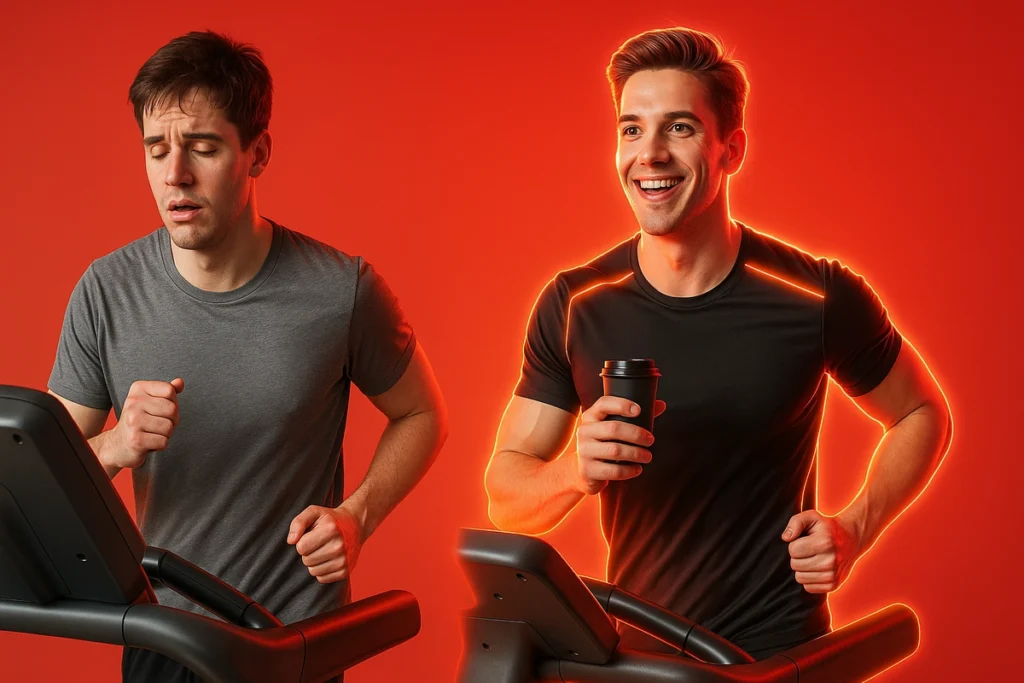
Research shows that caffeine before fasted cardio can increase fat oxidation by up to 29% compared to fasted cardio alone.
It also lowers your rate of perceived exertion (RPE), meaning the same workout feels easier.
In my own routine and with dozens of clients, caffeine turns sluggish 6 AM sessions into focused, high-energy work. More energy. More fat burned. Less suffering.
But here’s the catch – it backfires for some people. Jitters, anxiety, or a nasty crash.
That’s why the next sections cover exactly who should use it, how much, and when to skip it entirely.
📌 Individual results vary. The 29% figure comes from studies on caffeine and fat oxidation during exercise – not a guarantee, but a realistic upside.
Does Black Coffee or Caffeine Break a Fast?
No – if it’s zero calories, your fast stays intact.
Black coffee, espresso, and plain caffeine pills do not break a fast. In fact, they may improve fat oxidation during fasted cardio.
❌ What DOES break a fast (avoid these):
- Sugary energy drinks (Red Bull, Monster, etc.)
- Creamer, milk, or sugar in coffee
- MCT oil, butter, or coconut oil
- Any calorie-containing pre-workout
For strict intermittent fasting: Stick to water + plain caffeine (black coffee or pills). Even zero-calorie sweeteners may affect insulin sensitivity in some people – so when in doubt, keep it simple.
📿 Note on religious fasting (e.g., Ramadan):
In Islamic fasting, no food or drink (including water and coffee) is permitted from dawn to sunset. Caffeine before Fajr (pre-dawn meal) is fine, but during the fast itself, even black coffee breaks the fast. Always follow your religious guidelines first – fitness advice comes second.
How Caffeine Works in a Fasted State (Fat Oxidation Explained)
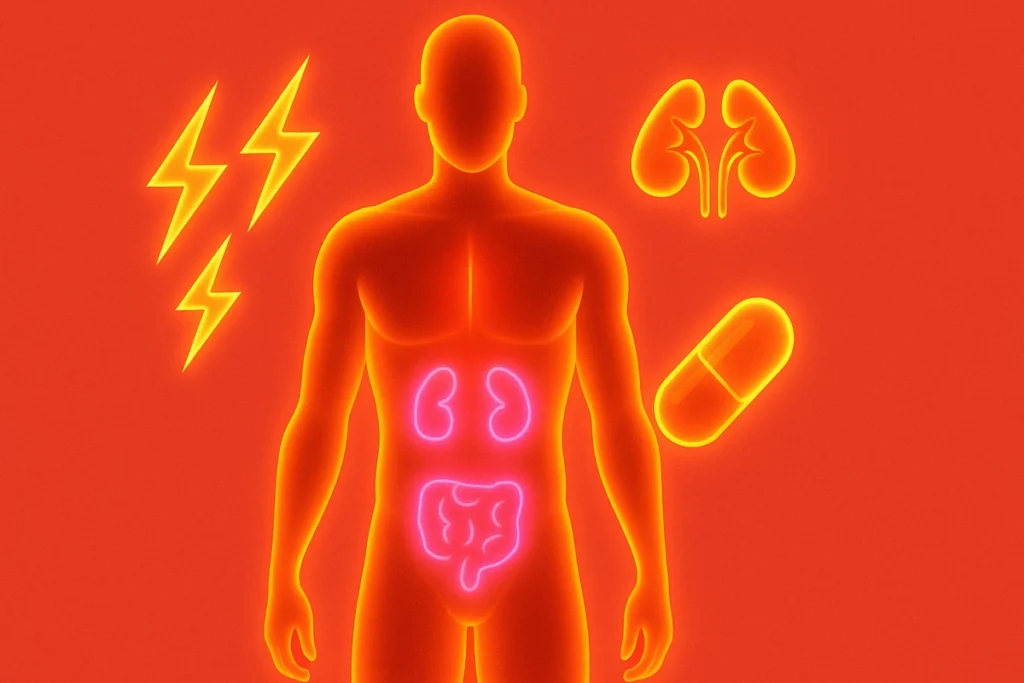
When you exercise fasted – without eating first – your body has no choice but to reach into its fat stores for energy. That’s exactly what you want for fat loss.
Caffeine accelerates this process in two powerful ways:
- It spikes adrenaline – Adrenaline signals fat cells to release fatty acids into your bloodstream, where muscles can burn them for fuel.
- It lowers perceived effort – Caffeine blocks adenosine, the chemical that makes you feel tired. The result? That same tough incline walk feels easier, even when you’re running on empty.
In short: more fat burned, less suffering felt.
Want to know which form works best? Read our comparison: Caffeine Pills vs Coffee for Gym Performance
Benefits of Caffeine for Fasted Cardio: Energy, Focus & Fat Loss

Caffeine gives you a noticeable edge when training fasted. Personally, I’ve used it before early-morning cardio, especially during fat-loss phases.
A 150 mg caffeine capsule or black coffee was enough to help me stay focused and push through.
Clients also report great results. For example, Liam, a client from Canada, struggled to get lean despite consistent training. After introducing 200 mg caffeine before his 6 AM walks, he finally saw progress in stubborn body fat within two weeks. The difference in his energy was clear.
Top 4 Benefits (Backed by Experience)
- More fat burned – Caffeine increases fat oxidation, helping your body use stored fat for fuel more efficiently.
- Lower perceived effort – Your workout feels easier than it actually is, even when running low on fuel.
- Better endurance – Caffeine delays fatigue, allowing you to walk, run, or cycle longer.
- Sharper mental focus – Especially valuable during early morning sessions when motivation is low.
For additional natural caffeine strategies, check out Natural Caffeine Sources for Pre-Workout.
Caffeine Pills vs. Coffee for Fasted Cardio
Not all caffeine is equal when you’re training fasted. The source matters for timing, convenience, and even health benefits.
Here’s how the two most popular options stack up:

Take this 2-minute assessment & get a science-backed training, nutrition & supplement roadmap built for YOUR body.
🔬 12,000+ personalized roadmaps generated
Feature | Caffeine Pills | Black Coffee |
|---|---|---|
Calorie-free | Yes | Yes (if black) |
Onset time | 30–45 min | 15–20 min |
Convenience | High (portable, no prep) | Low (needs brewing) |
Additional benefits | None (just pure caffeine) | Antioxidants, chlorogenic acid |
Best for | Exact dosing, pre-workout precision | Taste, hydration, overall wellness |
✅ Quick verdict:
- Choose caffeine pills when you need exact dosage and zero hassle before a 5 AM session.
- Choose black coffee when you enjoy the ritual, want antioxidants, and don’t mind waking up 10 minutes earlier.
Read our full comparison: Caffeine Pills vs Coffee for Gym Performance.
Best Timing & Dosage for Caffeine Before Fasted Cardio
The sweet spot for most people is 100–200 mg of caffeine taken 30–45 minutes before fasted cardio.
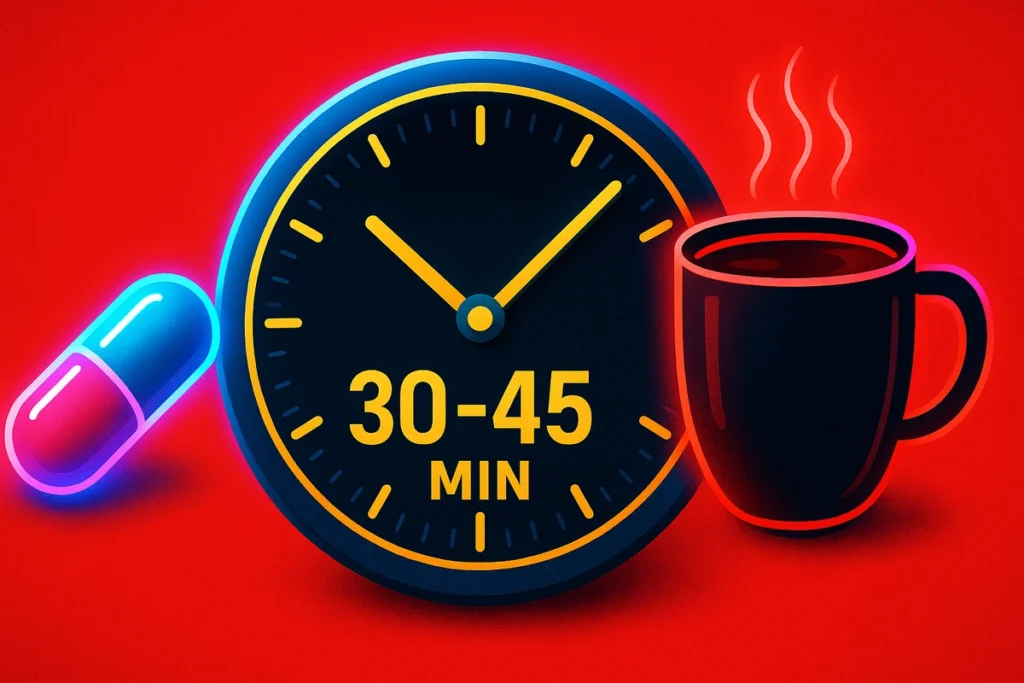
Start low — around 100 mg — and increase gradually if needed.
Personally, I use one espresso + half a caffeine tablet (≈125 mg total). That fuels a solid 30-minute fasted incline walk.
Dosage by Body Weight
Body Weight | Low Tolerance (Start Here) | Regular User |
|---|---|---|
<60 kg (132 lb) | 50–100 mg | 100–150 mg |
60–80 kg (132–176 lb) | 100–150 mg | 150–200 mg |
>80 kg (176+ lb) | 150–200 mg | 200–300 mg (max) |
⚠️ Never exceed 400 mg total per day – that’s the FDA safe limit for healthy adults.
Optimal Timing by Caffeine Source
Source | When to Take It |
|---|---|
Caffeine pills | 45 minutes before |
Black coffee or espresso | 30 minutes before |
Caffeine gum or anhydrous powder | 15 minutes before |
🌙 Avoid caffeine within 6 hours of bedtime – it kills sleep quality, which kills fat loss.
What to Avoid
- Sugary energy drinks – they break your fast and spike insulin.
- Taking caffeine too late – ruins recovery.
- Jumping to high doses – start low to assess tolerance.
To find the best amount for you, read Caffeine Dosage for Fat Burning and Focus.
Potential Downsides of Caffeine Before Fasted Cardio
That said, caffeine on an empty stomach isn’t for everyone. Here’s what can go wrong – and how to spot it early.
❌ Common side effects (empty stomach):
- Jitters or shakiness
- Increased heart rate
- Stomach discomfort
- Energy crash later in the day
Real client example: Isabella from Spain had trouble with just 100 mg caffeine. She felt anxious and dizzy, so we dropped it immediately and moved her cardio after a light breakfast. Problem solved – no more symptoms.
⚠️ Avoid caffeine before fasted cardio if:
- You have anxiety, high blood pressure, or heart issues
- You are pregnant or breastfeeding
- You take certain medications (e.g., stimulants, thyroid meds)
- You are sensitive to caffeine (jitters, insomnia, rapid heartbeat)
💡 When in doubt, consult your doctor before adding caffeine to your fasted cardio routine.
You might also benefit from reading How to Reset Your Caffeine Tolerance.
Who Should Avoid Caffeine Before Fasted Cardio?
Caffeine on an empty stomach is not for everyone. I always caution these individuals to skip it or adjust their routine:
- People with anxiety disorders – Caffeine can trigger panic attacks or heighten nervousness.
- Those with high blood pressure (hypertension) – The adrenaline spike may temporarily raise BP further.
- Anyone with sleep issues or insomnia – Morning caffeine can still affect next-night sleep, especially if you’re sensitive.
- Individuals prone to heart palpitations or arrhythmias – Fasted training + stimulants adds unnecessary strain.
- People with acid reflux or sensitive stomachs – Empty stomach + caffeine = irritation for many.
Real client example:
Mohammad, a client from the UAE, had high blood pressure. He tried 150 mg of caffeine before his fasted morning cardio – and immediately complained of headaches and a racing heart.
We removed caffeine entirely and shifted his cardio to mid-morning after a small meal (eggs + oatmeal). His symptoms vanished within a week.
📌 If you fall into any of the above categories, don’t force it. Fasted cardio without caffeine is still effective – or try a light pre-workout meal instead.
Coach’s Real Advice: What Works (and What Doesn’t)
I’ve used caffeine before fasted cardio with dozens of clients. It works – but only when dosed smartly. It’s an enhancer, not a miracle.
What works:
Jared from Australia was already training consistently but stuck at 20% body fat. Adding 200 mg caffeine before his 6 AM fasted walks (5 days/week) gave him the energy push he needed. Over 10 weeks, with no other changes, he dropped to 14% body fat.
What doesn’t work:
Nina from Germany wanted faster results. She took 300 mg caffeine before a fasted run – too much for her tolerance. Result: heart palpitations, dizziness. We cut her dose to 150 mg, added water, and moved cardio to after a small breakfast. Symptoms gone.
The real lesson:
Caffeine is a lever, not a light switch. What works for Jared (200 mg, fasted walking) could hurt Nina (300 mg, running). You have to test, adjust, and listen to your body.
My coaching rule:
Start at 100 mg. Increase by 50 mg every 3–4 days only if you feel zero side effects. The moment you feel jittery or anxious – that’s your ceiling.
Also worth exploring: Caffeine vs Pre-Workout: Which Is Better?
FAQ
No – start without caffeine or after a small meal.
It increases fat oxidation, but spot reduction is a myth.
45 minutes for peak blood levels.
With caffeine if you tolerate it; without if you’re sensitive.
No. Black coffee and plain caffeine pills have zero calories and do not break a fast.
No. Most energy drinks contain sugar or artificial sweeteners that break a fast and spike insulin.
Lower your dose next time. Start with 50–100 mg. If that still causes issues, skip caffeine entirely.
At least 8–12 oz (250–350 ml) of water. Caffeine is mildly dehydrating, and you lose more fluid during cardio.
Final Verdict: Is Caffeine Before Fasted Cardio Worth It?
- Yes – if you tolerate caffeine well.
- No – if you’re sensitive, anxious, or have high blood pressure.

Caffeine before fasted cardio is a powerful tool, not a magic pill. When used correctly, it helps you train harder, burn more fat, and stay mentally sharp. When misused or forced, it backfires.
📊 Quick Decision Guide (30 seconds)
Your Situation | Verdict | Action |
|---|---|---|
You tolerate caffeine well (no jitters) | Worth it | Start with 100 mg, 30–45 min before |
You’re sensitive or anxious | Skip it | Do cardio after a light breakfast instead |
You have high blood pressure | Avoid fasted caffeine | Consult a doctor first |
You drink caffeine late in the day | Use carefully | Only before morning cardio; cut off by 2 PM |
✅ Pros (Benefits)
- Increases fat oxidation during cardio
- Boosts energy without breaking your fast
- Lowers perceived effort – workout feels easier
- Sharpens mental focus, especially early morning
- Delays fatigue – lets you train longer
- Zero calories – won’t spike insulin
❌ Cons (Drawbacks)
- Can cause jitters, shakiness, or anxiety
- May spike heart rate or blood pressure
- Stomach discomfort on an empty stomach
- Energy crash later in the day
- Can disrupt sleep if taken too late
- Not safe for people with certain conditions
📋 Your 3-Step Action Plan
- Start light – Take 50–100 mg (half a pill or small coffee) on a rest day to test tolerance.
- Track how you feel – Note energy, focus, heart rate, and any jitters.
- Adjust or abort – If good, increase to 100–200 mg. If bad, skip caffeine entirely or move cardio after a meal.
Long-term sustainability over short-term intensity. If you dread fasted cardio with caffeine, don’t force it. Consistency beats intensity every time.
Coach’s Final Take: “Used wisely, caffeine can be your best fasted cardio partner. Forced or overdone, it becomes your worst enemy. Listen to your body – it’s smarter than any supplement.”
Deeper Guidance
For more details, check out these related articles:
Verdict in one sentence: If you tolerate caffeine, use it smartly – if not, don’t force it. There’s no one-size-fits-all, and that’s perfectly fine.

 Claim Your Free Assessment
Leave a Reply