
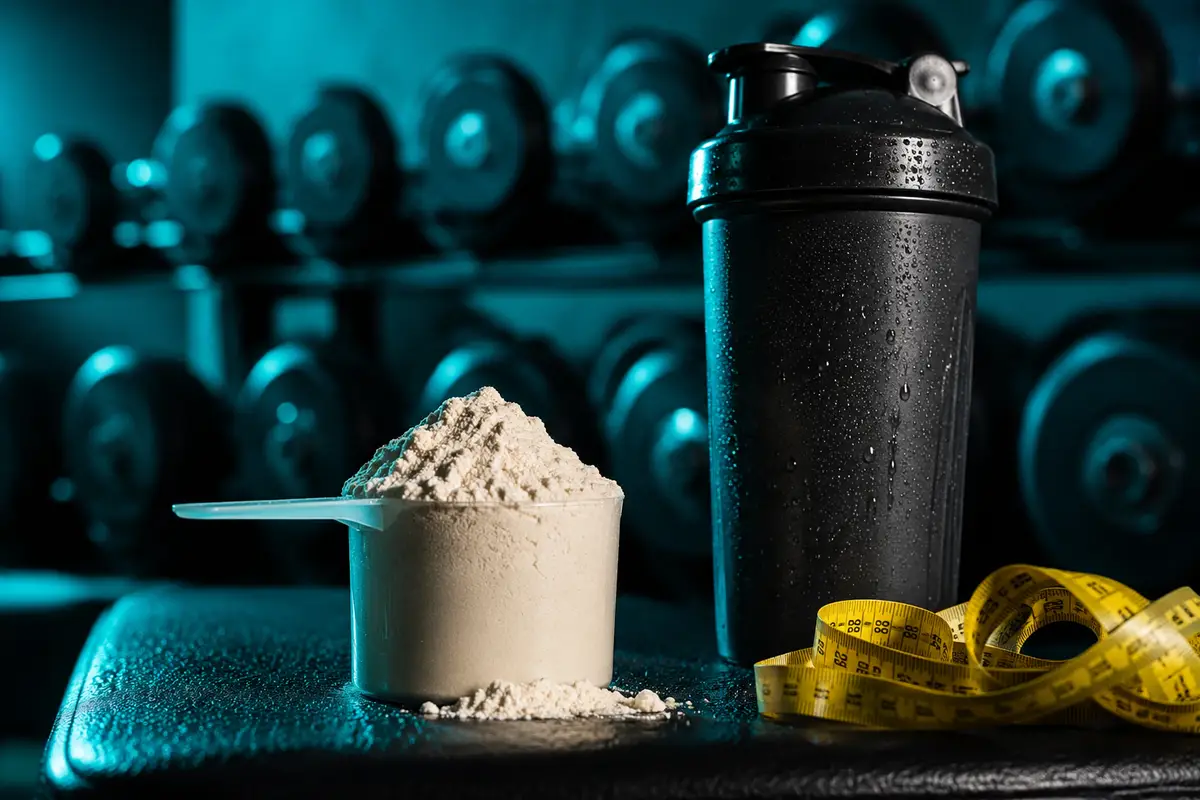

If there’s one supplement question I answer every single week without fail, it’s this: “Which protein powder should I buy for weight loss?“
Most people get it wrong. Not because they’re not trying hard enough, but because the marketing on these tubs is designed to confuse you.
I’ve seen clients waste hundreds of dollars on products that actually stalled their progress. Let me save you that frustration.
✅ Here’s the truth I’ve learned from coaching real people with real lives: the best protein powder for weight loss isn’t the one with the flashiest label or the lowest calorie count on paper. It’s the one that keeps you so full you forget you’re in a calorie deficit, while delivering the highest possible protein per scoop with the least metabolic junk attached.
Let’s break this down properly.
Table of contents
- The 30-Second Answer
- Why Most “Diet” Protein Powders Make You Hungrier
- The Satiety Index: Which Protein Type Wins?
- 3 Red Flags Killing Your Weight Loss Goals
- Top 5 Low-Calorie Protein Powders for Weight Loss
- How to Use Protein Powder for Actual Weight Loss
- The Coaching Truth: It’s Not Just the Powder
- Frequently Asked Questions
The 30-Second Answer
You clicked on this article because you want a direct, actionable answer. I respect that. So before we dive deep, here’s the framework I use with every client who walks through my door.
The golden rule is simple: look at the protein-by-weight ratio. Take the grams of protein per serving, multiply by four, and divide that number by the total calories per serving. If that percentage is above 80%, you’re holding a quality product. Anything below 70% is a flavored milk powder, not a weight loss tool.
Your top pick types are Whey Isolate and Micellar Casein. Whey Isolate is the purest form of dairy protein you can buy, stripped of almost all fat and lactose. Micellar Casein is the slow-digesting champion that gels in your stomach and releases amino acids for up to seven hours.
For plant-based eaters, a clean Pea and Rice Isolate blend without added gums gets closest to the amino acid profile of whey.
If you want me to cut through the noise entirely: go buy an unflavored Micellar Casein for nighttime and a pure Whey Isolate (90%+ protein content) for post-workout. That combination has been my personal staple for years, and it’s what I’ll detail throughout this article.

We analyze your goal, body & budget — then recommend only what you need.
IT’S FREETakes 2 Min | No sign-up needed
Why Most “Diet” Protein Powders Make You Hungrier
A client named Sofia came to me last year completely defeated. She’d been religiously drinking a popular “weight management” shake for breakfast for three months straight. The scale hadn’t budged. In fact, she’d gained two kilos. She showed me the tub with genuine confusion on her face. The front label screamed “Lean & Fit” in elegant white letters over a green background.
I flipped the tub over and read the actual ingredients. Eighteen grams of protein. Twenty-eight grams of carbohydrates, mostly maltodextrin. Seven grams of fat. She was starting her day with a 250-calorie sugar bomb that spiked her insulin, crashed her blood sugar two hours later, and left her ravenous by 10 AM.
The marketing department had done their job perfectly. The nutrition facts told a completely different story.
This is the trap. Brands know you scan for keywords like “diet,” “slim,” or “weight control.” They load the product with cheap fillers, add a gram of L-carnitine for label appeal, and sell it at a premium.
The lesson I drilled into Sofia, and into every client since, is this: the front label is advertising. The back label is the truth. Flip it over. Look at the protein-to-calorie ratio. If that math doesn’t check out, put it back on the shelf. I’ve written a complete guide on how to read supplement labels like a coach, including the 7 red flags I check first.
The Satiety Index: Which Protein Type Wins?
Not all protein powders digest the same way. The speed at which amino acids enter your bloodstream directly affects how long you stay full. Here’s the breakdown from my years of testing, both on myself during bodybuilding preps and on dozens of clients with different dietary preferences.
Micellar Casein: The Hunger Killer
This is my secret weapon and the recommendation I make most often for pure appetite control. When casein hits your stomach acid, it forms a gel-like clot. Your digestive system has to work through it slowly, releasing a steady trickle of amino acids for six to seven hours.
I personally take my last scoop at 9 PM. I mix it with water and a pinch of salt. The texture is thick, almost pudding-like. It feels substantial. I sleep through the night without that gnawing, empty-stomach feeling that wakes you up at 3 AM during a hard cut. For clients who struggle with nighttime snacking, micellar casein is the single most effective intervention I prescribe.
Whey Isolate: The Lean Machine
Whey Isolate is the fastest absorbing and the most stripped-down. A quality isolate hits 90% or higher protein content, meaning almost nothing but pure muscle-sparing amino acids. It spikes blood amino levels quickly, which makes it perfect for post-workout recovery.
On its own, it doesn’t keep you full as long as casein, but that’s not its job. Its job is purity. If you want to add protein to a meal without dragging in extra carbs or fats, isolate is your tool. I use it blended with ice and instant coffee in the morning for a high-volume, low-calorie start.
Pea and Rice Blends: The Vegan Champion
For my plant-based clients, the solution is a well-formulated Pea Isolate and Brown Rice Protein blend. Alone, pea protein can taste earthy and gritty. Rice protein is smooth but low in lysine. Together, they mimic the amino acid profile of whey quite well.
The key is finding a blend without inulin or cheap gums, which I’ll address later. A clean vegan blend digests at a moderate pace and, in my experience, sits somewhere between whey and casein for satiety.
Protein Type | Digestion Speed | Satiety Level | Best Used For | Typical Cost |
|---|---|---|---|---|
Micellar Casein | Very Slow (6-7 hrs) | Highest | Nighttime, Meal Replacement | Moderate |
Whey Isolate | Fast (1-2 hrs) | Moderate | Post-Workout, Adding to Meals | Higher |
Whey Concentrate | Medium (2-3 hrs) | Moderate | General Use (if no lactose issue) | Lower |
Pea/Rice Blend | Medium (2-4 hrs) | High | Vegan Diets, Meal Replacement | Moderate |
3 Red Flags Killing Your Weight Loss Goals
Over my seven years of coaching, I’ve developed a mental checklist of instant disqualifiers. I don’t need to taste a powder to know it’s wrong for a weight loss goal. I just read the label. Here are the three things that make me put a tub back on the shelf immediately.
1. Proprietary Amino Blends (Spiked Protein)
If you see “Amino Acid Matrix” or “Proprietary Blend” leading the ingredients instead of “Whey Protein Isolate,” walk away. Some manufacturers spike their protein with cheap amino acids like glycine or taurine. Lab tests still register these as “protein” because they contain nitrogen.
Your body doesn’t build muscle tissue from loose glycine. You’re being tricked into paying for filler. Look for products where the first ingredient is the protein source itself, clearly stated.
2. High-Fiber Additives, Specifically Inulin
I coached a school teacher from Stockholm named Henrik who was ready to abandon protein entirely. Every shake caused visible bloating within thirty minutes. He was convinced he’d developed an allergy. His tub was a mid-range whey concentrate blend with added inulin, a cheap chicory root fiber, for texture and label appeal.
Inulin ferments rapidly in the gut. For a large subset of people, it produces severe gas and discomfort. I switched him to a pure whey isolate with no added fiber, no gums, and sweetened only with stevia. The problem disappeared in two days. If a client reports bloating, step one is always to eliminate fiber additives and lactose.
3. Unrealistic Calorie Claims
Some labels claim 100 calories per scoop with 25 grams of protein. Do the math. Twenty-five grams of pure protein contributes 100 calories by itself. That leaves zero room for flavoring, fat, or carbs.
If the scoop size listed in grams doesn’t roughly match the protein claim plus a gram or two of lecithin, the numbers are being creatively rounded down. Trust brands that publish full amino acid profiles and third-party lab tests.
Top 5 Low-Calorie Protein Powders for Weight Loss
This isn’t a sponsored list. These are the types and standards I’ve landed on after ten years of personal use and countless client trials. I’m describing the archetypes so you can shop smart, regardless of which brand is trending this month.

Take this 2-minute assessment & get a science-backed training, nutrition & supplement roadmap built for YOUR body.
🔬 12,000+ personalized roadmaps generated
1. Best Overall Satiety: Pure Micellar Casein
Go for unflavored or vanilla. Look for a brand that specifies “Micellar Casein” as the sole protein source, not a caseinate blend. I personally use a bulk German brand that tests at 89% protein content.
The texture when mixed with minimal water is thick, creamy, and physically sits in your stomach. For appetite control, nothing beats it.
2. Best Pure Whey: Cold-Filtration Whey Isolate
Cold-processed, micro-filtered isolate. Cross-flow microfiltration is the term you want on the label. It means the protein hasn’t been denatured by heat and the fat and lactose have been physically removed, not chemically stripped. Unflavored versions are starkly clean and mix perfectly into savory foods or soups without clashing.
3. Best Vegan Option: Pea Protein Isolate with Brown Rice
Find a blend that uses pea isolate, not concentrate, and avoids the “natural flavors” catch-all. The fewer ingredients, the better. A good 70/30 pea-to-rice ratio delivers a complete essential amino acid profile. Expect an earthy taste. Mix it with cocoa powder and ice to improve the flavor naturally.
4. Best Clean Flavor Variety: Grass-Fed Whey Isolate with Stevia
For clients who genuinely dread drinking their protein, a flavored isolate sweetened only with stevia or monk fruit is the sweet spot. Grass-fed sourcing usually indicates a higher standard of quality control and a better fatty acid profile in the trace fats that remain. Vanilla or chocolate are the most versatile.
5. Best Budget Isolate: Standard Bulk Whey Isolate
If you’re on a tight budget, buy an unflavored whey isolate in bulk from a reputable supplier that provides a Certificate of Analysis. It won’t taste like a milkshake, but it will give you the highest protein-per-dollar ratio on the market. Combined with a few other smart purchases, you can build an entire natural supplement stack for under $50 a month. Your wallet and your waistline will thank you.
How to Use Protein Powder for Actual Weight Loss
Buying the right tub is half the battle. How you deploy it throughout the day determines whether you actually lose weight. These are the protocols I use with my in-person and online clients.
The Pre-Load Method
Fifteen to twenty minutes before your biggest meal, mix 15 grams of micellar casein or a small half-scoop of isolate with a full glass of water and drink it. This isn’t a meal replacement. It’s a tactical strike on your hunger hormones.
The protein triggers a release of satiety peptides before you ever pick up your fork. You’ll naturally eat less during the meal without feeling deprived. I’ve had clients reduce their dinner portions by 20% with zero additional effort using this method.
The Ice Cream Machine Sludge Bowl
This is the technique I mentioned earlier that has saved more diets than I can count. Take one scoop of whey isolate or casein, add 100 milliliters of cold water, and then dump in 300 to 400 grams of ice cubes. You must use a high-speed blender, not a shaker.
Blend for two to three minutes until the sound shifts from harsh crunching to a smooth, consistent whir. What you pour into the bowl is a massive 500-milliliter volume of protein fluff with the exact texture of soft-serve ice cream. You eat it with a spoon. It takes fifteen minutes.
The cold temperature, the physical act of spooning, and the sheer stomach distension signal your brain that you’ve eaten a substantial meal. Total calories: around 130. It’s the single highest volume-to-calorie ratio meal I know.
The Morning Hydration Stack
I’m not a breakfast person during a cut. But I train early, and training fasted can sacrifice muscle over time. My solution: a tall glass of cold water, one scoop of unflavored whey isolate, and a shot of instant coffee, shaken hard.
It hydrates, delivers fast amino acids to protect muscle, and the caffeine synergizes with the protein to blunt appetite for several hours. Zero sugar. Minimal calories. No post-meal lethargy. Try it tomorrow morning. If you’re curious about the science behind fasted versus fed training and how to time your supplements for maximum results, I’ve broken it all down here.
The Coaching Truth: It’s Not Just the Powder
I need to say something that might sound obvious, but it’s the number one reason people fail. A high-quality protein powder does not magically burn body fat. It is a tool. A remarkably effective tool, but only one piece of a larger system.
You still need to track your total daily calorie and protein intake. I’ve watched clients swap their sugary breakfast for a perfect isolate shake and then unknowingly eat back the saved calories by adding an extra handful of almonds to their salad.
The powder removes friction. It simplifies meal timing and controls hunger. But the fundamental law of energy balance still applies. Use a food scale. Use a tracking app. Treat the powder as a precise instrument, not a magical elixir.
Beyond the macros, consider your relationship with food. If your shakes are hyper-palatable, loaded with artificial sweeteners and flavor drops, you might be reinforcing the exact cravings you’re trying to escape.
Sometimes, the best psychological move you can make is to drink an intentionally bland shake. It resets your palate and breaks the expectation that every meal needs to be a flavor explosion.
This is the bodybuilding wisdom I’ve earned: extreme leanness sometimes requires embracing the functional, not the pleasurable. For sustainable weight loss, find the middle ground. And if you’re worried about long-term effects, here’s what the science actually says about high-protein diets and kidney health.
Frequently Asked Questions
No, the insulin response from whey protein does not stop fat loss. Protein-stimulated insulin release is accompanied by glucagon, a hormone that counters fat storage. As long as your total calorie intake remains in a deficit, a whey isolate shake will support muscle retention, not halt fat burning. I’ve never seen a client stall progress because of a pure protein shake.
Most commercial meal replacements are fortified high-carb drinks disguised as diet food. A client named Sofia gained two kilos drinking one daily before I reviewed the label. If you want a true meal replacement, make your own by blending a clean protein powder with spinach, ground flaxseed, and a handful of frozen berries.
Plant protein digests faster than casein but modern pea and rice isolates work well when properly formulated. A clean blend without added gums or fiber additives keeps my vegan clients full for two to four hours. The key is choosing a product free from inulin, which causes bloating and ruins dietary adherence.
Micellar casein suppresses hunger for four to six hours due to its slow gel-forming digestion. Whey isolate keeps you full for roughly 90 minutes to two hours. Use casein before long gaps between meals or before bed. Use whey post-workout or as a quick pre-meal appetite blunter.
No. The 30 calories from 50 grams of frozen berries add fiber, micronutrients, and natural sweetness that improve adherence. I only remove fruit during the final weeks of a bodybuilding competition prep. For sustainable weight loss, those 30 calories are an investment in consistency, not a sacrifice.
 Find Which Supplements You Need
Leave a Reply