


Not sure whether to take whey protein before or after the gym? You’re not alone — and getting it wrong can slow your gains.
Whether you’re chasing muscle growth, faster recovery, or better performance, timing matters more than you think.
Quick answer: Take whey within 30–60 minutes after your workout. That’s the sweet spot for muscle repair and growth. Train fasted? Add a small scoop before — but post‑workout is still the priority.
That’s the short version. Below is your Whey Protein Timing Cheat Sheet — one table, six scenarios, exact doses. No guesswork.
✅ Whey Protein Timing Cheat Sheet
Scenario | When to Take Whey | Dose | Extra Notes |
|---|---|---|---|
Trained 1‑2 hours after a balanced meal | Post‑workout only | 25–30g | Within 30–60 min after training |
Trained fasted (morning, no food for 4+ hours) | Post‑workout + optional pre‑workout | Post: 25–30g Pre: 10–15g | Pre‑workout dose 15 min before session |
Training twice same day (e.g., AM + PM) | After each session | 20g each | No need for extra carbs if meals are close |
Rest day (no training) | Split into 2 doses | Morning: 15–20g Evening: 15–20g | Helps maintain muscle protein synthesis |
Cutting / calorie deficit | Post‑workout only | 25–30g | Prioritize timing; skip pre‑workout whey |
Bulking / mass gain | Post‑workout + before bed (optional) | Post: 30g Bed: 20g casein (or slow whey) | Add carbs post‑workout (banana, rice cakes) |
In this article, I’ll back up every rule with real client examples and personal coaching experience — so you never waste a scoop again.
Table of contents
- When to Take Whey Protein for Best Results
- Why Timing Matters for Muscle Growth
- Whey Protein Before a Workout – Pros and Cons
- Whey Protein After a Workout – Pros and Cons
- Before vs After: Which Is Better for Muscle Growth?
- What If You Train Fasted?
- Can You Take Whey Before AND After?
- What I Recommend as a Coach
- Frequently Asked Questions
- Final Verdict: Whey Protein Timing – 5 Rules to Follow
When to Take Whey Protein for Best Results

Here’s the quick answer:Take whey protein after your workout. Period.
Why? Because that’s when your muscles are primed to repair, recover, and grow. Whey’s fast‑digesting amino acids hit exactly when they’re needed most.
One exception: If you train fasted (no food for 4+ hours) or haven’t eaten all day, a small 10–15g dose before training can help prevent muscle breakdown. But post‑workout is still your #1 priority.
For a deeper dive into post‑training benefits, read my full whey protein post‑workout guide.

🔍 Not Seeing The Results You Expected?
Answer a few quick questions and our smart system will analyze your routine, diet, and recovery to pinpoint exactly what’s holding you back.
No signup required · Results instantly
Why Timing Matters for Muscle Growth
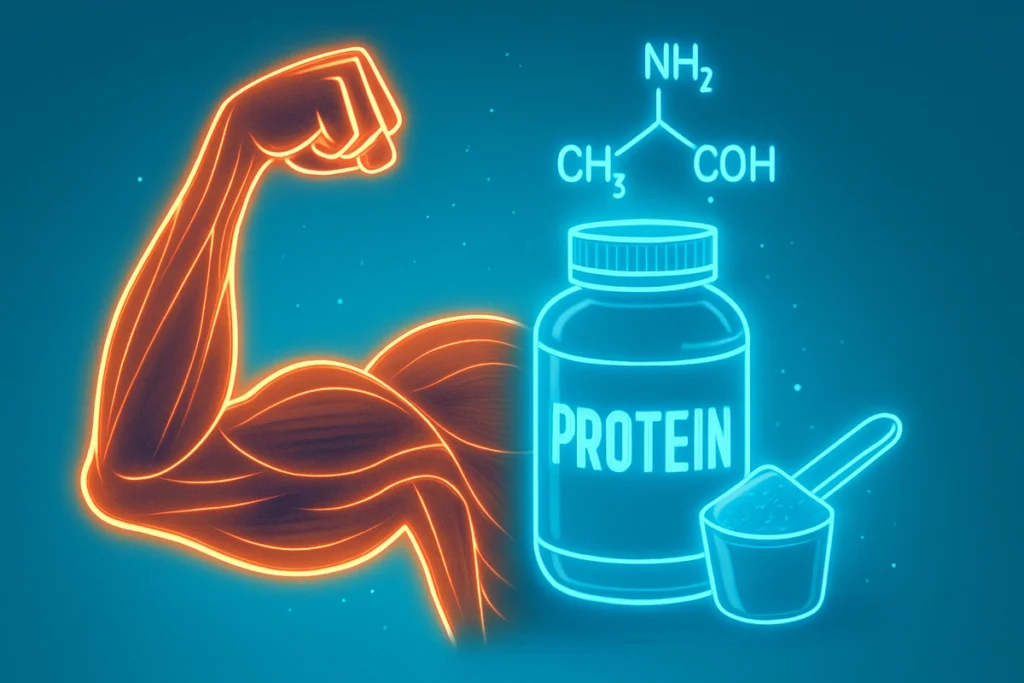
Your body breaks down muscle during training. That’s normal. But the real magic happens after your session — when it starts rebuilding stronger, denser fibers.
This is where whey protein shines.
Whey is fast‑digesting, meaning it floods your bloodstream with amino acids in minutes. That makes it perfect for this critical window of opportunity.
Give your muscles the building blocks (amino acids) right after they’ve been stressed, and you’ll:
- Speed up repair
- Reduce soreness
- Stimulate more growth
How much should you take? Check out this article on daily whey intake for muscle growth.
The #1 Mistake (Fix This Today)
Drinking a full 30g whey shake 5 minutes before lifting.
This causes bloating, gas, and sluggishness — exactly what you don’t want under a barbell.
✅ Fix: If you must take whey pre‑workout, use half a scoop (12–15g) and drink it 45–60 minutes before training.
Whey Protein Before a Workout – Pros and Cons

✅ Pros
- Helpful if you haven’t eaten in 3–4 hours
- Prevents muscle breakdown during training
- Can be paired with carbs (e.g., banana, oats) for steady energy
⚠️ Cons (based on my experience)
- May cause bloating or heaviness if taken too close to training
- Can slow you down during intense lifting – especially on leg day
I’ve had this issue myself. A full pre‑workout shake made me feel sluggish and full. Definitely not what you want under a barbell.
To see how whey compares to other options like EAAs, check out this comparison guide.
Whey Protein After a Workout – Pros and Cons

Pros:
- Accelerates recovery – Delivers amino acids right when muscles need repair.
- Reduces muscle soreness – Helps you get back to the gym sooner.
- Easy and fast to digest – No bloating, no heaviness, even during a cut.
- Fits naturally into your post-gym routine – Shower, shake, done.
Cons:
- Needs planning if you’re not heading straight home – Solution: Keep a shaker and single scoop in your gym bag.
🥇 This is where whey shines the most.
I always keep a scoop in my gym bag. Post-lift, I just mix it with water and I’m good to go — no blender, no mess.
Learn more about the best whey proteins for muscle gain and recovery.

Find Your Perfect Supplement Stack
Stop wasting money on supplements that don’t match your body or goals. Our algorithm picks only what you actually need, with exact doses and timing.
No signup required · Results instantly
Before vs After: Which Is Better for Muscle Growth?
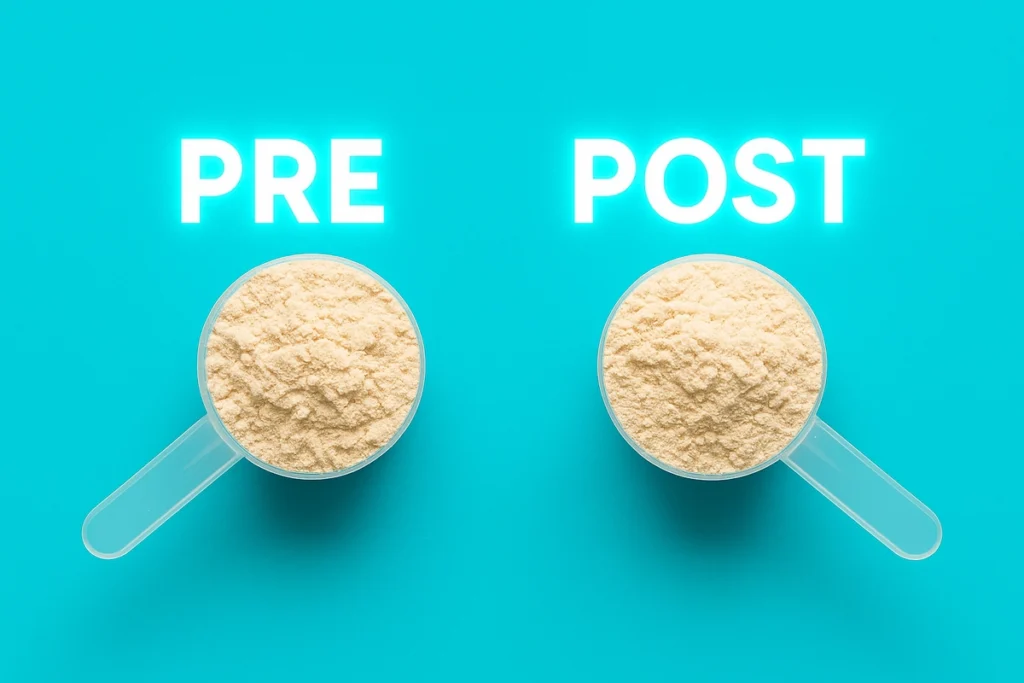
Still not sure? This head‑to‑head comparison makes it clear.
Aspect | Before Workout | After Workout |
|---|---|---|
Muscle repair | Minimal effect | Accelerates recovery |
Muscle soreness | No reduction | Lowers next‑day soreness |
Digestion | May cause bloating or heaviness | Easy, fast, and convenient |
Energy during training | Helpful if training fasted | Not relevant |
Best for | Fasted training or long gaps between meals | Most people, any goal, any training style |
- After workout wins for most lifters.
- Before workout only makes sense in specific cases (fasted, long gaps).
⚠️ And remember — if you’re not training at all, whey isn’t useless. Learn what happens when you take whey without working out — you might be surprised.
What If You Train Fasted?

Training first thing in the morning? Many of my clients do the same. Fasted training is perfectly fine — but when you take whey makes all the difference.
My rule: Take whey protein right after your workout. That’s the non‑negotiable.
But here’s where it gets specific. One size doesn’t fit all.
Fasted Training Protocol: My 3‑Step Rule
Use this quick protocol to nail your timing every time:
- Last meal >4 hours ago? → Take 10–15g whey 15 minutes before your workout. This prevents muscle breakdown during training.
- Otherwise (ate within 4 hours)? → Skip pre‑workout whey. Take 25–30g within 30 minutes after training.
- Always drink plenty of water with your whey — it aids digestion and prevents bloating.
Real client example:
Take Emma, one of my early‑rising clients. She trains at 6 a.m., completely fasted. Adding a whey shake immediately post‑workout made a clear difference in her strength and energy. It also helped her maintain lean muscle while cutting.
For skinny beginners just starting out, check out this guide: whey protein for skinny beginners.
Can You Take Whey Before AND After?
Yes, but most people don’t need to.
Taking whey both before and after a workout won’t hurt you. But it’s usually overkill unless you’re in a specific situation.
When Both Doses Make Sense
Scenario 1 – Fasted + delayed meal
You train completely fasted (no food for 5+ hours) and won’t eat a real meal for several hours after training.
- Pre‑workout: 10‑15g – prevents muscle breakdown
- Post‑workout: 25‑30g – drives repair
Scenario 2 – Cutting / calorie deficit
You’re in a steep calorie deficit and struggle to hit your daily protein goals.
- Why both help: Splitting your dose across both windows maintains muscle without adding many calories.
When One Dose Is Enough
If you eat a balanced meal 1‑2 hours before training, skip the pre‑workout whey. Your meal already provides amino acids. One post‑workout shake (25‑30g) is plenty.
📌 For 90% of lifters: Post‑workout only. For fasted trainees or aggressive dieters: Both can help.
Remember: Whey is a supplement, not a meal replacement. Don’t double up just because you think “more is better.”
Your body can only use so much at once.
What I Recommend as a Coach

For most people, whey after training wins every time.
Here’s why:
- Rapid absorption – gets amino acids to muscles fast
- Faster muscle repair – less soreness, more growth
- Easier meal timing – no need to plan around a pre‑workout shake
Real client example – Liam
Liam used to take whey in the morning… way before his afternoon training. His results? Stuck.
We switched one thing: post‑workout whey with a banana.
Within 6 weeks, he added nearly 2.5 kg of lean mass.
That’s the power of simple timing.
🤔 Curious how whey stacks up against mass gainers? Check this comparison.
Frequently Asked Questions
Yes, but it won’t boost performance. A whole meal 2 hours before is better. Save whey for after your workout.
No, not if you eat a high-protein meal within 2 hours. But whey is faster, easier to digest, and more convenient.
No. Whey alone doesn’t cause fat gain. Only eating more calories than you burn does. Whey is low in fat and carbs.
Within 30 to 60 minutes. That’s when your muscles absorb it best for repair and growth.
Yes. It digests quickly. But if you feel bloated, take half a scoop or eat a small snack first.
Yes. Split your daily dose into two servings (morning and evening) to maintain muscle recovery.
Very little. Without training, your body won’t use extra protein to build muscle. It may just add calories.
Yes, but let the coffee cool first. Hot liquid can make whey clump and may reduce its effectiveness.
For most people, yes. One scoop (25–30g) is ideal. Skinny beginners may need a little more.
Whey is faster. Food works too but takes longer to digest. For best results, use whey, then eat a meal 1–2 hours later.
Final Verdict: Whey Protein Timing – 5 Rules to Follow
Based on 7+ years of coaching experience:
- Take whey after your workout. Non‑negotiable for most.
- Drink it within 30–60 minutes of finishing your last set.
- Mix with water or milk, and add fast carbs – banana, rice cakes, or dextrose.
- If you train fasted (no food for 4+ hours), take 10–15g before training, plus your full post‑workout dose.
- On rest days, split your dose – morning and evening – to maintain muscle protein synthesis.
🌱 For plant‑based athletes: Whey isn’t your only option. Check out whey vs plant protein for bodybuilding for a fair comparison.
🐌 For slow‑release protein fans: See the full breakdown of whey vs casein to decide if casein fits your goals.
💡 One last thing: Supplements support consistency. They’re not magic. But when used right, whey protein will absolutely enhance your recovery, gains, and performance.
Leave a Reply