

Building muscle isn’t just about hitting the weights hard — it’s about recovering right and giving your body the fuel it needs.
After coaching hundreds of clients and experimenting on myself over the past 10+ years, I can confidently say: whey protein is the single most effective (and still misunderstood) tool for muscle gain and recovery.
So what’s the best whey protein for muscle gain and recovery? Here’s my no‑BS quick answer, drawn from real coaching results and science.
🏆 Quick Answer: The Best Whey at a Glance
- Best Overall (Lean & Clean): Whey Isolate — fast‑absorbing, minimal carbs and fat
- Fastest Recovery: Hydrolyzed Whey — pre‑digested for lightning‑fast amino delivery
- Budget‑Friendly Power: Whey Concentrate — solid quality if you pick a clean brand
- My Pick as a Coach: Dymatize ISO100 — I’ve used it through bulks and cuts, and recommended it to hundreds of clients
Don’t worry — I’ll explain exactly why these are my top picks and how to choose the right one for your goals.
In this guide, I’ll break down what really works — from personal experience, client stories, and the science that actually matters.
Whether you’re hunting for the best whey protein for recovery, the top whey powder for muscle repair, or just a straightforward, zero‑hype recommendation, you’re in the right place.


Table of contents
- Whey Protein for Muscle Recovery: How It Actually Works
- Why Whey Is the Best Protein for Recovery & Muscle Gain (Science)
- Types of Whey Protein for Muscle Gain & Recovery (Which One Is Best?)
- What Makes the Best Whey Protein for Muscle Gain?
- Best Whey Protein Brands for Recovery & Muscle Gain (Top 3)
- Best Time to Take Whey for Muscle Recovery & Results
- Whey Protein for Recovery & Muscle Gain: FAQ
- Final Thoughts: Train Smart, Recover Smarter
Whey Protein for Muscle Recovery: How It Actually Works
Training creates micro‑tears in muscle fibers, and recovery depends on how fast you deliver the right building blocks. A quality whey protein provides all the essential amino acids — especially leucine — in a form your body absorbs rapidly. That’s why it’s so effective for muscle repair.
I’ve seen this play out directly with clients. Jacob, for example, switched to a clean isolate and cut his post‑leg‑day soreness in half within three weeks, allowing him to train harder and more often. One scoop of a well‑made whey powder within 30–60 minutes of training goes a long way.
Why Whey Is the Best Protein for Recovery & Muscle Gain (Science)
You don’t grow in the gym — you grow during recovery. And recovery depends on what you feed your muscles.
Whey protein is rich in essential amino acids, especially leucine, which flips the anabolic (muscle-building) switch in your body. Here’s why I recommend it to almost every client:
- Digests and absorbs faster than any other protein source
- Contains a complete amino acid profile
- Proven to support muscle protein synthesis and reduce muscle soreness
🧪 One study published in the Journal of the International Society of Sports Nutrition showed that whey protein consumed post-workout significantly enhances muscle recovery and hypertrophy compared to placebo or other protein types. (Source) That’s not just theory — I’ve seen it in real time.
Types of Whey Protein for Muscle Gain & Recovery (Which One Is Best?)
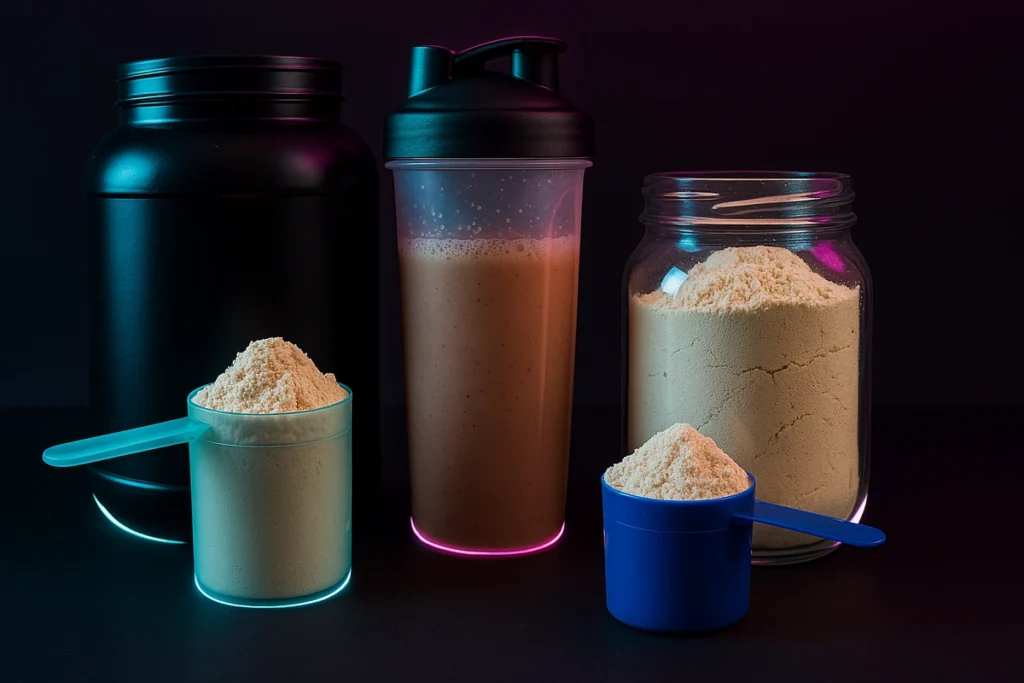
1. Whey Concentrate – Affordable & Effective
Whey concentrate is the most basic form—typically 70–80% protein, with the remainder being small amounts of fat and lactose.
It’s a solid whey protein powder for muscle recovery if you’re just starting out or sticking to a tight budget. The extra fat and carbs can slightly slow digestion, but for many people, it still gets the job done.
- Best for: Beginners, anyone on a budget, or those who tolerate dairy well.
- Watch out: The lactose content may cause bloating if you have a sensitive stomach—if that happens, switching to an isolate often solves the problem.
2. Whey Isolate – Lean, Clean & Fast
Whey isolate is filtered to remove almost all fat and lactose, leaving you with a protein content of 90% or higher.
This makes it a favourite among athletes who want lean muscle building without extra calories. Because it digests rapidly and is easy on the stomach, it’s often the best whey protein for recovery when you need something efficient after training.
- Best for: Cutting phases, anyone with lactose sensitivity, and people who want a clean, fast-absorbing recovery shake.
- My take: For most clients, a high-quality isolate is the sweet spot—pure enough to support muscle recovery without unnecessary fillers.
3. Hydrolyzed Whey – Ultimate Speed for Post-Workout Recovery
Hydrolyzed whey takes isolation a step further: the protein chains are broken down into smaller peptides through a process called hydrolysis.
This essentially “pre‑digests” the protein, making it absorb even faster than regular isolate. If you’re looking to maximise whey protein muscle recovery immediately after training, this is the pinnacle.
- Best for: Post-workout when your muscles need amino acids now; competitive athletes who want to minimise soreness and speed up repair.
- Consideration: It tends to be more expensive, and some brands have a slightly bitter taste due to the broken peptide bonds. But in terms of pure recovery power, it’s hard to beat.
Client Story (From Soreness to Strength)
Jacob, a 29‑year‑old office worker from Germany, was training hard but constantly wrecked by soreness and stalled progress.
I moved him from a generic whey concentrate to a hydrolyzed isolate.

Within three weeks, his post‑leg‑day muscle soreness dropped by around 50%, and he broke through a bench press plateau—105 kg to 115 kg.
This isn’t magic; it’s simply giving your body the right whey protein for muscle recovery when it needs it most.
What Makes the Best Whey Protein for Muscle Gain?
When a client asks me, “Coach, is this whey good?”, I go through this list:
- At least 20–25g protein per serving
- Third-party tested (look for NSF or Informed Choice logos)
- No hidden blends, fake flavor overload, or sugar bombs
- Optional: Digestive enzymes or added BCAAs
⚠️ Mira from Sweden came to me constantly bloated from her whey shake. We swapped her to a clean isolate with enzymes — bloating gone, energy up, and within a month she was doing weighted pull-ups for the first time.
Best Whey Protein Brands for Recovery & Muscle Gain (Top 3)
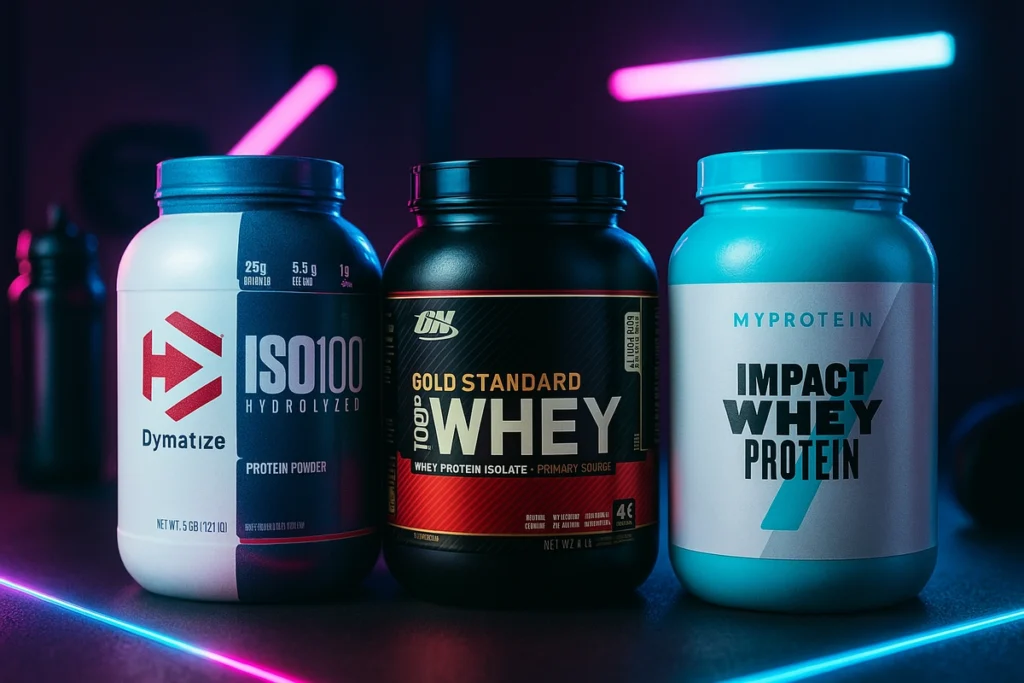
After trying over 30+ brands personally and through clients, these three consistently deliver results:
1. Dymatize ISO100
For anyone searching for the best whey protein for recovery, ISO100 is my top recommendation – it’s hydrolyzed, so it hits your system fast when you need it most.
2. Optimum Nutrition Gold Standard Whey
The most popular whey for a reason. Balanced, reliable, and great for beginners.
3. MyProtein Impact Isolate
Budget-friendly, especially for international clients. No frills, just results.
I once had a college athlete, Amir from Turkey, who needed serious recovery support during a cutting phase. Dymatize ISO100 helped him retain strength while dropping 6kg of fat over 10 weeks.
Best Whey Protein Isolate for Post‑Workout Muscle Repair
If you’re specifically after the best whey protein isolate for post‑workout muscle repair, you want a product that’s virtually fat‑ and lactose‑free, with at least 25g protein per serving.
My go‑to is Dymatize ISO100 – it’s a hydrolyzed 100% whey isolate that digests almost immediately, making it ideal for rapid muscle repair after tough sessions.
MyProtein Impact Whey Isolate is a budget‑friendly alternative that still delivers pure isolate quality.
Best Time to Take Whey for Muscle Recovery & Results
This is where a lot of people get it wrong.
The best time to take whey protein is:
- Post-workout (within 30–60 mins)
- First thing in the morning (especially if you’re fasting overnight)
- With meals if you’re struggling to hit your protein target
- Or even before bed if your goal is overnight recovery — here’s a full breakdown of whey protein at night and its benefits
🧃 I often recommend this smoothie to my clients after training: 1 scoop of isolate, 1 banana, 1 tsp almond butter, water or milk. Balanced, quick, and actually enjoyable to drink.
Whey Protein for Recovery & Muscle Gain: FAQ
Whey isolate is the best all-around choice. It’s high in protein, very low in fat and carbs, and digests quickly. Dymatize ISO100, Optimum Nutrition Gold Standard, and MyProtein Impact Isolate are all clean, reliable options.
The most important time is within 30–60 minutes after your workout. That’s when your muscles are most receptive to protein. You can also take it in the morning or between meals to hit your daily protein target.
Yes. Your muscles repair and grow on rest days, not just on training days. A scoop on rest days helps keep your protein intake consistent and supports recovery.
No. Whey helps you build lean muscle, but only if you’re eating enough calories to gain weight. It won’t make you bulky on its own. It’s just a convenient source of protein.
Whey isolate is more filtered. It contains less fat, less lactose, and a higher percentage of protein per scoop. Whey concentrate is less processed, slightly cheaper, but can cause bloating if you’re sensitive to lactose.
Absolutely. Whey, creatine, and BCAAs work well together. Many people take them post-workout.
Yes, for most healthy people, whey protein is safe when taken as directed. Look for a product that’s third-party tested (like NSF or Informed Choice) to ensure purity and quality.
Some people get bloating or gas from lower-quality whey concentrate. If that happens, switching to a pure whey isolate with digestive enzymes often solves the problem — just like it did for my client Mira.
Yes. Whey protein helps you keep your muscle mass while in a calorie deficit. It’s filling, low in calories (especially isolate), and supports recovery when you’re training hard during a cut.
Most people do well with 1–2 scoops per day, depending on how much protein they get from food. More isn’t always better. One scoop post-workout is enough for many, as my client Liam found out the hard way.
Hydrolyzed whey is pre-digested, so your body absorbs it faster. It’s great if you want the quickest recovery possible, but it’s not essential for everyone. Whey isolate works perfectly fine for most goals.
Yes, though casein is more common before bed because it digests slowly. Whey can still be useful if you train late or need to boost protein for overnight recovery.
Final Thoughts: Train Smart, Recover Smarter

Whey protein isn’t some magic powder — but if you’re lifting consistently and eating with purpose, it can seriously speed up your results.
As a trainer, I use it myself. I’ve recommended it to hundreds of clients. And I’ve seen the difference it makes — in strength, recovery, and physique.
Just remember:
- Pick a clean, high-quality product
- Time it right (especially post-workout)
- Don’t overthink it — be consistent
🎯 Still unsure which whey is right for you? Drop a comment — I’ll get back to you and help you choose the best fit based on your goals.
Let’s build muscle, recover smarter, and stay legendary 💪
Leave a Reply