


Yes — whey protein isn’t just for gym-goers.
As a certified fitness coach, I’ve seen clients who barely train use it to maintain muscle, manage hunger, and support their health.
But it’s not magic, and how you use it makes all the difference.
In this guide, I’ll walk you through what actually happens when you drink whey without exercising, who stands to benefit, and the exact way to use it so it helps — not hurts — your goals.
Table of contents
What Happens If You Drink Whey Protein Without Exercise?
If you start drinking whey shakes but aren’t lifting weights or doing intense cardio, don’t expect to magically pack on muscle.
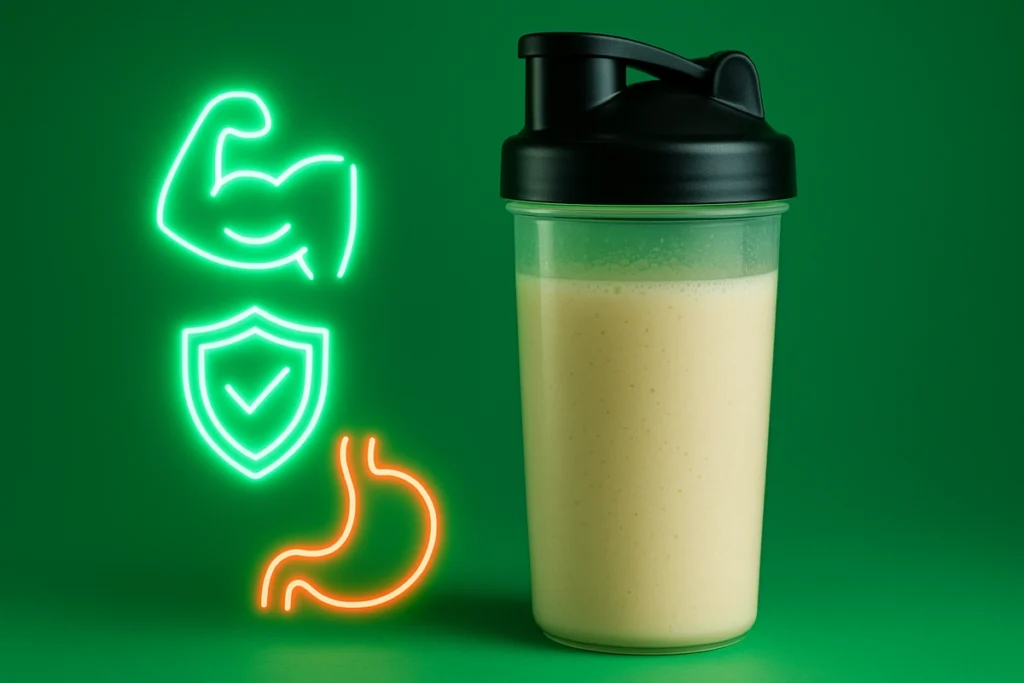
Here’s exactly what does happen—and what doesn’t.
What Actually Happens (Spoiler: No Magic Muscle)
Your body uses the protein for repair, satiety, and preserving lean muscle; however, excess calories without activity can lead to fat gain over time.
You won’t build new muscle without resistance training, but you’ll support overall health and recovery.
- Your body still uses that protein to repair tissues, maintain healthy skin, hair, and nails, and support your immune system.
- You help preserve lean muscle mass, which is especially important as you age.
- You may feel fuller longer, making it easier to avoid junk food or mindless snacking.
- You will not build muscle simply from drinking whey shakes—muscle growth requires resistance training.
- If you overdo it and keep piling on calories without adjusting your overall intake, you could gain fat over time.
That’s why balance is key.
✨ Whey With Workout vs. Without Workout – A Quick Comparison

Tell us your goal & discover your perfect stack — backed by science, no BS.
Free. Takes 2 Min | No sign-up needed
Scenario | Key Benefit | Muscle‑Building? | Risk |
|---|---|---|---|
With exercise | Supports repair & muscle growth | Yes, when combined with training | Minimal if within caloric needs |
Without exercise | Aids recovery, satiety, muscle maintenance | No new muscle without stimulus | Fat gain if calories exceed needs |
Personal Example
When I injured my shoulder two years ago and had to pause intense training for eight weeks, I kept having one whey shake a day. It helped me stay full, kept my energy levels steady, and most importantly—I lost far less muscle than I would have without it.
If you’re wondering how whey compares to other proteins, check out my detailed guide on Casein vs Whey for Muscle Growth.
Who Can Benefit from Whey Without Workouts
You might be surprised how many people can genuinely benefit from whey protein—even when they’re not hitting the gym or doing intense training.

Here are the top groups that find it most useful:
When You’re Trying to Lose Weight
Because protein is highly satiating, a well‑timed whey shake can reduce cravings and make it easier to stick to a calorie deficit, even without formal exercise.
It’s not a magic pill—but it’s a powerful tool when used to replace higher‑calorie snacks and keep hunger in check.
Real‑world example: Maria, a client from Spain, shifted to a remote desk job and began gaining unwanted weight from constant high‑carb snacking.
Adding a simple whey shake once a day helped her manage hunger and stay on track without feeling deprived. That single change supported her weight management while she navigated a more sedentary lifestyle.
For Busy Professionals Skipping Meals
When back‑to‑back meetings leave no time for a proper lunch, a quick whey shake bridges the gap. It stops energy crashes, keeps you full, and prevents you from grabbing the first high‑sugar snack you see.
For the time‑starved worker, whey protein without a workout is a practical, no‑fuss nutrition fix.
For Older Adults Losing Muscle Mass
After 30, we naturally lose muscle mass each year—a process that accelerates if protein intake is low.
Whey protein provides a highly digestible, complete amino acid source that helps older adults hold onto lean tissue, stay stronger, and maintain independence. No gym required.
During Injury Recovery & Rehab
When an injury forces you to stop training, the body still needs extra protein to repair tissues and protect muscle from wasting. Keeping a daily whey shake in the routine can make a noticeable difference.
Real‑world example: Jason, one of my online coaching clients from Canada, tore his ACL and couldn’t train for three months. We kept one whey shake in his daily diet. The result? He maintained most of his muscle mass and bounced back faster during rehab. Without that protein support, he likely would have lost significantly more strength.
If You Struggle with Low Appetite or Protein Intake
Not everyone naturally craves eggs, chicken, or fish. Some simply forget to eat enough. Whey helps fill that daily protein gap gently—no heavy meal required.
It’s especially helpful for those with small appetites or disordered eating patterns who still need to hit baseline nutritional needs.
🚀 If you want to maximize the benefits of protein throughout the day, you might also enjoy reading about taking whey protein at night.
How to Use Whey Protein When You’re Not Training
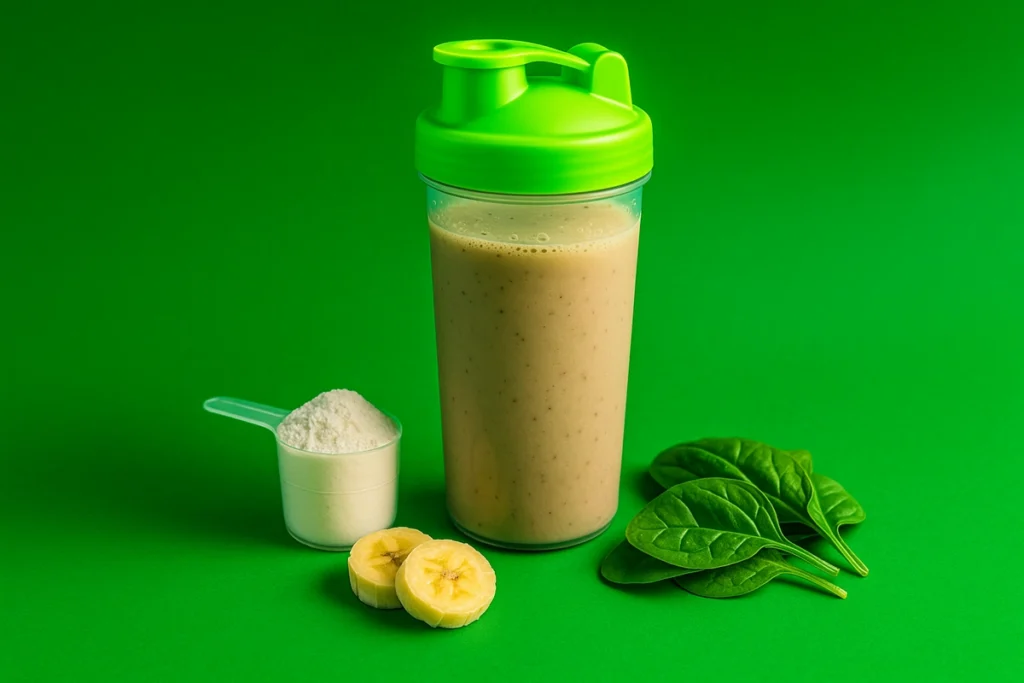
When your training volume drops, your approach to whey should shift slightly — not out of fear, but to make it work for you instead of against you.
- Think snack, not supplement. Treat whey as a small meal or purposeful snack — not an “extra” on top of your regular intake.
- Stick to one serving. For most people, that’s around 20–25 grams of protein, which is enough to trigger muscle protein synthesis without overloading calories.
- Keep the mix simple. I usually blend one scoop with water and half a banana, or toss a handful of spinach into unsweetened almond milk. Creamy, filling, and under 200 calories.
- Watch total calories. Your daily energy needs dip when you’re less active. Ignoring that and drinking the same high-cal shakes is where most people go wrong.
A Simple Shake Formula (Coach’s Tip)
My rule of thumb when training is on pause: if your shake needs a spoon, it’s probably a meal. Keep it drinkable, portioned, and purposeful. No 600‑calorie dessert smoothies disguised as “protein shakes.”
Using Whey for Weight Loss Without Exercise
Whey alone won’t melt fat — no single food will — but it can be a powerful tool inside a calorie deficit. Here’s why it works, and how to use it.

Take this 2-minute assessment & get a science-backed training, nutrition & supplement roadmap built for YOUR body.
🔬 12,000+ personalized roadmaps generated
It controls hunger.
Protein is the most satiating macronutrient. A mid-afternoon whey shake can cut cravings and make it far easier to skip the high-carb snacks that drive weight gain. And when it comes to body composition, a 2020 review in Nutrients confirmed that higher-protein diets support fat loss and help preserve lean muscle — a key advantage when you’re cutting calories without heavy training.
It protects muscle during a deficit.
When you cut calories without resistance training, your body often burns muscle along with fat. Keeping protein intake high helps preserve that lean tissue, which keeps your metabolism steadier.
Here’s a simple daily swap that works for my clients:
- Replace your usual 300+ calorie afternoon snack (chips, pastry, sugary latte) with a whey shake made from one scoop and water (~130–150 calories).
- That one swap alone can create a deficit of over 150 calories a day — enough to trend weight downward without feeling deprived.
Remember: whey supports weight loss only when it helps you stay in a caloric deficit. It’s a smart shortcut, not a free pass.
Curious how whey compares to EAAs? I break it all down in my guide on EAAs vs Protein Powder for muscle support.
How to Choose the Best Whey for Non‑Active Days
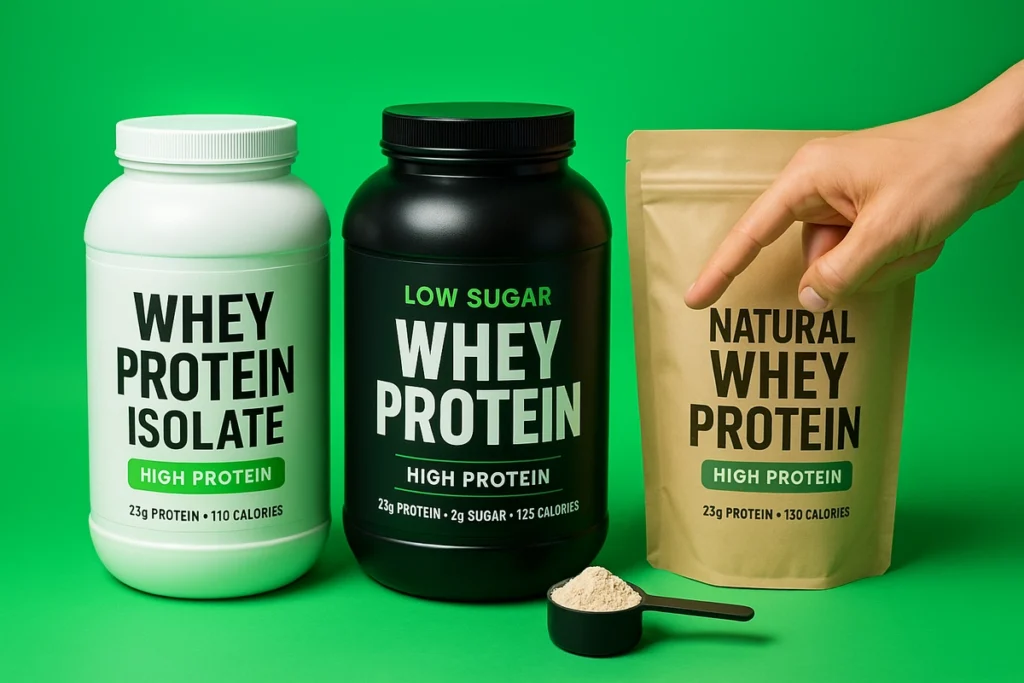
When you’re not training, small details add up fast. A shake that’s fine during a bulk can quietly tip you into a calorie surplus now.
Here’s what I look for — and tell my clients to look for — when activity is low:
- Whey isolate over concentrate if dairy bothers you. Isolate removes almost all the lactose, so it’s easier on digestion. If you’ve ever felt bloated or off after a shake, this swap usually fixes it.
- Low sugar, low fat. Less than 3 g of sugar and under 2 g of fat per serving is a good baseline. It keeps the drink light, digestible, and free of hidden calories that add up quickly when you’re moving less.
- Minimal ingredients. A short label with recognizable ingredients is always a good sign. You want milk protein, maybe a little sunflower lecithin, and a natural sweetener or unsweetened option — nothing more.
- No unnecessary fillers or “proprietary blends.” When my training volume drops, I stick to formulas where I know exactly what’s inside. Clean, simple, functional — no fairy dust promises on the tub.
You don’t need the most expensive brand on the shelf. Just a straightforward, honest powder that complements a reduced‑activity routine — not complicates it.
Final Verdict: Should You Take It or Not?

Yes — if it fills a gap.
If you struggle to hit your daily protein target through meals alone, whey is a practical, affordable way to support muscle maintenance, recovery, and overall health — even when you’re not working out.
Probably not — if you’re already covered.
If your diet is already high in protein and you’re largely inactive, adding whey likely just adds calories you don’t need. In that case, real food does the job just fine.
My Honest Take as a Fitness Coach
Whey is food, not magic. I’ve seen it help clients stay lean, preserve muscle during injury, and manage hunger on hectic days — but only when used intentionally. Lean on it as a tool, not a crutch.
So before you reach for the tub, ask yourself one question: Is this shake solving a real problem, or just adding noise to an already decent diet? Answer honestly, and the right choice is usually clear.
And remember: progress isn’t about perfection. It’s about making a few better decisions, one day at a time — even the small ones count.
Frequently Asked Questions (Whey Without Workouts)
Yes, absolutely. Whey is just a convenient protein source, not a gym-only supplement. It helps you hit your daily protein needs whether you train or not.
No, not on its own. Weight gain happens if you eat more calories than you burn. If a whey shake adds extra calories without reducing other foods, you could gain fat over time. Keep an eye on your overall intake.
Whey helps maintain muscle mass, supports skin, hair, and nails, keeps your immune system strong, and makes you feel full longer. It’s an easy, high-quality protein for daily nutrition.
One serving (about 20–25 grams of protein) is plenty. Use it to fill a gap in your diet, not to replace whole meals entirely. Don’t go over your body’s total daily protein needs.
Totally okay. Protein shakes aren’t reserved for athletes. They’re a practical option for busy people, older adults, or anyone who struggles to get enough protein from food alone.
It can be a helpful tool. By curbing hunger and reducing cravings, a low-calorie whey shake can make it easier to stick to a calorie deficit. Remember, weight loss still comes down to consuming fewer calories than you burn.
Your body uses the protein for repair, maintenance, and daily functions. You won’t magically build muscle, but you’ll help preserve what you have, support recovery, and stay satisfied between meals.
Go for a simple, low-sugar, low-fat whey isolate or concentrate with minimal ingredients. Unflavored or naturally flavored options help avoid hidden calories. Keep it clean and straightforward.
🩺 Disclaimer: This article is for informational purposes only and does not constitute medical advice. Consult your doctor before making dietary changes.

Leave a Reply