


You’re taking BCAAs to build muscle. Instead, you’re getting fatigue, stomach cramps, and broken sleep.
Sound familiar? You’re not alone—and no, it’s not in your head.
Overdoing BCAAs is one of the most common mistakes I see as a coach. And the worst part? Most guys don’t realize it until the side effects have already cost them weeks of progress.
In this guide, I’ll show you the 9 BCAA side effects you can’t ignore, the exact safe daily dosage, and why switching to EAAs might be the smartest move you make this year.
Let’s fix this—before your gains pay the price.
Table of contents
- Can You Overdose on BCAAs?
- What Happens When You Overdo BCAAs?
- 9 BCAA Side Effects: The Complete List
- What Research Says About Overusing BCAAs
- Who Should Avoid BCAA Supplements?
- BCAA vs EAA: Which One Should You Take?
- How Much BCAA Per Day Is Safe?
- How to Use BCAAs Smarter: Timing & Dosage
- My Experience: What Happened When I Took Too Many BCAAs
- Final Verdict: Are BCAAs Worth It?
- BCAA Side Effects & Dosage: FAQs
Can You Overdose on BCAAs?
Absolutely, yes. While BCAAs are popular for muscle recovery and workout performance, taking too much can backfire.
I’ve been there myself—thinking “more must be better”—but your body quickly proves otherwise.
If you’ve ever felt extra tired, had a weird stomach, or couldn’t sleep well after high BCAA intake, you’re not alone. These are real signs your body’s pushing back.
Learn more about the ideal BCAA dosage for athletes to avoid overdoing it.
BCAA Quick Reference
⚠️ clinicalWhat Happens When You Overdo BCAAs?

When I went overboard with 20–25 grams a day during a cutting phase, I expected better recovery.
Instead, I got nausea, fatigue, and broken sleep.
Common side effects include:
- Fatigue instead of energy
- Nausea or stomach discomfort
- Sleep disturbances
- Headaches or light-headedness
- Mood swings or increased cravings
- Possible insulin resistance over time
One of my clients, Diego from Spain, upped his BCAA intake hoping to speed up recovery.
Within two weeks, he was dealing with stomach cramps and sugar cravings he hadn’t had before.
If you’re wondering whether you should take BCAAs before or after a workout, timing matters more than quantity.
9 BCAA Side Effects: The Complete List
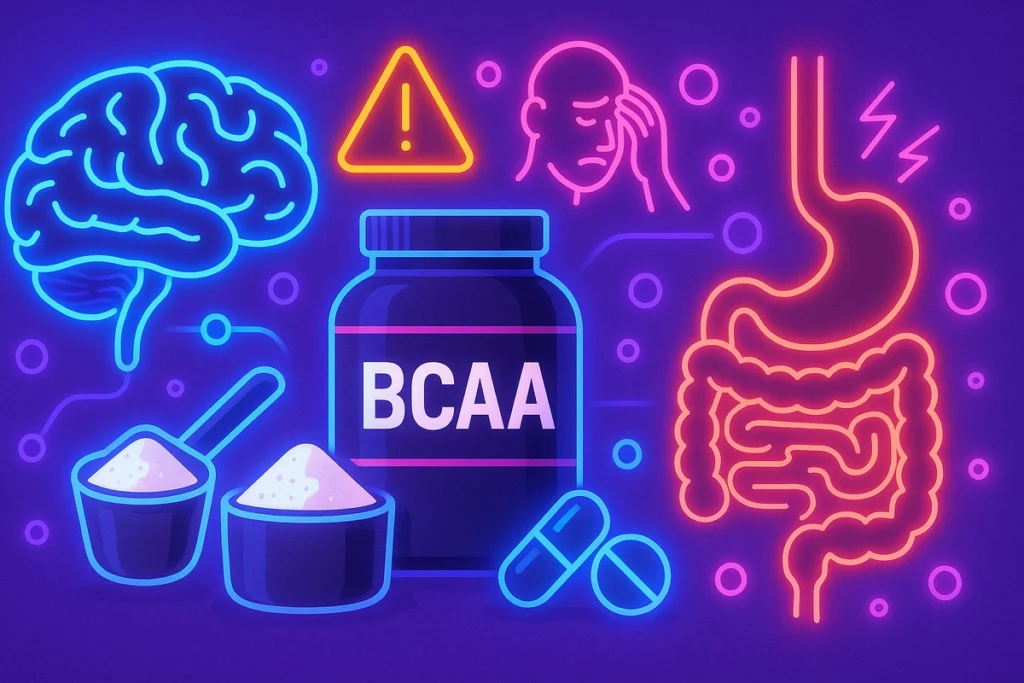
If you’re experiencing any of these after taking BCAAs, your body is telling you to dial it back:
Short-Term Side Effects (Hours to Days)
Side Effect | Why It Happens | What To Do |
|---|---|---|
Nausea & Stomach Cramps | High leucine irritates the GI tract; rapid amino acid absorption can overwhelm digestion | Reduce dose to 5g; take with food; switch to a slower-absorbing powder |
Fatigue (Instead of Energy) | Amino acid imbalance disrupts neurotransmitter production; tryptophan absorption is blocked | Lower dose; don’t use BCAAs as a “pre-workout” stimulant replacement |
Sleep Disturbances | Blocked tryptophan = less serotonin and melatonin production | Stop BCAAs 4-6 hours before bed; cap daily total at 10g |
Headaches / Light-Headedness | Amino acid transport competition affects electrolyte balance; potential blood sugar fluctuations | Hydrate more; reduce dose; consider EAAs instead |
Mood Swings / Irritability | Dopamine and serotonin pathways are disrupted by amino acid imbalance | Scale back; ensure adequate carb intake for tryptophan transport |
Long-Term Risks (Weeks to Months)
Side Effect | Why It Happens | What To Do |
|---|---|---|
Insulin Resistance | Chronic high leucine may interfere with insulin signaling (research from AJCN, 2019) | Cap intake at 10g/day; prioritize whole proteins |
Amino Acid Imbalance | BCAAs compete with other essential amino acids for absorption, especially tryptophan and tyrosine | Use BCAAs sparingly; consider switching to EAAs |
Digestive Issues | Overuse can alter gut microbiome and cause chronic discomfort | Take a 1-2 week break; reintroduce at lower dose |
Decreased Performance | Instead of helping recovery, you’re actually hindering it | Reduce dose; assess if you actually need BCAAs |
Red Flags: When to Stop Taking BCAAs
- Severe stomach pain or cramping
- Heart palpitations or chest tightness
- Extreme fatigue lasting more than 24 hours
- Difficulty breathing (rare allergy)
- Significant mood changes or depression
Note: If you experience any severe symptoms, discontinue use immediately and consult a healthcare professional.
If you’re unsure whether BCAAs are better than full protein sources, read BCAAs vs. protein powder or even this in-depth comparison of EAAs, BCAAs, and protein.
What Research Says About Overusing BCAAs
Let me break down what peer-reviewed research actually tells us:
1. How BCAAs Disrupt Neurotransmitters
High-dose BCAAs competitively block tryptophan and tyrosine from crossing the blood-brain barrier via the shared LNAA transporter (Fernstrom, 2005).
A 2023 meta-analysis confirms that doses >10g/day significantly reduce circulating tryptophan (effect size -3.907, p=0.018) and tyrosine (effect size -9.00, p=0.005) (Meta-analysis, 2023).
This directly limits serotonin and dopamine production—explaining the fatigue, sleep issues, and mood swings users report.
2. The Link Between BCAAs and Insulin Resistance
A 2019 RCT in the American Journal of Clinical Nutrition found that reducing dietary BCAAs improved glucose sensitivity by 24% and lowered insulin secretion by 28% in type 2 diabetics (Karusheva et al., 2019).
While another 2019 study found no acute impairment from supplementation, it confirmed that chronically elevated BCAAs remain a strong biomarker for insulin resistance and future diabetes risk (Woo et al., 2019). Chronic BCAA flooding may subtly undermine metabolic health over time.
3. Why BCAAs Ruin Your Sleep (The Tryptophan Connection)
Beyond the meta-analysis above, a foundational 2006 review details how BCAA ingestion consistently lowers brain tryptophan uptake, reducing central serotonin synthesis (Blomstrand, 2006).
Since tryptophan is the sole precursor for serotonin (mood) and melatonin (sleep), this competitive blockade directly links high-dose BCAA use to sleep disruption and mood instability (medium-to-high confidence evidence).
4. Whole Protein vs. BCAAs: What the Research Says
For active individuals meeting daily protein targets (1.4–2.0 g/kg body weight), the ISSN position stand concludes that isolated BCAAs offer no additional benefit over high-quality whole-food proteins (Campbell et al., 2007).
Whole proteins deliver all essential amino acids synergistically—avoiding the transport competition and metabolic imbalances caused by isolated BCAA flooding. Protein quality matters; BCAA supplements are largely redundant.
Key Takeaway: These side effects aren’t anecdotal—they’re backed by molecular biology and clinical data. Your body is an integrated system; isolating one nutrient class disrupts the delicate networks governing brain function, sleep, and metabolic health. Whole-food proteins remain the safer, more effective choice.
Who Should Avoid BCAA Supplements?
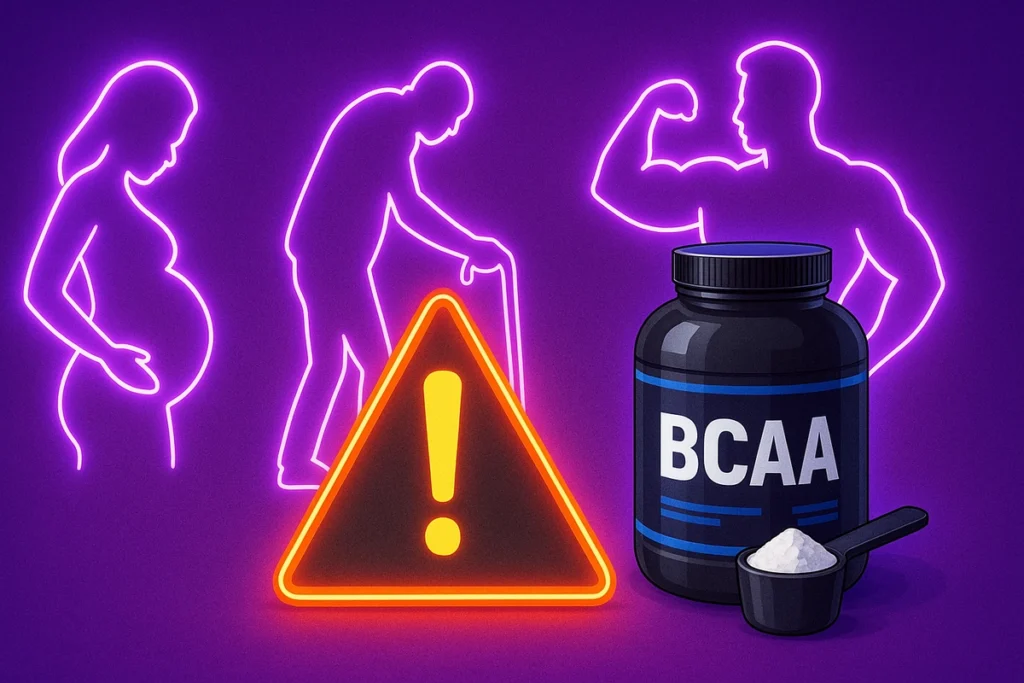
1. Kidney Disease or Impaired Function
- Why it matters: BCAAs contain nitrogen, which your kidneys must process and excrete as urea. High BCAA intake increases the nitrogen load on your kidneys. If your kidney function is compromised (eGFR below 60), this can accelerate damage.
- What to do: Consult a nephrologist before using any amino acid supplement. In most cases, whole food protein is safer and better regulated.
2. Prescribed Low-Protein Diets
- Why it matters: If you’re on a low-protein diet for medical reasons (like liver disease or kidney disease), BCAAs can actually disrupt the careful amino acid balance your doctor is trying to maintain.
- What to do: Only use BCAAs under direct medical supervision.
3. Low-Carb or Keto Dieters
- Why it matters: On a low-carb diet, your body relies on gluconeogenesis for blood sugar regulation. High BCAAs can disrupt this process and potentially spike blood sugar, kicking you out of ketosis.
- What to do: Use 5g maximum; monitor how your body responds. If you feel dizzy or weak (like my client Sarah did), switch to EAAs with electrolytes.
4. Pregnancy & Breastfeeding
- Why it matters: There simply isn’t enough research on high-dose amino acid supplementation during pregnancy or breastfeeding. Your developing baby’s amino acid balance is delicate and NOT something to experiment with.
- What to do: Focus on whole food protein from quality sources. Get your amino acids from diet, not supplements.
5. High-Protein Dieters (2.2g/kg+ Daily)
- Why it matters: If you’re eating 200g+ of protein daily from whole foods and protein shakes, your BCAA intake from diet alone is likely 30-40g. Adding more is completely pointless and could cause the imbalances I described.
- What to do: Stop supplementing BCAAs entirely. Your money is better spent elsewhere.
6. MAO-I Medications & Mood Disorders
- Why it matters: BCAAs affect neurotransmitter production (dopamine, serotonin, norepinephrine). If you’re on medications that affect these pathways, high BCAA intake can interfere.
- What to do: Talk to your prescribing doctor before using BCAAs.
7. Sugar Cravings: An Unexpected Side Effect
- Why it matters: BCAA supplementation has been shown to affect appetite-regulating hormones, sometimes increasing cravings for sweet foods (this happened with my client Diego). If you’re trying to control cravings, BCAAs might work against you.
- What to do: Use EAAs instead; they don’t seem to have the same effect on cravings.
Curious about BCAAs for fat loss? This guide on BCAAs for fasted cardio is a must-read.

Take this 2-minute assessment & get a science-backed training, nutrition & supplement roadmap built for YOUR body.
🔬 12,000+ personalized roadmaps generated
BCAA vs EAA: Which One Should You Take?
I mentioned earlier that I switched my client Sarah from BCAAs to EAAs with electrolytes. Here’s exactly why:
BCAA vs EAA: Key Differences
Feature | BCAAs (Branched-Chain Amino Acids) | EAAs (Essential Amino Acids) |
|---|---|---|
What’s in it | Only 3 aminos: Leucine, Isoleucine, Valine | All 9 essential aminos your body can’t make |
Action | Stimulates muscle protein synthesis (MPS) via leucine | Provides complete building blocks for muscle repair |
Competition | BCAAs compete with other aminos for absorption | Balanced formula prevents competition |
Neurotransmitter effect | Blocks tryptophan = affects sleep & mood | Contains tryptophan = supports serotonin & melatonin |
Recovery | Good for fasted training | Superior for full recovery |
When to use | Pre-workout (fasted) | Post-workout, anytime |
Why EAAs Win for Most People
- Complete Profile: EAAs contain all 9 essential amino acids your body needs. BCAAs are like having a hammer but no nails – you stimulate MPS but lack the raw materials to build muscle.
- No Competitive Inhibition: EAAs don’t cause the amino acid antagonism that BCAAs do. Your body absorbs them properly without blocking other nutrients.
- Sleep & Mood Benefits: Because EAAs contain tryptophan, they actually SUPPORT sleep quality rather than disrupting it. This is a game-changer for my clients who train late.
- More Bang For Your Buck: For the same price as BCAAs, EAAs give you a complete amino acid profile. You’re getting more value.
When BCAAs Still Make Sense
- You’re on a tight budget
- You ONLY need a pre-workout fasted training boost
- You’re already eating high-quality protein and just need a leucine spike
My Take: EAAs or BCAAs?
For 90% of people, EAAs are the smarter choice. They don’t cause the side effects BCAAs do, and they provide complete recovery support.
How Much BCAA Per Day Is Safe?

The research consensus is clear: 15 grams per day is the upper safe limit for most healthy adults.
But the better question is: how much do you actually NEED?
BCAA Dosage by Body Weight
Body Weight | Low Dose (Minimum) | Moderate Dose | High Dose (Avoid) |
|---|---|---|---|
60-70 kg (130-155 lbs) | 3-5g | 5-7g | Over 10g |
70-85 kg (155-185 lbs) | 4-6g | 6-8g | Over 12g |
85-100 kg (185-220 lbs) | 5-7g | 7-10g | Over 15g |
100+ kg (220+ lbs) | 6-8g | 8-12g | Over 18g |
When BCAAs Actually Help
- Fasted training: 5-7g pre-workout (to prevent muscle breakdown)
- Long endurance sessions: 5g during (to delay fatigue)
- Low-calorie diet: 5-8g strategically (but prefer EAAs)
- Vegan/vegetarian athletes: 5-10g if protein intake is inadequate
When You Can Skip BCAAs
- You eat 1.6-2.2g protein per kg of body weight daily
- You consume whey, casein, or a quality protein shake post-workout
- You’re eating whole food meals within 2 hours of training
- You’re on a bulking phase with adequate calories
My Experience: When I exceeded 15g daily (hitting 20-25g), my body rebelled. The nausea, fatigue, and sleep issues disappeared within 3 days of cutting back to 5-7g.
📌 You can also check this guide on BCAAs during intermittent fasting to better align with your training goals.
How to Use BCAAs Smarter: Timing & Dosage
Here’s how I recommend using BCAAs smartly:
- Fasted training? 5–7g pre-workout can help.
- Low-calorie diet? Use them strategically, not all day.
- Already eating 1.6–2.2g protein/kg? You likely don’t need BCAAs.
If you’re focused on muscle retention or cutting and training fasted, BCAAs can be helpful in small doses.
Otherwise, prioritize whole protein sources or a full-spectrum EAA.
If you’re training on rest days, here’s how to adjust:
Should you take BCAAs on rest days?
Women who train hard may also benefit from a tailored approach:
BCAAs for women in strength training
Also, don’t miss this one: Should you take BCAAs with or without food?
My Experience: What Happened When I Took Too Many BCAAs

During my own cut, I relied heavily on BCAAs thinking they’d help retain muscle while fasted.
What actually happened? I had less energy, worse sleep, and nagging nausea that didn’t make sense—until I cut back the BCAAs.
That’s when I learned: supplements are tools, not magic. Too much of a good thing can easily become a bad thing.
Since then, I’ve only used BCAAs sparingly and intentionally.
Want better absorption from your BCAA dose? Here’s a useful tip: how to mix BCAAs for best absorption.
Final Verdict: Are BCAAs Worth It?
If you’re using BCAAs as part of a smart, intentional plan—go for it.
But don’t fall for the “more is better” trap. I’ve done that. My clients have done that. It rarely ends well.
Be smart. Use BCAAs like a scalpel, not a hammer.
Your muscles grow from smart effort and smart recovery—not overdosing on any one supplement.
BCAA Side Effects & Dosage: FAQs
Yes. Exceeding 15 grams per day – especially without adequate protein intake – can lead to nausea, fatigue, sleep disturbances, and over time, amino acid imbalances and potential insulin resistance. Your body has limits, and “more is NOT better” with BCAAs.
For most people, anything over 15 grams per day is considered excessive. The optimal range is 5-10 grams, used strategically around workouts. If you’re eating adequate protein (1.6-2.2g per kg of body weight), you likely don’t need any BCAAs at all.
Common side effects include: nausea, stomach cramps, fatigue (instead of energy), sleep disturbances, headaches, mood swings, and increased sugar cravings. Long-term overuse may contribute to insulin resistance and amino acid imbalances.
If you already have kidney issues, high BCAA intake can strain your kidneys by increasing the nitrogen load they must process. For healthy individuals with normal kidney function, moderate BCAA use (under 15g/day) is generally considered safe. However, anyone with kidney disease should avoid BCAAs unless directed by a doctor.
Yes. BCAAs, particularly leucine, compete with tryptophan for absorption across the blood-brain barrier. Tryptophan is needed for serotonin and melatonin production. Taking BCAAs late in the day can disrupt sleep quality for many people.
Paradoxically, yes. While BCAAs are marketed for energy and performance, excessive intake can cause fatigue. This happens because BCAA overuse blocks tryptophan absorption, reducing serotonin production – your feel-good neurotransmitter that also regulates energy.
For most people, 10g is the upper end of the recommended range. If you split it into two 5g doses (e.g., pre-workout and post-workout), it’s typically fine. But taking 10g in one sitting, or daily over 10g without a specific need (like intense training), may cause side effects.
Timing matters more than quantity. For fasted training, take 5-7g pre-workout to prevent muscle breakdown. For regular training, post-workout with meals is better. But if you’re getting enough protein, you may not need BCAAs at all.
Yes, BCAAs are safe for women when used in appropriate doses (5-10g/day). However, women may be more sensitive to the sleep and mood effects of BCAAs due to hormonal fluctuations. A tailored approach works best – consider EAAs instead.
For weight loss while training fasted, 5-7g pre-workout is effective. This helps preserve muscle mass during a calorie deficit. But don’t exceed 10g daily, and consider switching to EAAs with electrolytes for better results and fewer side effects.

 Claim Your Free Assessment
Leave a Reply