


Struggling with the “BCAA before or after” question? You’re not alone. And getting it wrong can cost you muscle, slow recovery, and limit fat loss.
Whether you train fasted, push through a calorie deficit, or just want better performance, timing your BCAAs matters – but the right time depends on your goal.
I’m a certified fitness coach. I’ve tested both strategies on myself and dozens of clients. Here’s exactly what works best for muscle gain, fat loss, and faster recovery.
Quick Answer: Should You Take BCAAs Pre or Post Workout?
- Take BCAAs BEFORE if you train fasted, do cardio, or want to protect muscle during a cut.
- Take BCAAs AFTER if you can’t eat a meal soon after training and want to reduce next‑day soreness.
- Can you take both before and after? Yes – split dosing works for hard training or deep cuts.
Let’s clear up the confusion and help you get the most from every scoop.
Table of contents
- Quick Answer: Should You Take BCAAs Pre or Post Workout?
- Comparison: Pre‑Workout vs. Post‑Workout BCAAs
- Benefits of BCAAs Before a Workout
- Benefits of BCAAs After a Workout
- Best BCAA Timing for Fat Loss vs. Muscle Gain
- Does BCAA Before Cardio Help?
- Should You Take BCAAs Both Before and After?
- How BCAAs Work in Your Muscles
- Frequently Asked Questions
- Final Verdict: Choose Your BCAA Timing Based on Your Goal
Taking BCAAs? Don’t Let Bad Timing or Wrong Dosage Kill Your Progress.
I’ll map out exactly when and how much BCAAs you need — personalized to your full stack.
Show Me the Right BCAA Timing & Dosage →Comparison: Pre‑Workout vs. Post‑Workout BCAAs
Goal / Situation | Best Time | Why It Works |
|---|---|---|
Fasted training / morning cardio | Before | Prevents muscle breakdown when glycogen is low |
Calorie deficit / fat loss phase | Before | Preserves lean mass while maximizing fat burn |
Delayed post‑workout meal | After | Bridges the gap until you eat, speeding recovery |
Intense leg day (prone to soreness) | After | Reduces DOMS and helps you train harder next session |
Training twice a day | Both (split dose) | Maintains energy and muscle balance throughout the day |
Benefits of BCAAs Before a Workout
During my cutting phase, I trained fasted in the mornings. Taking BCAAs about 15–20 minutes before workouts gave me a noticeable energy boost and helped prevent muscle loss – especially during longer sessions.
One of my clients, Carlos, trained early mornings while intermittent fasting. After adding pre‑workout BCAAs, he felt less drained and told me his endurance improved significantly.
What Pre‑Workout BCAAs Can Do for You
- Reduce muscle breakdown during fasted or long workouts
- Delay central fatigue – stay sharper longer
- Improve mental focus for better mind‑muscle connection
- Keep you pushing longer without burning out early
If you train on an empty stomach, check out our full breakdown on BCAAs for fasted cardio and fat loss – it’s a game changer.
Some lifters also benefit from stacking BCAAs with other aminos for better synergy. Learn how to mix BCAAs for best absorption to maximize your results.
Benefits of BCAAs After a Workout
After intense leg days, I often couldn’t sit down to a full meal right away. Taking BCAAs post‑workout helped cut the soreness I’d normally feel the next day – a game changer for staying on track.

My client Marta started sipping BCAAs after her HIIT workouts during a cut. She noticed less DOMS and, surprisingly, felt strong enough to lift heavier in her next session.
How Post‑Workout BCAAs Aid Recovery
- Reduce delayed onset muscle soreness (DOMS) – wake up feeling less beat up
- Speed up recovery when meals are delayed – bridges the gap until you eat
- Support muscle preservation during calorie deficits – keeps hard‑earned muscle
Not sure if BCAAs are enough or if you should reach for a protein shake? Check out our guide on BCAA vs protein powder – what do you actually need? to make the right call.
Best BCAA Timing for Fat Loss vs. Muscle Gain
Here’s how I break it down for my clients:
For Fat Loss (Especially Fasted Training)
Take BCAAs before your workout – especially if you’re training fasted or in a calorie deficit. They help protect hard‑earned muscle while you maximize fat burn. For even smoother recovery, combine this approach with BCAAs on rest days.
For Muscle Gain (When You Already Eat Enough Protein)
If you’re bulking and already hitting your protein targets, BCAAs aren’t essential. That said, they can still help before or after workouts if your protein timing is off or you’re doing long, draining sessions.
Take Yuki, a vegan client of mine. She took BCAAs both pre‑ and post‑workout because her diet was naturally low in leucine. The extra amino support helped her maintain strength and size throughout her bulk.
Want to dial in exactly how much to take? Check out this full guide on BCAA dosage for athletes.
Does BCAA Before Cardio Help?
Yes – especially for fasted morning cardio.
Taking BCAAs before cardio helps preserve lean muscle while your body burns fat for fuel. The branched‑chain amino acids – particularly leucine – reduce muscle protein breakdown during both steady‑state and HIIT cardio.
💊 Dose: 5–10g, about 15 minutes before you start.
If you’re doing fasted cardio regularly, this small addition can make a big difference in maintaining your hard‑earned muscle.
Should You Take BCAAs Both Before and After?
In some cases, yes.
If you’re in a deep calorie deficit, training twice a day, or fasting for extended periods, split dosing BCAAs (both before and after) can help maintain steady energy and muscle balance throughout the day.
For most lifters, though, a single dose – either pre‑workout or post‑workout – is enough. I usually recommend taking them before training for better energy and muscle preservation.
Not sure if BCAA timing changes when you have food in your stomach? Check out this guide to taking BCAAs with or without food – we’ve got you covered.
How BCAAs Work in Your Muscles
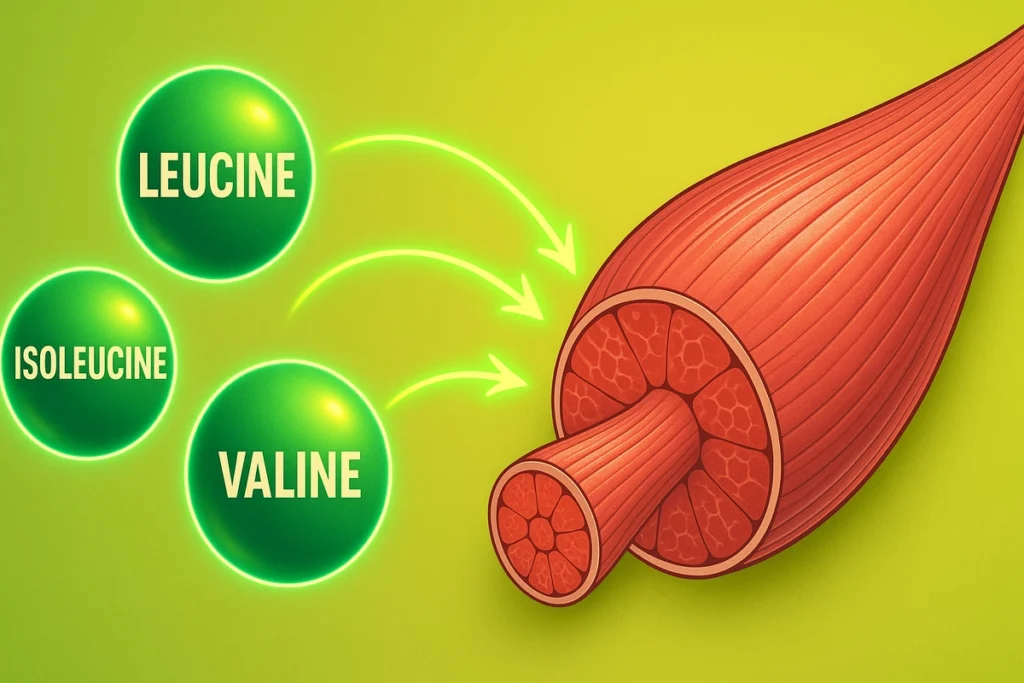
BCAAs (branched-chain amino acids) are three essential aminos: leucine, isoleucine, and valine.
Unlike other amino acids, BCAAs bypass the liver and go straight to your muscles. Once there, they help fuel your training, reduce soreness, and support muscle protein synthesis.
Leucine plays the lead role – it directly triggers the growth signals your body needs to build or maintain lean mass.
That’s why BCAAs are especially popular during fasted cardio, low‑protein diets, or for female lifters. For a deeper dive, check out our BCAAs for women and strength training guide.
If you want to understand the bigger picture, see how EAAs compare to BCAAs and protein – and for those practicing intermittent fasting, learn exactly how BCAAs work during intermittent fasting to time your doses perfectly.
Frequently Asked Questions
Take it before – especially if training fasted. This protects muscle while maximising fat burn.
If you already eat enough protein, timing matters less. But post‑workout BCAA helps if your meal is delayed.
Yes – if you can’t eat within 1–2 hours post‑training, BCAA after workout speeds recovery and reduces soreness.
You can take them together any time. BCAA timing doesn’t affect creatine. Many mix both in their pre‑ or post‑workout shake.
15–20 minutes before cardio or fasted training.
Final Verdict: Choose Your BCAA Timing Based on Your Goal

BCAAs aren’t a must for everyone, but they can be a powerful tool when used with purpose.
I’ve used them for years—especially during cuts, fasted training, or when I couldn’t eat right away after training.
My clients have also seen great results. James, for example, did fasted cardio 4 days a week and found his endurance and recovery improved with BCAAs taken before workouts.
So here’s my advice:
- If you train fasted or in a deficit: Take BCAAs before training.
- If you can’t eat soon after your session: Take them after.
- If you’re training hard and want to cover all bases, consider split dosing—especially during deep cuts.
Want to know how BCAAs compare to EAAs for your workouts? We break it all down in this detailed comparison.
Remember: it’s not just about when you take supplements—it’s about matching them with your goal. That’s how you train smart and recover stronger.

 Maximize Results
Leave a Reply