

Looking to maximize muscle growth while you sleep? Your last meal of the day could be the game-changer.
When it comes to slow-digesting protein, two options dominate the conversation: casein protein powder and cottage cheese.
Both provide a steady drip of amino acids overnight, helping you build lean mass and prevent muscle breakdown. But which one truly fuels better recovery, deeper sleep, and real fat loss?
As a certified fitness coach who’s tested both for years—on myself and hundreds of clients—I’ll break it down for you. No fluff. No supplement bias. Just real talk, real results.
⚡ The Fast Verdict: 6 Scenarios, 1 Clear Winner
If your goal is muscle recovery and overnight fat loss, both are excellent choices. But the winner depends entirely on your lifestyle, digestion, and fitness phase.
Scenario | Choose This |
|---|---|
Strict cutting / low calories | Casein Protein Powder |
Bulking or maintaining | Cottage Cheese |
You hate supplements | Cottage Cheese |
You’re always on the go | Casein Protein Powder |
You struggle to sleep | Cottage Cheese |
You want the best of both | Combine Them |
For pure convenience and macro precision, go casein. For a filling, natural option that also helps you sleep, choose cottage cheese. You can’t go wrong either way—consistency beats perfection.

Table of contents
- Nutrient Breakdown: Casein Protein Powder vs Cottage Cheese
- Cottage Cheese vs Casein Protein Powder: Head-to-Head
- How to Use Nighttime Protein for Maximum Recovery
- Alternatives to Casein Protein Powder
- Casein Protein Powder: Pros and Cons
- My Recommendation: Should You Eat Cottage Cheese Before Bed or Take Casein?
- Final Verdict: The Best Night Protein for Muscle Growth and Sleep
- FAQs: Cottage Cheese vs Casein Protein for Sleep & Recovery
Nutrient Breakdown: Casein Protein Powder vs Cottage Cheese
Feature | Casein Protein Powder | Cottage Cheese (Low Fat) |
Primary Goal | Best for Cutting | Best for Bulking/Satiety |
Protein per Serving | 24–26g (per scoop) | 10–12g (per 100g) |
Calories | ~120 | ~80–90 |
Carbs / Fat | Minimal (1–2g / 0.5g) | Moderate (2–4g / 2–4g) |
Digestion Type | Slow Release | Natural Slow Release |
Key “Extras” | Zero prep, portable | Calcium & Tryptophan for sleep |
🚀 Pro tip: When I’m in a lean bulk phase, I combine 1 scoop of casein with 100g of cottage cheese, a little cocoa, and stevia.
It turns into a delicious protein pudding. Luca, one of my clients, used this to boost his intake to 180g of protein daily without extra hunger.
This combo gives the best of both worlds—digestive ease, satisfaction, and solid gains.
Cottage Cheese vs Casein Protein Powder: Head-to-Head
While both are powerhouse sources of slow-digesting protein, choosing between cottage cheese vs. protein powder depends on whether you prioritize convenience or whole-food nutrition.
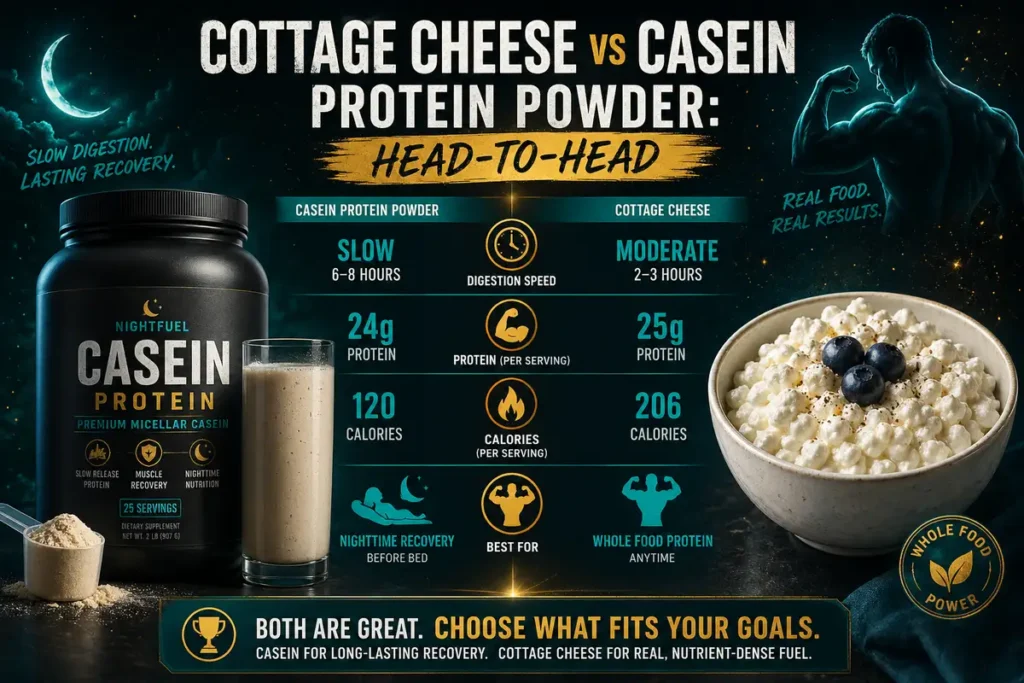
Below is the direct breakdown of how they compare across the most important categories for athletes.
1. Digestion Speed & Muscle Recovery
- Casein Powder: Being a processed supplement, it offers a very controlled, “slow and steady” drip of amino acids. It is pure casein, making it the gold standard for preventing muscle breakdown (catabolism) over 7–9 hours of sleep.
- Cottage Cheese: This is a slow‑digesting dairy protein that contains natural casein. Because it is a whole food, it may take even longer for some to digest, providing a sustained release of nutrients.
2. Satiety vs. Precision (Cutting vs. Bulking)
- Casein Powder: Best for strict cutting plans. With ~120 calories and 24–26g of protein per scoop, it allows you to hit your protein targets with almost zero fat or carbs.
- Cottage Cheese: Much more satisfying and filling. If you struggle with nighttime hunger, cottage cheese acts as a “real meal” that keeps you full longer than a liquid shake.
3. Sleep Quality & Micronutrients
- Casein Powder: Primarily focused on macronutrients; usually fortified with calcium but lacks the complex micronutrient profile of whole food.
- Cottage Cheese: A natural winner for sleep health. It is packed with tryptophan, an amino acid that supports the production of serotonin and melatonin, potentially helping you fall asleep faster.
4. Convenience & Lifestyle
- Casein Powder: Wins on portability and prep. It requires no refrigeration and zero cooking, making it perfect for busy professionals or late-night trainers.
- Cottage Cheese: Requires refrigeration and has a shorter shelf life. It also contains more sodium and carbs, which might not fit into very strict, low-sodium macro plans.
Everything You Need to Know About Cottage Cheese Before Bed
Cottage cheese isn’t just a diet food from the ’80s. It’s one of the most effective whole-food sources of slow-digesting casein protein you can eat before sleep.
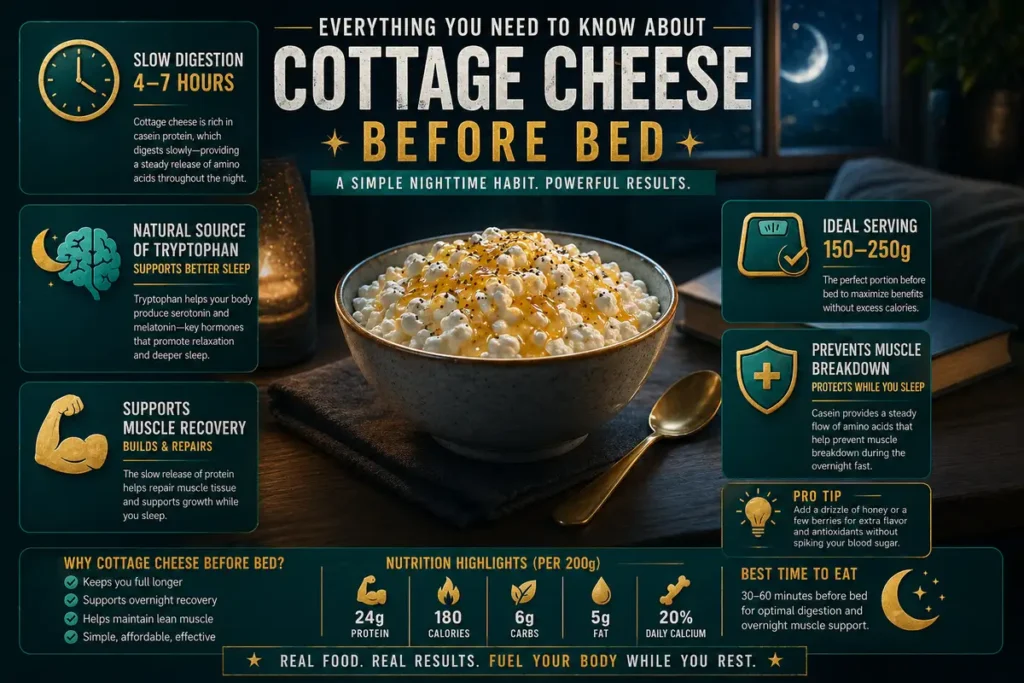
Below, I answer every major question about cottage cheese as a pre-bed protein — from casein content and digestion time to its unique sleep-enhancing benefits.
How Much Casein Is Actually in Cottage Cheese?
Cottage cheese is roughly 80% casein protein by content. That means:
Serving Size | Total Protein | Approx. Casein |
|---|---|---|
100g (standard portion) | 10–12g | 8–10g |
200g (typical pre-bed serving) | 20–24g | 16–20g |
250g (larger portion) | 25–30g | 20–24g |
The remaining ~20% is whey protein, which provides a small initial amino acid spike before the casein takes over for the long haul. For a natural, unprocessed food, that’s an ideal ratio for overnight muscle preservation.
Key takeaway: A 200g bowl of cottage cheese delivers roughly the same slow-release casein dose as one scoop of casein powder — but with added vitamins and minerals.
Cottage Cheese Digestion Time: How Long Does It Take?
Cottage cheese digests slowly due to its high casein content. Once eaten, casein forms a gel-like clot in your stomach, releasing amino acids gradually.
- Digestion window: 4–7 hours
- Peak amino acid release: 2–4 hours after eating
- Total coverage: Overlaps perfectly with a typical 7–9 hour sleep cycle
This makes cottage cheese ideal before bed. It bridges the overnight fasting gap, drip-feeding your muscles while you rest.
Benefits of Cottage Cheese Before Bed for Muscle & Sleep
Eating cottage cheese before bed offers a unique combination of muscle-building and sleep-enhancing benefits:

Benefit | What It Does |
|---|---|
Prevents muscle breakdown | Slow-release casein protects muscles during the overnight fast |
Supports lean muscle growth | Sustained amino acid delivery fuels repair and recovery |
High in tryptophan | Precursor to serotonin and melatonin — helps regulate sleep |
Contains magnesium | Relaxes muscles and reduces nighttime restlessness |
Highly satiating | Keeps you full, curbing late-night cravings without excess calories |
Rich in calcium | Supports bone health and may aid fat metabolism |
Does Cottage Cheese Help You Sleep? Yes, Here’s Why
Yes. Cottage cheese contains two key sleep-supporting nutrients:
- Tryptophan — An essential amino acid that your body converts into serotonin and then melatonin, the hormone that controls your sleep-wake cycle.
- Magnesium — A mineral known to promote muscle relaxation, reduce stress, and improve sleep quality, especially for those prone to waking during the night.
While it’s not a sedative, a serving of cottage cheese 30–60 minutes before bed provides the raw building blocks for deeper, more restorative rest — without the sugar crash that comes from carb-heavy nighttime snacks.
Cottage Cheese Before Bed: Benefits and Drawbacks
No food is perfect. Here’s the honest breakdown:
✅ Benefits:
- Natural source of slow-digesting casein
- Packed with calcium, tryptophan, and magnesium
- Very satisfying — feels like a real meal
- No artificial ingredients or sweeteners
- Widely available and affordable
❌ Drawbacks:
- Higher in sodium than supplements (check labels for low-sodium versions)
- Contains some carbs and fat — less precise for strict keto or cutting macros
- Requires refrigeration and has a shorter shelf life
- Not suitable for those with dairy allergies (lactose-free options exist)
Why Cottage Cheese Is the Ultimate Slow-Release Protein Cheese
Unlike most dairy products, cottage cheese is uniquely rich in casein — roughly 80% of its total protein. When digested, this casein clots in the stomach, creating a slow, steady release of amino acids into your bloodstream over several hours.
🏆 No other whole food replicates this effect as effectively:
- Milk — Contains casein but is liquid and digests faster
- Greek yogurt — Strains away some whey but remains faster-digesting overall
- Hard cheeses — High in casein but also high in fat and calories — less practical before bed
Cottage cheese sits in the sweet spot: high casein, moderate calories, easy to eat, and packed with sleep-supporting micronutrients. That’s why it remains the gold standard slow-release protein cheese for athletes who prefer whole foods over supplements.
⏭️ Now that you know what cottage cheese can do, let’s cover exactly how to use nighttime protein — whether from whole food or powder — for maximum overnight recovery.
How to Use Nighttime Protein for Maximum Recovery

You already know that pre-bed protein is crucial. But knowing exactly how much to take, why your body needs it, and how to make it work harder for you is where the real results begin.
This section covers the precise dosage, the science of overnight repair, and the unique sleep-muscle connection that makes cottage cheese a standout choice.
How Much Casein Before Bed? The Ideal Protein Dose
Aim for 25–40 grams of slow-digesting protein before bed, depending on your body size, training intensity, and overall daily intake.
For most people, 30 grams is the sweet spot—enough to fuel overnight muscle repair without causing digestive discomfort or excess calories.
Here’s what that looks like in practice:
Protein Source | Amount for ~30g Protein |
|---|---|
Casein Protein Powder | 1 slightly heaped scoop |
Low-Fat Cottage Cheese | 250–300g |
Cottage Cheese + Casein Combo | 100g cottage cheese + 1 scoop casein |
Coach’s note: Start at the lower end if you’re new to pre-bed eating. Too much protein too close to sleep can leave you feeling bloated or restless. Let your digestion guide you.
Why Nighttime Protein Matters: Stop Muscle Breakdown While You Sleep

When you sleep, your body enters a natural fasting state that can last 7–9 hours.
Without incoming nutrients, your muscles risk sliding into a catabolic state—breaking down hard-earned tissue for energy. That’s the exact opposite of what you want after a tough training day.
A slow-digesting protein source like casein or cottage cheese creates a “steady drip” of amino acids throughout the night.
Think of it as an insurance policy for your gains—keeping your body in muscle-building mode while you rest.
✅ Key benefits of pre-bed protein:
- Prevents overnight muscle breakdown (catabolism)
- Sustains muscle protein synthesis for hours
- Improves net protein balance
- Supports next-day recovery and performance
You can also check out how casein fits into intermittent fasting if you’re using time-restricted eating windows.
Cottage Cheese Protein for Sleep: More Than Just Muscle Repair
Cottage cheese isn’t just a protein source—it’s a natural sleep aid disguised as a bedtime snack. Unlike most supplements, it brings a unique combination of recovery + rest benefits to the table.
Sleep-Enhancing Nutrient | Found in Cottage Cheese? | What It Does |
|---|---|---|
Tryptophan | Yes | Precursor to serotonin and melatonin—helps you fall asleep faster and stay asleep longer |
Magnesium | Yes | Relaxes muscles, calms the nervous system, reduces nighttime restlessness |
Calcium | Yes | Supports tryptophan-to-melatonin conversion |
Slow-Digesting Casein | Yes (~80% of protein) | Prevents blood sugar dips that can trigger 3 AM wake-ups |
If you struggle with “night-waking” or take a long time to drift off, swapping your supplement shake for a bowl of cottage cheese could be the simplest fix you haven’t tried yet.
Why Do Bodybuilders Eat Cottage Cheese Before Bed?
Walk into any serious lifter’s kitchen at 10 PM, and you’ll likely find a tub of cottage cheese in the fridge. It’s been a bodybuilding staple for decades—and the reason is pure physiology.
3️⃣ Reasons bodybuilders swear by it:
- Slow-release casein dominance – Roughly 80% of the protein in cottage cheese is casein. That means hours of steady amino acid delivery, not a quick spike and crash.
- Overnight anti-catabolism – During a cut or intense training block, muscle preservation is everything. Cottage cheese acts as a natural shield, minimizing breakdown during the longest fasting window of the day.
- Satiety without the bloat – It’s a real food. It fills you up, crushes late-night cravings, and doesn’t leave you feeling heavy or gassy—unlike some protein shakes that can cause digestive drama.
Other slow-digesting proteins bodybuilders rely on before bed:
- Greek yogurt
- Whole milk
- Casein protein powder
- Low-fat cheese sticks
The common thread? They all deliver a prolonged release of amino acids—exactly what your muscles need while you recharge.
Alternatives to Casein Protein Powder
Not everyone wants to rely on supplements—and you don’t have to.
If you’re looking for whole-food sources that deliver the same slow-digesting, overnight muscle support as casein powder, you have several excellent options.
Below are the best natural substitutes, ranked for effectiveness and convenience.
What Can I Eat Instead of Casein Protein? Top Natural Substitutes
If you prefer to skip the powder, these foods provide the slow-release amino acids your muscles need while you sleep.
Food | Casein Content | Protein (per serving) | Why It Works |
|---|---|---|---|
Cottage Cheese | ~80% casein | 10–12g per 100g | The gold standard. Natural casein plus tryptophan for sleep. |
Greek Yogurt | Moderate (strained) | 15–18g per 170g | Thicker than regular yogurt. Contains both casein and whey. |
Milk (Cow’s) | ~80% casein | 8g per cup | Simple, accessible. A natural whey-casein blend. |
Casein Protein Powder | 100% casein | 24–26g per scoop | The most concentrated option. Ideal for strict macros. |
Lactose-Free Cottage Cheese | ~80% casein | 10–12g per 100g | Same slow-release benefits without the bloating. |
Lactose-Free Casein Isolate | ~100% casein | 24–26g per scoop | Pure casein. Virtually zero lactose. Easy on digestion. |
Cottage Cheese: The #1 Casein Protein Food Substitute
If you can only pick one whole-food alternative, make it cottage cheese.
It’s roughly 80% casein by protein content, meaning it clots in your stomach and digests slowly—just like the powder.
But unlike a supplement, cottage cheese also delivers calcium, magnesium, and natural tryptophan, which supports serotonin and melatonin production for deeper, more restorative sleep.
For athletes who prefer food over powders, no other option comes close.
More Casein-Rich Foods for Slow-Release Protein
Beyond cottage cheese, these whole foods also pack a casein punch:
- Greek Yogurt (plain, unsweetened): A strained dairy product with a higher casein-to-whey ratio than regular yogurt. Great with berries or nuts.
- Milk: A classic nighttime drink. One glass provides a natural blend of casein and whey—simple and effective.
- Skyr: An Icelandic dairy product similar to Greek yogurt but even thicker and higher in protein. Excellent slow-digesting option.
- Kefir: A fermented milk drink. Slightly thinner but still contains casein. Bonus: probiotics for gut health.
Foods with Casein Protein Before Bed: A Complete List
Looking for a quick, scannable list of bedtime-friendly casein foods? Here it is:
Best Casein Foods Before Bed | Key Benefit |
|---|---|
Cottage Cheese (low-fat) | Highest natural casein + sleep-supporting tryptophan |
Casein Protein Shake | Fastest prep, precise macros |
Greek Yogurt Bowl | Creamy, filling, customisable |
Warm Milk | Classic, soothing, natural whey-casein mix |
Skyr or Quark | Ultra-thick, high-protein, low-fat |
Casein Pudding (homemade) | Mix powder + cottage cheese or milk for a dessert-like meal |
🚀 Pro tip: Combine 1 scoop of casein with 150g of cottage cheese for a high-protein pudding that covers all bases—convenience, whole-food nutrition, and serious satiety.
Dairy vs Plant-Based Cottage Cheese for Muscle Recovery
With the rise of plant-based eating, you might wonder: can vegan “cottage cheese” match the real thing for overnight recovery?
The short answer is no.
- Dairy cottage cheese naturally contains casein—the slow-digesting protein that prevents muscle breakdown for 7+ hours. It’s uniquely suited for pre-bed recovery because of its gelling effect in the stomach, which creates a steady release of amino acids.
- Plant-based cottage cheese alternatives (made from soy, almond, coconut, or cashew) do not contain casein. While some may be fortified with pea or soy protein, they digest differently and do not replicate the same prolonged amino acid drip.
Feature | Dairy Cottage Cheese | Plant-Based “Cottage Cheese” |
|---|---|---|
Contains Casein? | Yes (~80% of protein) | No |
Slow-Release Effect? | Yes, clots in stomach | No, digests faster |
Tryptophan for Sleep? | Yes, naturally present | Minimal or absent |
Best For | Overnight muscle recovery | General daytime snacking |
For overnight muscle repair and sleep support, dairy cottage cheese is the clear winner.
If you’re fully plant-based, look for a pea-rice protein blend with added sleep-supporting nutrients, and manage expectations—it won’t mimic casein’s drip-feed effect exactly.
Casein Protein Powder: Pros and Cons
Casein protein is a slow-digesting milk-based supplement. One scoop gives you 24–26g of protein with almost no fat or carbs.
🤔 Why I use it: When I’m cutting or training late at night, casein helps me hit my numbers without cooking or cleaning.
In fact, during a six-week cut, I dropped 3.2 kg and retained my muscle by relying on a clean casein supplement before bed.
Pros:
- Slow and steady digestion
- High protein with minimal calories
- No prep required
Cons:
- Some people get bloated (check side effects guide)
- Texture can be clumpy if mixed wrong
- Less satisfying than whole food
If mixing is a struggle, this guide on mixing casein without lumps can help.
One of my clients, James, is a busy dad who doesn’t have time for evening meals. He uses one scoop of casein every night before bed and has seen great results.
If you’re wondering how it compares to other proteins, check this casein vs whey isolate comparison to see which suits your needs.
My Recommendation: Should You Eat Cottage Cheese Before Bed or Take Casein?
I’ve tested both options on myself and my clients over years of coaching.
During cutting phases, casein gives me the precision I need. It’s especially useful on low-calorie days when I want to preserve lean mass. (See more on casein for cutting vs bulking here.)
But when I want a better sleep, feel fuller, and eat more naturally, cottage cheese wins.
Luca, for example, was struggling to stay full at night. We added a bedtime combo of casein + cottage cheese. By week two, he was recovering better and feeling satisfied.
Also, for those building lean muscle, I cover ideal casein dosage and casein’s benefits for lean mass in detail.
Final Verdict: The Best Night Protein for Muscle Growth and Sleep
🧋 Choose Casein If:
- You need fast, no-prep convenience
- You’re on a strict cutting plan
- You’re comfortable with supplements
🧀 Choose Cottage Cheese If:
- You prefer whole food
- You’re bulking or maintaining
- You want something filling and natural
Honestly? They both work great. I recommend trying each one for a week and see how your body responds.
Sometimes I use casein for 3–4 nights straight when cutting. Then switch to cottage cheese during maintenance or bulking. Both help if used consistently.
Still unsure which suits your digestion? This casein digestion time guide might help, or check casein for lactose intolerance if dairy is a concern.
FAQs: Cottage Cheese vs Casein Protein for Sleep & Recovery
Yes. Cottage cheese is the best natural substitute for casein powder because roughly 80% of its protein is casein. It provides the same slow-digesting, overnight muscle support in a whole-food form—plus added calcium and tryptophan for sleep.
Cottage cheese contains approximately 8–10 grams of casein per 100g serving (out of 10–12g total protein). A typical 200g bowl before bed delivers 16–20 grams of pure casein—enough for solid overnight recovery.
Yes. Cottage cheese is one of the richest natural sources of casein protein. About 80% of its protein content is casein, with the remaining 20% being whey.
Yes. Cottage cheese contains mostly casein protein. This is what makes it a slow-digesting food, ideal for preventing muscle breakdown during the 7–9 hour overnight fast.
Cottage cheese digests slowly over 4–7 hours due to its high casein content. Casein forms a gel in the stomach, releasing amino acids gradually—perfect for sustained muscle repair while you sleep.
Yes. Cottage cheese contains tryptophan, an amino acid that helps produce serotonin and melatonin—the hormones responsible for deep, restful sleep. It also provides magnesium, which supports muscle relaxation.
Bodybuilders eat cottage cheese before bed because its high casein protein content provides a slow, steady release of amino acids overnight. This prevents muscle catabolism (breakdown) and supports recovery during the longest fasting period of the day.
Aim for 150–250g of low-fat cottage cheese before bed, providing 15–30g of protein. Adjust based on your body weight and daily protein goals. Too little won’t sustain recovery; too much may cause bloating and disrupt sleep.
Shoot for 25–40 grams of protein before bed, regardless of source. That equals approximately 1–1.5 scoops of casein powder or 200–400g of cottage cheese. This range supports muscle repair without overloading digestion.
Yes—and it works exceptionally well. Mix 1 scoop of casein powder with 100g of cottage cheese to create a high-protein pudding. It delivers both precision and satiety, making it ideal for lean bulking or anyone struggling with nighttime hunger.
The best whole-food alternatives to casein powder are cottage cheese, Greek yogurt, milk, skyr, and quark. All contain significant casein and provide slow-release amino acids. Cottage cheese is the closest natural match.
Casein powder is better for strict fat loss because it delivers 24–26g of protein with minimal calories, fat, and carbs. Cottage cheese is more filling and helps curb nighttime cravings—useful for long-term diet adherence—but contains slightly more calories and carbs per gram of protein.
No. Cottage cheese is low in whey. Approximately 80% of its protein is casein and only 20% is whey, making it a slow-digesting food rather than a fast-acting one.
Cottage cheese doesn’t directly cause drowsiness, but its tryptophan content supports serotonin and melatonin production, which can help you fall asleep faster and improve sleep quality.
Both are good, but cottage cheese is better for overnight recovery. It has a higher casein-to-whey ratio than Greek yogurt, meaning it digests more slowly and provides longer-lasting amino acid release while you sleep.
Yes. Casein in the morning is an underrated strategy for busy individuals who skip breakfast or need prolonged fullness. Its slow release keeps you satiated for hours and provides a steady amino acid supply until your next meal.
Choose lactose-free cottage cheese or a pure casein isolate powder. Both provide the same slow-digesting benefits without the bloating or digestive discomfort associated with lactose.
Taking casein protein before bed supports overnight muscle repair, reduces muscle breakdown, boosts metabolism slightly through protein-induced thermogenesis, and helps hit daily protein targets with minimal calories.
Eating cottage cheese before bed supports muscle recovery, improves sleep quality (thanks to tryptophan and magnesium), provides calcium for bone health, and keeps you full throughout the night—helping prevent waking up hungry.
The casein in cottage cheese is structurally the same as casein powder—both are derived from milk. The difference is that powder is isolated and concentrated, while cottage cheese delivers casein in a whole-food matrix with additional micronutrients.
✨ Summary: At a Glance
Question | Quick Answer |
|---|---|
Best natural casein source? | Cottage cheese (~80% casein) |
How much casein in 100g cottage cheese? | ~8–10g |
Digestion time? | 4–7 hours (slow release) |
Helps sleep? | Yes—tryptophan + magnesium |
How much cottage cheese before bed? | 150–250g (15–30g protein) |
Best for fat loss? | Casein powder (fewer calories) |
Best for satiety? | Cottage cheese (whole-food fullness) |
Can I mix both? | Yes—creates a perfect protein pudding |
Leave a Reply