


Struggling to hold onto lean muscle – especially while cutting or overnight?
You’re not alone. Thousands of lifters ask the same question: Does casein protein actually build lean muscle, or is it just slow‑digesting hype?
With so many protein options, it’s easy to feel stuck.
As a certified fitness coach, I’ve tested casein on myself and hundreds of clients. The results? Casein works.
✅ The 7 Proven Ways Casein Builds Lean Muscle:
- Boosts overnight muscle protein synthesis
While you sleep, casein feeds muscles for hours. - Preserves lean mass during cutting
Reduces muscle breakdown in a calorie deficit. - Keeps you full longer
Helps control hunger without losing muscle. - Provides steady amino acids
No spikes, just sustained repair. - Reduces next‑day soreness
Faster recovery between workouts. - Works synergistically with whey
Whey post‑workout, casein before bed. - Improves muscle retention during fasting
Ideal for intermittent fasting or long gaps between meals.
In this 2026 guide, you’ll also learn exact dosage, best timing, side effects, and how casein compares to whey.
Ready to see how each of these 7 ways can transform your lean muscle gains? Let’s dive in.
Table of contents
- Quick Answer: Yes – Highly Effective for Lean Muscle
- What Is Casein Protein? (And How It Works)
- How Casein Supports Lean Muscle Growth
- Casein vs. Whey: Which Is Better for Lean Muscle?
- How Much Casein Should You Take Per Day?
- Best Times to Take Casein Protein
- How to Use Casein for Best Results
- Potential Drawbacks of Casein (What to Watch For)
- Frequently Asked Questions
- Conclusion: Should You Add Casein to Your Routine?
Quick Answer: Yes – Highly Effective for Lean Muscle
Casein protein is highly effective for building lean muscle.
I’ve seen it firsthand with my clients and in my own training: casein supports muscle growth, reduces soreness, and speeds recovery. But it shines most when used correctly – as part of a smart, balanced supplement routine.
📌 Casein isn’t magic. But when you apply the 7 proven ways above, it becomes a powerful tool for lean muscle – especially overnight and during cutting phases.
Ready to understand why casein works differently than whey? Let’s break it down.
⚡ More protein ≠ more muscle
The right dose at the right time matters more than the total amount.
Optimize My Protein Intake FreeWhat Is Casein Protein? (And How It Works)
Casein is a slow‑digesting dairy protein that releases amino acids steadily over 4–7 hours – making it ideal for muscle repair, especially during sleep.
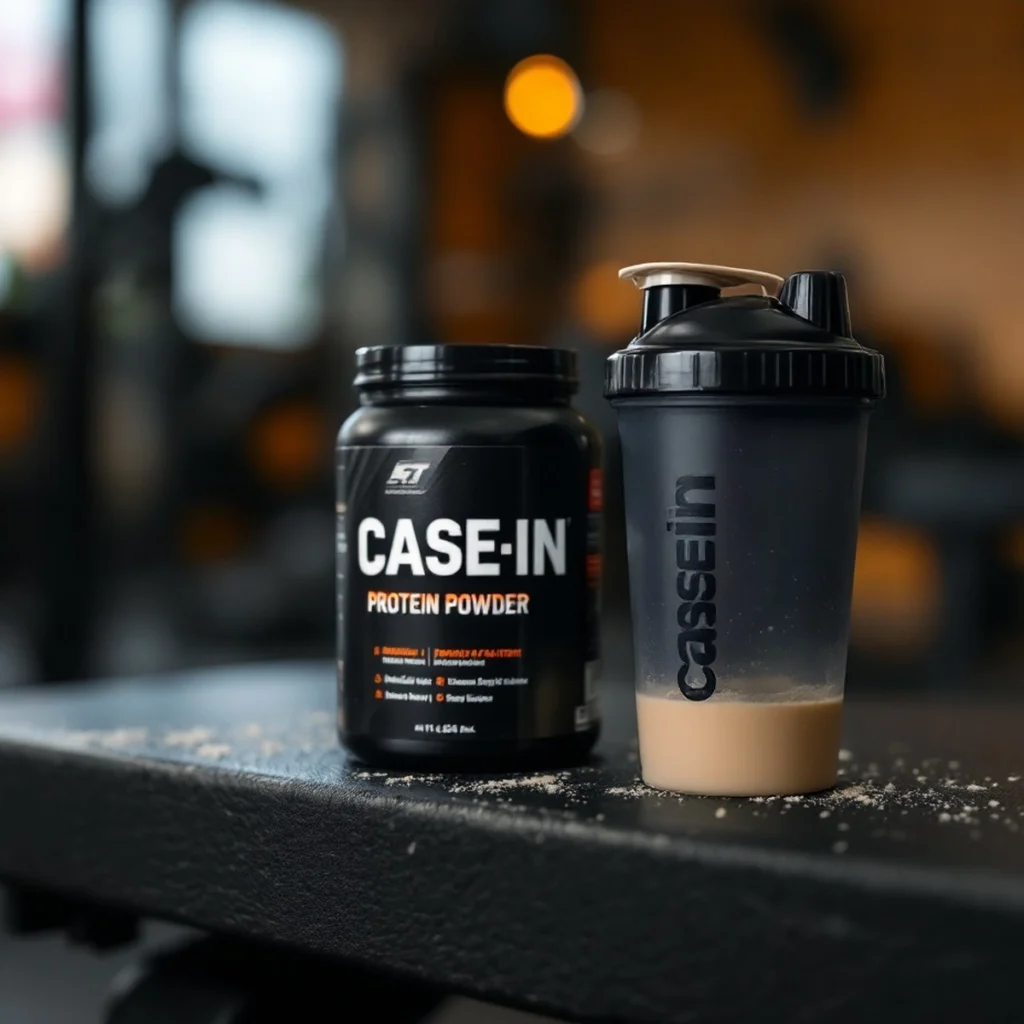
Unlike fast‑absorbing proteins (like whey), casein forms a gel‑like substance in your stomach. This delays digestion and creates a sustained delivery of muscle‑building amino acids into your bloodstream.
Why this matters for lean muscle:
- Prevents muscle breakdown during long gaps without food (e.g., overnight)
- Keeps you feeling full longer – helpful during cutting phases
- Provides a steady recovery signal, not just a quick spike
Real‑world example: Lucas, a trainer from Brazil, credits his nightly casein “pre‑bed shake” for better recovery and less muscle soreness between hard training days.
For a deeper look at digestion rates and benefits, see our guide: casein protein digestion time and benefits.
How Casein Supports Lean Muscle Growth
Casein’s unique slow‑release profile delivers a steady stream of amino acids into your bloodstream for 4–7 hours – keeping your muscles in repair mode even while you sleep.
Here’s what that means for lean muscle:
- Overnight muscle protein synthesis (MPS) – unlike fast proteins that spike then fade, casein sustains MPS through the night.
- Less muscle breakdown – during a calorie deficit or long gaps between meals, casein acts as an anti‑catabolic shield.
- Reduced next‑day soreness – steady recovery means you train harder, more often.
Personal experience: After adding nightly casein shakes, I noticed less soreness and visibly steadier muscle definition – especially during cutting phases.
Client example: Jana from Germany was struggling to retain strength while dieting. Adding casein before bed helped her improve muscle tone and preserve lifting numbers.
Science backs this up: Studies consistently show that pre‑sleep casein increases overnight MPS by ~22% and improves net protein balance, particularly during energy deficits.
(Ref: Res et al., 2012; Trommelen et al., 2018)
💯 Want the full mechanism? → Learn more on casein protein for overnight recovery.
📋 You just read everything about protein. Now let’s make it work for YOUR body.
I’ll design your personalized supplement protocol — exact timing, dosage, and stacking for your specific goal. No templates. No bots. A real coach who reads your answers.
Pay what you want after you receive it. No risk. No pressure.
Casein vs. Whey: Which Is Better for Lean Muscle?
Feature | Casein Protein | Whey Protein |
|---|---|---|
Digestion speed | Slow (4–7 hours) | Fast (1–2 hours) |
Best time to take | Before bed, between meals | Post-workout, morning |
Leucine content | ~8% | ~10–12% |
Satiety (fullness) | High | Moderate |
Muscle growth (daily total) | Equal if total protein matched | Equal if total protein matched |
Best for lean muscle | Cutting, overnight recovery | Post-training spike |
So, which one is better for lean muscle?
Neither is universally “better” – they complement each other.
- Whey gives you a rapid amino acid spike, ideal right after training to kickstart muscle repair.
- Casein provides a slow, steady drip of amino acids, perfect before long gaps without food (like sleep) to prevent muscle breakdown.
If you must choose only one for lean muscle:
- Casein edges ahead during calorie deficits or intermittent fasting.
- Whey wins if you train fasted and need quick recovery.
Practical takeaway from a coach
I use whey post‑workout and casein before bed – a routine a client (Amir from Iran) taught me.
He mixes his casein with oats and berries for extra fiber and micronutrients. Many advanced athletes use both for 24/7 muscle coverage.
Want to dig deeper?
How Much Casein Should You Take Per Day?
Getting the dose right is key for lean muscle gains without digestive issues.
The Simple Formula (Before Bed)
Take 0.4–0.5g of casein per kg of body weight – 30–60 minutes before sleep.
Your Weight | Casein Dose (Before Bed) |
|---|---|
70 kg (154 lbs) | 28–35 g |
80 kg (176 lbs) | 32–40 g |
90 kg (198 lbs) | 36–45 g |
100 kg (220 lbs) | 40–50 g |
Example: An 80kg lifter → 32–40g casein (roughly 1.5 scoops).
Total Daily Protein – Don’t Overdo Casein
Casein is a supplement, not a meal replacement.
- Use 1–2 scoops (24–48g) of casein per day as part of your total protein intake.
- Aim for 1.6–2.2g of total protein per kg of body weight daily – from food, whey, and casein combined.
Example for an 80kg person: ~130–175g total protein → casein covers 30–40g, the rest from meals and whey.
Special Case: Cutting Phase (Fat Loss)
When you’re in a calorie deficit, muscle becomes harder to keep.
- Increase casein to 40–50g before bed – this helps preserve lean mass overnight.
- Why? The slower, longer amino acid release fights muscle breakdown during fasting hours.
Pro tip: On a cut, take casein right before sleep and again if you wake up in the middle of the night (e.g., 20g).
Start Low, Go Slow
If you’re new to casein:
- Begin with 1 scoop (~24g) for 3–4 days.
- Then increase to your target dose if no bloating or discomfort.
Best Times to Take Casein Protein
Casein works best when your body goes several hours without food – because its slow release shines during fasting windows.
✅ Top 3 times to take casein:
- Before bed (most effective)
Take 30–60 minutes before sleep. This fuels muscle repair overnight – one of the 7 proven ways casein builds lean muscle. - Between meals (if meals are 4+ hours apart)
A small casein shake mid‑morning or afternoon can prevent muscle breakdown. - During cutting phases
Use casein as a meal replacement or pre‑bed snack to preserve lean mass while in a calorie deficit.
What about post‑workout?
Stick with whey – it digests fast and spikes muscle protein synthesis quickly. Save casein for long gaps, not immediate recovery.
Real‑world examples:
I mix my casein into Greek yogurt as a nighttime snack. A client from Italy, Mia, prefers a straight shake with water. Both work – choose what fits your routine.
Pro tip: Don’t take casein right before a workout or within 2 hours after training. That’s whey’s job.
How to Use Casein for Best Results
Start simple, stay consistent.
- Dosage: Begin with one scoop (~24g protein) 30–60 minutes before sleep. For larger athletes or during cutting, increase to 1.5 scoops (36g).
- Mixing options: Blend with water, milk, or plant‑based milk. For a thicker, more satisfying snack, mix into Greek yogurt, oatmeal, or a smoothie with berries.
- Don’t replace – supplement: Use casein alongside whey, whole foods, and other protein sources. It’s a night‑time anchor, not a total replacement.
- Experiment with recipes: A few client favorites:
- Chocolate peanut butter casein pudding (casein + Greek yogurt + peanut butter)
- Overnight casein oats (oats, milk, casein, chia seeds)
- Pro tip: Consistency beats perfection. A nightly casein shake during a cutting phase or busy training week makes the biggest difference.
Need help picking a product? See my guide: Best Casein Protein for Athletes in 2026.
Potential Drawbacks of Casein (What to Watch For)
Casein is safe for most people, but it’s not for everyone. Here’s what to watch for:
- Digestive discomfort
Some users experience bloating, gas, or stomach upset – especially with larger doses (e.g., double scoops). Start with one scoop (≈24g) and assess tolerance. - Constipation
Because casein digests slowly, it can slow bowel movements in sensitive individuals. Drink plenty of water and balance with fiber‑rich foods. - Lactose issues
Casein is a dairy protein. If you’re lactose intolerant, choose casein isolate (lower lactose) or a lactose‑free brand. Severe dairy allergy? Avoid casein entirely or consult your doctor. - Calorie density
Unflavored casein is low‑calorie, but many flavored versions contain added sugars or fillers. Check labels if you’re cutting. - Potential for over‑reliance
Casein is a supplement, not a meal replacement. Don’t skip whole foods – they provide micronutrients and fiber casein lacks.
Most people tolerate casein well. Start low, go slow, and listen to your body. If symptoms persist, try a different brand or consult a healthcare professional.
Frequently Asked Questions
Yes. Casein’s slow digestion provides a steady stream of amino acids for hours, which helps muscles repair and grow – especially overnight.
Take 0.4–0.5 grams per kg of body weight before bed. For example, an 80 kg (176 lb) person would take 32–40 grams. Do not exceed 2 scoops (about 48 grams) unless advised by a coach.
The best time is 30–60 minutes before bed. You can also take it between meals or any time you go more than 4 hours without food.
Neither is “better” – they work best together. Use whey after workouts for fast absorption. Use casein before bed for overnight muscle repair. For total daily muscle gain, total protein intake matters more than the type.
Yes, indirectly. By improving overnight muscle repair, casein can reduce next‑day soreness. However, it’s not a direct pain reliever.
Most people tolerate it well. Possible side effects include bloating, gas, or constipation – especially with very large doses. If you are lactose intolerant, try casein isolate or micellar casein.
Absolutely. Casein helps preserve lean muscle during a calorie deficit. Take 30–40 grams before bed to reduce muscle breakdown overnight.
Not strictly necessary, but it’s convenient. If your last meal is more than 4 hours before sleep, a casein shake ensures your muscles get protein all night. Real food works too – Greek yogurt, cottage cheese, or milk also contain casein.
Conclusion: Should You Add Casein to Your Routine?
If building or maintaining lean muscle is your goal – yes, casein deserves a spot in your stack.
I’ve seen it firsthand with myself and clients like Mark (a bodybuilding prep athlete from Australia): casein consistently supports muscle repair, cuts down soreness, and helps deliver that lean, defined look.
📌 Here’s the bottom line: Add 30–40g of casein to your nightly routine. Let those 7 proven ways work while you sleep.
Still unsure about timing, dosage, or which brand to pick?
Drop a comment below – I personally answer every question. Let’s get you those lean gains.
Leave a Reply