


Casein protein releases amino acids for 6 to 8 hours – and in some cases, up to 10 hours.
That’s the short answer. Now here’s what that actually means for your muscle growth, recovery, and daily routine.
As a fitness coach who’s been through bulking and cutting phases, I’ve used casein personally and recommended it to countless clients.
✅ Quick Answer: Casein Release & Digestion Times
- Amino acid release duration: 6–8 hours (up to 10 hours for anti-catabolic effects)
- Protein digestion time: 6–8 hours in the stomach/small intestine
- Slow release mechanism: Forms a gel-like clot, slowing absorption
- Peak blood amino acids: ~3–4 hours after ingestion
Let me walk you through how long it really stays in your system, how to time it for best results, and whether you actually need it.
Table of contents
- How Long Does Casein Stay in Your Body?
- How Long Do the Effects of Casein Last?
- How Casein Protein Works Inside the Body
- Muscle‑Building Benefits of Slow Digestion
- When to Take Casein for Best Results
- Casein vs. Whey: Digestion & Release Time
- Real-World Tips from a Trainer
- Frequently Asked Questions
- Final Thoughts: Who Should Use Casein?
How Long Does Casein Stay in Your Body?
6 to 8 hours. That’s how long casein stays active in your system.
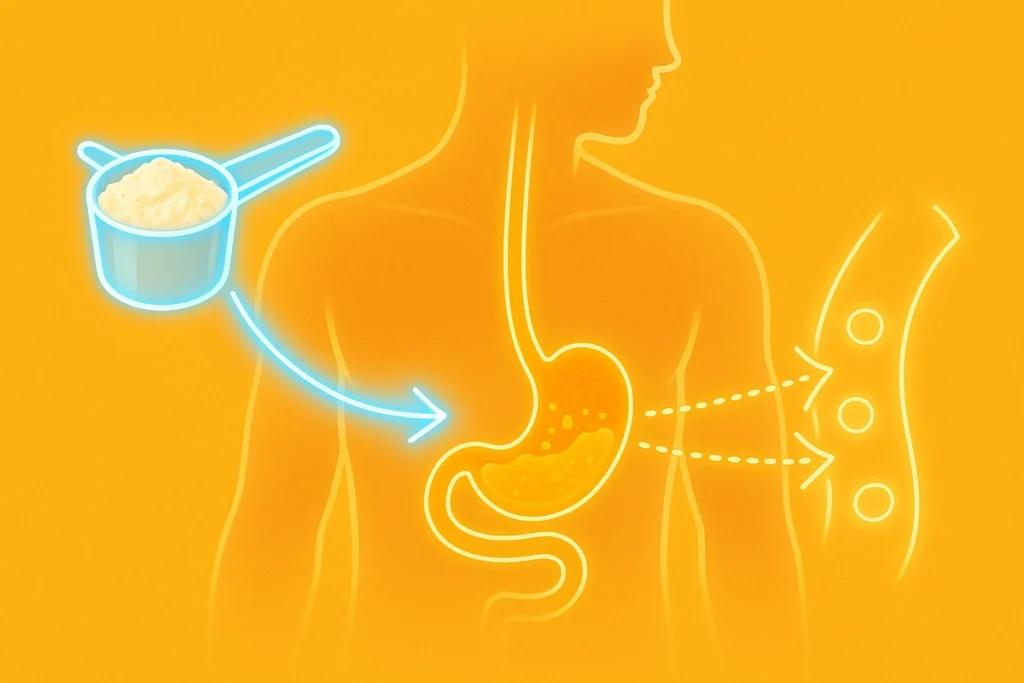
⏱️ Total time in system: 6–8 hours
🛡️ Muscle protection: Up to 10 hours
⚡ Whey comparison: 1–2 hours
Amino acid release lasts the same duration, with muscle‑sparing effects extending up to 10 hours in some cases.
This slow, steady digestion is exactly why many athletes take casein before bed. It releases amino acids gradually throughout the night, helping your body recover and rebuild muscle while you sleep.
How it compares to whey:
Whey spikes amino acid levels fast, then drops off within 1–2 hours. Casein works like a slow drip — ideal for overnight repair or long gaps between meals.
I’ve personally used casein before bed during cutting phases. The difference is subtle but real — I wake up feeling more recovered, especially after brutal leg days.
📖 Learn more: Benefits of casein before bed
⚡ More protein ≠ more muscle
The right dose at the right time matters more than the total amount.
Optimize My Protein Intake FreeHow Long Do the Effects of Casein Last?
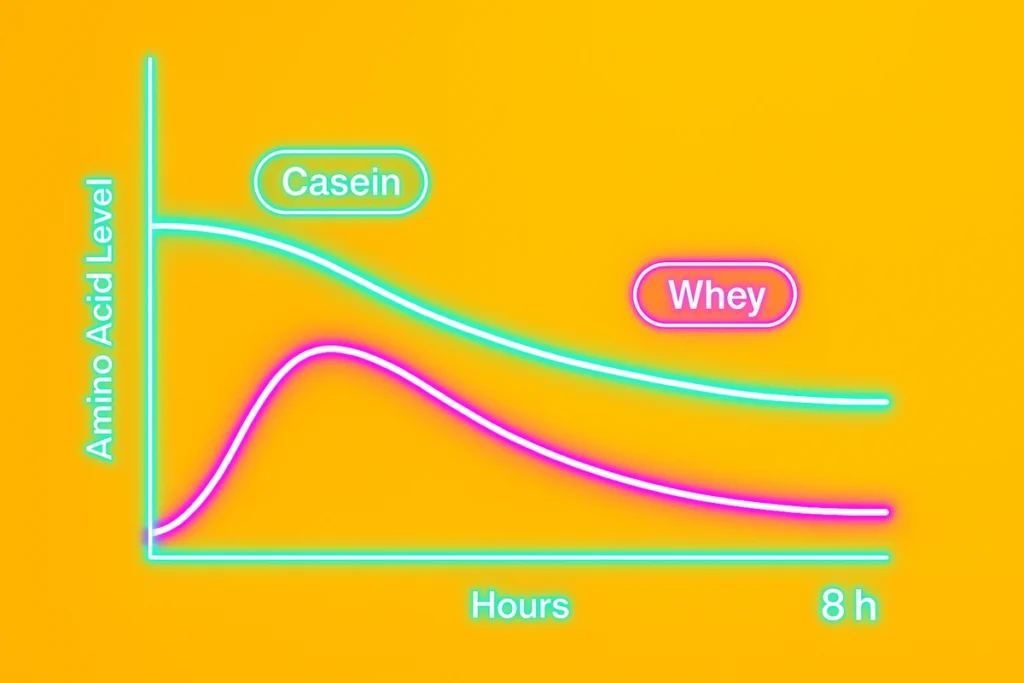
Digestion takes 6–8 hours, but the muscle‑sparing effects often last longer — sometimes up to 10 hours.
To be precise: casein is primarily anti‑catabolic (it helps prevent muscle breakdown) rather than strongly anabolic. That slow, steady release makes it ideal for long gaps between meals — like overnight sleep or extended fasts.
Best time to use it:
Right before bed, or after your last meal of the day when you know you won’t eat again for many hours.
During Ramadan, I take casein after Iftar. It keeps my body fed through the night and into the next day’s fast. It’s been a reliable tool for maintaining muscle.
For product recommendations, check out my guide on the best casein proteins for overnight recovery.
How Casein Protein Works Inside the Body
Here’s the simple science: once casein hits your stomach, it forms a gel-like clot. That clot slows down digestion dramatically.
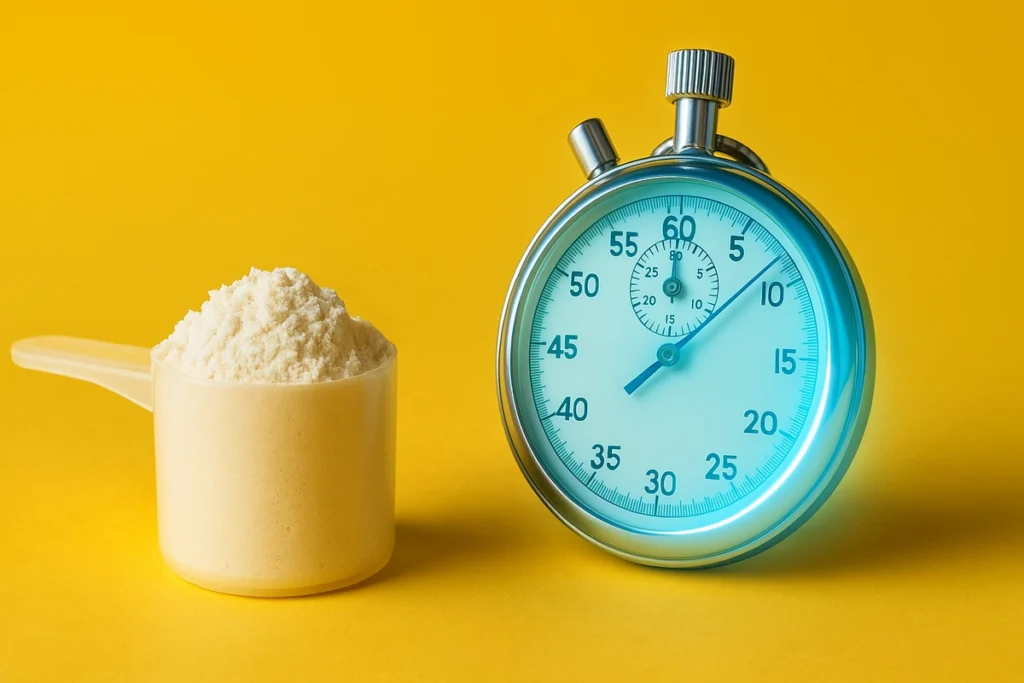
Why does that matter? Because instead of a quick burst of amino acids that fades fast, casein releases them slowly and steadily into your bloodstream – fueling muscle repair for hours, not minutes.
This is the main reason casein digests much slower than whey.
➡️ See how casein compares to whey for muscle growth
For anyone who goes long stretches without eating – overnight sleep, long work shifts, or intermittent fasting – this slow-release mechanism is a game changer.
Unlike fast-digesting proteins that spike and drop, casein keeps you in a muscle-preserving state for longer. Less breakdown. More recovery.
📋 You just read everything about protein. Now let’s make it work for YOUR body.
I’ll design your personalized supplement protocol — exact timing, dosage, and stacking for your specific goal. No templates. No bots. A real coach who reads your answers.
Pay what you want after you receive it. No risk. No pressure.
Muscle‑Building Benefits of Slow Digestion

Most proteins give you a quick burst of amino acids, then fade fast. Casein does the opposite.
Because it digests slowly, casein works in the background — protecting your muscle, controlling hunger, and keeping your body in a muscle‑preserving state for hours.
Here’s what that means for you:
- Prevents overnight muscle breakdown – Your body naturally enters a catabolic state during sleep. Casein counteracts that.
- Preserves lean muscle during cutting or fasting – When calories are low, casein helps ensure muscle is the last thing you lose.
- Extends the muscle‑building window – Between spread‑out meals, casein fills the gap.
- Kills late‑night cravings – A steady release of protein keeps hunger quiet.
Real client example:
David, a busy lawyer, used to wake up starving in the middle of the night. He was losing energy and struggling to keep muscle during his cut. Adding casein before bed changed that — his hunger disappeared, and he held onto his muscle much better.
🤔 Want to know which products actually work? See the full list of best casein proteins for athletes.
When to Take Casein for Best Results

In my experience, these are the three most effective times to take casein:
- 30–60 minutes before bed
The most common and research-backed use. It feeds your muscles while you sleep. - Before a long work shift
If you know you won’t be able to eat for 6+ hours (night shifts, back-to-back meetings), casein keeps amino acids flowing. - After a large meal
Only if you’re using it as a meal replacement or a late-night snack, not as a post-workout recovery drink.
Pro tip for better taste & slower digestion
Mix your casein with water or unsweetened almond milk. Then add a spoon of peanut butter or a handful of almonds.
This slows digestion even further, adds healthy fats, and honestly – it tastes like dessert.
Want more strategies? Check out our casein protein recovery guide.
Casein vs. Whey: Digestion & Release Time
Not all protein digests the same way. Whey is a sprinter. Casein is a marathon runner.
Here’s how they compare side by side:
Protein Type | Digestion Time | Amino Acid Release |
|---|---|---|
Casein | 6–8 hours | Slow & steady (6–10 hours) |
Whey | 1–2 hours | Fast spike (1–3 hours) |
When to use each:
- Whey – Right after workouts when you need rapid muscle repair.
- Casein – Before bed or long fasts when you want sustained release overnight.
📌 They’re not competitors. They work best as teammates in your overall protein strategy.
Real-World Tips from a Trainer

I often recommend casein to three types of people:
- Clients on cutting plans or lower-calorie diets – It preserves muscle when calories are low.
- Night-shift workers – Anyone who goes 6+ hours without a real meal.
- Intermittent fasters – Slow-release fuel that bridges long gaps without eating.
Real client example:
Lina, a 26-year-old nurse working overnight shifts, kept losing muscle even though she trained hard. She wasn’t eating enough during her shifts, and her body started breaking down muscle for energy.
We added one scoop of casein at the start of her shift. The result? Fewer cravings, better energy, and she stopped losing muscle – even as her weight continued to drop.
💡 One more thing: Casein isn’t your only slow-release option. Compare it to other protein sources like EAAs.
Frequently Asked Questions
Casein releases amino acids steadily for 6 to 8 hours.
Casein takes 6 to 8 hours to fully digest.
Casein digestion time is 6 to 8 hours.
Casein’s slow release lasts 6 to 8 hours, with effects up to 10 hours.
Casein absorbs slowly over 6 to 8 hours because it forms a gel in the stomach.
For casein protein, it stays active for 6 to 8 hours. (Whey stays 1‑2 hours.)
Slow release of amino acids from casein lasts 6 to 8 hours.
Casein releases amino acids for 6 to 8 hours after you take it.
Final Thoughts: Who Should Use Casein?
Casein isn’t a magic bullet. But when used correctly, it’s one of the most effective tools for muscle preservation, hunger control, and overnight recovery.

Quick Recap – Exact Numbers
Metric | Time |
|---|---|
Casein amino acid release duration | 6–8 hours |
Casein protein digestion time | 6–8 hours |
Slow release (anti-catabolic) effect | Up to 10 hours |
Best time to take | 30–60 minutes before bed |
Whey digestion time | 1–2 hours |
Casein digestion time | 6–8 hours |
✅ Use casein if you:
- Train at night
Your muscles need fuel while you sleep - Sleep 7+ hours without eating
Casein bridges the overnight fasting gap - Are cutting or doing intermittent fasting
Helps preserve lean mass when calories are low - Struggle with late-night cravings
Casein is highly satiating - Want steady amino acids without frequent meals
Perfect for busy schedules - Wake up feeling sore or under-recovered
Slow release supports repair while you rest
❌ Skip casein if you:
- Need a fast-digesting protein before or after workouts
That’s whey’s job. Casein before training can feel heavy and sluggish. - Are lactose intolerant or have a dairy allergy
Some isolates are low in lactose, but proceed with caution. - Are in a mass-gaining phase and already eat frequent whole-food meals
You may not need the extra calories or slow release.
💡 Pro tip: Many advanced lifters use both – whey around workouts and casein before bed. They’re not rivals; they’re teammates.
Leave a Reply