


Struggling to keep muscle while intermittent fasting? You’re not alone. Many lifters hit a wall trying to balance gains with long fasting windows.
Casein protein will break your fast if you take it during the fasting window. It contains calories and amino acids—there’s no loophole. But when timed correctly, it’s a game-changer. Take it as your last meal before you close your eating window for the night.
Casein digests slowly, feeding muscles for hours and crushing the hunger that derails so many fasts. For those observing Ramadan, it’s an ideal Suhoor choice that provides sustained energy through a long day of dry fasting.
Here’s exactly how to use it without sabotaging your progress.
Table of contents
- Can You Use Casein While Intermittent Fasting? (Spoiler: Timing Is Everything)
- Why Casein Is the Fasting Lifter’s Secret Weapon
- Casein vs. Whey When Fasting: Why Digestion Speed Matters
- The Ultimate IF Stack: Combining Casein, Whey, and Creatine
- Who Should Skip Casein? (Lactose, Digestion, and Clean Fasting)
- Real Results: What Happened When Clients Added Casein to IF
- Casein & Intermittent Fasting: Your Top Questions Answered
- The Verdict: Should You Use Casein for Intermittent Fasting?
Can You Use Casein While Intermittent Fasting? (Spoiler: Timing Is Everything)
Yes—but only during your eating window, never during the fast itself.
If you’re following 16:8 or 18:6 like I do, the sweet spot is your last meal before the fast begins. This timing ensures two things:
- You don’t break your fast early.
- Your muscles get a slow, steady feed for hours.
I personally take my casein shake 30–60 minutes before I close my eating window in the evening. Since adding this habit, I train harder, sleep deeper, and wake up without that gnawing, empty-stomach feeling.
One of my clients, David from Canada, used to struggle with night hunger during 16:8 fasting. We added 30g of casein to his dinner, and within a week, his hunger vanished, and sleep improved.
You can read more about ideal casein timing here.
Why Casein Is the Fasting Lifter’s Secret Weapon
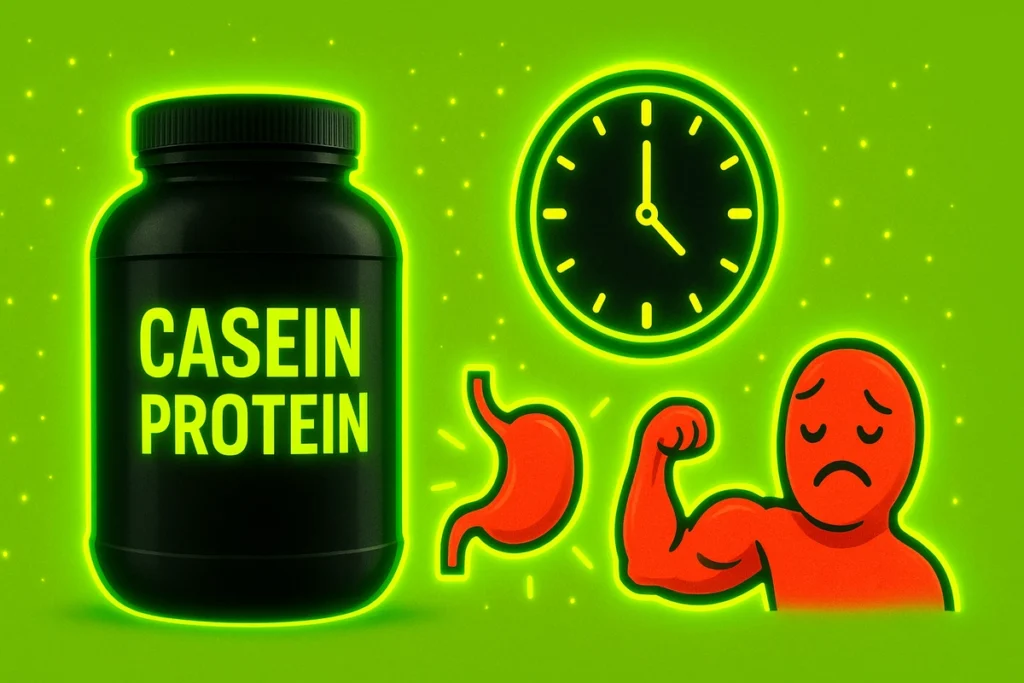
The magic of casein protein is in how slow it digests. Unlike whey, which spikes quickly and drops off, casein gives your body a steady stream of amino acids over several hours.
That’s exactly what you want when you’re fasting—long-lasting satiety, muscle protection, and reduced cravings.
I’ve noticed that when I use casein before my fast, I don’t wake up with hunger pangs, and my body feels more recovered in the morning.
If your goal is to preserve lean muscle mass while cutting, check out this guide: Casein for Cutting vs Bulking.
Also helpful:
Casein vs. Whey When Fasting: Why Digestion Speed Matters
Both have their place, but for fasting, casein wins.
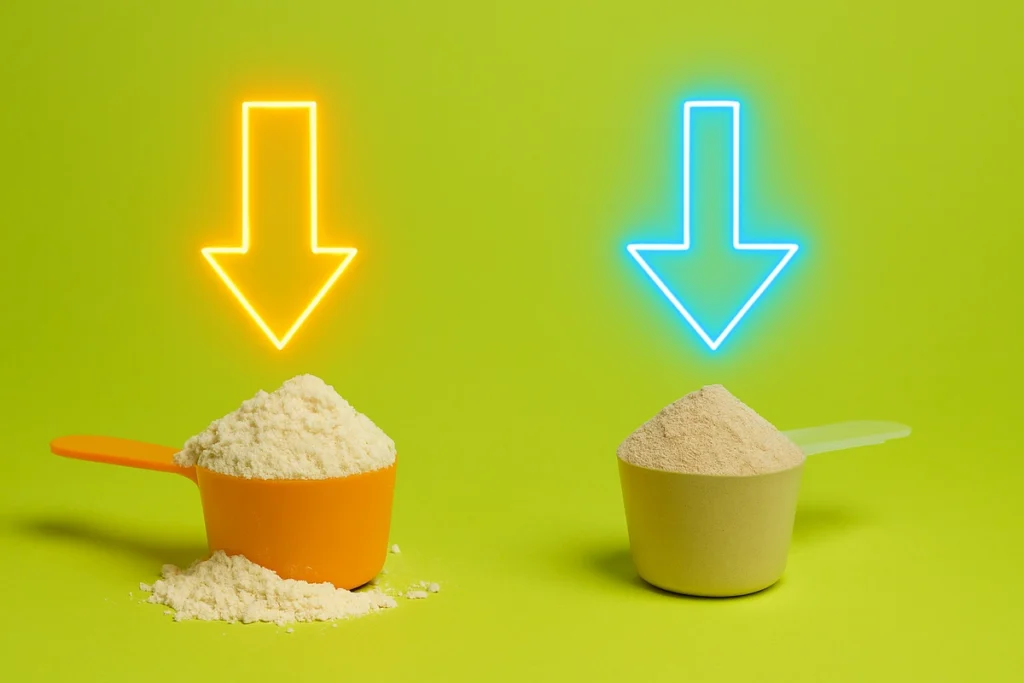
✨ Quick Comparison:
Factor | Casein Protein | Whey Protein |
|---|---|---|
Digestion Rate | Slow (6–8 hours) | Fast (1–2 hours) |
Best Timing for IF | Last meal before fasting window | Post-workout during eating window |
Hunger Control | Excellent—keeps you full through the night | Moderate—hunger returns faster |
Muscle Preservation During Fast | High—steady amino acid release | Low—rapid spike then drop |
Morning Energy (Fasted State) | Stable—no crashes | Variable—potential flat feeling |
Verdict for Fasters | ✅ Ideal for fasting windows | ⚠️ Better for breaking the fast |
Whey is fast and great after workouts. But it doesn’t hold up during long gaps without food. I did a comparison myself—one week with whey at night and one with casein. The difference was huge.
With whey, I got hungry faster and felt flat in the morning. With casein, my energy was more stable, and I held onto strength better during my fasted morning workouts.
More on this comparison here: Casein vs Whey Isolate: Which One’s Better?
The Ultimate IF Stack: Combining Casein, Whey, and Creatine
Most fasters pick one protein and call it a day. But when you layer these three supplements strategically across your eating and fasting windows, the effects on body composition can be significantly amplified.
Creatine During the Fast (Yes, It’s Allowed)
Let’s address the elephant in the room: creatine does not break a fast. It contains zero calories, zero sugar, and triggers no insulin response. You can mix 5 grams of plain creatine monohydrate in water and sip it during your fasted window without compromising fat burning or autophagy.
Why bother? Research consistently shows creatine supports strength output and muscle retention during caloric deficits. When you’re training fasted in the morning, that extra ATP regeneration helps you push harder and preserve the muscle you’re working so hard to keep.
Whey: The Fast Breaker
Whey is your opening act. After 16+ hours without food, your muscles are primed for rapid nutrient uptake. A fast-digesting whey shake floods amino acids into your bloodstream within 60–90 minutes, kickstarting recovery and signaling your body that the feeding window has officially begun.
Casein: The Anchor
This is where casein closes the loop. As established, casein is your final meal before the fast begins. It releases amino acids slowly over 6–8 hours, bridging the gap between your last bite and your first meal the next day.
The Complete Daily Blueprint
Time | Supplement | Purpose |
|---|---|---|
Morning (Fasted) | 5g Creatine in water | Strength support, zero fast-breaking |
Break Fast (Noon) | Whey Protein | Rapid amino acid delivery post-workout |
Last Meal (Evening) | Casein Protein | Slow-release muscle preservation overnight |
This layered approach ensures you’re never catabolic—whether you’re deep in a standard IF fast, observing Ramadan, or refueling during your window. It’s the exact protocol I use with clients who want to maintain strength and lean mass while cutting body fat.
Who Should Skip Casein? (Lactose, Digestion, and Clean Fasting)
Casein isn’t for everyone.

If you’re lactose intolerant, it may cause bloating—though many do fine with micellar casein or lactose-free versions.
If you’re a strict clean faster who avoids any calories during the fast, casein should be reserved for your feeding window only.


I had a client, Lila from Germany, who had digestive issues with regular casein. We switched her to a hydrolyzed, low-lactose version, and she was fine.
Need help choosing the right product?
Real Results: What Happened When Clients Added Casein to IF
I’ve seen casein work wonders, especially for people trying to lose fat without sacrificing muscle.
In my own journey, casein helped me stay full longer, preserve lean mass during cuts, and avoid the trap of late-night snacking.
Many of my clients say the same—less hunger, better sleep, improved muscle tone, and less stress about hitting protein goals during short eating windows.
Want to experiment with timing in the morning too? Casein Protein in the Morning
Casein & Intermittent Fasting: Your Top Questions Answered
Yes, if you take it during your fasting window. Casein contains calories and amino acids that trigger an insulin response. Reserve it for your eating window only—ideally as your last meal before the fast begins.
No. Even mixed with plain water, casein still contains calories and protein. It will break your fast. If hunger strikes during your fast, try sparkling water, black coffee, or plain green tea instead.
For pre-fast meals, yes. Casein digests slowly over 6–8 hours, keeping you full and feeding muscles through the night. Whey digests in 1–2 hours and is better suited for breaking your fast post-workout.
Take casein at Suhoor (pre-dawn meal). It digests slowly and provides sustained amino acids through the long daylight hours of dry fasting. Do not consume casein or any liquid during daylight hours.
Casein triggers an insulin response, which pauses autophagy. This is why you should only take it during your eating window. Once your fast begins and insulin drops, autophagy resumes naturally.
Yes, but not together during the fast. Creatine is calorie-free and can be taken during your fasted window with water. Casein must stay inside your eating window. They work well as a combined strategy but at different times.
Both work. Cottage cheese is roughly 80% casein protein. The advantage of casein powder is faster digestion (no chewing) and precise dosing. Cottage cheese offers more satiety from volume. Choose based on your calorie goals and appetite.
Yes. Because casein digests slowly over 6–8 hours, it keeps you fuller longer. Taking it before your fast reduces late-night cravings and helps you wake up without the gnawing hunger that derails many fasts.
The Verdict: Should You Use Casein for Intermittent Fasting?
If you’re doing intermittent fasting and want to keep your muscle, control hunger, and wake up feeling recovered instead of ravenous, casein protein is a legitimate game-changer.

The rule is simple: casein lives in your eating window, never in your fast. Use it as your last meal before you close the window for the night. That 30–60 minute window makes all the difference.
I’ve used it personally for years and recommend it to nearly all my clients. It’s not flashy. It won’t trend on TikTok. But it works—and when you’re training hard and eating smart, that’s exactly what matters.
- Skip casein if: You’re lactose intolerant (unless you opt for lactose-free versions) or you’re a strict clean faster who prefers whole foods only.
- Try casein if: You struggle with night hunger, want to preserve lean mass during a cut, or need steady energy through your fasted morning.
One scoop before bed. Better sleep. Less hunger. More muscle retained.
Sometimes the simplest tools deliver the biggest results.
Leave a Reply