

Caffeine is one of the most popular performance enhancers in the fitness world—but what happens when you take too much?
Sure, it can boost focus, energy, and endurance. But high doses can quickly turn from helpful to harmful, leaving you anxious, sleepless, and wired in the worst way.
✅ The safe limits you need to know:
For healthy adults, the FDA recommends up to 400 mg per day (about 4 cups of coffee). Per serving, stick to 150–200 mg for pre‑workout, and never exceed 300 mg in a single dose unless you have a high tolerance.
Exceed those numbers, and your body will warn you.
⚠️ Here are 5 signs you’ve had too much caffeine:
- Resting heart rate above 100 bpm
- Shaky hands or muscle twitching
- Severe anxiety or panic feeling
- Nausea or diarrhea
- Trouble sleeping despite exhaustion
In this article, I’ll break down the real side effects of caffeine overload based on science, client experiences, and my own journey as a fitness coach.
If you’re using coffee, pre‑workouts, or energy drinks to power through your day, this is your wake‑up call.
Table of contents
- How Much Caffeine Is Safe?
- When Caffeine Becomes Dangerous
- Common Side Effects of Too Much Caffeine
- Severe Caffeine Overdose Symptoms
- Caffeine in Coffee, Pre‑Workout & Energy Drinks
- Who Is More Sensitive to Caffeine?
- Caffeine Tolerance: Why You Need More Over Time
- Safe Caffeine Use for Athletes & Gym‑Goers
- Frequently Asked Questions
- Conclusion: Respect Caffeine, Reap the Benefits
How Much Caffeine Is Safe?

For healthy adults, the FDA sets the daily safe limit at 400 mg – roughly four 8‑oz cups of coffee. But how much is actually in your go‑to sources?
Source | Typical caffeine (per serving) |
|---|---|
Cup of coffee (brewed) | 80–100 mg |
Energy drink | 150–300 mg |
Pre‑workout (1 scoop) | 200–400 mg |
The hidden risk: Some brands hide the real dose behind “proprietary blends.” Always check the label. If caffeine isn’t listed in milligrams, assume it could be high – and consider a different product.
Real example – Jacob from Canada:
He used a 400 mg pre‑workout every day. Within weeks, he felt completely flat without it. That’s not performance – that’s dependency.
👉 Stick to the safe limits: 150–200 mg pre‑workout, and never exceed 400 mg total per day from all sources.
Explore how caffeine compares to other supplements: caffeine vs pre‑workout.
When Caffeine Becomes Dangerous
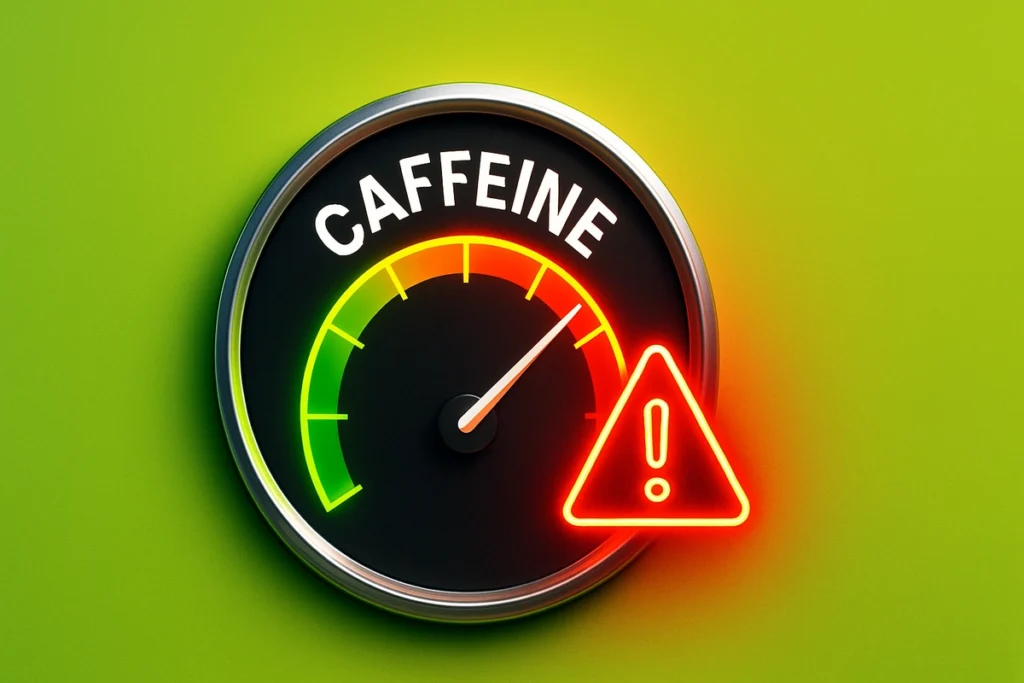
Going beyond your personal tolerance – even by a little – can turn caffeine from an ally into a problem.
The line between “focused” and “wired” is thinner than most people think. Cross it, and you’ll feel it immediately:
- Racing heart while sitting still
- Jitters that ruin your grip and form
- Inability to sleep for hours after training
- Stomach pain or acid reflux mid‑workout
I learned this the hard way. During a cutting phase, I doubled up on a strong pre‑workout and chased it with an espresso. My heart pounded, I felt wired for six hours, and I didn’t sleep until 4 a.m. That night killed my next day’s training.
💣 Danger also spikes when you:
- Stack coffee + pre‑workout + energy drinks
- Ignore early warning signs
- Take caffeine within 6 hours of bed
For timing your caffeine properly – so it boosts, not ruins, your workout – check out our guide: best time to take caffeine for workout.
Common Side Effects of Too Much Caffeine

Once you exceed your personal caffeine limit, your body starts sending clear warnings. Ignoring them can turn a helpful boost into a daily struggle.
Here are the most common side effects I’ve seen in clients and personally felt:
- Jitteriness and anxiety – You feel wired for no reason, even outside the gym. This happens because caffeine overstimulates your nervous system.
- Insomnia – Especially if you consume caffeine after 5 p.m. Its half‑life is about 5 hours, meaning half the dose is still in your bloodstream at bedtime.
- Elevated heart rate and blood pressure – A resting heart rate consistently above 100 bpm is a red flag. It puts unnecessary strain on your cardiovascular system.
- Digestive issues – Caffeine can irritate the gut lining, trigger acid reflux, and even cause diarrhea in sensitive individuals.
Real‑world example:
I had a client, Miguel from Spain, who relied on 4–5 energy drinks a day to cut fat. He struggled with constant restlessness and couldn’t sleep properly. Once we cleaned up his intake, his energy leveled out, his anxiety dropped, and he finally slept through the night.
For caffeine use before cardio, see caffeine before fasted cardio.
Severe Caffeine Overdose Symptoms

Going too far with caffeine isn’t just uncomfortable – it can be dangerous. Overdose occurs most often when consuming multiple high-dose sources (e.g., pre‑workout + energy drinks + caffeine pills) in a short window.
💀 Signs of actual caffeine overdose include:
- Heart palpitations or irregular heartbeat – A fluttering, pounding, or skipping sensation in your chest. This is not normal, even after heavy stimulants.
- Panic attacks – Sudden, intense fear accompanied by racing heart, sweating, and feeling unable to breathe.
- Nausea and vomiting – Your body’s way of trying to expel the toxin.
- Muscle twitching or tremors – Uncontrolled small movements, often in the hands or eyelids.
These aren’t just “too much coffee” symptoms – they can lead to emergency situations. I’ve personally seen people end up in the ER over what they thought was just a strong pre‑workout. In rare cases, extremely high doses (above 1,200 mg) can cause seizures or cardiac arrest.
✅ What to do immediately: If you or someone else experiences these symptoms after caffeine, stop all caffeine intake and seek medical help – especially if palpitations or vomiting persist.
For safer, lower-risk alternatives, read my guide on natural caffeine sources for pre‑workout.
Caffeine in Coffee, Pre‑Workout & Energy Drinks
Not all caffeine sources are equal. Knowing how much is in your go‑to drink or supplement is the first step toward safe use.
Source | Typical Caffeine (mg) | Risk Level (single serving) |
|---|---|---|
Home‑brewed coffee (8 oz) | 80–100 | Low |
Energy drink (e.g., Monster, Bang) | 150–300 | Moderate |
Pre‑workout (1 scoop) | 200–400 | Moderate to high |
Caffeine pill | 200 | High (if combined with other sources) |
Important notes:
- Coffee – A large (16 oz) from a café can easily hit 200–300 mg. Size matters.
- Energy drinks – Some “extra strength” versions contain 300 mg per can – that’s 75% of your daily limit in one sitting.
- Pre‑workout – “Proprietary blends” may hide the exact dose. If a label doesn’t list caffeine explicitly, assume it’s on the higher side or skip it.
- Caffeine pills – One pill is often 200 mg. Taking a pill plus a pre‑workout can push you over 500 mg instantly.
⚠️ Hidden caffeine trap: Many fat burners, focus supplements, and even some protein bars contain added caffeine. Stacking multiple products throughout the day is the #1 reason healthy people accidentally overdose.
Practical tip: Add up everything you consume in a typical day – coffee, pre‑workout, energy drink, tea, soda, and any “energy” labeled supplement. If the total exceeds 400 mg, you’re in the risk zone.

Take this 2-minute assessment & get a science-backed training, nutrition & supplement roadmap built for YOUR body.
🔬 12,000+ personalized roadmaps generated
☕ Today’s Caffeine Tracker
Check what you’ve had. See your total.
⚠️ Keep total under 400 mg/day (FDA guideline). This is a simple tracker, not medical advice.
Who Is More Sensitive to Caffeine?
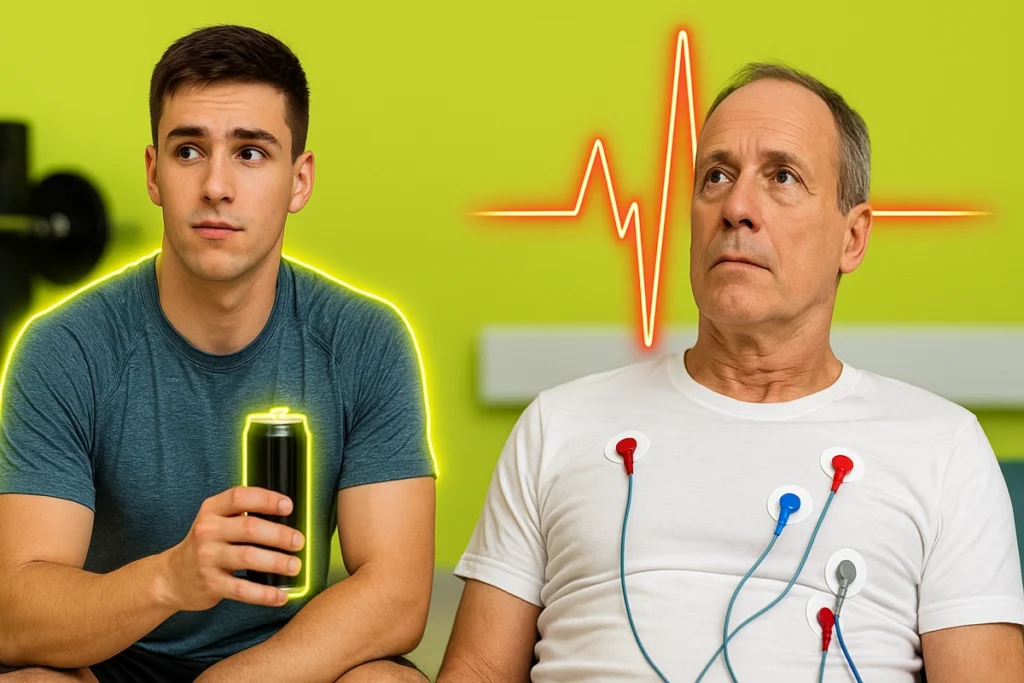
Caffeine affects everyone differently. Some people can handle 400 mg with no issues; others feel jittery after a single cup of coffee.
Certain groups should be extra cautious:
- Beginners with no caffeine tolerance – Even 100 mg can cause palpitations, anxiety, or insomnia if your body isn’t used to stimulants. Start with 50–100 mg and see how you respond.
- People with anxiety or heart conditions – Caffeine can trigger panic attacks, worsen existing anxiety, and increase heart rate or blood pressure unpredictably. Consult a doctor before using any stimulant pre‑workout.
- Athletes stacking stimulants from multiple sources – Coffee + pre‑workout + energy drink + caffeine pill can quickly exceed safe limits without you realizing it. Track your total daily intake.
Real‑world example:
Lina, a young client from Germany, once tried a caffeine pill without any prior use. She ended up in the ER with heart palpitations. A hard lesson – but she learned to always start low and go slow.
For a deeper comparison of caffeine sources and their risks, read caffeine pills vs coffee for gym performance.
Caffeine Tolerance: Why You Need More Over Time
The more regularly you consume caffeine, the less it works. This isn’t imagination – it’s physiology.
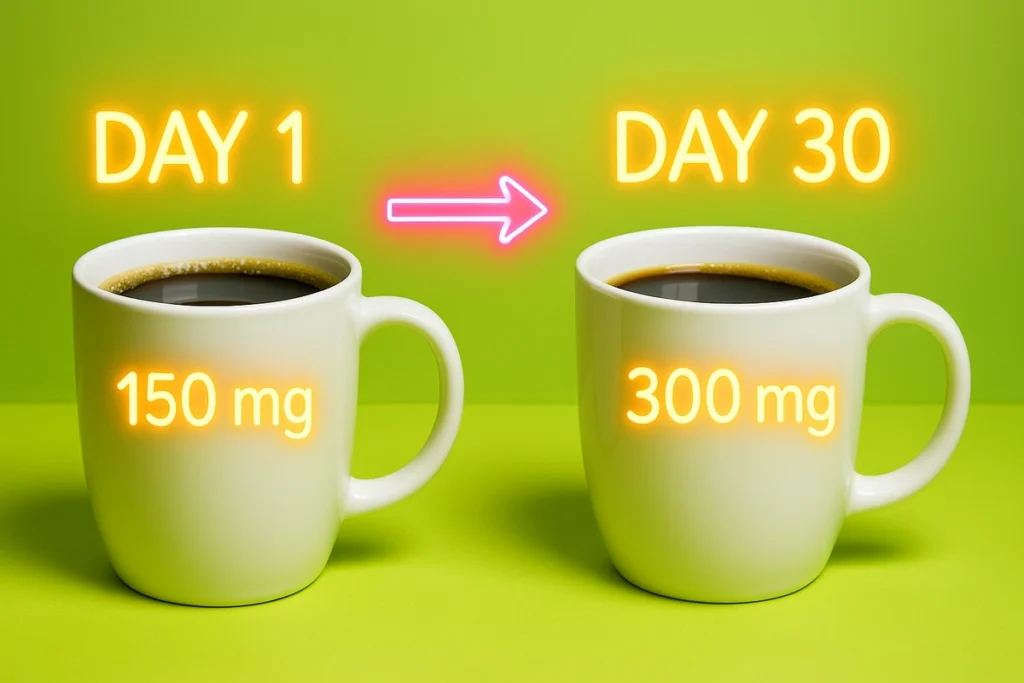
Caffeine works by blocking adenosine receptors (the chemicals that make you feel tired). Your brain responds by creating more receptors. Result? You need a higher dose to get the same alertness.
How fast does tolerance build?
As quickly as 1–4 days of daily use. Within a week, the same 200 mg pre‑workout may feel half as effective.
And when you stop suddenly? Withdrawal hits:
- Headaches (from increased blood flow to the brain)
- Brain fog (difficulty focusing)
- Low motivation (no natural drive)
I’ve been through it myself. The first few days are rough – fatigue and irritability are real. But by day five, my energy came back naturally, and my sleep improved dramatically.
The good news: Tolerance is reversible. A short break (7–10 days) can reset your sensitivity.
For a step‑by‑step plan, read our guide: caffeine tolerance reset.
Safe Caffeine Use for Athletes & Gym‑Goers
Here’s what I recommend as a fitness coach – and someone who’s made all the mistakes so you don’t have to.
The smart approach to caffeine:
- Stick to 150–200 mg pre‑workout if you’re healthy. That’s roughly one strong coffee or one standard scoop of most pre‑workouts.
- Avoid caffeine after 5 p.m. Its half‑life (~5 hours) means an evening dose can ruin sleep quality, even if you fall asleep.
- Cycle off every 2–3 months for 7–10 days. This resets your tolerance, so you get the same boost from half the dose afterward.
- Never stack multiple sources – coffee + pre‑workout + energy drink in the same 4‑hour window is a recipe for overload. Pick one.
One more pro tip:
Pair caffeine with L‑theanine (200 mg) to smooth out jitters and maintain focus without the wired crash.
Moderate caffeine can definitely help with energy and training focus. But like any tool, it only works if used right.
Need more specific guidance?
- For fat‑burning and focus: caffeine dosage for fat burning and focus.
- For muscle recovery: caffeine and muscle recovery.
Frequently Asked Questions
More than 400 mg per day for healthy adults. That’s about 4 cups of coffee or 2 strong pre-workout scoops.
Jitters, racing heart, anxiety, trouble sleeping, and an upset stomach.
Yes, but very rare. Doses above 1,200 mg (around 12 cups of coffee) can cause seizures or heart problems. A few deaths have been reported from pure caffeine powder.
Symptoms like rapid heartbeat and anxiety can last 6–12 hours. Full recovery takes 1–2 days, but see a doctor if severe.
Stop all caffeine. Drink water. Eat something bland (like bread or banana). Lie down and breathe slowly. Call a doctor if you have chest pain, vomiting, or can’t stop shaking.
For most healthy people, yes — but not if you also drink coffee or energy drinks the same day. Keep total under 400 mg.
Caffeine stimulates your nervous system. In sensitive people, it can make your heart beat irregularly or skip a beat. Lower your dose or switch to decaf.
Stop caffeine completely for 5–7 days. You’ll have headaches for 2–3 days, then your energy returns naturally. After that, start with half your old dose.
Not recommended. Most experts say no caffeine under age 12, and very limited (under 100 mg) for teens. Side effects hit harder when you’re smaller.
Pre-workout usually wins. Coffee: 80–100 mg per cup. Pre-workout: 200–400 mg per scoop. Always check the label.
Conclusion: Respect Caffeine, Reap the Benefits
Caffeine is a powerful tool – but only if you respect the dose.
Let’s recap the essentials:
- Safe daily limit: 400 mg (FDA guideline)
- Per‑serving sweet spot: 150–200 mg for pre‑workout
- Red flags: Jitters, insomnia, palpitations, panic, vomiting
Stay aware of your total intake, listen to your body, and don’t chase energy with stimulants alone.
From a coach who’s felt the highs and the crashes: use caffeine to fuel your workouts, not your entire day. Train hard, rest well, and don’t let the buzz take over.
One last tip: If you’re currently dependent on high doses, try a caffeine tolerance reset. A few days of reduced intake or cycling off can restore sensitivity – and you’ll feel the benefits again without the side effects.

 Claim Your Free Assessment
Leave a Reply