


Stop worrying. Here’s the truth.
Are you worried that whey protein might harm your kidneys? You’re not alone — but that fear is based on myths, not science.
As a professional fitness trainer who’s used whey daily for years and coached hundreds of clients, I’ve seen the same question again and again.
For healthy individuals, whey protein is safe and effective. No kidney damage. No secret danger.
✅ In this 2026 guide, you’ll get:
- What science actually says
- Safe daily dosage (no guessing)
- The truth about creatinine and kidney stones
- Who actually needs to be careful
Don’t ditch your shake. Read this first — and stop worrying for good.
Table of contents
- Quick Answer: Is Whey Safe for Your Kidneys?
- What Is Whey Protein? (And How It Works)
- What Science Says About Whey and Kidney Health
- How Much Whey Protein Is Safe Per Day?
- Can Whey Protein Cause Kidney Stones?
- Side Effects of Whey Protein (Digestion & More)
- Precautions: If You Have Kidney Issues
- Frequently Asked Questions
- Key Takeaways for Gym‑Goers & Athletes
Quick Answer: Is Whey Safe for Your Kidneys?
Yes — for healthy individuals, whey protein does not damage your kidneys.
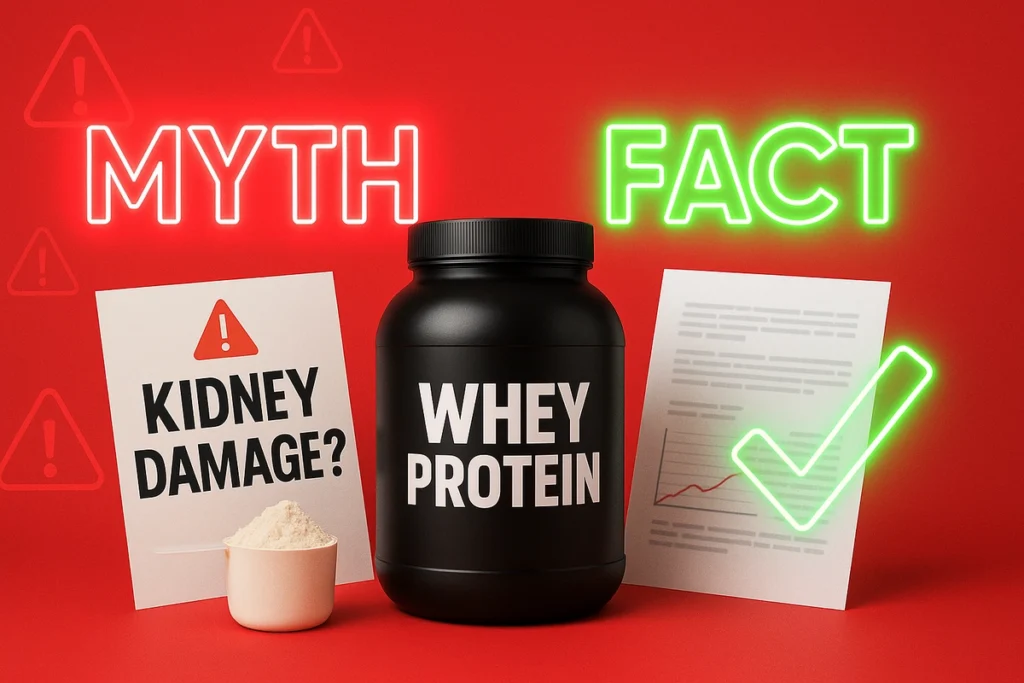
This is the #1 question I get as a trainer. Newcomers hear scary stories online and immediately worry their daily shake is a hidden risk.
Let me be direct: I’ve used whey protein every day for years. I’ve coached hundreds of clients who do the same. None of us have ever had kidney issues from it.
What about the liver? Also safe. Your liver processes amino acids every day from food. Normal whey intake is well within its capacity. The warning applies only to people with diagnosed liver or kidney disease.
Quick Myth vs. Fact
❌ Myth | ✅ Fact |
|---|---|
Whey causes kidney failure | No evidence in healthy individuals |
Protein powder = kidney stones | Only a risk with extreme intake + dehydration |
High creatinine means kidney damage | Usually just normal muscle breakdown |
If you’re healthy, stop worrying. Your kidneys can handle whey protein just fine.
📌 Before you ditch your shake, read the facts below. We’ll cover safe dosage, creatinine, kidney stones, and who actually needs to be careful.
Curious about timing? Check out our guide on whey protein before or after workout.
⚡ More protein ≠ more muscle
The right dose at the right time matters more than the total amount.
Optimize My Protein Intake FreeWhat Is Whey Protein? (And How It Works)
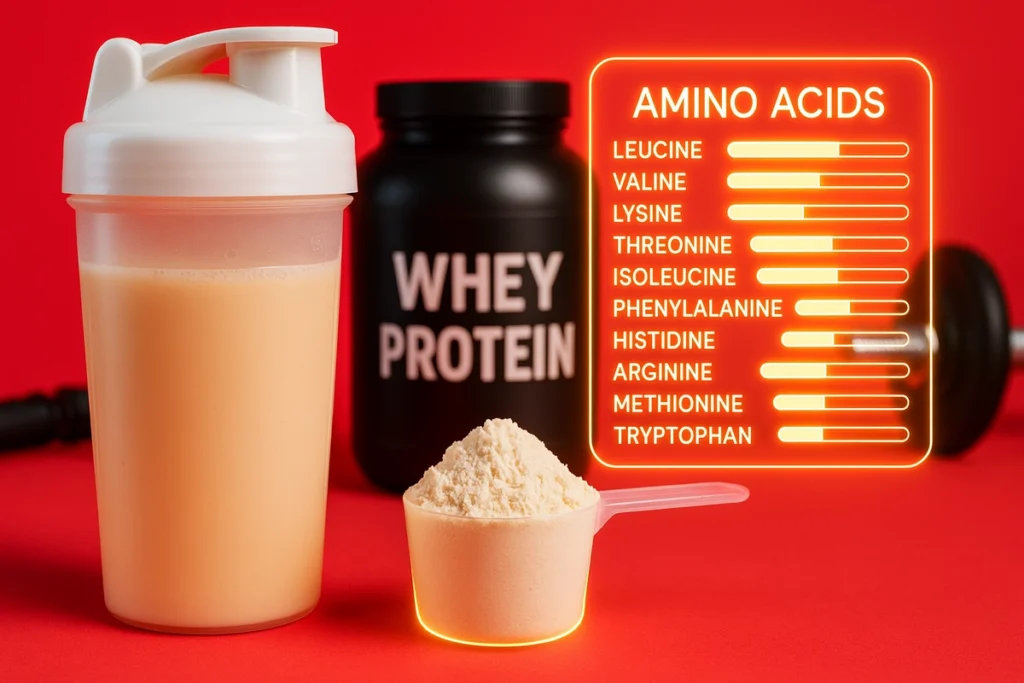
Whey protein is a fast-digesting, complete protein sourced from milk. It’s packed with all nine essential amino acids — making it one of the most effective supplements for muscle recovery and growth.
That’s why athletes, bodybuilders, and even weekend warriors rely on it.
I personally started using whey when my intense training made it impossible to get enough protein from whole foods alone. One shake post-workout solved that gap.
Quick comparison: Not sure how whey stacks up against EAAs or BCAAs? Read our full guide: EAAs vs BCAAs vs Protein Guide.
What Science Says About Whey and Kidney Health
Let’s clear the air: There’s no real scientific evidence showing that normal whey protein use harms healthy kidneys.

Most scare stories link back to studies on individuals with pre‑existing kidney disease. For everyone else, regular whey use isn’t a danger.
What Studies Show
A meta‑analysis of 74 studies found no kidney damage from protein supplements in healthy subjects.
Two key references support this:
- Poortmans & Dellalieux (2000) – No kidney damage in athletes on high protein diets. Int J Sport Nutr Exerc Metab.
- Systematic review (2018) – Protein supplementation is safe for kidneys in healthy adults. Br J Sports Med.
Creatinine Levels: What Whey Users Should Know
Creatinine is a waste product from muscle breakdown. Whey protein provides amino acids for muscle repair, which can slightly increase creatinine levels in blood tests. This is normal and does not mean kidney injury.
Doctors distinguish between high creatinine from muscle activity vs. kidney failure using additional markers like cystatin C or BUN/creatinine ratio.
Not sure how much protein you really need for muscle growth? My whey protein daily intake for muscle growth article breaks it down with real numbers.
You just read everything about protein. Now let’s make it work for YOUR body.
I’ll design your personalized supplement protocol — exact timing, dosage, and stacking for your specific goal. No templates. No bots. A real coach who reads your answers.
Pay what you want after you receive it. No risk. No pressure.
How Much Whey Protein Is Safe Per Day?
For most healthy adults, 1–2 scoops (20–40g) of whey per day is plenty. You may need less if your regular meals already provide enough protein.
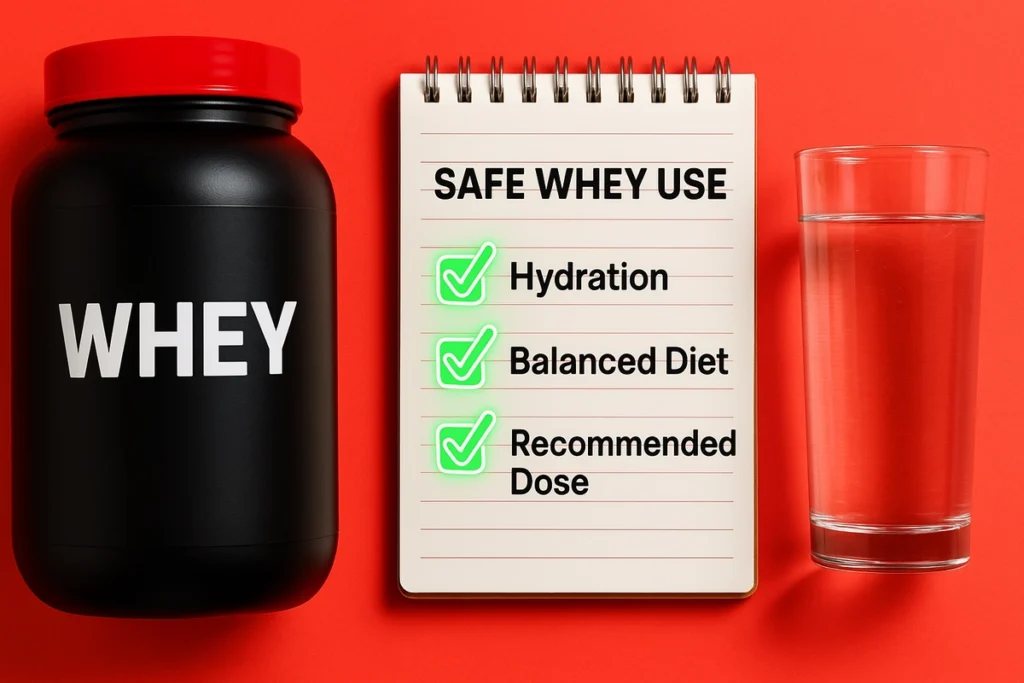
Use the table below as a quick reference. These are supplement-only recommendations — not including protein from food.
Body Weight | Sedentary (not training) | Active / Gym-Goer | Upper Caution Limit |
|---|---|---|---|
60 kg (132 lbs) | 10–20g | 20–30g | 40g/day |
80 kg (176 lbs) | 15–25g | 25–40g | 60g/day |
100 kg (220 lbs) | 20–30g | 30–50g | 70g/day |
Upper caution limit applies only if your total daily protein from food is already high.
For most healthy individuals, total daily protein (food + supplements) should not exceed 2.2–2.5g per kg of body weight without medical supervision.
📌 A note from experience: I used to take three scoops a day. Once I improved my meal planning, I realized it wasn’t necessary.
Special situations:
- If you’re skinny and looking to put on size, see our guide: Whey Protein for Skinny Guys
- Wondering about rest days? Here’s our complete look: Taking Whey Protein Without Working Out
Quality matters. Stick with transparent, trusted brands like Optimum Nutrition or MyProtein. Not all powders are created equal.
Can Whey Protein Cause Kidney Stones?
No — not for healthy people.
Kidney stones are rarely caused by whey protein itself. Most stone cases trace back to low water intake, high oxalate foods (spinach, nuts, tea), or pre-existing metabolic conditions — not your post-workout shake.
That said, any very high animal protein intake can increase urinary calcium slightly. But here’s what matters: whey is derived from milk, and multiple studies show moderate whey use does not elevate stone risk in healthy individuals.
✅ To stay safe (and stone‑free):
- Drink 2.5–3L of water daily — this is the #1 stone prevention
- Keep total daily protein (food + whey) under 2g per kg of body weight unless a doctor approves more
- Stick to 1–2 scoops of whey per day — well within the safe zone
Your kidneys and whey shake can coexist peacefully. Just hydrate.
Side Effects of Whey Protein (Digestion & More)

For most healthy adults, the main side effect is mild digestive discomfort — usually from taking too much protein at once.
I’ve personally noticed bloating if I go overboard. For me, that’s more than two scoops in a day.
🐘 Reddit Myth Bust: “Kidney Pain” After Whey
Some users report kidney pain after drinking whey. Here’s the truth:
In almost all cases, what they feel is:
- Digestive gas or bloating (very common)
- Dehydration (not enough water)
- Back muscle soreness (from training)
True kidney pain is deep in your lower back (flank area) and is not caused specifically by whey in healthy people.
🩺 If you have persistent pain, stop guessing — see a doctor.
Other common questions:
Yes, it’s safe to use whey protein every day if you’re healthy — read more in our guide on whey protein daily use safety.
Not sure between whey and mass gainer for bulking? They serve different goals. Check out Mass Gainer vs Whey Protein: What’s Best for Bulking? to decide.
Precautions: If You Have Kidney Issues
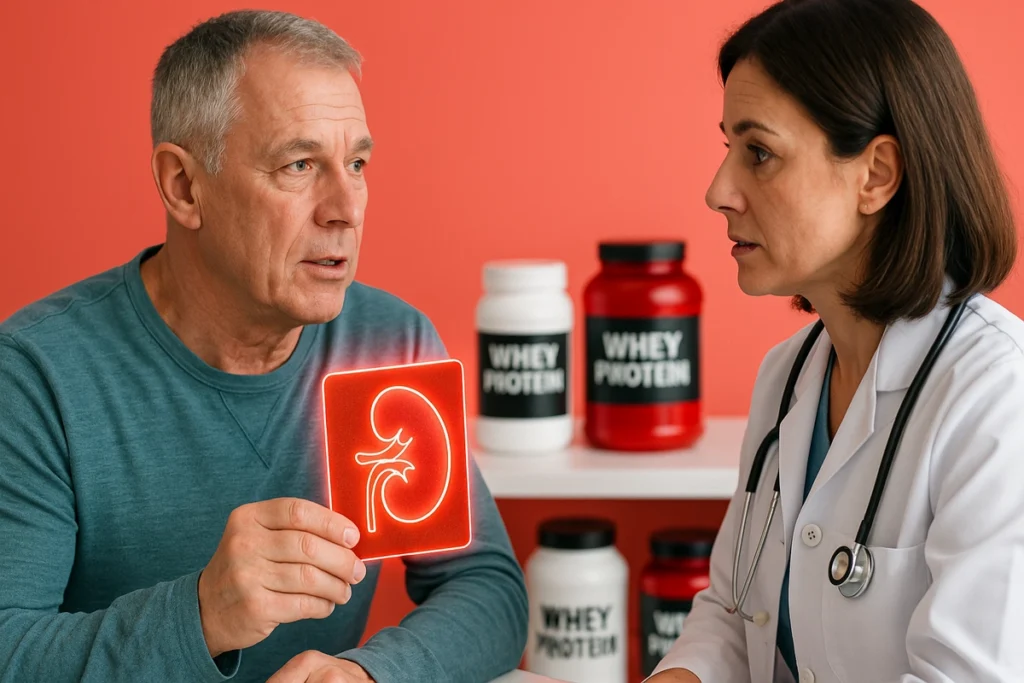
This section is for you if: you have been diagnosed with kidney disease, have a family history of kidney problems, or are under a nephrologist’s care.
Here’s the honest truth: whey protein is not dangerous for healthy kidneys — but if your kidneys are already compromised, the rules change.
⚠️ Always consult your doctor or a kidney specialist before adding any protein supplement — including whey.
One of my clients, Julia from Germany, did exactly that. She has a family history of kidney disease, so she brought a whey container to her doctor’s appointment. Her doctor reviewed her lab work, approved a moderate dose, and scheduled regular checkups. Today, Julia uses whey safely — with zero kidney issues.
Your situation is unique. A doctor who knows your medical history is the only person who can say “yes” or “no” for you.
📌 Still unsure about other supplements?
Compare EAAs vs protein powder here: EAAs vs Protein Powder: Which Should You Use?
Frequently Asked Questions
No. For healthy people, normal whey intake does not harm kidneys. Scientific studies show no damage.
Most active adults can safely take 20–40 grams (1–2 scoops) per day. Total daily protein from all sources should not exceed 2.2 grams per kg of body weight without medical advice.
Whey protein alone does not directly cause kidney stones. Very high animal protein intake combined with low water intake may increase risk. Stay hydrated (2.5–3 liters of water daily) to reduce any risk.
Yes, slightly. Creatinine increases naturally from muscle breakdown and repair. A small rise is normal and does not mean kidney damage. Doctors use additional tests to check true kidney function.
No direct evidence links whey to kidney pain in healthy people. If you feel flank pain, it is often gas, bloating, dehydration, or muscle soreness. Stop use and consult a doctor if pain continues.
No. The liver easily processes normal amounts of whey protein. Only people with pre‑existing liver disease need medical guidance before using supplements.
Only with a doctor’s approval. People with diagnosed kidney disease or a strong family history should consult a physician before adding any protein supplement.
For healthy individuals, long‑term moderate use does not cause kidney problems. Most studies follow people for 6–12 months, but no evidence shows progressive damage with normal intake.
Mild digestive issues like bloating, gas, or stomach discomfort – usually from taking too much at once. Start with one scoop to see how you tolerate it.
Both are safe for healthy kidneys. Plant protein may produce less uremic load, but whey is not dangerous. Choose based on your diet preferences and tolerance.
Key Takeaways for Gym‑Goers & Athletes
For most healthy athletes and gym‑goers, whey protein is safe — period.

It does not damage your kidneys. It does not secretly harm you over time. What it does do is help with muscle recovery, growth, and hitting your daily protein goals more easily.
I’ve used whey daily for years. I’ve coached hundreds of clients who do the same. None of us have experienced kidney issues — only better workouts and faster recovery.
Quick Summary (What You Actually Need to Remember)
What you might have heard | What’s actually true |
|---|---|
Whey damages kidneys | Only a concern if you already have kidney disease |
High creatinine = kidney failure | Usually just normal muscle breakdown |
One scoop is risky | 1–2 scoops (20–40g) is safe for most active people |
You need to cycle off whey | No scientific reason to do so |
3 Simple Rules for Safe Whey Use
- Know your total protein
Whey is a supplement, not a replacement. Aim for 1.6–2.2g of protein per kg of body weight per day from food + shakes. - Stay hydrated
Water helps your kidneys process any protein. Drink 2–3 liters daily — good advice with or without whey. - Listen to your body
Mild bloating or gas? Reduce your scoop size. Persistent flank pain or dark urine? See a doctor. (But don’t assume it’s whey — it rarely is.)
Who Should Be Careful?
Whey is not recommended without medical supervision if you have:
- Diagnosed chronic kidney disease (CKD)
- A history of kidney stones (talk to your doctor first)
- A single kidney (generally still safe, but get checked)
For everyone else? Stop worrying. Enjoy your shake.
Final Word
Stay motivated. Train smart. And remember: consistency beats extremes. Whey protein is a tool — a safe, effective, and well‑studied one.
If you’re still unsure, take this article to your next checkup and ask your doctor. Chances are, they’ll give you the green light.
Leave a Reply