

Bulking seems simple: eat more, lift heavy, grow. But the moment you face the shelf—one side stacked with mass gainer tubs, the other with chicken, rice, and oats—the choice gets messy fast.
One promises speed. The other promises quality. One might bloat you for hours. The other might test your meal-prep patience.
So which actually builds more lean muscle without the side effects?
I’ve tested both paths myself. I’ve also coached dozens of clients through the same decision. Some started with gainers and felt sluggish within weeks. Others built their best physiques on nothing but whole-food meals and one smart homemade shake.
This guide breaks down what works, what backfires, and exactly how to choose the right approach for your body and lifestyle.
Table of contents
- The Short Answer: Whole Food or Mass Gainer?
- What a Mass Gainer Actually Is
- What Whole-Food Bulking Really Means
- Head-to-Head: Nutrition, Digestion, and Satiety
- When a Mass Gainer Makes Sense
- When Whole Foods Are the Smarter Choice
- Real Results: My Clients and My Own Experience
- The Real Cost: Money, Time, and Results
- The Best Bulking Strategy for You
- Frequently Asked Questions
The Short Answer: Whole Food or Mass Gainer?
In my experience as a coach and lifter, whole food bulking wins for long-term lean muscle and better health.
Mass gainers might be useful for hardgainers or guys with crazy fast metabolisms, but they often come with downsides—like fat gain, bloating, and low energy.
If your goal is quality muscle without the gut, whole food is your best friend. It’s more customizable, cleaner, and gives your body the nutrients it truly needs.
⚡ Mass gainer turning into fat?
Wrong timing builds your waistline. Right timing builds your muscles.
Turn Gainer Into Muscle FreeWhat a Mass Gainer Actually Is
Mass gainers are high-calorie supplements—basically a mix of carbs, protein, and often sugar or fats. They’re designed to help you hit your calorie target fast.
I’ve tried popular brands like Serious Mass and Mutant Mass in the past. They did the job of pushing the scale up—quickly—but I also noticed water retention and fat gain, especially around my waist.
Some of my clients like Liam, who was underweight and busy with work, used a mass gainer to get started. But within weeks, he started feeling bloated and sluggish.
That’s when we switched to a better plan—homemade mass gainer shakes using oats, whey, banana, and milk.
The Most Common Side Effects I See
In my coaching experience, three issues come up repeatedly:
- Bloating and gas: Cheap fillers like maltodextrin and artificial thickeners sit heavy in the gut. If you feel swollen after a shake, it’s not you—it’s the ingredients.
- Unwanted fat gain: Mass gainers spike insulin fast. Without enough activity to shuttle those carbs into muscle, the surplus becomes belly fat. I saw this personally when I used Serious Mass years ago.
- Energy crashes: The sugar high peaks quickly, then drops. Clients describe it as feeling “sluggish” 90 minutes after drinking. This is a blood sugar rollercoaster, not sustainable fuel.
What Whole-Food Bulking Really Means
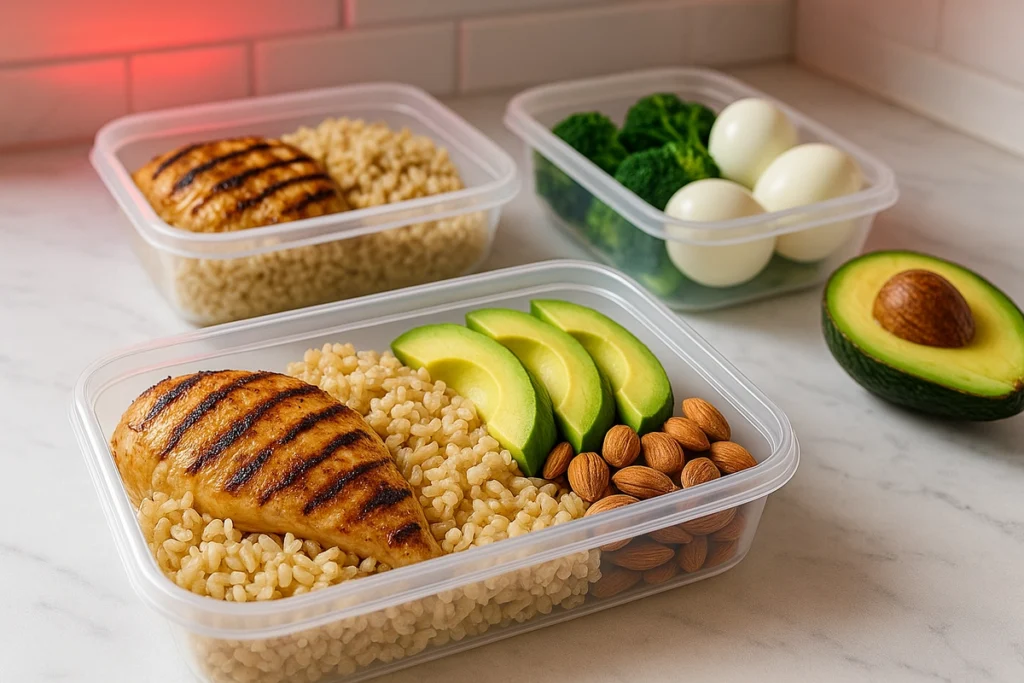
Whole food bulking is about eating real meals—chicken, rice, eggs, oats, peanut butter, healthy oils, and more—to increase your calorie intake naturally.
I did a full 2-month clean bulk using whole foods only. It was slower than the gainer method, but my energy was steady, my digestion was better, and I looked leaner even as I gained muscle.
Real food gives you more than just macros—it delivers vitamins, minerals, fiber, and better satiety.
You just read everything about mass gainers. Now let’s make it work for YOUR body.
I’ll design your personalized supplement protocol — exact timing, dosage, and stacking for your specific goal. No templates. No bots. A real coach who reads your answers.
Pay what you want after you receive it. No risk. No pressure.
Head-to-Head: Nutrition, Digestion, and Satiety
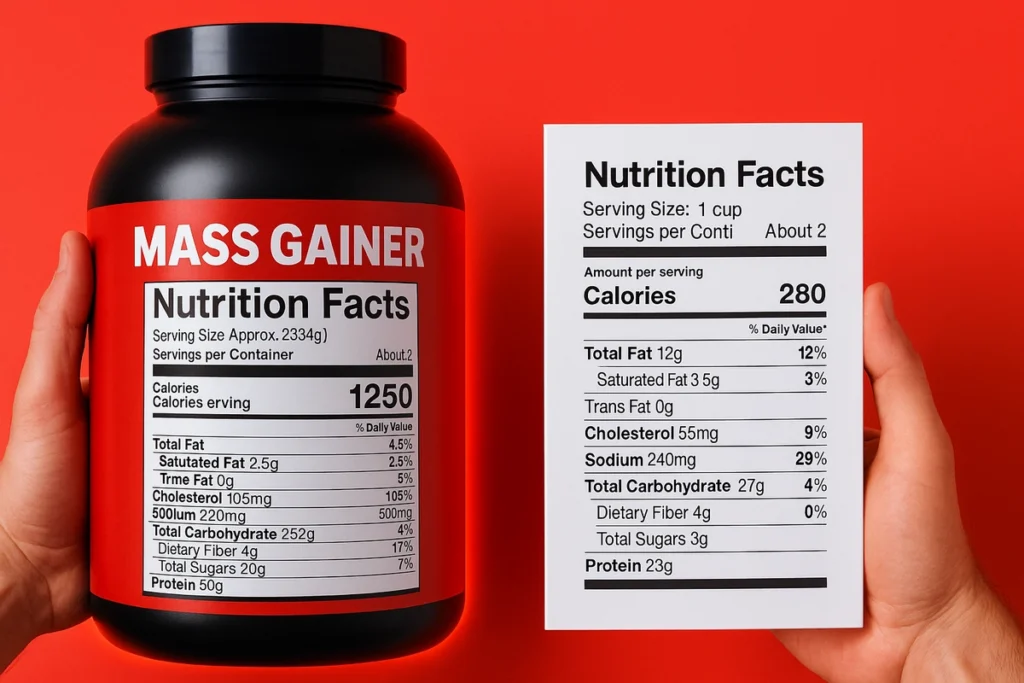
Aspect | Mass Gainer | Whole Food |
|---|---|---|
Calories | Fast and dense | Slower and more controlled |
Nutrients | Often lacks fiber/micronutrients | Rich in vitamins, minerals, fiber |
Digestion | Can cause bloating/sluggishness | Easier on the gut (when planned) |
Satiety | Not very filling | Keeps you full and satisfied |
Cost | Can be pricey long term | More affordable over time |
For a deeper look at digestive effects, see mass gainer side effects.
When a Mass Gainer Makes Sense

There are situations where a quality mass gainer helps.
If you’re a beginner with a fast metabolism, or someone who can’t find time to eat 5 solid meals, a post-workout shake or breakfast gainer can help bridge the gap.
One of my clients, Eric, was working 12-hour shifts. We added one homemade gainer shake to his routine, and he started gaining steadily without the stomach issues.
The Homemade Shake That Replaces a Mass Gainer
When Eric switched from commercial gainers, this is the shake he used daily. No sugar crash. No bloat. Just clean calories.
- 1 cup rolled oats (blend dry first into powder)
- 2 scoops whey protein (unflavored or vanilla)
- 1 large banana
- 2 tbsp peanut butter
- 2 cups whole milk (or oat milk for lighter digestion)
✨ Macros: ~850 calories | 55g protein | 90g carbs | 35g fat
🗒️ Instructions: Blend oats into powder first. Add remaining ingredients. Blend until smooth. Drink immediately or refrigerate for up to 12 hours.
In some cases, adding creatine to your gainer may improve performance and recovery. And yes, you can use mass gainer on rest days too, especially if your total calorie intake is still under target.
Can You Build Muscle Using Only Mass Gainers?
Yes, but the quality suffers. Mass gainers provide enough protein and calories to trigger growth, but the excess sugar and cheap carbs often lead to more fat gain than muscle.
You’ll get bigger on the scale, but without whole food nutrients, recovery and long-term health take a hit.
When Whole Foods Are the Smarter Choice

If you want more control over your macros, better digestion, and leaner muscle gains, whole food is the clear winner.
It also teaches you habits you can sustain for life. You’re not relying on a tub of powder—you’re learning how to eat to fuel your body properly.
And if you’re an intermediate or advanced lifter looking to clean up your bulk, there’s no substitute.
Is Bulking With Real Food Slower?
Yes, slightly. Whole food bulking typically yields 0.5 to 1 pound gained per week, compared to 1 to 2 pounds with mass gainers. But the weight is leaner, with less fat and water retention. Slower scale movement means better mirror results and less aggressive cutting later.
A Full Day of Whole-Food Bulking (3,200 Calories)
Meal | Food | Calories (approx.) |
|---|---|---|
Breakfast | 4 scrambled eggs, 1 cup oatmeal with honey, 1 banana | 700 |
Mid-Morning | 1 cup Greek yogurt, 1/4 cup almonds, 1 apple | 500 |
Lunch | 200g chicken breast, 250g white rice, 1 tbsp olive oil, steamed broccoli | 750 |
Pre-Workout | 2 rice cakes with peanut butter and sliced banana | 350 |
Post-Workout | Homemade shake (see recipe above) or 200g lean beef with 300g sweet potato | 850 |
Evening Snack | Cottage cheese with blueberries | 200 |
Adjust portions based on your TDEE. Add 200-300 calories every two weeks if the scale stalls.
Looking for alternatives with fewer additives? Check out this sugar-free mass gainer guide or go fully whole-food.
Real Results: My Clients and My Own Experience

One of my clients, Carlos, started on a commercial gainer. After two weeks, he had energy crashes and poor focus in workouts.
We switched him to whole foods with one clean homemade shake daily. Within a month, his strength improved and body fat stayed in check.
Personally, I noticed the best gains in my 3rd and 5th years of training—both times using only real food. My meals were simple: chicken, rice, olive oil, peanut butter, eggs, and oats. Nothing fancy, just consistent nutrition.
Teens often ask about this too—if you’re in that age group, read this guide: Mass Gainer for Teens – Is It Safe and Effective?
My Two Bulks, Two Very Different Outcomes
Year two of training, I bulked with a popular mass gainer. I gained 14 pounds in 8 weeks—but at least 6 of those were water and fat. My waist grew. My energy dipped.
Year five, I bulked only on whole foods. Same surplus, same training. I gained 10 pounds in 10 weeks. This time, my lifts went up steadily, my digestion stayed normal, and I didn’t need to cut aggressively afterward. The mirror showed muscle, not puffiness.
That experience shaped my coaching philosophy: speed of weight gain is not the same as quality of weight gain.
The Real Cost: Money, Time, and Results
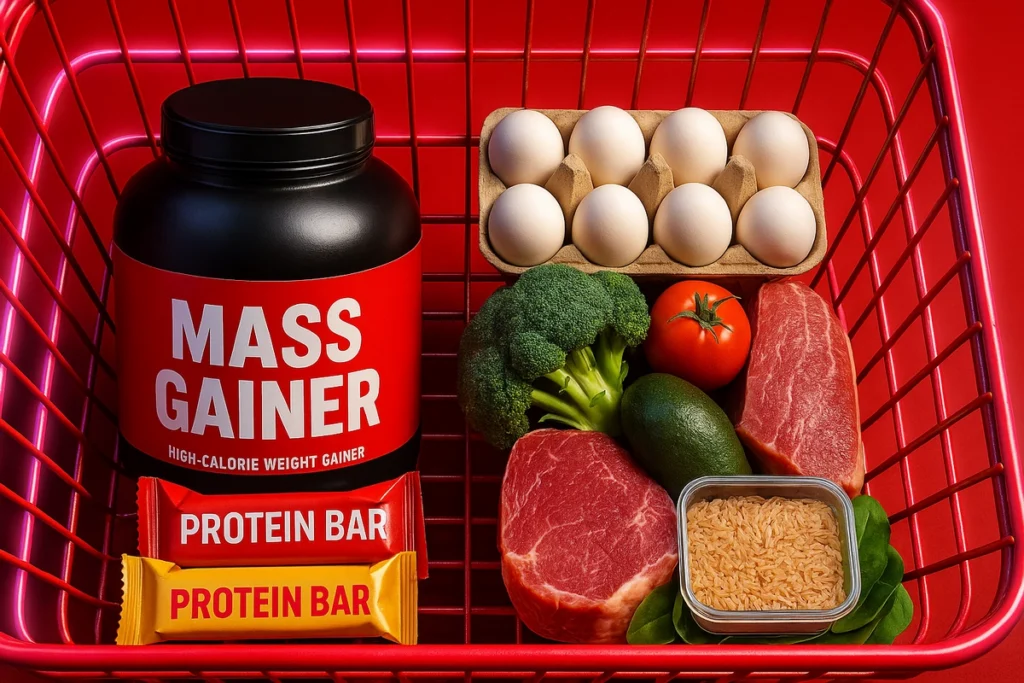
Mass gainers are convenient but not cheap. One tub can be gone in under 10 days—especially if you’re following recommended serving sizes.
Whole foods take time and prep, but they’re cost-effective and adaptable. You can batch-cook, meal-prep, and even carry high-calorie snacks like nuts or protein muffins with you.
If you want the best of both worlds, I often recommend a hybrid plan—whole foods for most meals, and mass gainer after your workout when needed.
Price Per Serving: Gainer Shake vs. Homemade Blend
Commercial Mass Gainer | Homemade Whole Food Shake |
|---|---|
$45 per 10-lb tub | Oats: $0.30 | Whey: $1.20 | Banana: $0.25 |
~15 servings per tub | Peanut butter: $0.35 | Milk: $0.50 |
$3.00 per serving | $2.60 per serving |
The homemade option costs less, delivers real food micronutrients, and won’t leave you bloated. Over a 12-week bulk, that’s a $30+ savings—and better results.
The Best Bulking Strategy for You

So, which should you choose?
- If you’re short on time, struggle with appetite, or need a quick boost—
a clean, homemade gainer or quality supplement can help. - But for long-term results, whole food bulking is the gold standard.
It’s better for your health, your digestion, and your physique.
So, What’s the Healthiest Way to Bulk?
The healthiest way to bulk is with whole foods in a controlled calorie surplus. Prioritize lean proteins, complex carbs, healthy fats, and fiber-rich vegetables.
Aim for 300-500 calories above maintenance to minimize fat gain. This approach supports digestion, steady energy, and quality muscle growth without relying on processed supplements.
Frequently Asked Questions
Yes, but not optimally. Mass gainers supply calories and protein, which are essential for muscle growth. However, they lack the micronutrients, fiber, and healthy fats found in whole foods. Relying on them exclusively often leads to fat gain, digestive issues, and nutrient gaps. They work best as a supplement to a whole-food diet, not a replacement.
Most mass gainers use cheap carbohydrate sources like maltodextrin and added thickeners. These ingredients ferment rapidly in the gut, causing gas, water retention, and that swollen, sluggish feeling. Lactose from low-quality whey concentrates can also trigger bloating if you’re even mildly sensitive. Switching to a homemade whole-food shake usually resolves this.
On the scale, yes. You might gain 0.5 to 1 pound per week with whole foods versus 1 to 2 pounds with mass gainers. But the quality of weight matters more than speed. Whole-food gains are leaner, with less fat and water retention. Slower scale movement often means better mirror results and an easier cut later.
Eat a calorie surplus from minimally processed whole foods. Prioritize lean proteins, complex carbohydrates, healthy fats, and plenty of vegetables. Aim for a 300 to 500 calorie daily surplus. Use homemade blended shakes if you struggle with appetite or time. Keep processed supplements to a supportive role, not the foundation.
Yes. Mass gainers are often loaded with simple sugars that spike insulin. When your body doesn’t immediately use that energy for muscle repair, it stores the excess as fat, often around the midsection. If your goal is lean muscle without added waist size, whole foods give you far better control over calorie quality and partitioning.
Almost always. A homemade shake using oats, whey, banana, peanut butter, and milk gives you the same calorie density without artificial fillers, added sugars, or digestive irritants. It costs less per serving and delivers real-food micronutrients. The only advantage of a commercial gainer is 30 seconds of saved prep time.
Start by calculating your maintenance calories using a TDEE calculator. Add 300 to 500 calories on top. For most men, this lands between 2,800 and 3,500 daily. Track your weight weekly. If the scale hasn’t moved after two weeks, add another 200 calories. Quality matters as much as quantity—get those calories from real food whenever possible.
Not as a first resort. Beginners make rapid progress with even modest nutrition improvements. Whole foods teach portion awareness, meal timing, and sustainable habits. If a beginner truly struggles to eat enough solid meals, a homemade shake is a far better starting point than a commercial powder. Build the habit first, supplement only if necessary.
Only if you can’t hit your calorie target with solid meals. Muscle repair happens on rest days, so your body still needs a surplus. But there’s nothing magical about a gainer shake. Whole-food meals are equally effective and often more satisfying. If you’re short on calories, a small homemade shake bridges the gap without overcomplicating things.
Stick to nutrient-dense staples. Chicken breast, lean beef, eggs, and Greek yogurt for protein. Oats, rice, sweet potatoes, and quinoa for carbs. Avocado, olive oil, nuts, and peanut butter for healthy fats. Add plenty of vegetables for fiber and micronutrients. These foods give you the calories you need without the digestive and metabolic downsides of processed supplements.
Leave a Reply