

Tired of eating nonstop and still not seeing the scale move? You’ve probably thought about grabbing a mass gainer.
They promise fast weight gain, bigger muscles, and easier bulking — all in one shake. Sounds like the perfect shortcut.
But here’s what most people don’t realize until it’s too late: mass gainers can backfire fast. Bloating, stubborn fat gain, energy crashes, acne flare-ups, and stomach problems aren’t rare — they’re common side effects when you use the wrong product or the wrong approach.
- Bloating and stomach discomfort often come from cheap fillers like maltodextrin and artificial sweeteners.
- Unwanted fat gain happens when shake calories stack on top of meals without tracking.
- Blood sugar spikes and crashes from high-glycemic carbs leave you drained and craving junk.
- Acne and oily skin can be triggered by insulin spikes and low-quality dairy blends.
- Low-quality fillers and additives wreck digestion and work against your progress.
✅ The good news? You can avoid almost all of this with a few smart adjustments.
- Start with a clean gainer (minimal sugar, no maltodextrin).
- Test your tolerance with half a serving first.
- Take it post-workout instead of before bed.
- Track your total daily calories — always.
And if powders still don’t sit right, a homemade shake with oats, whey, banana, and nut butter often works even better.
As a fitness coach who’s used gainers personally and guided dozens of clients through bulking, I can tell you this: the issue isn’t the gainer itself — it’s how you use it.
In this article, I’ll walk you through the five most common mass gainer side effects, who’s most at risk, and exactly how to avoid the downsides while still building muscle the smart way.


Table of contents
Are Mass Gainers Safe?
Yes — for most healthy people, mass gainers are safe when used correctly.

They’re not magic, and they’re not poison. They’re a convenience tool: a way to get a large dose of calories, protein, and carbs into one easy shake when real food isn’t enough.
I’ve used them personally during stubborn bulks and have coached dozens of hardgainers through the same struggle. When used smartly, they help you put on size faster without wrecking your digestion or health.
But here’s where it goes wrong: many people over-serve themselves, pick the wrong formulas, or use them at times that do more harm than good — and that’s when bloating, fat gain, and blood sugar crashes kick in.
The fix is simpler than most think. Choosing a clean gainer with minimal sugar, starting with half a serving, and getting your timing right — like taking it post-workout rather than before bed — makes a huge difference. Small adjustments, not total avoidance, are what keep side effects off the table.
What Are Mass Gainers Made Of?
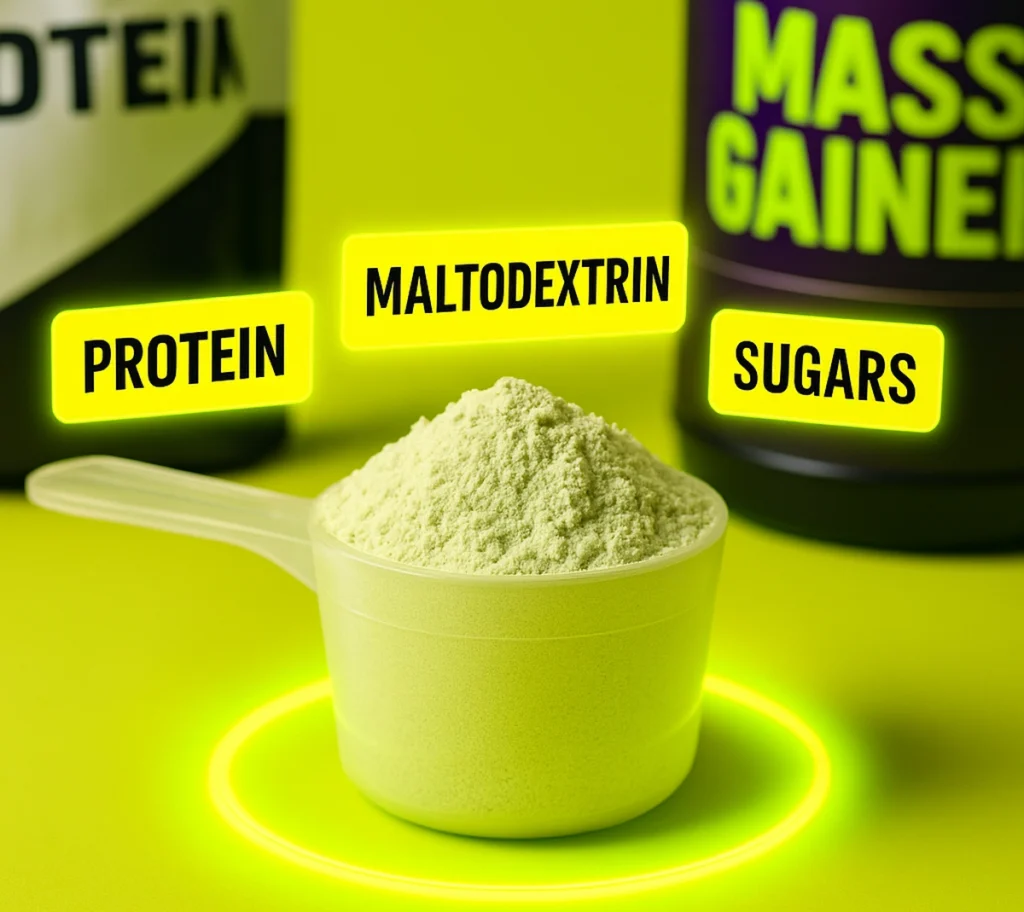
Mass gainers are high-calorie powders designed to deliver a large calorie load in a single shake — typically anywhere from 500 to over 1,200 calories per serving. Most are built around a simple combination:
- Fast-digesting carbs (usually maltodextrin or dextrose) as the primary calorie driver
- Protein from whey, casein, or a blend of both
- Small amounts of fats for texture and calorie density
- Sometimes fortified with extras like creatine, vitamins, minerals, or digestive enzymes
The goal is straightforward: help you bridge the gap between the calories you eat and the calories you need to grow.
But not all gainers are created equal. Low-quality formulas rely heavily on cheap fillers, maltodextrin as the very first ingredient, and sugar-laden flavor systems — and that’s exactly where most side effects begin.
If you’re unsure whether a mass gainer is the right tool or if a standard whey protein would work better for your bulk, I’ve compared the two in detail: Mass Gainer vs Whey Protein for Bulking.
5 Mass Gainer Side Effects You Should Know

1. Bloating and Stomach Discomfort
This is the complaint I hear the most.
One of my clients, Marko from Croatia, once told me he felt like he was “carrying a balloon” in his stomach after every shake. Turns out, the gainer was loaded with maltodextrin and artificial sweeteners.
Why it happens:
- Maltodextrin and artificial sweeteners pull water into the gut and ferment quickly
- Lactose from low-grade whey concentrate can trigger gas and cramping if you’re sensitive
- Drinking a 1,000-calorie shake in 30 seconds overwhelms digestion
- Most gainers contain zero fibre, which slows gastric emptying
How to fix it:

- Sip the shake slowly over 15–20 minutes
- Start with half a serving to test your gut tolerance
- Add a teaspoon of psyllium husk or blend in oats for natural fibre
- Switch to a gainer with digestive enzymes (protease, lactase, amylase) and no artificial sweeteners
2. Unwanted Fat Gain
Another guy I coached, James from the UK, gained 4 kg in a month — but half of it was belly fat.
He wasn’t tracking his intake and was drinking two full servings a day without adjusting his meals. That “extra” shake was simply a calorie surplus his body didn’t need.
Why it happens:
- Shake calories are added on top of a full diet instead of replacing a meal
- Serving sizes are often unrealistically large for the average lifter
- Low-protein, high-carb gainers skew nutrient partitioning toward fat storage
How to fix it:
- Track your total daily calorie intake, including the shake, for at least a week
- Replace a meal with the gainer when bulking, don’t just add it
- Use half a serving as a starting point and only increase if the scale stalls
- For a full breakdown of cleaner bulking strategies, read: Mass Gainer Without Fat Gain
3. Blood Sugar Spikes and Crashes
High-carb gainers — especially ones with dextrose or maltodextrin as the first ingredient — can send your blood sugar soaring, then crashing down an hour later.
The result? Low energy, brain fog, sugar cravings, and in some people, worsening acne (see #4). That post-shake slump is not in your head.
Why it happens:
- High-glycemic carbs hit the bloodstream almost as fast as pure glucose
- No fibre, fat, or protein slow-down means a rapid insulin surge
- The crash triggers cortisol and hunger signals, making you overeat later
How to fix it:
- Choose a gainer with lower-GI carb sources (oat flour, sweet potato powder, or even a blend with fibre)
- Take it post-workout when your muscles are primed to pull glucose out of the blood without a huge insulin spike
- If you must use a high-carb gainer, blend it with a tablespoon of nut butter or oats to blunt the spike
4. Acne and Oily Skin
I’ve seen this mostly in younger clients using cheap gainers.
It’s not the gainer directly causing the breakout — it’s the downstream hormonal effect. A massive insulin spike from high-glycemic carbs ramps up sebum production, and low-quality dairy protein blends can make things worse for sensitive individuals.
Why it happens:
- Insulin surges increase IGF-1 and androgen activity, both linked to acne
- Lactose and whey concentrate can be pro-inflammatory if you’re dairy-sensitive
- Artificial sweeteners may alter gut bacteria, indirectly affecting skin
How to fix it:
- Stick to gainers with minimal added sugar and no artificial sweeteners
- Opt for a whey isolate or a dairy-free blend (pea and rice protein) if acne persists
- Keep the shake post-workout and avoid carb-heavy shakes on rest days
5. Low-Quality Fillers and Additives
Many popular gainers rely heavily on fillers, added sugar, and artificial flavors to hit an impressive calorie count on the label while keeping costs down.
These don’t just impact your health — they make it harder for your body to absorb the nutrients you actually need.
Why it happens:
- Maltodextrin is dirt cheap and legally counts as a “complex carb” despite spiking blood sugar faster than table sugar
- Artificial flavors and sweeteners can irritate the gut lining over time
- Low-grade protein blends have lower bioavailability, meaning less of that protein ends up in your muscles
How to fix it:
- Check the ingredient list: if maltodextrin is the first ingredient, put it back
- Avoid anything with sucralose, acesulfame potassium, or “natural and artificial flavors” as major components
- Look for gainers with minimal ingredients — you should recognize everything on the label
Summary: Nearly every mass gainer side effect traces back to one thing — cheap ingredients and poor usage. By choosing a clean formula, watching your serving size, and timing it right, you can enjoy the calorie convenience without the downsides.
Who Is Most Likely to Get Side Effects?

⚠️ You’re more likely to experience issues with mass gainers if:
- You have a sensitive stomach or digestive issues
- You’re not training hard enough to justify the extra calories
- You’re already eating a calorie surplus
- You use cheap brands with poor ingredient profiles
✅ Mass gainers are best for:
- Busy hardgainers
- High-calorie meal replacements
❌ Not great for:
- Casual lifters
- People prone to fat gain
If you’re someone with a fast metabolism, read this: Best Mass Gainer for Fast Metabolism
How to Avoid Mass Gainer Side Effects (2 Smart Paths)
Over the years, I’ve found that avoiding side effects really comes down to a handful of non-negotiables, followed by a simple decision: buy clean or build your own.

Every client I work with starts with these five rules — no exceptions:
- Choose a gainer with minimal sugar and at least 30 g of protein per serving
- Start with half a serving to test your gut tolerance before ever going full scoop
- Take it post-workout, when your body is primed to use the carbs without a big insulin swing
- Avoid it before bed unless the formula is specifically low in carbs and sugar
- Read the label like a detective — if maltodextrin or artificial sweeteners sit near the top, walk away
Once those are locked in, the path splits. You either grab a clean, research-backed commercial gainer, or you blend up something yourself.
Path 1 – Choose a Clean Commercial Gainer
If convenience is king, a well-formulated powder is still a solid choice.
The key: find one that uses real food-based carbs, a high-quality protein isolate, and skips the junk entirely. I’ve personally had the best consistency and zero digestive drama with these:
- Transparent Labs Mass Gainer – Built on whole-food carb sources like sweet potato and oat flour, with grass-fed whey isolate and zero artificial sweeteners. It also includes digestive enzymes (protease, lactase), which makes a real difference for bloating.
- Rule 1 Mass Gainer – A clean, high-protein option that avoids maltodextrin entirely, uses whey isolate and concentrate, and keeps sugar remarkably low. Digestion-friendly and no unnecessary fillers.
If dairy itself is your gut’s enemy, look for a plant-based gainer that uses pea and rice protein blends and avoids sucralose and maltodextrin — many small, transparent brands now fill that gap nicely.
Both of the above are what I’d call “label-friendly” gainers: you can read every ingredient and understand it. That’s the benchmark.
Path 2 – Make Your Own Homemade Shake
In my coaching practice, I often replace commercial gainers with a homemade option. It gives you full control over ingredients, costs less per serving, and almost always digests better.
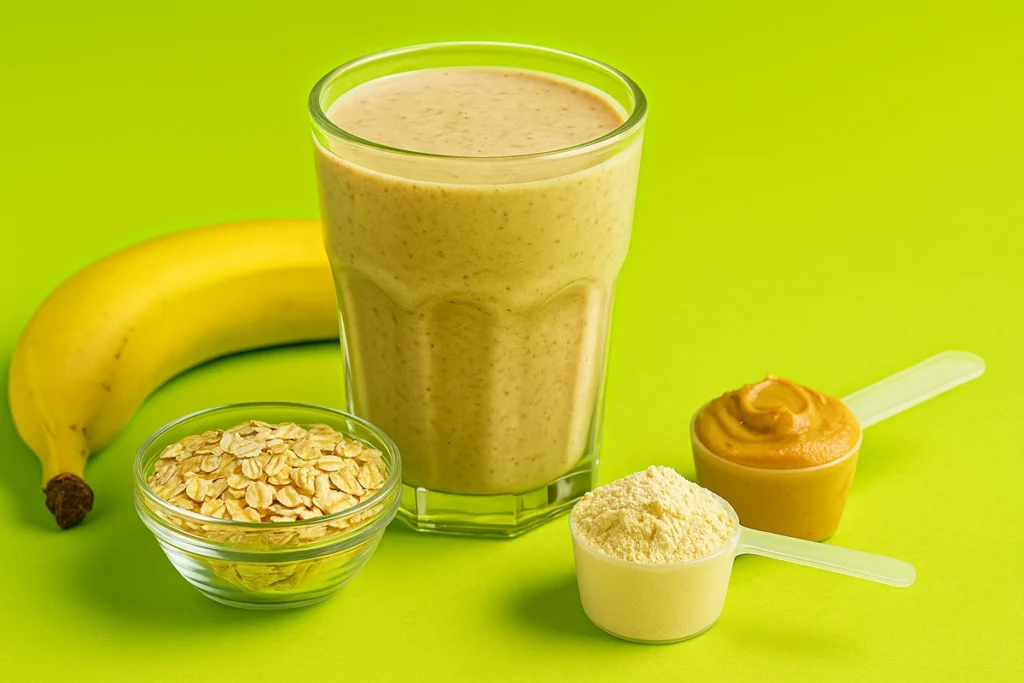
Here’s the simple base recipe I’ve used myself and recommended to dozens of clients:
Base Recipe
- 1 scoop whey protein
- 1 banana
- ½ cup oats
- 1 tbsp peanut butter
- 1.5 cups almond milk
- (Optional: honey or Greek yogurt)
It’s clean, customizable, and easy on your stomach — plus you know exactly what’s in it. One shake typically lands between 500 and 650 calories with a solid balance of protein, slow carbs, and healthy fats.
But not everyone needs the exact same calories. Here’s how to tweak this base recipe for different goals — no need for a store-bought mass gainer at all.
Low-Sugar Lean Bulk Option
Skip the honey and use a ripe banana for natural sweetness. Replace almond milk with unsweetened almond milk and choose a plain whey with no added sugar. This lowers the sugar content significantly while keeping the muscle-building calories intact.
Dairy-Free / Lactose-Free Option
Swap the whey for a high-quality plant protein (pea or a pea-rice blend). Choose oat milk or extra almond milk instead of Greek yogurt. The peanut butter and banana keep the texture creamy, so you won’t miss the dairy.
Bulking Monster (High-Calorie Version)
If you’re a true hardgainer and need to pack in the calories:
- Increase oats to ¾ cup
- Add 1 tablespoon of coconut oil or MCT oil
- Use whole milk instead of almond milk
- Add a second tablespoon of peanut butter
This pushes the shake well above 800 calories without any cheap fillers.
Pre-Bed Slow-Release Option
Before sleep, you want slow-digesting protein and fewer sugars. Replace whey with casein (or a milk protein blend), remove the banana, and use almond butter instead of peanut butter for a lower-carb fat source. A dash of cinnamon helps with blood sugar stability overnight and adds taste without calories.
With these four variations, you have a homemade mass gainer for almost every situation — clean, adjustable, and free from the maltodextrin and artificial junk that cause most side effects. I’ve seen clients make better progress with this approach than with any powder in a tub.
Should You Use Mass Gainers? (Final Verdict)
If you’re a true hardgainer who struggles to eat enough food during the day, a clean mass gainer can absolutely help.
But for most lifters, real food plus whey protein will give you better control over your body composition, digestion, and progress.
Mass gainers aren’t a magic solution — they’re a tool.
Used smartly, they can make bulking easier. Used carelessly, they can backfire.
I always tell my clients:
Train hard, eat smart, and don’t rely on shortcuts.
If your base diet is solid and your workouts are intense — then yes, a mass gainer might be the missing link.
For more tips, check out Best Mass Gainer for Skinny Guys.
🩺 This article is based on my coaching experience and research. Always consult a healthcare professional before starting new supplements.
Common Questions About Mass Gainer Side Effects
The most common side effects are bloating, gas, unwanted fat gain, blood sugar spikes, and acne or oily skin. These usually happen when using cheap formulas high in maltodextrin, sugar, or artificial sweeteners, or when taking too many servings without adjusting your total daily calories.
No. Bloating is mainly caused by low-quality ingredients like maltodextrin, lactose, and artificial sweeteners. Clean mass gainers with natural carb sources (like oat flour), digestive enzymes, and no artificial additives are much less likely to cause stomach issues.
Yes. If you drink multiple servings per day without tracking your overall calorie intake, the excess calories get stored as fat — often around the belly. To avoid this, use mass gainers only to fill a calorie gap, not on top of a full meal plan.
Mass gainers can trigger acne through large insulin spikes from high-glycemic carbs and low-quality dairy protein blends. This hormonal response increases oil production and inflammation, especially in people who are already acne-prone.
Choose a clean gainer with minimal sugar and no maltodextrin. Start with half a serving to test your stomach. Take it post-workout when your body handles carbs better. Avoid drinking it before bed if it’s high in sugar. Always track your total daily calories so you don’t overshoot and gain fat.
The best options use high-quality proteins (like whey isolate), slower-digesting carbs (like oat flour or sweet potato powder), and no artificial sweeteners. Brands like Transparent Labs and Rule One are popular choices because they avoid cheap fillers and include digestive enzymes.
Leave a Reply