

Struggling to wake up and crush your early morning workouts? You’re not alone.
Many lifters turn to caffeine to boost energy, focus, and performance—but the timing makes all the difference.
Take it too late, and it kicks in after your workout. Take it too early, and you miss the peak window.
In this article, I’ll break down the best time to take caffeine for early morning training, based on science, personal experience, and real client results.
Let’s optimize your morning performance—one cup at a time.
Table of contents
- When to Drink Coffee Before Morning Training
- How Much Caffeine to Take Before a Workout
- Best Caffeine Sources for Early Gym Sessions
- Fasted vs. Fed: Coffee on an Empty Stomach?
- Why Caffeine Timing Affects Morning Performance
- Side Effects of Early Morning Caffeine
- Final Verdict: Smart Caffeine Use for Morning Workouts
- FAQ: Coffee and Morning Workouts
When to Drink Coffee Before Morning Training
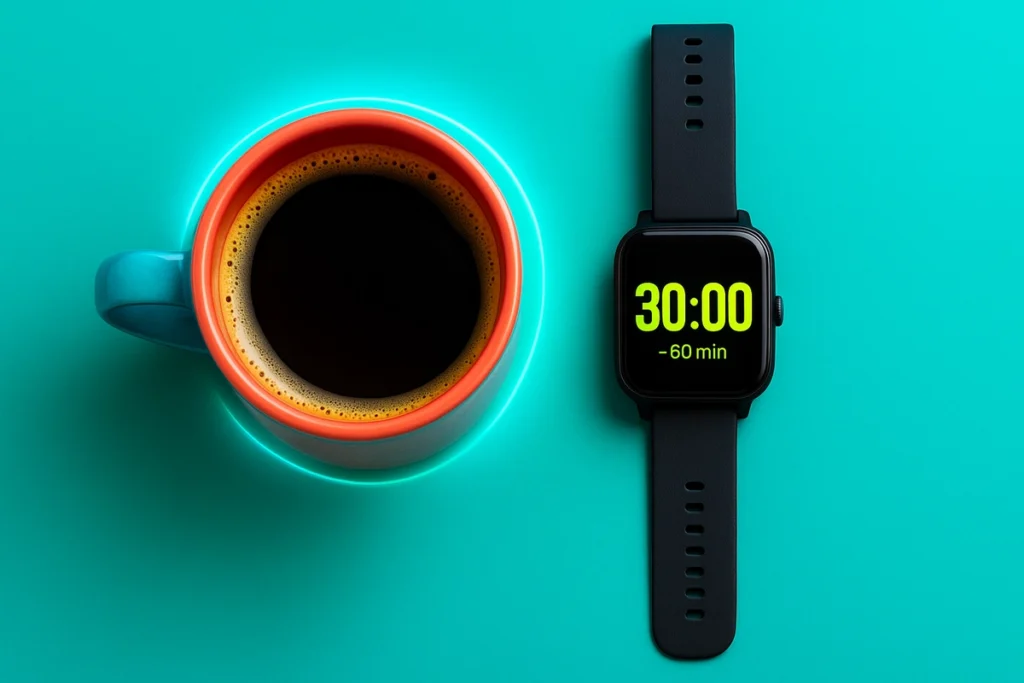
If you’re hitting the gym right after waking up, the best time to take caffeine is 30 to 60 minutes before your workout.
That window gives your body enough time to absorb the caffeine and unlock its full benefits—like improved alertness, sharper focus, and better strength output. Personally, I aim for 35–40 minutes. It’s my sweet spot, and I’ve seen it work for clients too.
For more detailed insights on optimal caffeine timing in general, check out this complete guide.
⚡ Caffeine crashes hitting hard?
Timing and cycling fix the energy rollercoaster completely.
Maximize Energy Without Crashing FreeHow Much Caffeine to Take Before a Workout
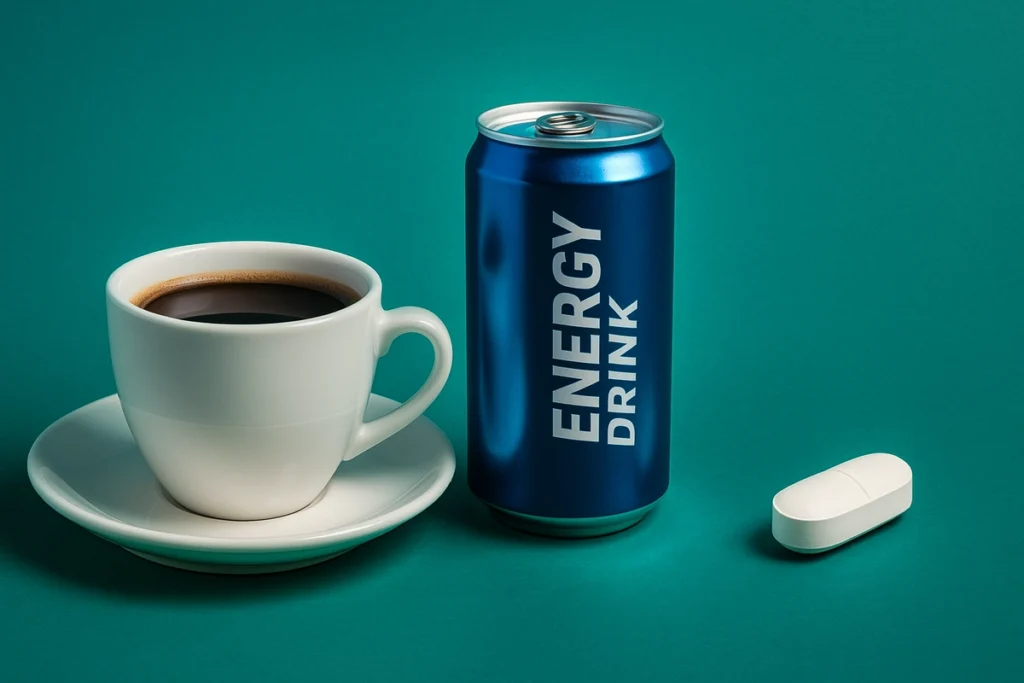
The research supports 3–6 mg of caffeine per kg of bodyweight for performance.
But let’s keep it real—not everyone needs the upper end. I typically take around 150–200 mg, which is about one strong cup of black coffee.
It gives me all the focus and energy I need without jitters.
One of my clients, Carlos, used to struggle through his 6:30 AM sessions. I suggested a small cup of coffee before his warm-up.
A week later, he said, “It was like flipping a switch—I was finally awake.”
Everyone’s tolerance is different, so start low and listen to your body.
If you need help resetting your sensitivity, here’s a full guide on how to manage caffeine tolerance.
Best Caffeine Sources for Early Gym Sessions
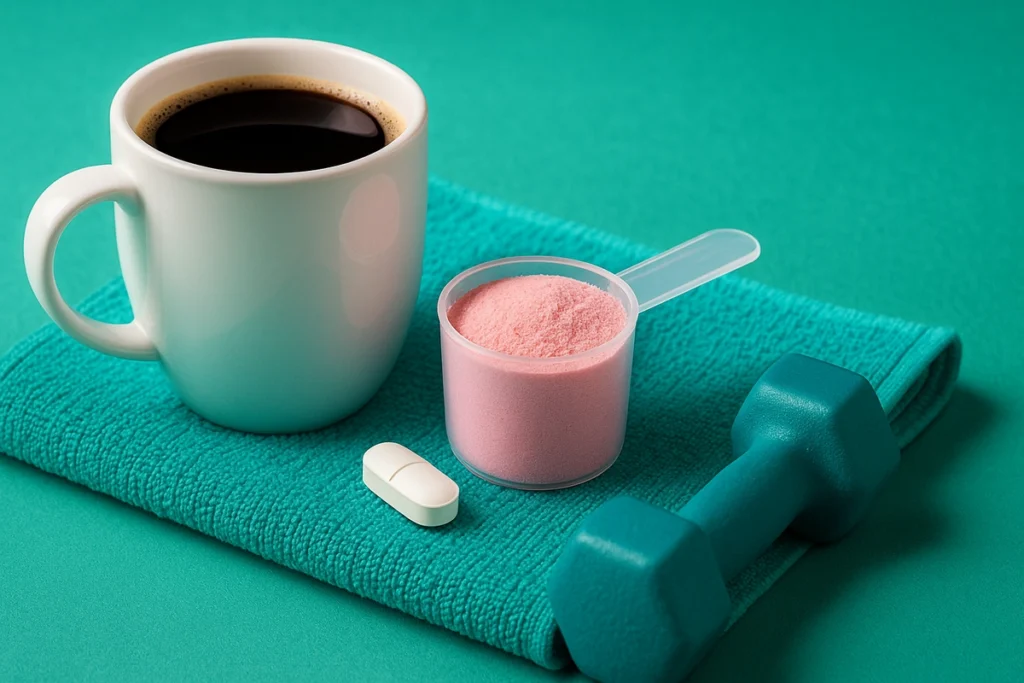
Here’s what I’ve tested (and what works best):
- Black Coffee – My go-to. It’s natural, fast, and clean.
- Caffeine Pills – Great for when I’m in a rush or need a precise dose.
- Pre-Workout Drinks – I use them occasionally, but I’m picky because many are overloaded with sweeteners and stimulants.
For beginners, I always recommend starting with coffee.
It’s the easiest way to test your reaction without committing to something heavy.
For a deeper comparison, check out caffeine pills vs coffee for gym performance.
Also, you can find stimulant options that won’t cause a crash in this no-crash caffeine supplement guide.
Looking for more natural options? See natural caffeine sources for pre-workout.
You just read everything about caffeine. Now let’s make it work for YOUR body.
I’ll design your personalized supplement protocol — exact timing, dosage, and stacking for your specific goal. No templates. No bots. A real coach who reads your answers.
Pay what you want after you receive it. No risk. No pressure.
Fasted vs. Fed: Coffee on an Empty Stomach?
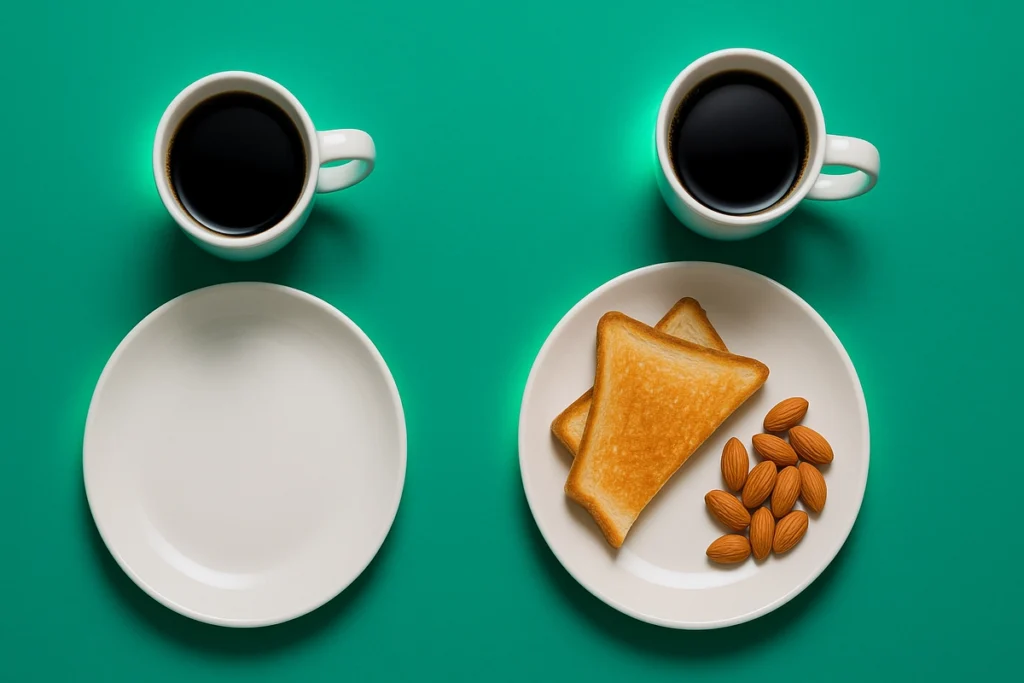
Caffeine on an empty stomach can hit faster and feel stronger—but it’s not for everyone.
Personally, during cutting phases, I’ve often trained fasted with just coffee, and it helped suppress hunger while boosting focus.
In 2023, while prepping for a summer shoot, I relied on this strategy for morning HIIT.
That said, I’ve learned the hard way: too much caffeine fasted can cause nausea or light-headedness. So now, if I wake up feeling off, I’ll have a few almonds or half a slice of toast with it.
Some of my clients, like Emily, felt better this way too.
Curious about the best practices? Explore more in this caffeine and fasted cardio guide.
Why Caffeine Timing Affects Morning Performance
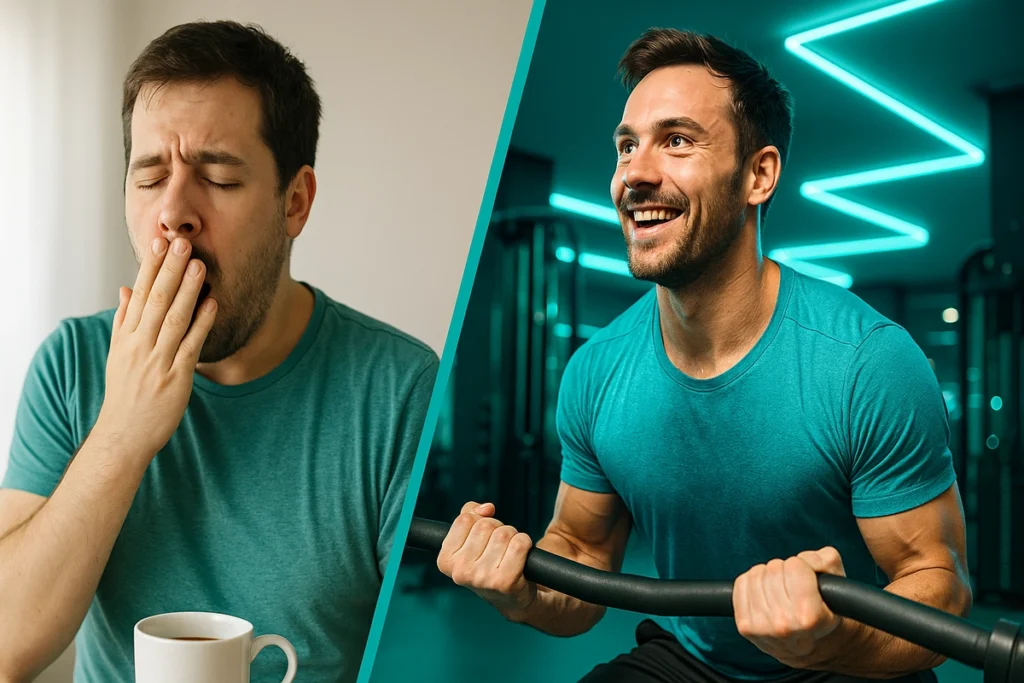
Early mornings are rough. Your body’s still shaking off sleep, cortisol levels are naturally rising, and your nervous system might not be fully alert.
This is where caffeine shines.
The Science of the Timing Window: Adenosine & Alertness
When you wake up, the sleep-inducing molecule adenosine is still clearing from your brain. Drinking caffeine immediately blocks adenosine receptors, but your body is already doing the job naturally. This is why some experts recommend a 90-minute delay. However, for early morning lifters, this isn’t always realistic. The 30–60 minute sweet spot is a powerful compromise: you hydrate first, let your natural cortisol awakening response do its work, then use caffeine as a targeted performance amplifier right as you start your warm-up. The caffeine peak (45–60 minutes post-ingestion) then perfectly aligns with your heaviest sets.
Taking caffeine first thing helps counter that “morning fog” by stimulating the central nervous system and giving your brain a jolt of clarity.
On days I skip it, I feel the drag—especially on heavy deadlift mornings. But with a small black coffee before my warm-up, I’m locked in by the first working set.
If you want to learn how caffeine enhances your brain and focus during early lifts, read this article.
Side Effects of Early Morning Caffeine

Caffeine’s a tool, but it can backfire if abused.
I’ve had days where too much caffeine led to poor sleep—especially when I took it again later in the afternoon.
That’s why I avoid caffeine after 2 PM now.
Also, watch out for stomach sensitivity. When I trained fully fasted with a high dose, I got light nausea mid-session.
A small snack usually solves this.
Clients with anxiety or sleep issues should also monitor their intake.
For details, read about the side effects of high-dose caffeine.
Final Verdict: Smart Caffeine Use for Morning Workouts
Here’s what I tell every client (and follow myself):
Use caffeine as a performance tool—not a daily crutch.
Take it 30–60 minutes before early morning workouts, stick to moderate doses, and learn how your body responds.
For best results, give your body caffeine-free breaks a couple of days per week to maintain sensitivity.
When timed right, caffeine can elevate your performance, sharpen your focus, and energize your mornings.
For a complete morning performance stack, the caffeine + creatine combo is one of the most researched and effective protocols. Take your caffeine 30–60 minutes pre-workout and 5g of creatine immediately post-workout or with your morning shake. Here’s the full science-backed caffeine + creatine combo guide.
Also, don’t overlook recovery—caffeine may even help reduce muscle soreness.
FAQ: Coffee and Morning Workouts
Yes, for most people. Coffee on an empty stomach can boost alertness faster and may enhance fat burning. However, it can cause stomach discomfort, acid reflux, or jitters in sensitive individuals. If that happens, eat a small snack like half a banana or a few almonds with your coffee.
The ideal window is 30 to 60 minutes before training. Caffeine levels peak in your bloodstream around 45 to 60 minutes after consumption. Taking it within this window ensures you hit your first working set with maximum focus and energy.
Aim for 3 to 6 mg of caffeine per kilogram of bodyweight. For most people, this translates to 150 to 200 mg, or roughly one strong 8 to 12 oz cup of black coffee. Start at the lower end if you’re sensitive or new to caffeine.
The 90-minute delay is based on sleep science, which suggests letting adenosine clear naturally before consuming caffeine. For early gym sessions, this is often impractical. A realistic compromise: hydrate with water immediately upon waking, do your warm-up, then drink your coffee 30 to 45 minutes pre-workout. This creates a natural short delay without missing the performance window.
Some research suggests caffeine on an empty stomach may increase fat oxidation during exercise. However, the overall effect on long-term fat loss is modest. The bigger benefit for most people is improved workout intensity and focus, which leads to better performance and more calories burned.
Yes. Caffeine pills offer precise dosing and a faster, mess-free option when you’re short on time. A standard 200 mg pill is equivalent to a strong cup of coffee. Start with half a pill if you’re unsure of your tolerance.
Common side effects include jitters, anxiety, rapid heart rate, nausea, and trouble sleeping later that night. To avoid sleep disruption, stop all caffeine intake by 2 PM, especially if you train early in the morning.
Take 2 to 4 consecutive caffeine-free days every few weeks, or cut your dose in half for a week. This allows your adenosine receptors to resensitize, making your regular dose feel effective again without needing more.
Absolutely. The caffeine and creatine combination is well-researched and effective. A simple protocol: take your caffeine 30 to 60 minutes before training, and consume 5 grams of creatine post-workout or with your morning shake. Both supplements complement each other for strength and focus.
For most people, yes. Black coffee is natural, fast-absorbing, inexpensive, and free from artificial sweeteners and unnecessary additives found in many pre-workout powders. It’s the cleanest starting point for beginners and experienced lifters alike.
Leave a Reply