
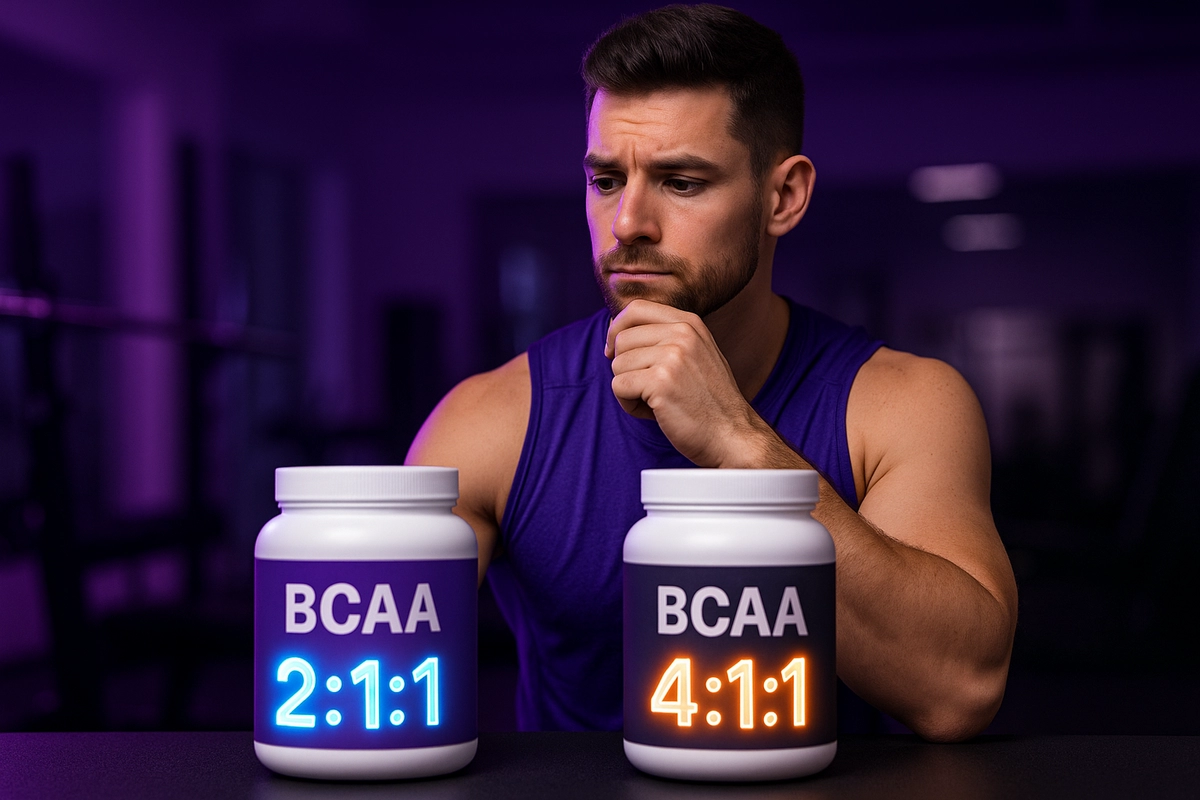

Walk into any supplement store, and you’ll see them side by side: BCAA 2:1:1 and BCAA 4:1:1.
Both promise more muscle, better recovery, less soreness. But which one actually delivers?
Some say extra leucine (that’s the 4 in 4:1:1) means faster gains. Others stick with the balanced 2:1:1 because that’s what most studies use.
I’ve tested both on myself and coached clients through cuts, bulks, and everything in between.
Here’s what actually works — no marketing fluff.
Table of contents
So, Which One Wins? (Quick Answer)
Ratio | Best For |
|---|---|
2:1:1 | Most lifters (balanced – cutting, bulking, maintenance) |
4:1:1 | Advanced lifters / fasted training / deep calorie deficit |
3:1:2 | Endurance athletes (rare – limited research) |
8:1:1 | Clinical muscle-wasting conditions (not for general fitness) |
✅ 2:1:1 (211) is the best BCAA ratio for most lifters. Here’s why.
It’s backed by science, proven in real training scenarios, and trusted by coaches and athletes worldwide.
Yes, 4:1:1 looks more “powerful” on paper with extra leucine—but more isn’t always better.


If you want to learn how to dose BCAAs effectively, especially during cutting, check out my full BCAA dosage for cutting guide.
🧭 Which BCAA Ratio Is Right for You?
Click your answers below – we’ll show your result instantly.
🏆 90% of lifters end up with 2:1:1 – and that’s perfectly fine.
Let’s Break Down Those Numbers First
BCAA ratio refers to the proportion of leucine : isoleucine : valine in a supplement.
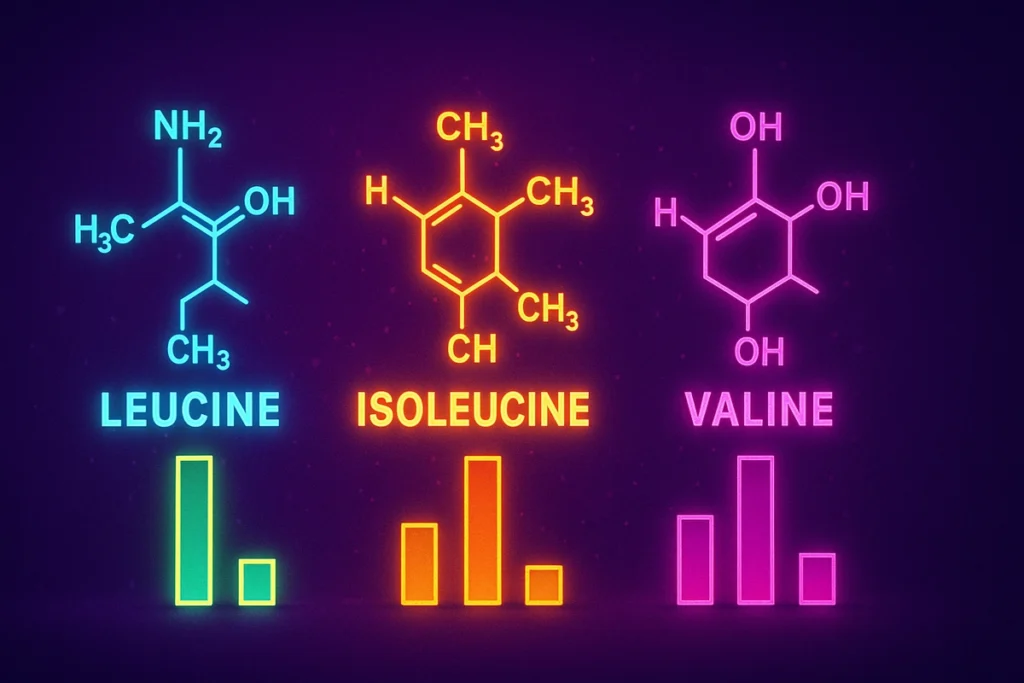
For example, 2:1:1 means twice as much leucine as the other two.
This matters because leucine drives muscle growth, but isoleucine and valine support energy and endurance.
Isoleucine helps with glucose uptake and energy, while valine assists with focus and muscle endurance—which is crucial for runners and endurance athletes.
Why 2:1:1 Has Been the Gold Standard
After more than a decade of training and coaching, I keep coming back to one ratio: 2:1:1.
Not because it’s flashy. Because it works.
I’ve put popular formulas like Scivation Xtend and ON BCAA 5000 through cutting phases, bulking phases, and everything in between. The result? Smoother recovery. Less soreness – especially after those brutal leg days. And noticeably better energy between sets.
Take Sofia, a client from Greece. She ran a demanding CrossFit program five days a week on 2:1:1 alone. Her feedback still sticks with me: “I bounce back so much faster now.”

There’s a simple reason this ratio delivers. It mirrors what you’d naturally get from whole food proteins like chicken, eggs, or whey. And it’s the same ratio most scientific studies use when testing BCAAs.
So no, 2:1:1 isn’t a marketing gimmick. It’s the real-world, research-backed standard that’s earned its spot in my supplement stack – and my clients’.
For those wondering about BCAAs vs complete proteins, you can read the full comparison here: BCAAs vs Protein Powder – Do You Still Need BCAAs?
Does Extra Leucine in 4:1:1 Actually Help?
Let’s be real—leucine is the MVP when it comes to building muscle.
So, does more leucine mean faster gains? Not necessarily.
I tested a European 4:1:1 product during a cutting cycle. While it gave me a slight mental kick in the beginning, that edge faded quickly.
By the end of my workout, I felt a bit more drained. Plus, I started noticing bloating and occasional light headaches.
Later, I realized I was taking in too much leucine—something I explain in my article about BCAA overdose and side effects.
Another client of mine, Marc from Belgium, also experimented with 4:1:1 during prep. He mentioned his joints felt “drier” and that recovery didn’t feel as complete.
The takeaway?
Overloading leucine might actually suppress the benefits of isoleucine and valine—breaking the synergy BCAAs are meant to provide.
What About the Weird Ones? (8:1:1, 3:1:2, etc.)
You might see supplements advertising 8:1:1 or 3:1:2 ratios. Here’s the truth:
Ratio | What It Means | Should You Use It? |
|---|---|---|
8:1:1 | 8 parts leucine : 1 part isoleucine : 1 part valine | No for healthy lifters. This extreme ratio is designed for clinical muscle-wasting conditions (like cancer or bedridden patients). In active individuals, it can lead to isoleucine deficiency over time, causing fatigue and poor recovery. |
3:1:2 | 3 parts leucine : 1 part isoleucine : 2 parts valine | Probably not. There’s very little research on this ratio for muscle growth. Some endurance brands push it for higher valine (focus/endurance), but it’s not proven better than 2:1:1. |
Bottom line: Stick with 2:1:1 (or 4:1:1 if advanced). The exotic ratios are marketing gimmicks, not science-backed solutions for lifters.
When 4:1:1 Might Actually Make Sense
That said, 4:1:1 isn’t useless.
There are some specific cases where it might be worth testing.
If you’re:
- Training fasted daily
- Deep in a calorie deficit
- Or an advanced lifter hitting two-a-days
then the extra leucine might help you preserve muscle a bit more aggressively.
In these scenarios, 4:1:1 could offer a short-term benefit.
Still, I’d pair it with timing strategies like those I cover in BCAA before vs after workout or even using BCAAs on rest days to avoid wasting the potential of the supplement.
Here’s What I Tell My Clients

Here’s what I tell all my clients:
- Beginners to intermediate lifters: Stick with 2:1:1. It’s proven, balanced, and reliable whether you’re cutting, bulking, or maintaining.
- Advanced lifters or competitors: You can test 4:1:1, but do so with purpose—and monitor how your body responds.
For my own use, I rely on 2:1:1 combined with creatine and glutamine during longer or heavier sessions.
If I’m training fasted or doing early-morning cardio, I mix it into water with electrolytes. It really helps me preserve muscle and reduce soreness. I talk more about this in my guide to BCAAs for fasted cardio and fat loss.
Want to learn how to mix BCAAs for best absorption and taste? I’ve covered that too in this article: How to Mix BCAAs Properly.
And if you’re confused whether to go for BCAAs, EAAs, or full protein powders, here’s a full breakdown: EAAs vs BCAAs vs Protein Guide
Quick Answers to Common Questions
A 4:1:1 ratio means 4 parts leucine to 1 part isoleucine and 1 part valine.
For most people, 2:1:1 (double leucine) is science-backed.
It’s the proportion of leucine : isoleucine : valine in a supplement.
2:1:1 is generally better, but 4:1:1 may help in deep deficits.
2:1:1 mirrors natural protein and works for 90% of lifters.
3:1:2 is rare and not well-studied. Stick with 2:1:1 unless you have specific endurance needs.
Technically yes, but there’s no real benefit. It’s better to choose one ratio that aligns with your training goal.
I prefer them before or during fasted workouts. If you’re training in a fed state, whole protein usually covers your needs.
Not always. But during cutting, fasted training, or low-calorie phases, they can definitely help.
Yes—especially if you’re in a calorie deficit. Even on non-training days, BCAAs can help with muscle preservation.
Final Word:
Don’t get overwhelmed by marketing numbers on the label.
Focus on what actually works in the real world—and what’s proven by science.
The 2:1:1 BCAA ratio remains the gold standard for a reason. I’ve tested both ratios, and seen firsthand how each performs under real training demands.
Trust your body. Train smart. Fuel with purpose.
You’ve got this. 💪
Leave a Reply