

Cutting is tough. You’re eating less, training hard, and doing everything you can to hold onto muscle while the scale drops.
If you’ve been wondering whether BCAAs actually help during a cut — or how much you should even take — you’re asking the right questions.
I’ve tested BCAA timing, dosage, and stacks through multiple cutting phases, both on myself and with clients. Here’s what consistently works.
✨ BCAA Dosage for Cutting: Quick Answer
- Training days: 10g total — 5g pre-workout, 5g intra-workout
- Fasted cardio only: 3–5g before your session
- Lighter or low-intensity days: 5–7g total
- Best ratio: 2:1:1 (leucine, isoleucine, valine)
- Max effective dose: 15g per day — more won’t give extra benefits
Below, I’ll break down exactly why this dosage works, when to take it, and how to adjust it based on your body and goals — backed by real experience, not just theory.
Table of contents
- How Much BCAA Per Day for Cutting
- Why BCAAs Matter During a Cut
- BCAA Timing: When to Take It for Best Results
- BCAA Dosage by Body Weight and Training Intensity
- BCAA for Cutting vs Bulking
- BCAA vs EAA During a Cut
- Do You Need BCAAs to Cut Effectively?
- My Experience Using BCAAs While Cutting
- BCAA for Cutting: Frequently Asked Questions
How Much BCAA Per Day for Cutting
The recommended BCAA dosage for cutting is 10 grams per day, split into two 5g servings — one pre-workout and one intra-workout.
The ideal ratio? Stick with the 2:1:1 formula — that’s 2 parts leucine, 1 part isoleucine, and 1 part valine.
This is the most researched formula and helps stimulate muscle protein synthesis without wasting your money on trend-heavy ratios like 8:1:1.
You don’t need to overdo it. Taking more than 10–15g daily won’t bring extra benefits if your protein intake is already on point.
For tips on how to mix BCAAs for best absorption, check this guide.
⚡ BCAAs without a plan = wasted money
Wrong time = zero muscle recovery. Wrong dose = money down the drain.
Fix My BCAA Timing FreeWhy BCAAs Matter During a Cut
BCAA for Weight Loss: Why It Helps
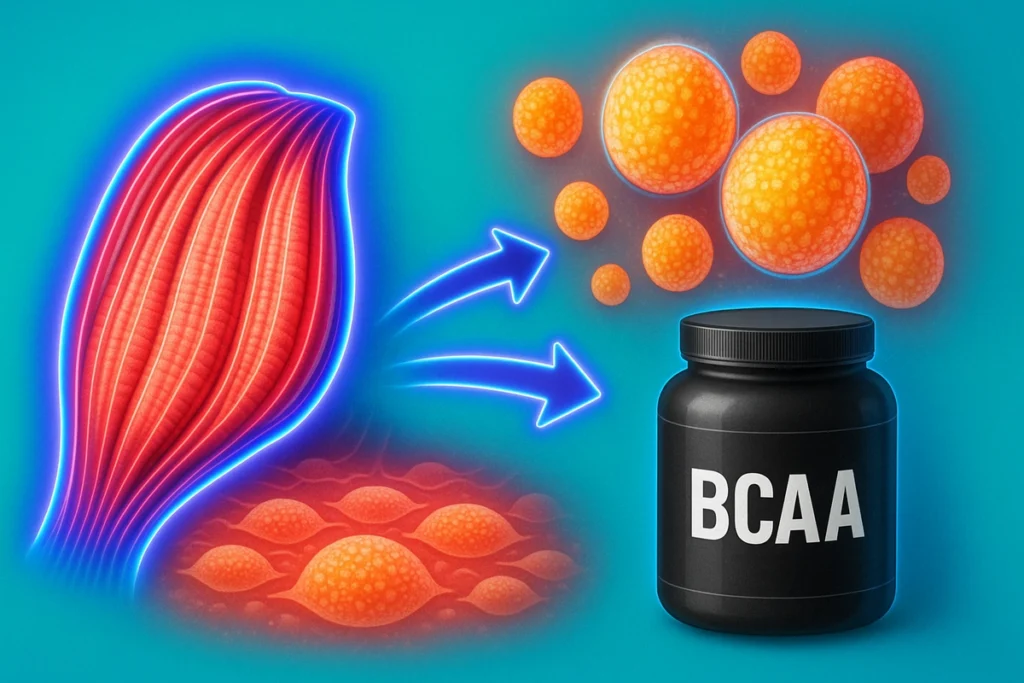
While BCAAs don’t directly burn fat, they help preserve muscle during weight loss phases — keeping your metabolism elevated. For those focused on weight loss while maintaining muscle tone, 5–10g of BCAA per day, especially around fasted cardio or low-calorie training days, can make a noticeable difference in energy and recovery.
That’s where BCAAs shine:
- Leucine triggers muscle protein synthesis.
- Isoleucine and valine support endurance and reduce fatigue.
- Together, they help preserve lean mass and boost recovery even in a calorie deficit.
In one cut before summer, I kept up my strength on lifts like RDLs and incline dumbbell press — which usually drop off during a cut.
I credit that to consistent BCAA use, along with smart training and proper recovery.
And if you’re a runner or do endurance-style cutting workouts, check out this article on BCAAs for runners and endurance athletes.
BCAA Timing: When to Take It for Best Results
To get the most benefit, use BCAA when your body is most at risk for muscle loss:
- Fasted morning workouts
- High-intensity interval training
- Long cardio sessions
Personally, I often trained fasted while traveling or during Ramadan. Taking 5g of BCAA pre-workout gave me steady energy and less soreness.
One of my clients, Andrei, trained at 6 a.m. with zero food. Once he added BCAA pre-workout, his performance instantly improved.
Want to go deeper? Read my full breakdown on BCAA timing for fasted cardio and fat loss or compare BCAA before vs after workout.
You just read everything about BCAAs. Now let’s make it work for YOUR body.
I’ll design your personalized supplement protocol — exact timing, dosage, and stacking for your specific goal. No templates. No bots. A real coach who reads your answers.
Pay what you want after you receive it. No risk. No pressure.
BCAA Dosage by Body Weight and Training Intensity

If you’re on the lighter side and not training super hard, 5–7g total per training day might be enough.
But for most lifters and athletes:
- 10g/day split pre and intra-workout hits the sweet spot.
- Doing fasted cardio? Take a small 3–5g dose before to avoid muscle loss.
During a 3-week calorie shock phase, I stuck to 10g/day. Despite the calorie drop, I stayed full, recovered well, and didn’t lose strength.
For rest days, you might still benefit. Check this breakdown on BCAA timing on rest days.
Quick Reference: BCAA Dosage by Body Weight
Body Weight | Light Activity / Rest | Moderate Training | Intense Cutting / Fasted |
|---|---|---|---|
Under 130 lbs (59 kg) | 3–5g | 5–7g | 7–10g |
130–180 lbs (59–82 kg) | 5g | 7–10g | 10g |
180–220 lbs (82–100 kg) | 5–7g | 10g | 10–15g |
Over 220 lbs (100 kg) | 7g | 10–15g | 15g |
This table serves as a practical BCAAs dosage calculator for most athletes. Always adjust based on how you feel and your total daily protein intake.
BCAA for Cutting vs Bulking
BCAAs serve different roles depending on whether you’re cutting or bulking. Both phases benefit, but for different reasons.
During a cut
Muscle loss is a real risk when calories are low. BCAAs — especially leucine — help protect lean mass by supporting muscle protein synthesis and reducing breakdown during training.
- Dosage: 10g on training days, split pre and intra-workout
- Fasted cardio: 3–5g beforehand to prevent muscle breakdown
- Why it matters: Preserving muscle keeps your metabolism higher, making fat loss more efficient
During a bulk
Protein intake is typically higher, so BCAAs become less essential. But they still have a place — particularly for intra-workout endurance and faster recovery between sets.
- Dosage: 5–10g around training, optional based on intensity
- Best use: High-volume sessions or when training fasted
- Why it matters: Reduces fatigue without adding unnecessary calories
📌 BCAAs are more valuable during a cut, but they’re a smart addition to any phase if your training intensity is high or you train fasted.
BCAA vs EAA During a Cut
I’ve tested both. Here’s my honest take:
- EAAs are great if your protein intake is low or if you’re plant-based.
- But BCAA feels lighter, absorbs faster, and works better during intense training.
Once, I switched to EAA during a cut. It helped recovery but made me feel bloated mid-workout.
BCAA was easier to digest and didn’t sit heavy. I now stick with it for intra-workout use.
If you’re not sure which is right for you, check out this full comparison: EAAs vs BCAAs vs Protein.
And for those considering protein powders as an alternative, here’s the truth on BCAA vs protein powder — do you really need both?
Do You Need BCAAs to Cut Effectively?
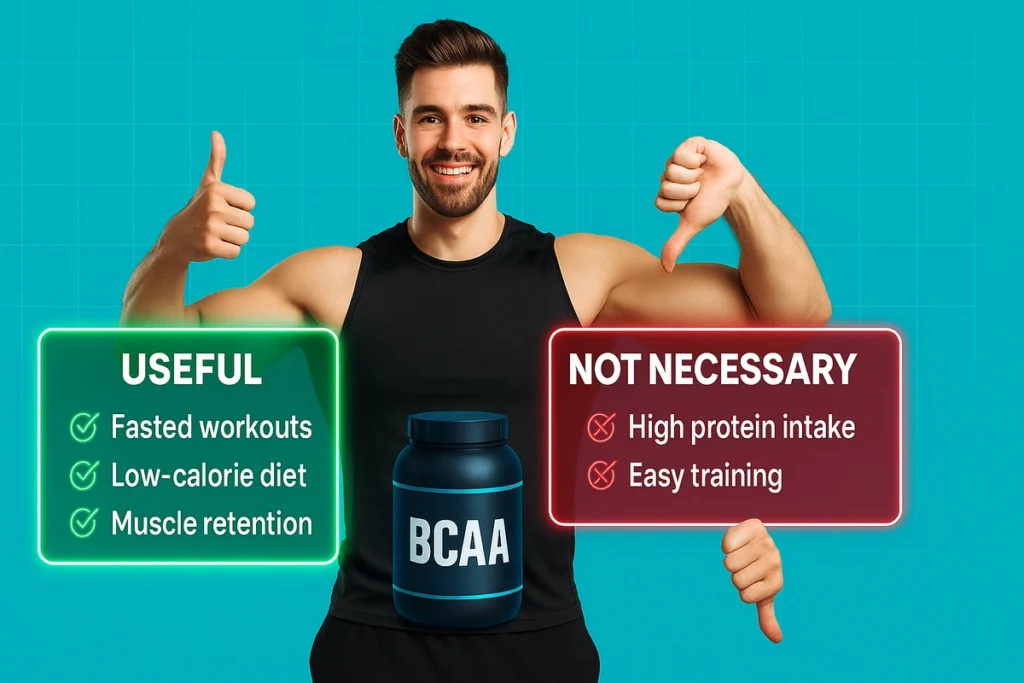
If you’re eating enough protein (2g/kg+), you might not need BCAA.
But if you:
- Train fasted
- Do intense cardio
- Follow a strict low-calorie or vegan diet
- Struggle with recovery during cuts
then BCAA can be a game-changer.
I still use them in most cuts — and recommend them to clients in these exact situations.
They’re not magic, but they’re a smart, simple tool to hold onto lean mass and stay sharp in your workouts — even when you’re deep in a deficit.
My Experience Using BCAAs While Cutting

Every serious cut I’ve done included BCAA.
One cut had me at 1700 kcal/day, training hard. I stayed full, strong, and sore-free — thanks to consistent 10g/day BCAA use.
My client Lucas cut BCAA out completely and by week two, he looked flat and reported poor recovery. We added BCAA back in, and by week three, his energy and muscle fullness bounced back.
If you’re vegan or vegetarian, this becomes even more important. Check this guide on the best BCAA supplements for vegans.
BCAA for Cutting: Frequently Asked Questions
The recommended BCAA dosage for cutting is 10 grams per day, split into 5g pre-workout and 5g intra-workout.
5 to 10 grams per day. If you do fasted cardio or low-calorie training, take 5g beforehand to help protect muscle and support energy levels.
15 grams. Taking more than this offers no extra benefit if your daily protein intake is already adequate.
10 grams on training days is the sweet spot for most people. Lighter individuals or those doing lower-intensity training can get results with 5 to 7 grams.
5 grams is usually enough on rest days to support recovery. It is optional if your protein intake is high.
Take 5 grams about 20 to 30 minutes before training. This is especially useful for fasted workouts or early morning sessions.
Anything above 15 grams per day is unnecessary for muscle preservation. It will not speed up results and may cause digestive discomfort.
Yes. BCAA stacks well with caffeine, creatine, and L-carnitine during a cut.
Yes. 5 to 10 grams per day is safe for long-term daily use during a cutting phase.
Women can follow the same dosage guidelines as men. Start with 5 to 7 grams per training day and adjust based on intensity and body weight.
The 2:1:1 ratio. That is 2 parts leucine, 1 part isoleucine, and 1 part valine. It is the most researched and effective formula.
BCAA is more critical during a cut to prevent muscle loss. During a bulk, it is optional but can still improve endurance and recovery if training is intense.
No. BCAA does not burn fat directly. It helps preserve lean muscle, which keeps your metabolism higher and supports fat loss indirectly.
Not necessarily. If you consistently eat 2 grams of protein per kilogram of body weight or more, BCAA may not add much. It becomes more valuable when training fasted or in a strict calorie deficit.
Leave a Reply