


Thinking about doing fasted cardio to burn more fat? You’re not alone. It’s a popular strategy for cutting body fat and sharpening definition.
But there’s a catch: fasted training can increase muscle breakdown. That’s why many turn to BCAAs (Branched‑Chain Amino Acids).
Do BCAAs actually help you torch more fat? Or are they just another overhyped supplement that drains your wallet?
I’ve used BCAAs during early morning fasted training for years – as a coach, athlete, and competitor. In this article, I’ll give you the honest, no‑fluff answer.
First, let’s bust the biggest myth right now.
3 Reasons BCAAs Won’t Melt Belly Fat
- BCAAs don’t trigger fat burning.
They don’t increase lipolysis (fat breakdown) or thermogenesis. No supplement directly “melts” fat – only a calorie deficit does that. - Your body prefers carbs or stored fat for energy, not BCAAs.
During fasted cardio, your body taps into fat and some muscle amino acids. BCAAs are a tiny energy source at best – not a fat‑burning trigger. - Preserving muscle isn’t the same as burning fat.
BCAAs help protect muscle, which supports a healthy metabolism. But protecting muscle ≠ melting belly fat. Don’t confuse the two.
👉 So if BCAAs don’t burn fat, why take them at all? Keep reading – they still have a valuable role in fasted cardio.
Table of contents
- Are BCAAs Effective for Fasted Cardio?
- What Happens to Your Body During Fasted Cardio?
- How BCAAs Work: Muscle Preservation & Energy Support
- Do BCAAs Actually Boost Fat Loss?
- Myth vs. Fact: Do BCAAs Burn Fat?
- When and How to Take BCAAs for Best Results
- BCAAs vs EAAs vs Whey: Best for Fasted Training?
- Who Should Use BCAAs for Fasted Cardio?
- Frequently Asked Questions
- Conclusion: Are BCAAs Worth It for Fasted Cardio?
Are BCAAs Effective for Fasted Cardio?
Let’s cut to the chase: BCAAs can help during fasted cardio – but not for the reason most supplement ads want you to believe.
They won’t magically burn belly fat. What they will do is help protect your muscle when you train on an empty stomach.
That alone makes them a smart tool during a fat loss phase – especially if you’re lean, in a deep deficit, or cutting aggressively.
From my own experience coaching dozens of clients, the real benefits of BCAAs during fasted cardio are:

Tell us your goal & discover your perfect stack — backed by science, no BS.
Free. Takes 2 Min | No sign-up needed
- Less muscle soreness after morning sessions
- Smoother energy without breaking your fast
- Faster recovery between workouts
BCAAs won’t burn fat directly, but they help you keep the muscle that keeps your metabolism burning fat long‑term.
For more on BCAA timing, check out Best Time to Take BCAAs.
What Happens to Your Body During Fasted Cardio?

When you train fasted – typically first thing in the morning – your insulin levels are low. That’s good: it creates an ideal environment for fat burning.
But there’s a downside.
Fasted training also increases muscle breakdown. Your body may start tapping into muscle amino acids for energy.
Over time, that can cost you hard‑earned gains – especially during a cut.
🚨 Signs You’re Losing Muscle (Not Just Fat)
- Your strength drops even though you’re training consistently
- Morning body weight stays stable, but waist measurement decreases slowly
- You lose more than 0.5–1% of body weight per week
- Persistent soreness with no performance improvement
📌 If you notice these signs, BCAAs (or EAAs) might help.
For more, read: BCAAs During Intermittent Fasting.
How BCAAs Work: Muscle Preservation & Energy Support
Leucine is the star here.
BCAAs – especially leucine – help stimulate muscle protein synthesis and reduce muscle breakdown during fasted training.
They also provide a small, direct energy source. That can help you push through early morning cardio without feeling drained.
My Experience
I’ve used BCAAs during many cutting phases. They consistently helped me:
- Stay energized
- Reduce post‑workout fatigue
- Keep training intensity high
Client Case: Markus (Sweden)
Markus started sipping 8g of BCAAs before his morning fasted cardio.
Despite a deep calorie deficit:
- His strength stayed stable
- He didn’t lose muscle
🔁 Want to learn how BCAAs support recovery? Read: BCAA for Muscle Soreness.
Do BCAAs Actually Boost Fat Loss?
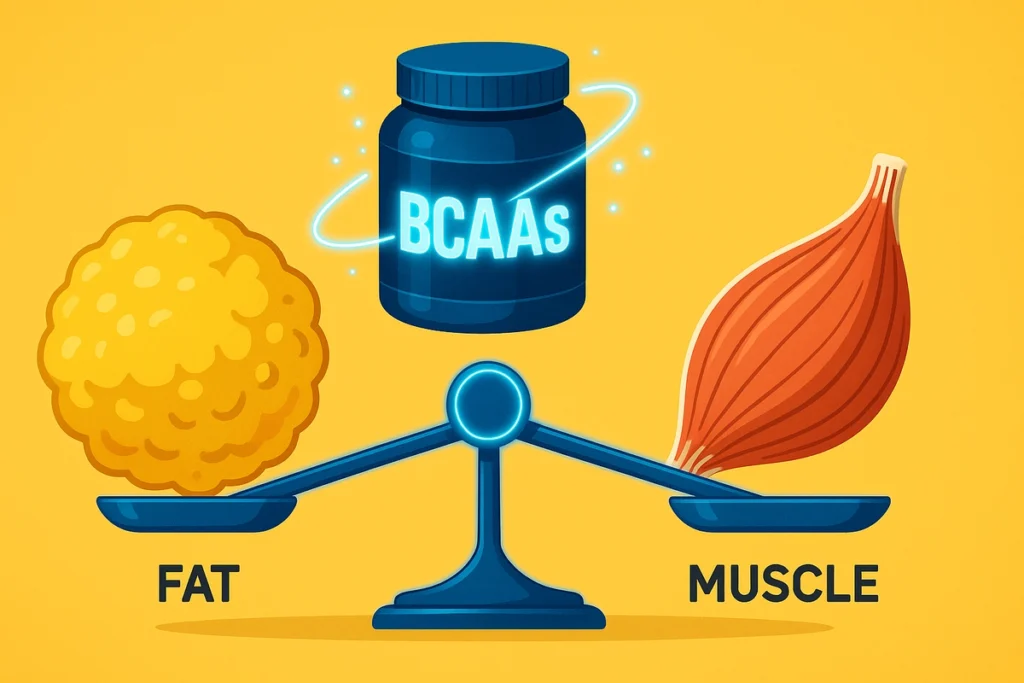
✅ Here’s the truth: BCAAs don’t directly burn fat.
What they do is help you preserve muscle, which keeps your metabolism high. The more muscle you maintain, the more efficient your body becomes at burning fat long-term.
When I ran a 4-week mini cut, I used BCAAs with fasted cardio to help retain muscle tone. The fat dropped, and I stayed full and strong.
For a full breakdown on how BCAAs compare to other proteins, check out BCAA vs Protein Powder: Do You Really Need Both?.
Myth vs. Fact: Do BCAAs Burn Fat?
Let’s clear up the confusion once and for all.
❌ Myth | ✅ Fact |
|---|---|
BCAAs directly burn belly fat. | BCAAs do not increase fat oxidation or lipolysis. No supplement directly “burns” fat – only a calorie deficit does. |
You need BCAAs to lose fat during fasted cardio. | You can lose fat without BCAAs. They are optional – helpful for muscle preservation, but not required for fat loss. |
BCAAs turn your body into a fat‑burning machine. | BCAAs provide a minor energy source (via gluconeogenesis), but that doesn’t translate into meaningful fat burning. |
More BCAAs = more fat loss. | Taking extra beyond 6–10g offers no additional fat‑loss benefit. Your body simply oxidizes the excess for energy. |
BCAAs work better than dieting for fat loss. | False. Diet and calorie deficit drive fat loss. BCAAs only support muscle retention – a secondary, indirect benefit. |
💡 BCAAs are muscle‑saving tools, not fat‑burning pills. Use them wisely – don’t believe the hype.
When and How to Take BCAAs for Best Results
Timing is everything.

The Protocol
- Dosage: 6–8 grams of BCAAs
- When: 15–20 minutes before fasted cardio
- Why: Gives your body time to absorb and use them effectively
Real Example
During a beach cut, I followed this exact routine every morning:
✅ BCAAs → 30‑minute fasted walk → kept all my muscle while dropping fat

Take this 2-minute assessment & get a science-backed training, nutrition & supplement roadmap built for YOUR body.
🔬 12,000+ personalized roadmaps generated
This same strategy has worked consistently for both myself and dozens of clients.
Pro Tips
- Mix properly
Learn how: Mix BCAAs for Best Absorption - Adjust dosage
For goals and body size: BCAA Dosage for Athletes - Stick to 6–8g
More isn’t better for fat loss – your body will just burn the excess as energy.
BCAAs vs EAAs vs Whey: Best for Fasted Training?
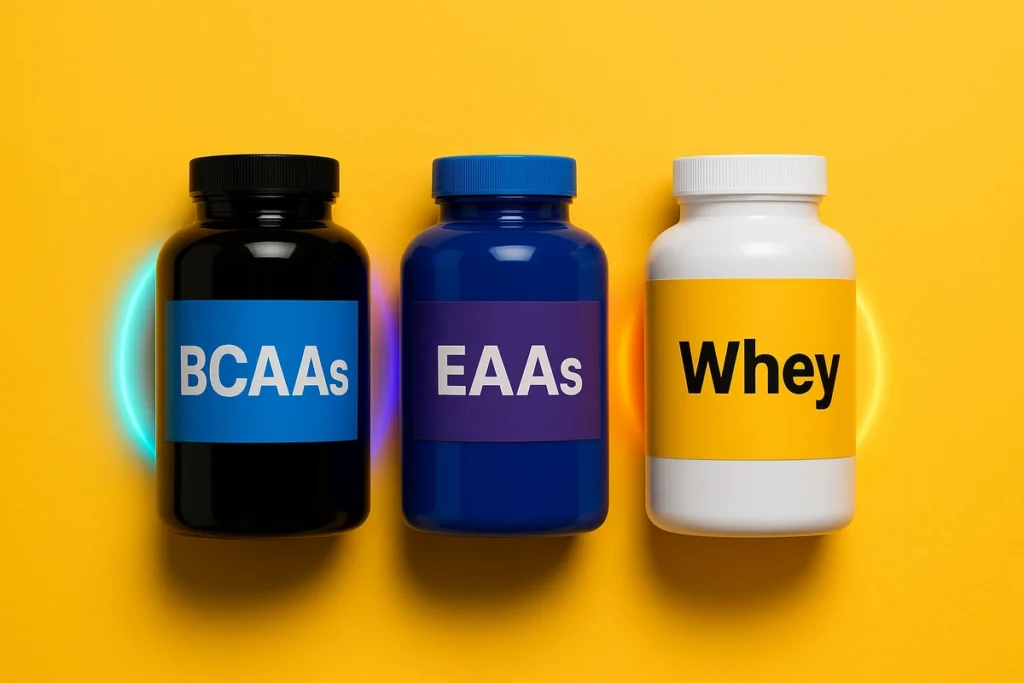
Which one should you actually take before fasted cardio? Let’s break it down simply.
Feature | BCAAs | EAAs | Whey |
|---|---|---|---|
Breaks a fast? | No | No (if pure EAAs) | Yes |
Muscle preservation | Moderate | High | High |
Calories | ~10 | ~15 | ~120 |
Best for fasted cardio? | Yes | Better, but more expensive | No |
Direct fat loss effect | No | No | No |
I personally save EAAs for later in the day – like post-workout or between meals. In the morning, BCAAs are my go‑to. They’re light, fast, and don’t break my fast.
One client, Natalie from Canada, used BCAAs during Ramadan fasts. She noticed better endurance and fewer cravings during her early training sessions.
Pro tip for bulking phases:
If muscle growth is your main goal, skip BCAAs during fasted cardio. Go with EAAs (10–15g) or a scoop of whey (20–25g) instead. Yes, it may lightly break your fast, but the complete amino profile is much better for muscle repair and growth.
Want a full comparison? Visit EAAs vs BCAAs vs Protein Guide and EAAs vs BCAAs for Workouts.
Who Should Use BCAAs for Fasted Cardio?

You’ll benefit from BCAAs if:
- You train fasted and want to preserve muscle
- You’re in a calorie deficit for more than 4 weeks
- Your body fat is below 15% (men) or 22% (women)
- You struggle with energy during morning workouts
Clients like Diego from Brazil preferred black coffee instead. But others—especially those with muscle to protect—noticed real differences in recovery and energy.
For women specifically, I recommend reading BCAAs for Women Strength Training.
You can also find tips on timing and food interactions here: BCAA With or Without Food Guide.
Frequently Asked Questions
No, BCAAs don’t target fat loss anywhere. They help preserve muscle, which supports a healthy metabolism.
Yes – that’s the best time for fasted cardio. Take 6–8g 15‑20 minutes before.
Coffee boosts energy and fat oxidation; BCAAs preserve muscle. They work well together.
6–8g for most people. Leaner athletes may use up to 10g.
Technically yes, but minimally. BCAAs have very few calories (≈10‑15 calories per 8g). For fat loss and muscle preservation, the small calorie hit is worth it. For strict autophagy fasting, skip them.
Probably not. If you eat 1.6–2.2g of protein per kg of body weight daily, your BCAA levels are already high. BCAAs help most when training fasted or in a deep calorie deficit.
Yes. Women benefit just as much as men – better recovery, less soreness, and muscle preservation during cutting phases.
15–20 minutes before. That gives your body enough time to absorb them so they’re available during exercise.
Yes. BCAAs mix well with caffeine, citrulline malate, and electrolytes. Avoid mixing with high-calorie protein shakes if you want to stay fasted.
For fasted cardio during a cut – yes, especially if you’re lean. For general fitness or bulking – no, spend your money on whole food protein or EAAs instead.
Conclusion: Are BCAAs Worth It for Fasted Cardio?
✅ Yes – but only if you use them smartly.

Let’s be real: BCAAs won’t directly burn belly fat. No supplement will. That job belongs to a calorie deficit and consistent training.
What BCAAs will do is help you hold onto muscle when you train fasted. That means less soreness, better energy, and faster recovery – especially during a deep cut.
In my years of coaching and competing, I’ve seen them work best for:
- Lean athletes who can’t afford to lose any muscle
- Anyone training early morning on an empty stomach
- People in an aggressive deficit who still want to perform well
So, should you buy them?
You might benefit from BCAAs if… | You can probably skip them if… |
|---|---|
You train fasted and feel drained | You always eat before training |
You’re below 15% body fat (men) or 22% (women) | You’re above 15% (men) or 22% (women) body fat |
You struggle with soreness or recovery | You recover just fine without them |
You want an affordable, light option that won’t break your fast | You prefer EAAs or whey (and don’t mind breaking the fast) |
Final takeaway from me
BCAAs aren’t magic. They won’t transform your body overnight. But as a support tool during fasted cardio and cutting phases? I’ve found them genuinely helpful.
If your goal is definition without sacrificing hard‑earned muscle, BCAAs are worth trying – just keep your expectations real.
Train hard, eat right, and use supplements for what they actually do. Nothing more, nothing less.

Leave a Reply