
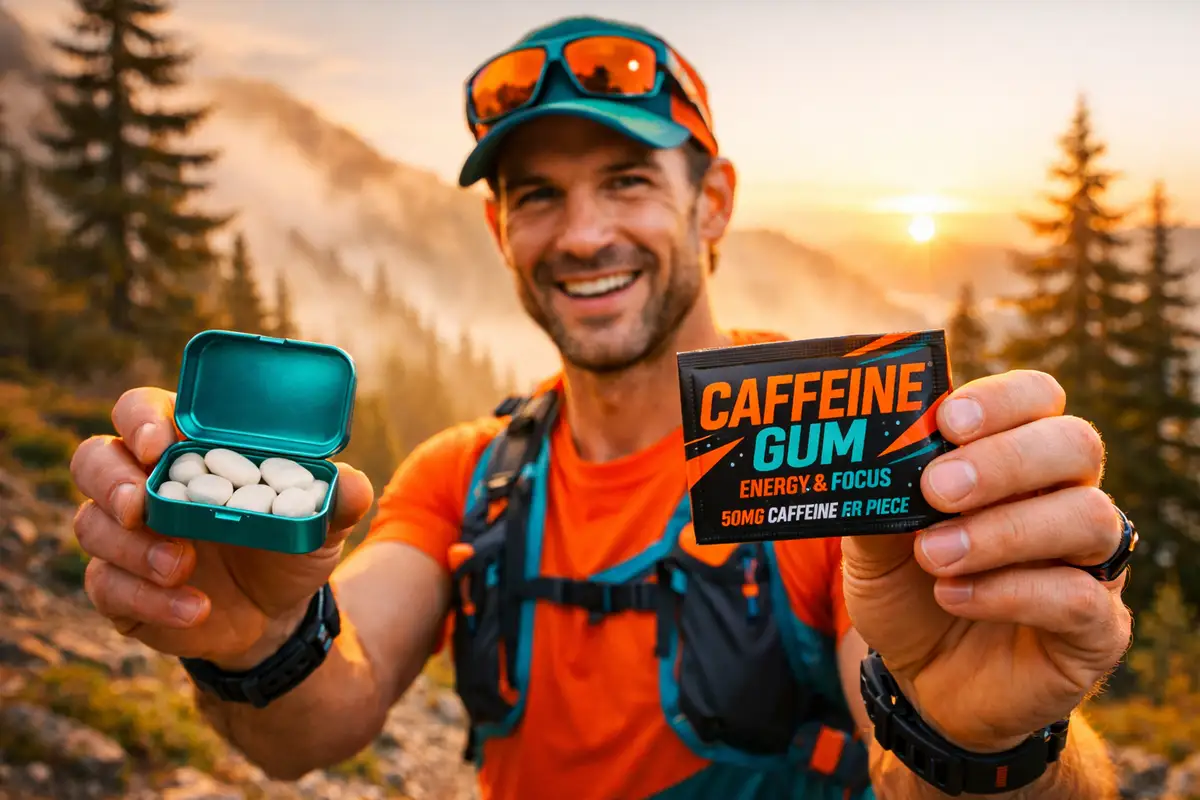

Let me save you the research time. After a decade of training outdoors and seven years coaching clients, the best portable caffeine options for outdoor workouts are:
- Caffeine gum – fastest absorption (5–10 min)
- Dissolving strips – zero prep, fits anywhere
- Energy gel packs with caffeine – fuel + focus
- Caffeine mints – discreet and easy to dose
- Instant coffee sticks – cheap and natural
Each delivers 50–200 mg of caffeine in under five minutes, fits in your pocket, and won’t leave you stranded mid-hill sprint. For a deeper look at how caffeine works in the body, check out the Caffeine Ultimate Guide.
But here’s what most articles won’t tell you: not every portable caffeine works for every situation. I’ve learned that the hard way—sweating, shaking, and once even dry-heaving behind a tree.
Let me walk you through what actually works outdoors, based on real mistakes and wins.
Table of contents
- Why Caffeine Boosts Outdoor Workouts
- Top 5 Portable Caffeine Options Ranked (By Speed & Practicality)
- Quick Comparison Table – All Options Side by Side
- How to Dose Caffeine for Outdoor Workouts (Safety First)
- Timing Your Caffeine Intake for Outdoor Sessions
- Pros & Cons – At a Glance
- What to Avoid (Hard-Earned Lessons)
- Quick Safety Checklist Before Any Outdoor Workout
- FAQ
- Final Word From a Coach Who’s Been There
Why Caffeine Boosts Outdoor Workouts
Caffeine isn’t just a morning pick-me-up. For outdoor training, it’s a legit performance tool. Beyond endurance, Caffeine for Agility & Coordination: Athlete’s Guide explains how it sharpens movement quality on uneven terrain.
Key benefits:
- Improves endurance by 5–10%
- Sharpens focus on uneven terrain
- Makes hard efforts feel easier (lower perceived exertion)
- Delays fatigue in sessions over 60 minutes
You’ll feel the effects within 15 to 45 minutes, depending on the form you take.
The outdoor twist: Wind, heat, cold, and sweat change how caffeine hits you. A gel that works perfectly on a stationary bike might wreck your stomach on a rocky trail. That’s why choosing the right portable option matters more than just the dose.
Taking Caffeine? Don’t Let Bad Timing or Wrong Dosage Kill Your Progress.
I’ll map out exactly when and how much caffeine you need — personalized to YOUR body and YOUR goal.
Maximize My Energy — No More Crashes →Top 5 Portable Caffeine Options Ranked (By Speed & Practicality)
1. Caffeine Gum – The Fastest (5–10 minutes)
This is my personal go-to for early morning outdoor runs. I pop a piece of caffeine gum right as I step out the door. By the time I finish my dynamic warm-up, it’s already working.
Why I love it:
- No water needed
- No swallowing – absorbs through gums
- Works in freezing temperatures
Real story: On a freezing January trail run in Colorado, my water bottle froze solid. My caffeine gum? Still worked perfectly.
Spec | Detail |
|---|---|
Typical dose | 100 mg per piece |
Onset time | 5–10 minutes |
Best for | Cold weather, high-intensity, fasted mornings |
Shelf life | 12–18 months |
2. Dissolving Strips – Zero Prep
These are like breath strips but with caffeine. You put one on your tongue, it dissolves in seconds, and you’re done. No chewing, no swallowing, no mess.
Client story: Liam (Toronto) does 5 AM outdoor stair runs. He used to skip caffeine because making coffee meant waking his whole house. Dissolving strips solved it. Now he keeps a pack in his car glove box.
Spec | Detail |
|---|---|
Typical dose | 50 mg per strip |
Onset time | 2–5 minutes |
Best for | Stealthy early sessions, travel, backup stash |
Shelf life | 24 months |
3. Energy Gels with Caffeine – Fuel + Alertness
These are two-in-one: carbohydrates for energy plus caffeine for focus. Great for sessions lasting over 90 minutes. If you’re wondering about other pre-workout swaps, here’s Can BCAAs Replace Pre-Workout? (Coach Answers).
Real caution here: On a July hike in 2022, I took a 200 mg caffeine gel before a 3-hour trek in 34°C (93°F) heat. By mile two, my heart was racing and I felt dizzy.
What I learned: Heat + high caffeine = risk. Now I never exceed 100 mg when temperatures go above 30°C (86°F). Also, managing hydration is critical – read Caffeine & Electrolytes: What Athletes Must Know.
Spec | Detail |
|---|---|
Typical dose | 25–100 mg per gel |
Onset time | 15–20 minutes |
Best for | Long trail runs, rucks, cycling |
Warning | Lower dose in hot weather |
4. Caffeine Mints – Discreet & Easy
These look like regular mints. Each one packs 40–80 mg of caffeine. You can take half by biting a mint.
Client fail story: Elena from Munich tried caffeine mints before a 6 AM outdoor bootcamp. She took four at once (200 mg) thinking “more is better.” Twenty minutes in, she had the jitters and nausea.
The fix: One mint (50 mg) right after her warm-up. Perfect.
Spec | Detail |
|---|---|
Typical dose | 40–80 mg per mint |
Onset time | 10–15 minutes |
Best for | Social outdoor classes, gradual energy |
Bonus | Can be split in half |
5. Instant Coffee Sticks – Cheap & Natural
Old school but effective. These are single-serving sticks of instant coffee. Just tear, pour into your mouth, and chase with water (or swallow dry if you’re desperate – but I don’t recommend it).
Downsides:
- Needs water
- Taste is intense
- Slower absorption
Upside: For clients who want zero artificial ingredients, this is the cleanest option.
Spec | Detail |
|---|---|
Typical dose | 60–100 mg per stick |
Onset time | 30 minutes |
Best for | Budget-friendly, natural preference, camping |
Needs water | Yes |
Quick Comparison Table – All Options Side by Side
Option | Dose (mg) | Speed | Portability | Taste | Cost | Needs Water |
|---|---|---|---|---|---|---|
Caffeine gum | 100 | 5-10 min | ★★★★★ | Good | $$ | No |
Dissolving strips | 50 | 2-5 min | ★★★★★ | Mild | $$$ | No |
Energy gel | 25-100 | 15-20 min | ★★★★☆ | Varies | $$ | No |
Caffeine mints | 40-80 | 10-15 min | ★★★★★ | Good | $ | No |
Instant coffee | 60-100 | 30 min | ★★★☆☆ | Bitter | $ | Yes |
How to Dose Caffeine for Outdoor Workouts (Safety First)
Here’s the formula I use with all my clients:
The 1–3 mg per kg rule:
- For a 70 kg (154 lb) person: 70–210 mg total
- Start at the low end (50–100 mg) if you’ve never tested that form outdoors
My personal dosing protocol:
Workout duration | Total caffeine | Timing |
|---|---|---|
60 minutes | 50–100 mg | Once, pre-workout |
90 minutes | 100–150 mg | Single dose or split |
2+ hours | 150–200 mg | Split into 2 doses |
Why split? Because a single large dose wears off. I learned this doing long rucks:
- 100 mg gum before start
- 50–100 mg at 60–75 minute mark
- Result: No mid-session crash
For a steady energy approach without the crash, explore Microdosing Caffeine: Steady Workout Energy No Crash.
Timing Your Caffeine Intake for Outdoor Sessions
Most advice says “take caffeine 30–45 minutes before exercise.” That works for pills and coffee. But for gum and strips? You can take them right as you start. The mental lift is real – read about Pre-Workout Caffeine: The Mental Edge You’re Missing.
My timing protocol by product type:
Product type | When to take |
|---|---|
Caffeine gum/strips | As you begin warm-up |
Gels/mints | 15 minutes before outdoor session |
Instant coffee | 30 minutes before (needs digestion) |
For endurance over 90 minutes:
- Re-dose halfway
- Example: 100 mg pre-workout + 50–100 mg at 60–75 minutes
Evening workouts warning:
- Caffeine’s half-life = ~5 hours
- Training after 6 PM? Stick to 50 mg or less
- Otherwise: hello, midnight ceiling-staring
Pros & Cons – At a Glance
Caffeine Gum
- ✅ Fastest absorption, works in cold, no water
- ❌ Can irritate gums with daily use
Dissolving Strips
- ✅ Smallest size, no chewing, ultra-fast
- ❌ Most expensive per mg
Energy Gels
- ✅ Fuel + caffeine in one, good for long sessions
- ❌ Risk of GI distress, bulky packaging
Caffeine Mints
- ✅ Cheap, easy to split, tastes good
- ❌ Slower than gum, can stick to teeth
Instant Coffee Sticks
- ✅ Natural, cheapest option, widely available
- ❌ Needs water, bitter taste, slowest onset
What to Avoid (Hard-Earned Lessons)
After 10+ years of outdoor training, here’s my “never again” list:
1. Never take caffeine on an empty stomach before high-intensity outdoor workouts
I did this once before hill sprints. Twenty minutes in, I was dry-heaving behind a tree.
What I tell clients now: Have a small banana or rice cake first. Even 100 calories makes a massive difference.
2. Avoid bulky cans or glass bottles outdoors
A friend brought a glass-bottled cold brew on a trail run. It broke in his pack. Caffeine + glass shards + 5 miles from the car = nightmare.
Rule: Stick to sealed, shatterproof packaging.
3. Never try a new caffeine product on race day
Test every portable option during a regular training session first. I’ve seen clients discover that certain gels give them GI distress – but only at mile 8 of a 10-mile trail race.
4. Avoid unknown “high-stim” blends outdoors
Some pre-workouts and energy products contain 300+ mg plus other stimulants like yohimbine.
Risk: Outdoors + heat + dehydration + variable terrain + high stims = panic attack or worse.
Rule: Stick to simple caffeine.
5. Don’t assume more is better
Elena’s story proves this:
- 200 mg = wrecked workout
- 50 mg = great workout
Find your sweet spot.
For those wanting to maximize pumps outdoors, see Caffeine & Citrulline Stack: Skin-Tearing Pumps.
Quick Safety Checklist Before Any Outdoor Workout
- Have you tested this caffeine product before?
- Is the dose ≤100 mg if temperature >30°C (86°F)?
- Did you eat something small (if high intensity)?
- Is the packaging shatterproof and sealed?
- Do you have water available (if using instant coffee)?
- Is your workout ending ≥6 hours before bedtime?
FAQ
Caffeine gum and dissolving strips. They work in 5–10 minutes.
Yes. Gum, strips, mints, and gels need no water. Only instant coffee does.
50–100 mg for 60 minutes. 150–200 mg split into two doses for 2+ hours.
Yes, but keep it under 100 mg if temperature is above 30°C (86°F).
Jitters, nausea, racing heart, or dizziness. Stop, find shade, and sip water.
Yes, if your workout ends 6+ hours before bedtime. Otherwise stick to 50 mg or less.
Caffeine gum. It doesn’t freeze and needs no water.
Yes for high-intensity workouts. A banana or rice cake prevents stomach issues.
Yes, but track your total dose. Don’t exceed 200 mg total.
Use a running belt, small zip pouch, or zippered shorts pocket.
Final Word From a Coach Who’s Been There
Look, portable caffeine is a tool, not a crutch.
✅ What I’ve learned in 10+ years:
- It helps crush early morning runs
- It powers long hikes
- It helps clients push through plateaus
- It backfires when you ignore heat, empty stomachs, or your own limits
✨ My three golden rules:
- Start low (50 mg) and test each option on a regular training day
- Never try a new caffeine product on race day or during a remote outdoor session
- When in doubt, take half
Your best portable caffeine is the one that fits your workout, your environment, and your body.
For me?
- Winter: Caffeine gum
- Summer: Half a mint
- Long sessions (90+ min): Split doses
- Hot days (>30°C): 100 mg max
Now get outside. And keep that caffeine handy – but use it smart.
 Maximize Results
Leave a Reply