
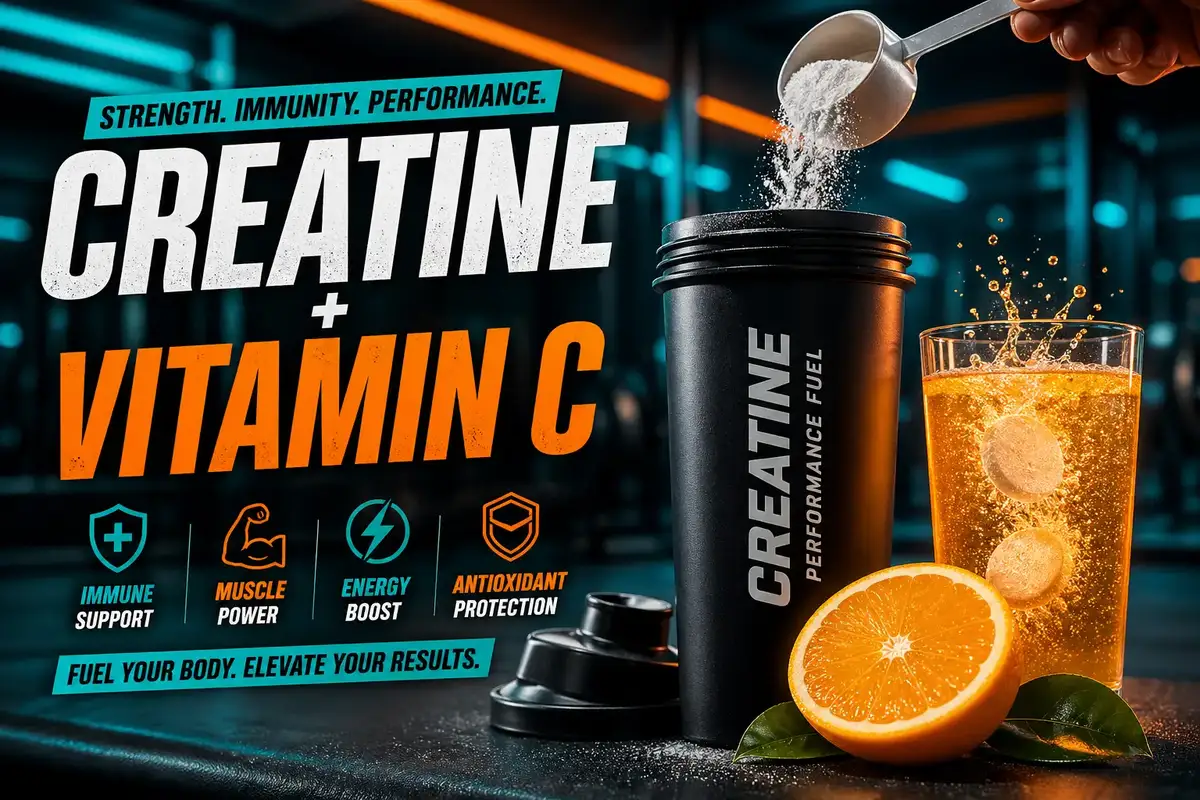

Think mixing creatine with vitamin C ruins absorption? You’re not alone—but you’ve been misled.
You can take creatine and vitamin C together safely. There is no harmful interaction, and vitamin C does not degrade creatine or block absorption.
In fact, you can mix them in the same drink—including Emergen-C or other vitamin C powders—without fear.
✅ The 10-Second Tip About Creatine + Vitamin C:
Mix creatine with any vitamin C source—juice, Emergen-C, or a tablet. It’s 100% safe and won’t degrade your creatine. Just don’t let the drink sit for hours; chug it fresh. Sensitive stomach? Take it with a meal. That’s the hack.
Both supplements work through completely different pathways:
- Creatine fuels strength and power
- Vitamin C supports immunity and recovery.
That makes them a complementary stack, not a conflicting one.
Even Drugs.com‘s interaction checker confirms they can be combined without issues. So you can stack both worry-free.

Below, we break down the science you actually need, answer the most confusing mixing questions, and show you how to take them together for maximum results and zero stomach drama.
Table of contents
- Can I Mix Creatine with Vitamin C? (Tablets, Powder & All Forms)
- Can I Mix Creatine with Emergen-C or Other Vitamin C Drinks?
- Does Vitamin C Affect Creatine Absorption or Stability?
- Do Creatine and Vitamin C Interact? What the Science Says
- Best Way to Take Creatine and Vitamin C Together (Timing & Doses)
- What Does Creatine Do in the Body? (Why Athletes Use It)
- How Vitamin C Supports Recovery, Performance, and Immunity
- Who Should Avoid Taking Creatine and Vitamin C Together?
- Practical Tips for Taking Creatine and Vitamin C Safely
- Creatine and Vitamin C: Final Verdict (Safe — When Used Correctly)
- FAQ: Creatine and Vitamin C
Can I Mix Creatine with Vitamin C? (Tablets, Powder & All Forms)
Yes, you can mix creatine with vitamin C in any form. Both are stable together and do not interfere with each other’s absorption. Here’s how it works for each specific type:
- Tablets or capsules: Take them together with water or a shake. No need to separate timing—your body handles each independently.
- Plain powder (ascorbic acid): Stir both into the same glass of water or juice. The tangy taste can mask creatine’s slight bitterness.
- Effervescent tablets (like Emergen‑C): Drop creatine directly into the fizzy drink. The mild acidity doesn’t degrade creatine fast enough to matter (see next section for details).
- Buffered vitamin C (sodium ascorbate): A gentler option if you have a sensitive stomach; mixes just as easily as regular powder.
Quick tip for stomach comfort: If you feel mild bloating without food, take them with a meal or split the vitamin C dose. That usually solves it.
If you’re curious about other supplement combinations, check out this guide on creatine supplement interactions.
Can I Mix Creatine with Emergen-C or Other Vitamin C Drinks?
Yes, absolutely. You can mix creatine directly into Emergen-C, Airborne, orange juice, or any other vitamin C-rich drink without safety concerns or loss of effectiveness.

Here’s what you need to know about the most common scenarios:
- Creatine + Emergen-C (or similar effervescent powders): Drop your creatine scoop right into the fizzy Emergen-C drink. The mild acidity (ascorbic acid) doesn’t degrade creatine into creatinine fast enough to matter—your stomach empties in minutes, while studies show creatine remains stable in acidic solutions (pH 3–4) for several hours. Stir, drink, and you’re fine.
- Creatine + orange juice: A classic combo. The juice helps mask creatine’s slight bitterness, and the sugars can even give an insulin boost that may mildly aid uptake. Just don’t let the mixture sit in the fridge overnight; fresh mixing is best.
- Creatine + other vitamin C drinks (like Airborne, fizzy tablets, or powdered drink mixes): Same rule applies. If it’s a drinkable vitamin C supplement, creatine can go in it. No special timing or separation needed.
A note for sensitive stomachs: The combination of carbonation, acidity, and creatine can sometimes cause temporary bloating or gurgling. If that happens, try:
- Drinking it more slowly
- Taking the mixture with a solid meal
- Using a non-fizzy source (like diluted orange juice or plain water with vitamin C powder) instead
Whether it’s Emergen-C, a generic vitamin C fizz, or a glass of OJ, you’re not harming creatine’s absorption or stability. Choose what tastes best and fits your gut comfort.
If you want to dive deeper into mixing specifics with tablets and powders, the previous section covers that in detail. And for a full map of supplement interactions, see our creatine supplement interactions guide.
Does Vitamin C Affect Creatine Absorption or Stability?
One of the most common worries is whether vitamin C — especially in acidic forms like ascorbic acid or citrus juices — could break down creatine before your body can use it.
The short answer: it won’t. Creatine is remarkably stable, even in low-pH environments, and vitamin C does not interfere with the transporter systems that shuttle creatine into your muscles.
🤔 Here’s how the key concerns stand up to the evidence:
- Does vitamin C block creatine absorption? No.
Creatine is absorbed in the intestines via sodium‑dependent creatine transporters (SLC6A8). Vitamin C (ascorbic acid) does not compete with or inhibit these transporters, so uptake is unaffected. - Does vitamin C degrade creatine into creatinine? No, not in digestion.
Creatine is stable for several hours in solutions as acidic as pH 3–4 — similar to the acidity of a cola or orange juice. Digestion takes minutes to a few hours, so no meaningful conversion to creatinine occurs before absorption. Long‑term storage in highly acidic liquids might cause slow degradation, but that’s irrelevant to a fresh drink. - Does vitamin C improve creatine absorption? Not directly, but it helps overall recovery.
Vitamin C doesn’t boost creatine uptake, but its antioxidant effects reduce exercise‑induced oxidative stress and support tissue repair. That means better recovery between sessions, which indirectly helps you train harder and get more from your creatine‑fueled workouts.
Bottom line: You can confidently mix creatine with vitamin C tablets, powders, or acidic juices without worrying about losing potency.

If you have a sensitive stomach, taking them with a meal — as suggested throughout this guide — removes any minor risk of tummy trouble. There’s no absorption downside, only a complementary benefit.
Do Creatine and Vitamin C Interact? What the Science Says
Creatine and vitamin C work in completely different pathways in the body.

Creatine impacts energy metabolism and muscular power, while vitamin C functions mainly as an antioxidant and supports tissue repair.
Because of this, there’s no evidence they interfere with each other’s effectiveness.
That said, the body is highly individual. I once made the mistake of taking creatine and a high-dose vitamin C tablet on an empty stomach. The result? Mild bloating and discomfort for about an hour.
It wasn’t harmful, but it reminded me that timing and dosage matter. Aisha also experienced similar digestive upset when she combined them without food—but once we adjusted her routine to take them with a meal, the problem disappeared.
Best Way to Take Creatine and Vitamin C Together (Timing & Doses)
One of the biggest benefits of creatine is its ability to improve performance in short, intense efforts. Users often notice more strength, greater endurance during quick bursts, and faster recovery between sets.
A 2024 review in Nutrients found that creatine supplementation combined with resistance training significantly increased both upper- and lower-body strength compared to training alone. This shows why creatine has become a staple supplement for athletes who want measurable performance gains.
The best way to use these supplements is to focus on consistency and comfort. Creatine works best when taken daily, even on rest days. Most athletes prefer 3–5 grams per day, usually after a workout or with a meal.
Vitamin C doesn’t require strict timing—you just need to hit your daily intake. Personally, I take creatine in my post-workout protein shake. For vitamin C, I prefer natural sources like kiwi, strawberries, or bell peppers during lunch.
When I’m pressed for time, I’ll take a small vitamin C tablet along with creatine, and it works just fine. For one of my clients, Miguel from Spain, combining both in his morning routine helped him stay consistent.
He admitted that he used to forget his creatine on off days until he paired it with his daily vitamin C supplement. Now, he rarely misses a dose. If you’re curious about nutrient timing, read my article on creatine and carbs for maximum results.
What Does Creatine Do in the Body? (Why Athletes Use It)

Creatine works by boosting the body’s natural energy system. When you supplement, your muscles store more creatine, which helps them regenerate ATP—the quick energy currency of your body—faster.
A study on creatine for exercise and sports performance explains that this increase in intramuscular creatine leads to improved power output and training capacity. This is why athletes often feel stronger and more explosive when they use creatine consistently.
When I first began supplementing with creatine, the difference was noticeable. My bench press and squat numbers climbed, and I could push through extra reps without feeling gassed as quickly.
One of my clients, Daniel from Germany, shared that within three weeks of consistent use, his squat volume increased, and his recovery between heavy sets improved dramatically. If you’re into aesthetics, creatine can also enhance muscle fullness and bodybuilding posing.
How Vitamin C Supports Recovery, Performance, and Immunity
Vitamin C isn’t just for your immune system—it’s also a powerful antioxidant. It helps reduce the oxidative stress and free radicals that build up during intense workouts.
Research on vitamin C and exercise-induced oxidative stress shows that supplementation can reduce tissue damage and improve recovery. This makes vitamin C especially useful for athletes pushing through demanding training blocks.
I’ve leaned on vitamin C during demanding training phases. Personally, I noticed fewer sore throats and colds when supplementing regularly.
One of my clients, Aisha from the UAE, felt her recovery improved once she started adding more vitamin C-rich foods like kiwi, citrus fruits, and bell peppers into her diet. She told me her DOMS (delayed onset muscle soreness) felt less severe, and she had more energy between sessions.
Who Should Avoid Taking Creatine and Vitamin C Together?

Although creatine and vitamin C are safe for most healthy adults, there are some groups that should be cautious.
- People with sensitive stomachs: Taking both together, especially on an empty stomach, may cause discomfort.
- Those with kidney concerns: Creatine is safe for healthy kidneys, but if you already have kidney issues, check with your doctor before starting supplementation.
- High-dose users: Taking megadoses of vitamin C (over 1,000 mg daily) may lead to digestive upset or diarrhea.
When coaching clients, I always recommend starting with smaller doses and adjusting based on how your body responds. Supplements should work with your routine—not against it.
If you’re interested in more niche cases, check my deep dive on creatine for winter sports athletes and how environment can affect your stack.
Practical Tips for Taking Creatine and Vitamin C Safely
Here are some straightforward strategies I share with clients:
- Keep vitamin C moderate: 200–500 mg daily is plenty for most athletes. You’ll get a good portion of that from whole foods.
- Be consistent with creatine: Take 3–5 grams daily, with or without vitamin C, and don’t skip on rest days.
- Pair with food if sensitive: A light meal helps reduce any chance of bloating or stomach upset.
- Don’t overthink it: Convenience matters. If combining them helps you remember, do it.
Remember, supplements are tools—they only work if you use them consistently and wisely. If you’re choosing between different creatine products, see my comparison on flavored vs. unflavored creatine monohydrate.
For athletes who also monitor diet closely, sodium intake matters. Here’s my article on creatine and sodium for performance.
Creatine and Vitamin C: Final Verdict (Safe — When Used Correctly)

Creatine and vitamin C may serve different roles, but both contribute to better health and performance. Creatine supports strength, power, and muscle growth, while vitamin C helps combat oxidative stress, strengthen immunity, and support tissue repair.
The International Society of Sports Nutrition’s position stand on creatine confirms creatine’s proven role in enhancing training outcomes. Meanwhile, vitamin C’s well-documented benefits make it an easy addition to any athlete’s routine. Together, they create a balanced foundation for performance and recovery.
From my years as a trainer and athlete, I can confidently say the combination is simple and effective. Whether you take them in the same shake or separately doesn’t matter nearly as much as building a routine you can stick with.
So don’t overcomplicate it—keep your creatine daily, get your vitamin C through food or a small supplement, and you’ll support both performance and long-term health.
If you’re an athlete or gym-goer looking to maximize results, this duo can fit seamlessly into your supplement stack and keep you training strong, day after day.
FAQ: Creatine and Vitamin C
Yes. Most healthy adults can safely take creatine and vitamin C together. They work through completely different pathways in the body, and there is no evidence that vitamin C reduces creatine’s effectiveness.
No harmful interaction exists. Creatine supports energy production and muscular strength, while vitamin C acts as an antioxidant and immune-support nutrient. Because they operate independently, they do not interfere with each other.
Absolutely. You can mix creatine with any form of vitamin C—tablets, powder, capsules, or effervescent drinks. If you have a sensitive stomach, take them with food or split the dose to avoid mild bloating.
Yes. Emergen-C and similar effervescent vitamin C drinks are fine to combine with creatine. The slight acidity does not degrade creatine. Many athletes drop their creatine straight into their Emergen-C. If the combination upsets your stomach, simply take them with a solid meal instead.
Yes. Mixing creatine with orange juice is a popular and effective method. The acidity of the juice does not harm creatine or block its uptake. As always, if you’re prone to stomach sensitivity, having food alongside it is a good idea.
No. Current research does not show that vitamin C blocks creatine uptake in muscles. Creatine absorption relies on sodium-dependent transporters, which are not hindered by vitamin C.
No. Creatine remains stable even in acidic solutions (like orange juice or a vitamin C drink) for several hours—far longer than the time it takes to digest. You don’t need to worry about it turning into creatinine.
Not directly. While vitamin C does not boost creatine transport into muscles, it does support recovery by reducing exercise-induced oxidative stress. So the two supplements complement each other’s benefits, even though they don’t chemically enhance absorption.
With a meal, daily. Take 3–5 grams of creatine at the same time each day, ideally with a post-workout shake or a solid meal. Add your vitamin C from food (kiwi, citrus, bell peppers) or a modest supplement. Consistency matters much more than precise timing.
Yes. Creatine does not interact with vitamins or minerals commonly found in multivitamins. Taking your daily creatine alongside a multivitamin that includes vitamin C is both safe and convenient.
You should be more careful about taking creatine and vitamin C together if you have any pre-existing kidney disease, if you regularly take high-dose vitamin C supplements (more than 1,000 milligrams per day), or if you often get stomach irritation from supplements. If any of these apply to you, check with your doctor before you start using them.
Yes—indirectly. They don’t “boost” each other in a direct chemical sense, but they complement your training exceptionally well. Creatine fuels strength and power output, while vitamin C supports immune function and connective tissue repair. Together, they create a solid foundation for consistent, hard training.
Leave a Reply