


If your usual coffee, energy drink, or pre-workout isn’t hitting like it used to, you’re likely dealing with caffeine tolerance.
The good news? You can reset it faster than you probably think.
How long does it take to reset caffeine tolerance? For most people, a full reset takes 7–14 days—either by taking a complete caffeine break or tapering down gradually.
After the reset, your sensitivity returns and even small doses feel powerful again.
The best way to reset caffeine tolerance depends on your lifestyle: a cold-turkey break works fastest, while gradual tapering lets you avoid withdrawal. Both approaches get the job done.
As a certified fitness coach who’s guided dozens of athletes through this exact problem (and dealt with it myself), here’s what I’ve learned: caffeine tolerance isn’t permanent, and resetting it the right way can bring back your energy, sharpen your focus, and make your workouts feel strong again.
Let me walk you through exactly how to do it—step by step.
Table of contents
What Is Caffeine Tolerance?
Caffeine tolerance is your body’s way of adapting to regular caffeine use. The more often you consume it, the less it affects you.
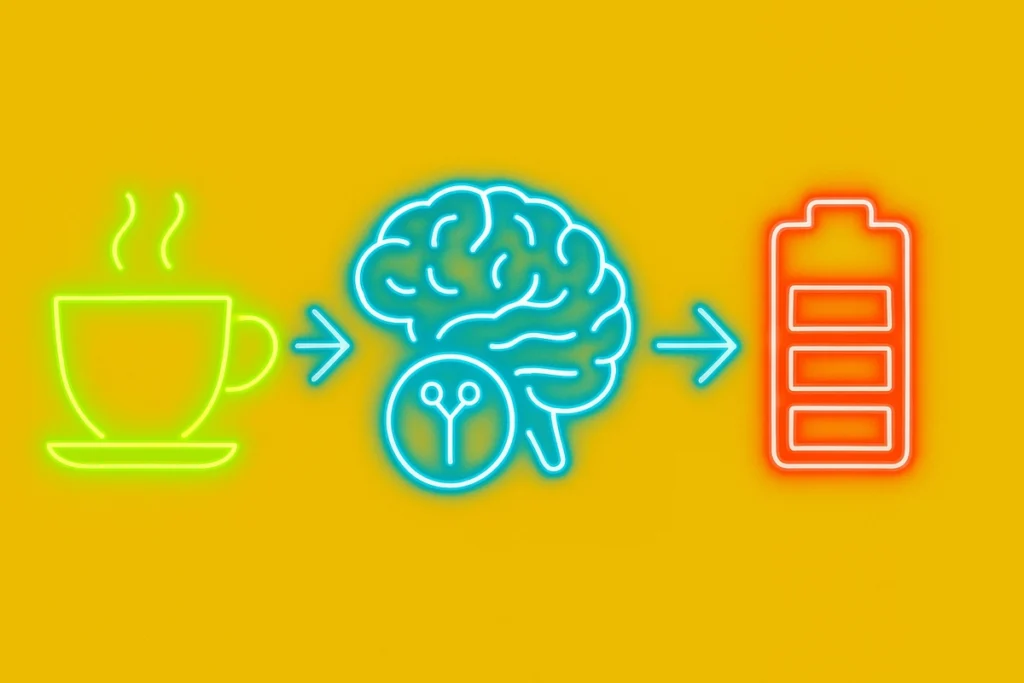
Here’s how it works: caffeine keeps you alert by blocking adenosine receptors in your brain—the ones that signal tiredness. But your brain is smart. With daily caffeine intake, it responds by creating more adenosine receptors to restore balance.
The result? You end up needing more caffeine just to feel the same energy boost you used to get from a single cup of coffee.
It’s not that caffeine stopped working—your brain simply built a resistance to it. (You’ll sometimes hear this called caffeine resistance, and it means the same thing.)
I learned this firsthand while building MuscleZeus.com. One strong coffee used to be enough to fire me up for training. Before I knew it, even two coffees barely moved the needle. My body had adapted—and not in a good way.
In short: Caffeine tolerance happens when your brain creates more adenosine receptors to compensate for caffeine’s blocking effect. The fix? A proper reset, which we’ll get into next.
Curious how caffeine stacks up against full pre‑workouts? Read: Caffeine vs Pre‑Workout: Which One Should You Choose?
⚡ Caffeine crashes hitting hard?
Timing and cycling fix the energy rollercoaster completely.
Maximize Energy Without Crashing FreeSigns You’ve Built a Caffeine Tolerance
How do you know if caffeine tolerance is creeping up on you? The signs are often subtle at first, then impossible to ignore.

Here’s what I’ve noticed in myself and consistently see with my coaching clients:
- You need more caffeine just to feel normal. That one cup that used to wake you up? Now it barely registers.
- Your regular coffee or pre-workout feels weak. What once gave you a clean energy boost now feels like drinking water.
- Headaches, irritability, or fatigue kick in without caffeine. Your body has started depending on it just to function at baseline.
- Your sleep gets worse, even when you’re exhausted. Caffeine tolerance often hides a disrupted sleep cycle you don’t realise is there.
- Energy crashes hit harder during the day. The highs get weaker and the lows get deeper—a telltale sign your adenosine receptors have adapted.
If several of these sound familiar, you’re likely dealing with caffeine tolerance. But don’t worry—recognising the signs is the first step toward fixing it.
A real example from my coaching:
Jack, a 29-year-old runner, came to me frustrated. His energy drinks had stopped giving him any lift at all. He was stacking multiple boosters throughout the day and still feeling groggy by noon. That’s a textbook case of caffeine tolerance—and once we applied a reset plan, his energy came back within two weeks.
How to Reset Caffeine Tolerance (3 Proven Methods)
There are three reliable caffeine tolerance reset methods, and the right one depends on how quickly you want results and how much withdrawal you’re willing to handle.

Here’s a quick overview before we dive in:
Method | How It Works | Best For |
|---|---|---|
Full Caffeine Break | Stop all caffeine for 7–14 days | Fastest reset, no deadline pressure |
Gradual Tapering | Reduce intake slowly over 1–2 weeks | Avoiding withdrawal symptoms |
Smart Cycling | 5 days on, 2 days off each week | Long-term sensitivity maintenance |
All three work. Pick the one that fits your lifestyle.
1. Take a Full Caffeine Break
The fastest way to reset your tolerance is a complete caffeine tolerance break—zero caffeine for 7–14 days.
Caffeine Tolerance Reset Timeline:
- Day 1–3: Withdrawal symptoms may kick in (headaches, fatigue, yawning).
- Day 4–7: Natural energy starts returning; brain fog lifts.
- Day 10–14: Full sensitivity is typically restored.
I took a 10-day break myself when I first realised my tolerance was out of control. The first three days weren’t fun—slight headaches, major yawning—but by the end of the week, my natural energy came roaring back. Small doses felt strong again.
2. Taper Your Caffeine Gradually
If going cold turkey sounds too rough, tapering is your best bet. You simply reduce your caffeine intake step by step over 1–2 weeks.
My client Sofia, a busy marketing manager, halved her coffee intake every three days. She barely noticed any withdrawal, and within two weeks her caffeine sensitivity bounced back completely—without the rough first few days I went through.
Simple Tapering Schedule:
Days | Caffeine Intake |
|---|---|
Days 1–3 | 75% of normal |
Days 4–6 | 50% of normal |
Days 7–9 | 25% of normal |
Day 10+ | Caffeine-free or minimal |
3. Cycle Your Caffeine Intake
Once your tolerance is reset, cycling helps you keep it that way long-term.
Here’s how smart cycling works:
- Use caffeine 5 days a week, take 2 days off.
- Save it for high-demand moments—tough workouts, big meetings, long drives.
- Avoid caffeine late in the day to protect your sleep. I personally stop after 2 PM.
Cycling prevents tolerance from creeping back and keeps every dose feeling effective.
For more on timing your caffeine around training, read: Best Time to Take Caffeine for Maximum Workout Performance.
You just read everything about caffeine. Now let’s make it work for YOUR body.
I’ll design your personalized supplement protocol — exact timing, dosage, and stacking for your specific goal. No templates. No bots. A real coach who reads your answers.
Pay what you want after you receive it. No risk. No pressure.
How Long Does It Take to Reset Caffeine Tolerance?
For most people, a full caffeine tolerance reset takes 7 to 14 days. The exact timeline depends on the method you choose and how heavily you used caffeine before starting.
Here’s what to expect with each approach:
Method | Time to Full Reset | Withdrawal Intensity |
|---|---|---|
Full Caffeine Break | 7–14 days | Moderate at first, fades quickly |
Gradual Tapering | 10–14 days | Minimal to none |
Smart Cycling (maintenance) | Ongoing prevention | None once established |
Caffeine Tolerance Reset Timeline (Full Break):
- Day 1–3: Withdrawal symptoms often peak here—headaches, fatigue, irritability, and brain fog. This is your body adjusting to fewer blocked adenosine receptors.
- Day 4–7: Natural energy starts returning. Most people notice improved sleep quality and steadier afternoon energy.
- Day 7–10: Caffeine sensitivity significantly recovers. Many feel a single small coffee again.
- Day 10–14: Full sensitivity is typically restored. Adenosine receptor levels return to baseline.
Key Insight: The heavier your caffeine habit, the longer the reset may take. Someone consuming 400mg daily (roughly 4 cups of coffee) might need closer to 14 days, while a lighter user could feel fully reset in under a week.
What if you need results faster? Even a 5-day break can noticeably improve sensitivity, though a full 7–14 days delivers the most complete reset.
The bottom line: whether you go cold turkey or taper slowly, your caffeine tolerance isn’t permanent. A week or two of patience brings it right back to baseline—and your energy levels will thank you.
Resetting Caffeine Tolerance for Pre‑Workout Users
If you rely on a pre-workout supplement to power through your sessions, resetting your caffeine tolerance can feel risky—you don’t want your training to suffer while you fix your sensitivity. The good news? You can do both at the same time.
During your reset (7–14 days), switch to a stimulant‑free pre‑workout. These formulas give you the pump, focus ingredients, and performance support without any caffeine, so your training intensity stays high while your adenosine receptors recover.
When it’s time to reintroduce caffeine, don’t jump straight back to your old dose. Start with a half‑scoop of your usual pre‑workout and see how it hits. After a full reset, your sensitivity will be much higher—half the amount often delivers the same kick you used to get from a full serving.
Real Example: My client Carlos, a competitive bodybuilder, was deep in a cutting phase and crashing hard from daily high‑stim pre‑workouts. We replaced his usual pre‑workout with a stim‑free version on weekends and lower‑caffeine sessions midweek. Within a month, his energy stabilised, his workouts improved, and when he reintroduced his full pre‑workout, half a scoop was all he needed.
Resetting your caffeine tolerance doesn’t mean pausing your progress. With stim‑free alternatives and a smart reintroduction plan, you can fix your sensitivity and keep crushing your training at the same time.
How to Keep Your Caffeine Sensitivity High
Over the years, I’ve learned a few powerful tips (sometimes the hard way):
- Stick to Moderate Doses
200-250mg max daily works best for me (about 2 small cups of coffee). Here’s a deeper guide on ideal caffeine dosages for fat burning and focus. - Skip High-Stimulant Products Daily
In my early days, I made the mistake of using heavy pre-workouts every day. It wrecked my sensitivity fast. - Protect Your Sleep
No caffeine late afternoon or evening — ever. - Use Caffeine Intentionally
Save it for high-demand days rather than making it automatic.
Real Example:
During a cutting phase, my client Carlos, a competitive bodybuilder, was facing brutal caffeine crashes from daily high stim pre-workouts. We switched him to lower caffeine doses with weekend breaks. His mood, training, and sleep skyrocketed within a month.
Frequently Asked Questions
Most people fully reset their caffeine tolerance in 7 to 14 days without any caffeine.
A break of 7 to 14 days is enough for your body to lower its adenosine receptors and restore sensitivity to caffeine.
The quickest method is a complete caffeine break. Stop all caffeine—coffee, tea, energy drinks, and pre‑workouts—for 7 to 14 days.
Tapering is easiest. Slowly reduce your daily caffeine intake over 1 to 2 weeks. Cut your usual amount by half every 3 days.
Yes, by gradually tapering your intake. You’ll lower your tolerance while still drinking a smaller amount each day.
Take a 7‑ to 14‑day break from stimulant pre‑workouts. Switch to a stim‑free formula during the reset. When you return, start with a half dose to test your new sensitivity.
You need more caffeine to feel alert, your usual coffee or pre‑workout feels weak, and you get headaches or tiredness without it.
Caffeine tolerance happens when your brain creates more adenosine receptors over time. This means you need more caffeine to get the same energy boost you used to feel from a smaller amount.
Keep your daily dose moderate, avoid caffeine late in the day, and take 1 or 2 caffeine‑free days each week.
Sensitivity usually stays high for a few weeks. Without cycling or breaks, tolerance can start creeping back.
Yes. Even if you feel tired, high tolerance can push you to use caffeine later in the day, which worsens sleep quality.
Final Thoughts

Caffeine is an awesome tool—when you use it smartly.
If your usual dose isn’t hitting like it used to, don’t make the mistake of piling on more coffee, another energy drink, or a bigger scoop of pre-workout. That path leads nowhere good: higher dependence, worse sleep, and a tolerance that keeps climbing.
Instead, hit the reset button. A short caffeine tolerance reset—even just 7 days—can completely restore your sensitivity and make small doses feel powerful again.
Personally, I reset my caffeine tolerance every few months. It’s become a non-negotiable part of my routine, just like deload weeks in the gym. The result? My energy stays sharp, my workouts feel strong, my sleep stays clean, and I never feel like I’m chasing a feeling that’s slipping away.
A simple rhythm that works long-term:
- Reset for 7–14 days every 3–4 months (or whenever caffeine stops hitting).
- Between resets, cycle your intake: 5 days on, 2 days off.
- Keep daily doses moderate—200–250 mg max for most people.
- Stop all caffeine by early afternoon to protect deep sleep.
Don’t overthink it. Pick your method and start:
- Need the fastest reset? Go cold turkey for 7–14 days.
- Want to skip withdrawal? Taper gradually over two weeks.
- Already reset and want to stay sensitive? Start cycling your intake weekly.
Whatever approach you choose, the key is the same: use caffeine intentionally, not automatically. Treat it like the performance tool it is—not a background habit you don’t even think about.
The bottom line? Caffeine works best when you respect it. Reset regularly, cycle smartly, and it’ll keep delivering the energy, focus, and training intensity you want.
Use it as a tool, not a crutch. Trust me—your body, your brain, and your workouts will thank you.
Ready to reset? Pick your method from the guide above and start tomorrow morning. In two weeks or less, you’ll wonder why you didn’t do it sooner.
Leave a Reply