

Most athletes make the same mistake: they treat a five-day race like five single-day races. The result is poor sleep, rising fatigue, and weaker performance when it matters most.
Used correctly, caffeine sharpens focus, lowers perceived effort, and helps you push through key stages without wrecking recovery for the next day.
In this guide, I’ll show you how to use caffeine intelligently across multiple days—based on real coaching experience, not theory—so you finish stronger instead of burning out.
Table of contents
- Quick Answer (Start Here)
- Why Caffeine Works in Multi-Day Endurance Events
- The Biggest Mistake: Treating Multi-Day Events Like One-Day Races
- Optimal Caffeine Dosage Across Multiple Days
- Timing Strategies That Preserve Performance
- Best Forms of Caffeine for Multi-Day Events
- Managing Tolerance and Withdrawal
- Caffeine, Sleep, and Recovery Balance
- Hydration, Electrolytes, and Caffeine
- Who Should Be Extra Careful
- Final Takeaway
- FAQ
Quick Answer (Start Here)

Caffeine can absolutely help you perform better in multi-day endurance events—but only if you use it strategically, sparingly, and with recovery in mind, as explained in this complete caffeine guide for athletes and performance.
Treat caffeine like a precision tool, not daily fuel.
When you respect sleep, manage dosage, and time it around the hardest moments, caffeine supports performance instead of sabotaging it.
I’ve seen athletes finish stronger across multiple days once they stopped chasing constant stimulation and started thinking long-term.
Taking Caffeine? Don’t Let Bad Timing or Wrong Dosage Kill Your Progress.
I’ll map out exactly when and how much caffeine you need — personalized to YOUR body and YOUR goal.
Maximize My Energy — No More Crashes →Why Caffeine Works in Multi-Day Endurance Events
Caffeine works because it stimulates the central nervous system, lowers perceived effort, and sharpens focus when fatigue builds up.
It also influences oxygen utilization and endurance capacity, as discussed in this caffeine and VO₂ max guide.
In single-day races, that’s usually enough.
In multi-day endurance events, the mental benefit becomes even more important than the physical one.
I’ve coached cyclists, ultrarunners, and multi-day trekkers who didn’t need more fitness.
They needed better decision-making under fatigue.
Caffeine helps with that when used correctly.
The Biggest Mistake: Treating Multi-Day Events Like One-Day Races
This is where most athletes mess up.
They use the same caffeine dose every morning, every day.
It becomes a habit, not a strategy.
This often happens when athletes stack stimulants unnecessarily instead of following a smart caffeine no-booster stacking approach.
I saw this clearly with Alex, a cyclist from the UK training for a multi-stage race.
He maxed out caffeine on day one and day two. By day three, he felt flat, anxious, and couldn’t sleep properly. His legs weren’t the problem—his nervous system was fried.
Multi-day events punish short-term thinking.
Every bad sleep compounds.
Every stimulant-heavy day steals from tomorrow.
Optimal Caffeine Dosage Across Multiple Days

From real-world coaching, low-to-moderate caffeine intake works best across multiple days.
This is especially true when athletes learn to train smarter instead of relying on pre-workout stimulation.
The real question isn’t “how much caffeine can I tolerate?”
It’s “what’s the minimum I need to stay sharp?”
I consistently see better outcomes when athletes stay in the 1–3 mg per kg range.
Repeating high race-day doses rarely works past day two.
More caffeine doesn’t equal more performance.
Timing Strategies That Preserve Performance
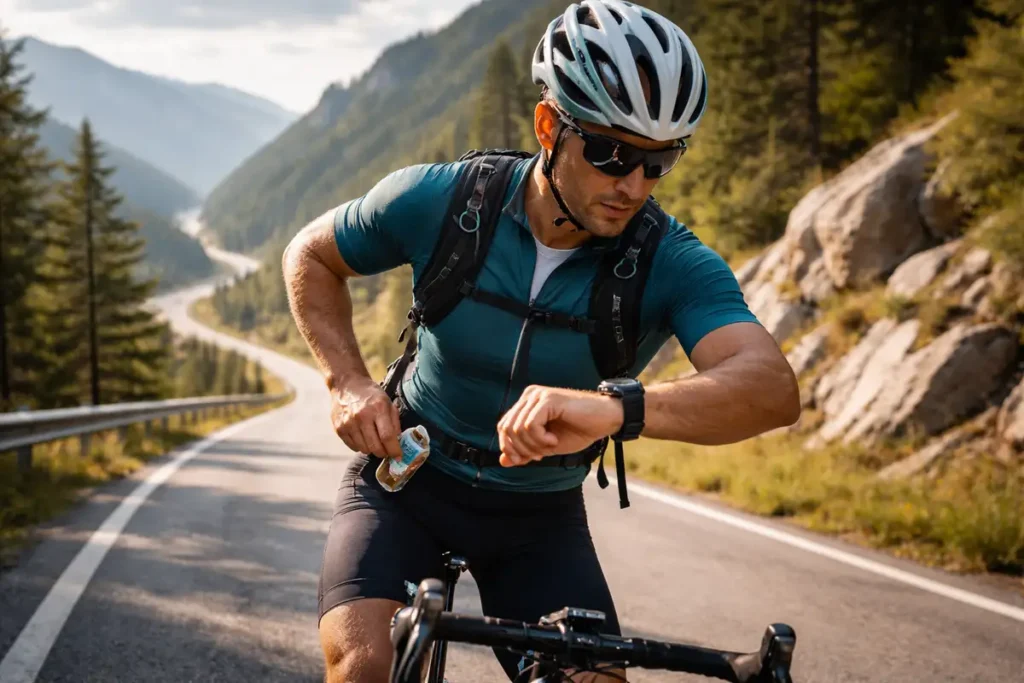
Timing matters more than total dose.
I coach athletes to delay caffeine, not front-load it.
Luis from Spain used to take caffeine first thing every morning.
We changed that.
On hard stages, he waited until fatigue actually showed up.
On easier days, he skipped caffeine almost entirely.
His energy became more stable.
His finishes got stronger late in the event.
Use caffeine when you need it—not because it’s part of your routine.
Best Forms of Caffeine for Multi-Day Events
From experience, the most controllable forms work best.
Black coffee.
Caffeine capsules.
Low-dose gels when needed—especially when used strategically, as outlined in this caffeine gels for endurance guide.
I avoid energy drinks with my athletes.
They bring sugar spikes, GI issues, and unpredictable crashes.
Jonas from Germany switched from energy drinks to caffeine capsules.
His sleep improved immediately.
So did his consistency across days.
Control beats convenience.
Managing Tolerance and Withdrawal
Caffeine tolerance builds fast—especially when intake is constant.
I recommend strategic low-caffeine or caffeine-free days, particularly during lighter stages.
This keeps sensitivity high for the moments that actually matter.
Athletes who do this don’t feel weaker.
They feel sharper when it counts.
Caffeine, Sleep, and Recovery Balance

Sleep is the real performance enhancer in multi-day endurance events.
I’ve learned this the hard way through coaching.
Ethan, an ultrarunner from Australia, struggled with broken sleep every night.
The fix wasn’t magnesium or supplements.
It was cutting caffeine after early afternoon.
Once he stopped caffeine after 2 p.m., his recovery improved immediately.
If caffeine hurts your sleep, it’s costing you far more than it gives.
Hydration, Electrolytes, and Caffeine
Moderate caffeine does not cause dehydration.
Problems arise when athletes rely on caffeine and forget fluids and electrolytes.
Caffeine works best when hydration is dialed in and sodium intake is adequate.
When GI issues appear, caffeine timing—not caffeine itself—is usually the problem.
Who Should Be Extra Careful
Some athletes need extra caution.
Those with anxiety.
Athletes with poor sleep history.
Very lean endurance athletes.
Nina from Sweden struggled with jitteriness and poor recovery at standard doses.
Reducing caffeine by more than half improved her consistency and mood across the event.
Caffeine is individual.
Ego dosing doesn’t work.
Final Takeaway
My core coaching rule is simple:
Never sacrifice tomorrow’s performance for today’s short-term boost.
Caffeine should support your strategy—not control it.
This applies whether you’re choosing between delivery methods like caffeine patches versus pills for training or adjusting intake for different performance goals, including strength-focused scenarios covered in this guide on caffeine for explosive power in Olympic lifting.
Used selectively, late, and sparingly, caffeine becomes a powerful ally in multi-day endurance events.
Used recklessly, it quietly destroys recovery and performance.
FAQ
Most athletes perform best with low to moderate doses, usually well below single-day race levels.
Yes—but not at maximum doses and not without timing control.
Reducing or skipping caffeine on lighter days helps preserve sensitivity and sleep quality.
At moderate intake levels, caffeine does not significantly increase dehydration.
Use caffeine selectively, late, and sparingly—only when fatigue demands it, not because the clock says so.
 Maximize Results
Leave a Reply