


If you’re a runner struggling to push through the final stretch of your runs, you know that leg burn all too well.
That burning sensation — when your pace drops and your form crumbles — is often the difference between a PR and a near miss.
Beta-alanine for runners has become a go-to endurance booster for a reason. It helps buffer lactic acid and delay muscle fatigue, letting you hold your pace longer and finish stronger.
Elite runners, cyclists, and obstacle course racers use it for that exact edge.
✅ 7 Beta-Alanine Tips for Runners:
- Buffers lactic acid – Delays leg burn during high-intensity runs (800m to 10K).
- Best for 1–10 minute efforts – Ideal for intervals, hill repeats, and middle-distance races.
- Take 3.2–4g daily – Consistent daily dose, not just on run days.
- Commit for at least 4 weeks – Loading phase required to raise muscle carnosine levels.
- Split doses to avoid tingling – Take 1.6g twice a day, preferably with food.
- Don’t use it as a pre-run stimulant – No instant boost like caffeine. Timing doesn’t matter.
- Stack with creatine for hybrid training – Creatine adds sprint power; beta-alanine adds endurance.
In this article, I’ll break down exactly how beta-alanine works for runners, how to take it, and whether it’s worth adding to your endurance stack.
You’ll also hear real stories from clients I’ve coached who’ve used it to level up their performance.
Table of contents
- Does Beta-Alanine Help Runners?
- What Is Beta-Alanine and How Does It Work?
- Why Runners Should Consider Beta-Alanine
- How to Take Beta-Alanine for Endurance
- Side Effects and How to Manage Them
- Stacking Beta-Alanine with Other Supplements
- Beta-Alanine vs. Creatine: Which for Runners?
- Real Runners’ Results with Beta-Alanine
- Frequently Asked Questions
- Final Verdict: Is It Worth It for Runners?
Does Beta-Alanine Help Runners?
Yes — especially for middle-distance and high-intensity running.

As a coach who trains both strength and endurance athletes, I’ve seen beta-alanine for runners improve performance in real time.
It doesn’t give you an instant energy boost, but it does something arguably more valuable: it delays muscle fatigue.

Tell us your goal & discover your perfect stack — backed by science, no BS.
Free. Takes 2 Min | No sign-up needed
The sweet spot is high-effort runs lasting 1 to 10 minutes — think 800m repeats, mile pace work, or the final kick of a 5K or 10K. That’s exactly when lactic acid builds up and your legs start to burn.
💭 Real example: Marco, a client from Italy, added beta-alanine to his 10K prep. His feedback? “I could push harder in the final kilometers without my pace falling apart.”
My own experience: During a conditioning block with sprint intervals, beta-alanine helped keep my legs from giving out midway through high-intensity rounds.
For a deeper dive into when results typically appear, check out this detailed beta-alanine results timeline.
What Is Beta-Alanine and How Does It Work?
Beta-alanine is a non-essential amino acid that your muscles use to produce carnosine.
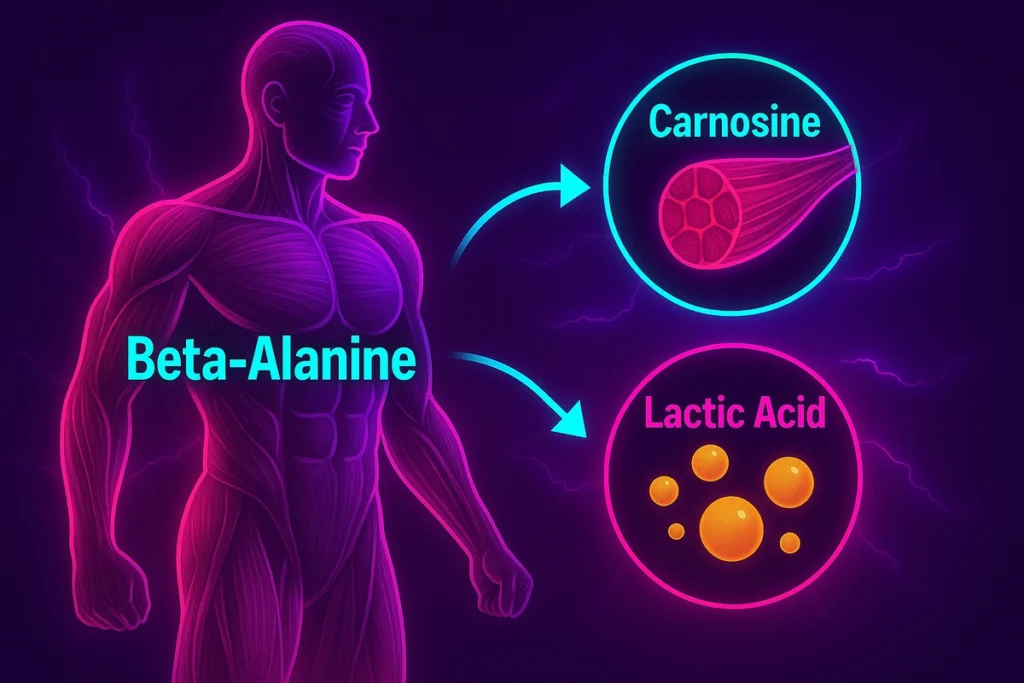
Think of carnosine as a built-in buffer — it neutralizes the acid (hydrogen ions) that builds up during hard running.
When you push pace in an 800m repeat or a 5K threshold effort, that familiar burning sensation comes from rising acidity in your muscles. Carnosine helps soak up that acid, delaying fatigue and letting you hold your speed longer.
Unlike caffeine, beta-alanine won’t give you an instant jolt. It works slowly over time. With consistent daily intake for a few weeks, carnosine levels rise — and you’ll notice you can grind out more hard efforts before your legs give in.
📌 Key takeaway: Beta-alanine doesn’t work in one run. It works between runs, building up your muscles’ natural acid defense.
Read more on how beta-alanine works and why timing matters less than consistency.
Why Runners Should Consider Beta-Alanine
Middle-distance runners — from the 800m up to the 10K — benefit most from beta-alanine.

It helps you stay stronger in that final stretch when your legs want to quit.
That burning feeling? Beta-alanine helps delay it.
Take one of my clients, Aisha from Dubai. She trains for obstacle course races. After three weeks on beta-alanine, she noticed two things:
- Faster recovery between high-intensity intervals
- Stronger finishes
If you’re pushing pace in interval sessions or fighting to hold speed during the last third of a race, this supplement can give you a real edge.
And yes, it works for both men and women. For more on that, see my beta-alanine guide for women.
How to Take Beta-Alanine for Endurance
From my work with runners, this protocol delivers the best results.
- Start with a loading phase
Take 3.2 to 4 grams daily for at least 4 weeks. This saturates muscle carnosine levels. - Split your doses
Divide the total into two smaller servings (e.g., 1.6g morning + 1.6g evening). This minimizes the tingling sensation. - Prioritize consistency over timing
Unlike caffeine, beta-alanine doesn’t work acutely. Just take it every day — same time or different, it doesn’t matter.
⚡ Some runners prefer to avoid caffeine while loading. If that’s you, check out these caffeine-free beta-alanine supplements.
Recommended Dosage for Runners
Runner Type | Daily Dose | Duration | Best Form |
|---|---|---|---|
5K / 10K racer | 3.2 g | 4+ weeks | Capsules or powder |
Half-marathon+ (high intensity) | 4.0 g | 6 weeks | Powder (easier to split) |
Recreational (intervals only) | 2.4 g | Ongoing | Split doses (e.g., 1.2g twice daily) |
🧠 Note on sustained-release: Most beta-alanine supplements are immediate-release. Sustained-release options exist but are less studied for runners. Stick with standard powder or capsules.
If you’re unsure how to begin, follow this step-by-step loading guide.

Take this 2-minute assessment & get a science-backed training, nutrition & supplement roadmap built for YOUR body.
🔬 12,000+ personalized roadmaps generated
Side Effects and How to Manage Them
The most common side effect? Tingling — known as paresthesia.
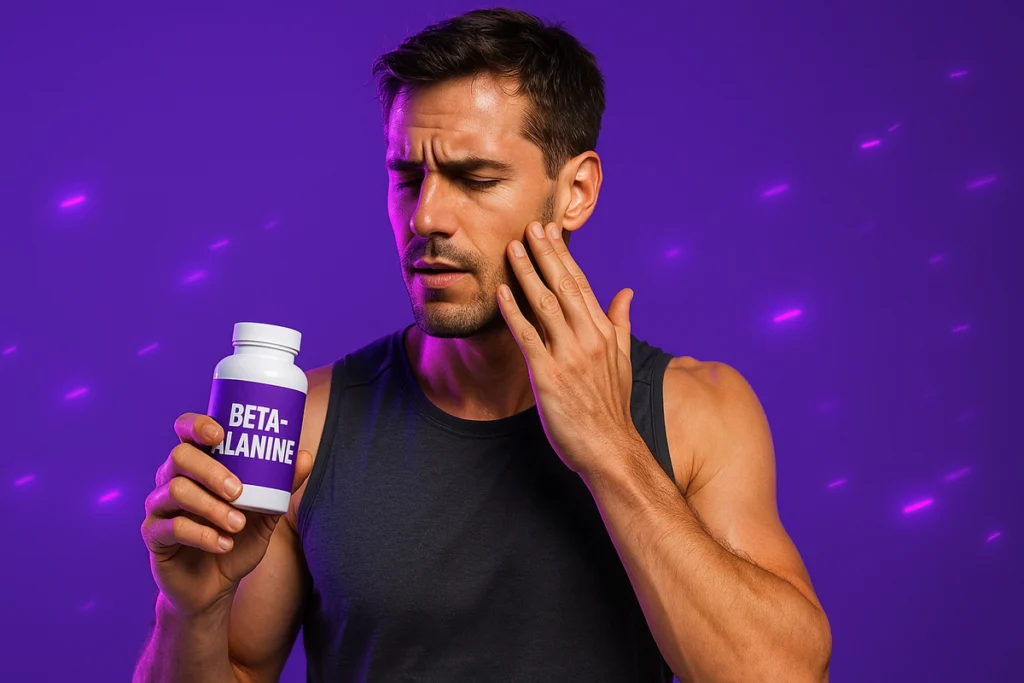
You might feel it on your face, hands, or even your ears. It’s harmless, but it can catch you off guard.
I felt it myself during my first week of loading. Most of my clients notice it too — usually within 15–30 minutes of taking beta-alanine, and it fades after about an hour.
How to reduce or avoid the tingling:
- Split your daily dose into smaller servings (e.g., 1.6g twice a day instead of 3.2g all at once)
- Take each dose with food
- Use sustained-release capsules if available (though standard powder works fine)
- The sensation typically disappears after 2–3 weeks of consistent use
Important: The tingling isn’t dangerous. It’s just a harmless neurological response. If it really bothers you, lower the dose and build up slowly.
For a deeper dive into why this happens and how to manage it, read my complete breakdown on beta-alanine tingling.
Stacking Beta-Alanine with Other Supplements
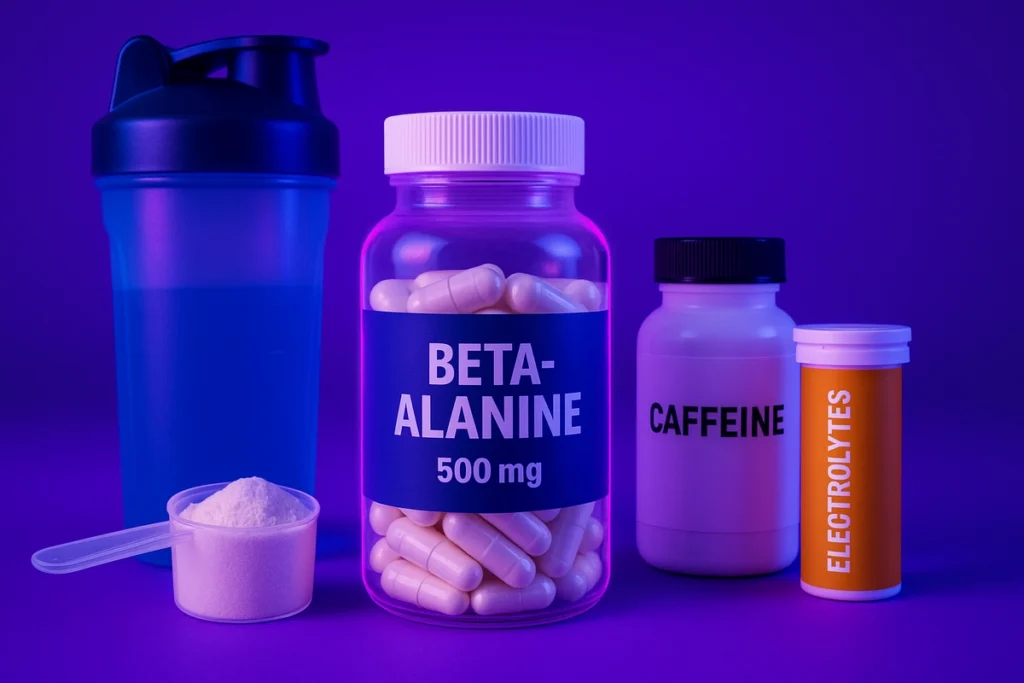
Beta-alanine works even better when combined with the right partners. Here’s what I recommend based on client results and research:
- Creatine monohydrate – Improves strength-endurance and helps preserve muscle during high-volume running or hybrid training. Beta-alanine delays fatigue; creatine fuels short, explosive repeats. Together, they cover more energy systems.
- Caffeine – Take it pre-run for alertness and a mental edge. Caffeine doesn’t interfere with beta-alanine’s loading, so feel free to use both. Just don’t expect caffeine-like instant jolts from beta-alanine — that’s not its job.
- Electrolytes – Essential for long runs or hot-weather sessions. Beta-alanine doesn’t replace what you sweat out. Stack them to stay hydrated and keep muscles firing.
My go-to is the creatine and beta-alanine stack — it’s been a game-changer for hybrid athletes who run and lift.
Beta-Alanine vs. Creatine: Which for Runners?
Both supplements are popular, but they serve different purposes. Here’s how they compare side by side.
Feature | Beta-Alanine | Creatine |
|---|---|---|
Primary benefit | Delays fatigue (buffers acid in muscles) | Boosts power and sprint repeats |
Works for runs longer than 2 minutes? | Yes (best for 1–10 min efforts) | No (mostly helps efforts under 30 seconds) |
Loading phase needed | 4 weeks | 5–7 days |
Common side effects | Tingling (harmless, temporary) | Bloating or water retention (rare, dose-dependent) |
Real Runners’ Results with Beta-Alanine

When I ask runners how beta-alanine has helped them, the feedback is almost always the same:
“I can push longer.”
“My legs didn’t give out as fast.”
It’s rarely about raw speed. It’s about holding your form and maintaining power deeper into a run — whether that’s the final kilometer of a 10K or the last rep of a tough interval session.
Marco (Italy) added beta-alanine to his 10K prep and noticed he could push harder in the final kilometers.
Aisha (Dubai) trains for obstacle course races. After three weeks, she said she was recovering faster between high-intensity intervals — and finishing stronger.
And then there are the quieter wins that don’t make it into testimonials:
- Sarah, a masters 800m runner, dropped her time by 1.2 seconds after six weeks of beta-alanine — mainly because she held her pace through the second lap.
- Tom, a trail runner, noticed significantly less leg burn on steep three-minute climbs.
I’ve felt the difference myself during sprint conditioning blocks. My legs simply stopped giving out midway through high-intensity rounds.
If you’re still wondering when to take it, I’ve written about the best time to take beta-alanine and why timing is less important than consistency.
Frequently Asked Questions
Yes. It delays muscle fatigue during high-effort runs lasting 1–10 minutes. Think 800m repeats, mile pace work, or 5K race intensity. It’s less effective for steady-state marathon running.
Neither. Beta-alanine doesn’t work as a pre-run booster. It builds up in your muscles over weeks of daily use. Take it at the same time every day. When you take it doesn’t matter. Just don’t skip days.
Yes. Beta-alanine works the same way in men and women. The dosage and side effects are identical.
About 2–4 weeks of daily use. Your muscle carnosine levels rise slowly. You won’t feel anything after one dose. Most runners notice the difference in week 3 or 4.
3.2 to 4 grams per day. Every day. Split into two smaller doses (e.g., 1.6g morning + 1.6g evening) to reduce tingling. Do this for at least 4 weeks.
Yes, tingling (paresthesia) is common. No, it’s not dangerous. It feels like a harmless pins-and-needles sensation on your skin. Split your doses and take with food to reduce it. The tingling fades as your body adjusts.
Yes. They work through different mechanisms. Beta-alanine buffers acid. Creatine recycles energy. Together, they’re a strong stack for runners doing intervals, hills, or sprint work.
It depends. If your marathon includes hills or surge moments, yes. If you run a steady pace the whole way, the benefit is smaller. Beta-alanine shines when intensity varies, not during steady-state efforts.
No. You can take it year-round. After 12+ weeks, muscle carnosine levels max out. You can drop to a maintenance dose of 1–2g daily, but stopping entirely will reverse benefits over several weeks.
Taking it right before a run expecting an instant boost. That’s not how it works. The #1 mistake is inconsistent daily dosing. Set a daily reminder. Split your doses. Be patient for 3–4 weeks.
Final Verdict: Is It Worth It for Runners?
Yes — for the right runner, under the right conditions.

Beta-alanine isn’t magic, and it’s not essential. But if you’re a serious runner who trains at high intensities, it’s a solid, evidence-backed performance enhancer.
Who should consider it?
- Middle-distance runners (800m – 5K)
- 10K racers who push threshold pace
- Interval training addicts (1–10 minute efforts)
- Trail runners with steep, repeated climbs
Who might skip it?
- Marathoners running steady-state (less benefit)
- Casual joggers not doing high-intensity work
- Anyone sensitive to tingling (though manageable)
The bottom line
Aspect | Verdict |
|---|---|
Works as claimed? | Yes, for 1–10 min high-effort running |
Worth the cost? | Yes — inexpensive, one-time buy lasts weeks |
Side effects manageable? | Yes — split doses, take with food |
Replaces hard training? | No — it’s a supplement, not a shortcut |
📌 Stick with it consistently. Use it smart. And when you’re grinding through that last rep or final kilometer, you’ll feel the edge.

Leave a Reply