

Need a casein substitute that’s actually plant-based? You’re in the right place.
Casein works brilliantly for slow-digesting overnight recovery — until it leaves you bloated, heavy, or simply clashes with a vegan lifestyle. I’ve been there myself. That heavy morning feeling? It’s what pushed me to find something better.
✅ The fix? A vegan casein alternative or casein replacement that delivers real muscle repair without the dairy hangover.
The best casein protein alternatives — from soy and pea to hemp, brown rice, and pumpkin seed blends — give you exactly that: steady recovery, lasting satiety, and genuine strength gains.
Is there a vegan casein protein?
No. Real casein comes from milk, so a vegan casein protein powder doesn’t exist. But you can absolutely get the same slow-release overnight recovery using the right plant-based proteins.
✨ Quick answer: The best casein substitutes right now
- Best overall substitute: Pea-rice protein blend — complete amino acid profile, easy digestion, ideal for overnight recovery.
- Closest amino acid match: Soy protein — rich in leucine, most similar to dairy casein for muscle repair.
- Most digestible: Pea protein — light on the stomach, rarely causes bloating.
- Best for added nutrients: Hemp protein (omega-3s and fiber) or pumpkin seed protein (magnesium and zinc).
Here’s what actually works, tested with my clients and in my own training.
Table of contents
- Why Look for Casein Substitutes?
- Plant-Based Proteins vs. Casein: A Complete Comparison
- Top Plant-Based Casein Substitutes & Vegan Alternatives
- Why Blended Plant Proteins Outperform Single Sources
- When and How to Use Plant-Based Protein Powders
- FAQ: Common Questions About Casein Substitutes & Vegan Alternatives
- The Trainer’s Final Verdict: Your Best Casein Replacement
Why Look for Casein Substitutes?
Casein protein is often called the “night-time protein” because it digests slowly and releases amino acids gradually. It’s excellent for preserving muscle during sleep.
But here’s the truth — it doesn’t suit everyone. In my own case, casein sometimes left me bloated and heavy in the morning. Many of my clients also struggled with digestion or avoided casein for lifestyle reasons like veganism.
If you’re in the same boat, don’t worry. The best plant-based alternatives to casein protein are soy protein, pea protein, hemp protein, brown rice protein, and pumpkin seed protein. Each of them brings unique benefits — and I’ll share my experiences and client stories to help you decide.

Tell us your goal & discover your perfect stack — backed by science, no BS.
Free. Takes 2 Min | No sign-up needed
(Related: Casein Protein Benefits for Women in Fitness)
Plant-Based Proteins vs. Casein: A Complete Comparison
If you’re switching from casein, you’re probably asking one question: “Will plant protein actually match up?”
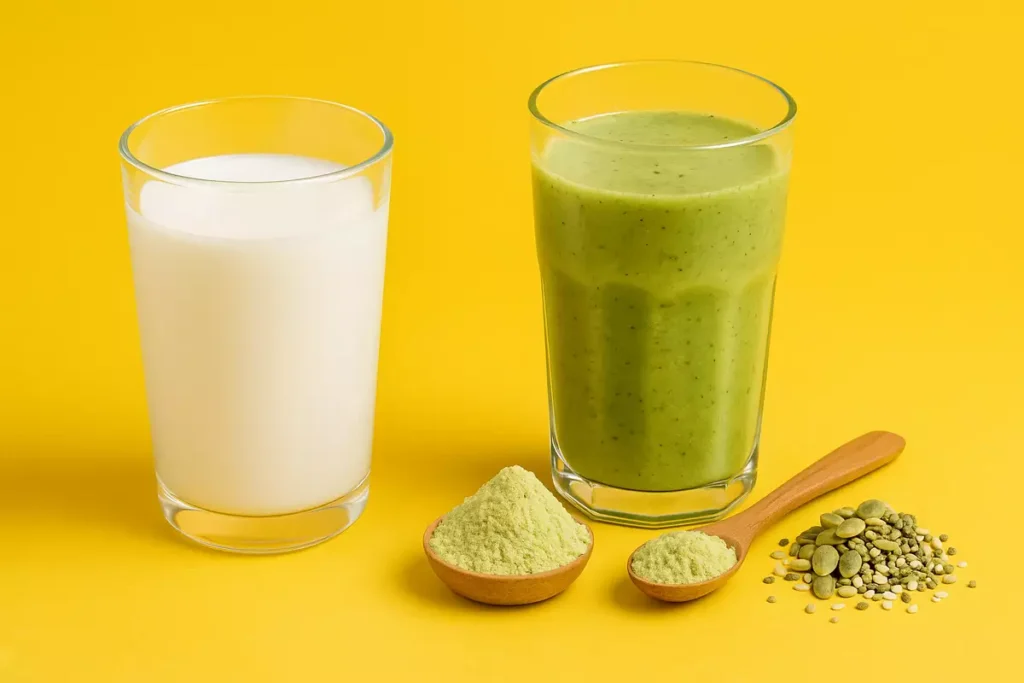
The short answer? Yes — and in some ways, it’s better. Plant-based proteins won’t mimic casein’s exact slow-drip mechanism, but the right blends come remarkably close while solving the very problems that push people away from dairy.
Here’s how they stack up across the four factors that matter most for muscle growth and recovery.
Comparison Table: Plant-Based Proteins vs. Casein
Factor | Casein | Soy Protein | Pea-Rice Blend | Pea Protein (Single) | Hemp Protein |
|---|---|---|---|---|---|
Amino Acid Profile | Complete, high leucine | Complete, closest plant match to casein | Complete when blended | Slightly low in methionine | Moderate; lower leucine |
Absorption Rate | Very slow (6-8 hours) | Moderate (2-4 hours) | Moderate-slow (3-5 hours) | Moderate (2-3 hours) | Slow (3-4 hours, due to fiber) |
Digestive Comfort | Can cause bloating, heaviness | Generally well-tolerated | Excellent; very low allergy risk | Excellent; lightest on stomach | Good; fiber aids digestion |
Satiety (Fullness) | High, but can feel heavy | High, without heaviness | High, steady release | Moderate-high | High, thanks to fiber and omega-3s |
Overnight Recovery | Excellent (gold standard) | Very good | Excellent (best plant option) | Good | Good |
Best For | Those who tolerate dairy well | Closest all-round dairy-free swap | Vegan overnight recovery | Sensitive stomachs | Cutting phases, added nutrients |
What This Means for Your Training
- Amino Acid Profile: Soy protein is the only single plant source that matches casein’s complete, leucine-rich profile. Pea-rice blends achieve the same by filling each other’s gaps (pea lacks methionine, rice lacks lysine). Single sources like hemp or pumpkin seed should be paired for a full profile.
- Absorption Rate: Casein’s slow release comes from a gel-like clot in the stomach. No plant protein replicates that mechanism exactly, but pea-rice blends and fiber-rich hemp deliver a similar steady, sustained release over 3-5 hours — enough for overnight repair without the digestive burden.
- Satiety: Both soy and pea protein match casein’s fullness without the heavy, sluggish feeling. Hemp protein, with its fiber and healthy fats, is the most satiating option and works especially well during a cutting phase.
- Recovery: Real-world results confirm plant blends work. Client examples include lean muscle built on a pea-rice blend and maintained overnight recovery after switching from casein to a soy-pea mix — all without the bloating.
More insights: How Long to See Results with Casein Protein.
Top Plant-Based Casein Substitutes & Vegan Alternatives
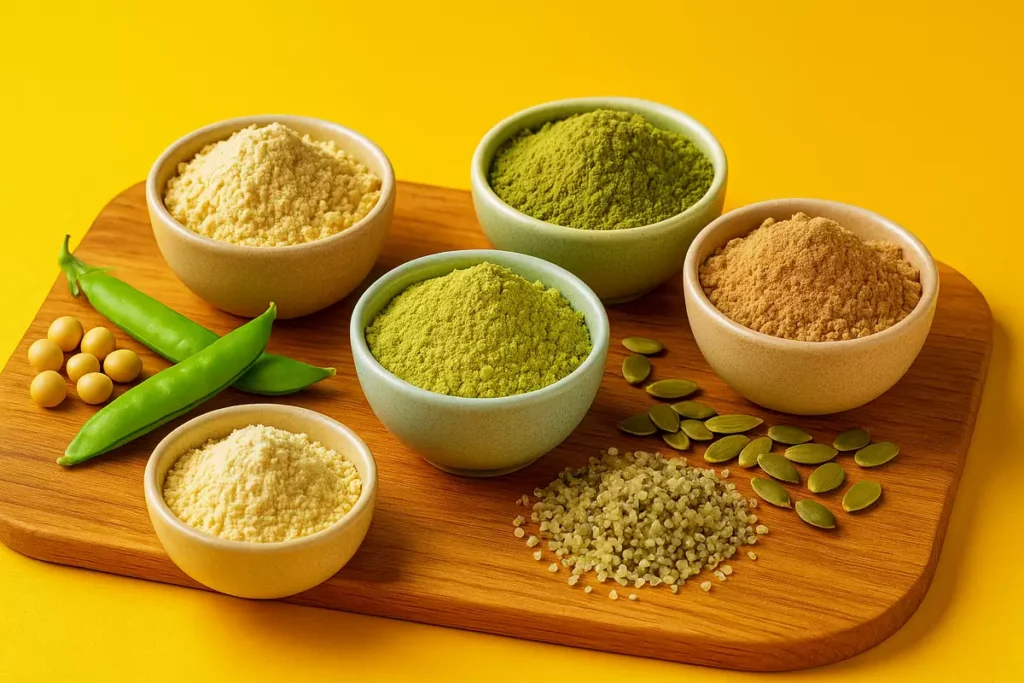
Here are the five best plant proteins that replace casein — each tested and chosen for a specific reason:
- Soy Protein — The closest amino acid match to dairy casein.
- Pea Protein — Gentle on digestion, powerful for recovery.
- Pea-Rice Blend — A complete protein that outperforms single sources.
- Brown Rice Protein — Hypoallergenic and easy to digest.
- Hemp Protein — Packed with omega-3s, fiber, and clean energy.
- Pumpkin Seed Protein — A mineral-rich muscle builder.
Each of these plant proteins brings something unique to the table. Some match casein’s amino acid profile almost perfectly, others prioritize digestion or add nutrients dairy simply can’t offer.
Here’s a closer look at each one — starting with the closest match to casein itself.
Soy Protein – The Closest Amino Acid Match to Casein
Soy protein is the most similar to casein when it comes to amino acid profile. It’s rich in leucine, a key trigger for muscle growth.
I’ve used soy protein after workouts and found the recovery nearly identical to casein — but without the heavy digestion.
Client story: Anna from Germany used casein at night but often woke up nauseous. After switching to a soy-pea protein blend, she slept better and maintained her recovery without discomfort.
(Read more: Casein vs. Soy Protein – Slow Digestion Compared)
Pea Protein – Gentle on Digestion, Powerful for Recovery
Pea protein is one of my favorites. It’s light, easy on the stomach, and still powerful for muscle repair.
When I switched from casein to pea protein before bed, I woke up feeling lean and refreshed instead of heavy.
Real-life example: My friend Carlos from Spain had cramps with casein. Within weeks of using pea protein, his morning workouts felt stronger, and recovery stayed on point.
Hemp Protein – Omega‑3s, Fiber, and Clean Energy
Hemp protein goes beyond muscle. It packs omega-3 fatty acids, fiber, and minerals.
I used hemp protein during a cutting phase, and it gave me clean, steady energy. The taste is earthy, but blending it with banana and almond milk balances it out nicely.
Brown Rice Protein – Hypoallergenic and Easy to Digest
Rice protein isn’t as complete alone, but when combined with pea protein, it forms a full amino acid profile.
Client experience: David from Canada, a vegan client, built lean muscle on a pea-rice blend. He couldn’t tolerate casein, but this combo worked perfectly for his goals.
(Learn more: Casein vs. Blended Protein Powders for Athletes)

Take this 2-minute assessment & get a science-backed training, nutrition & supplement roadmap built for YOUR body.
🔬 12,000+ personalized roadmaps generated
Pumpkin Seed Protein – A Mineral-Rich Muscle Builder
Pumpkin seed protein doesn’t get enough credit. It’s rich in magnesium, zinc, and iron — all essential for muscle function.
I like adding it to smoothies with pea protein. Together, they provide protein plus vital nutrients for recovery and strength.
Why Blended Plant Proteins Outperform Single Sources
Here’s the one drawback of plant proteins you need to know: most single sources have amino acid gaps.
Pea protein is low in methionine. Rice protein is low in lysine. Hemp and pumpkin seed proteins are moderate across the board but don’t hit leucine thresholds as effectively on their own.
This isn’t a dealbreaker — it’s just a reason to blend.
How Blends Solve the Problem
When you combine complementary sources, their amino acid profiles fill each other’s gaps automatically:
- Pea + Rice = Complete. Pea provides the lysine rice lacks; rice supplies the methionine pea misses. Together, they form a full amino acid profile comparable to dairy or animal proteins.
- Soy + Hemp = Balanced with extra nutrients. Soy brings the leucine punch for muscle protein synthesis; hemp adds omega-3s, fiber, and minerals for overall health.
- Pumpkin Seed + Pea = Mineral-rich and complete. Pumpkin seed delivers magnesium, zinc, and iron; pea rounds out the amino acid profile.
The Real-World Advantage
A well-chosen blend mimics exactly what casein does — steady, complete nourishment over several hours — but without the heavy stomach that drives so many people away from dairy. You get the slow-release recovery benefit and the digestive comfort in one product.
That’s why my top recommendation throughout this guide isn’t any single plant protein. It’s a pea-rice blend. And that’s why most high-quality vegan protein powders on the market are already blended for you.
Bottom line: Single-source plant proteins work. Blends work better.
When and How to Use Plant-Based Protein Powders
Knowing which protein to pick is half the battle. Using it at the right time is where the real results show up.
Here’s how to time your plant proteins for maximum muscle growth and recovery.
- Post-Workout: Choose pea or soy protein for fast recovery.
- Before Bedtime: A pea-rice blend is the best substitute for casein, providing overnight amino release.
- Daily Nutrition: Add hemp or pumpkin seed protein to smoothies for an extra nutrient boost.
Post-Workout: Fast Fuel for Repair
Your muscles are primed for nutrients in the 30-60 minute window after training. This is when absorption speed matters most.
- Best choice: Soy protein or pea protein.
- Why: Both digest quickly (2-3 hours) and deliver a rapid amino acid spike to kickstart muscle repair. Soy has the edge on leucine content; pea has the edge on digestive comfort.
- How to use: Mix one scoop with water or almond milk immediately after training. Keep it simple — no need for added fats or fiber that slow absorption.
Before Bedtime: Your Overnight Casein Replacement
This is the moment casein users care about most. You want a steady, sustained release of amino acids while you sleep to prevent muscle breakdown.
- Best choice: A pea-rice protein blend.
- Why: The combined amino acid profile digests at a moderate-slow pace (3-5 hours), mimicking casein’s overnight repair effect without the bloating or heaviness. It’s the closest plant-based alternative to casein for nighttime use.
- How to use: Take one scoop 30-60 minutes before bed. Mix with water or a small amount of unsweetened almond milk. Avoid loading it with fruit or nut butters — keeping it light helps you sleep without digestive discomfort.
Daily Nutrition: Boost Your Meals with Extra Protein and Nutrients
Not every shake needs to be timed strategically. Plant proteins can simply fill nutritional gaps in your everyday diet.
- Best choice: Hemp protein or pumpkin seed protein.
- Why: Hemp adds omega-3 fatty acids and fiber; pumpkin seed delivers magnesium, zinc, and iron. These aren’t just for muscle — they support hormones, immunity, and recovery at a deeper level.
- How to use: Add half to one scoop into smoothies, oatmeal, or even pancake batter. Hemp’s earthy taste pairs well with banana and cinnamon; pumpkin seed blends smoothly with berries and cocoa.
Related reading: Micellar Casein for Overnight Muscle Repair.
FAQ: Common Questions About Casein Substitutes & Vegan Alternatives
A pea-rice protein blend is the best vegan casein alternative. It provides a complete amino acid profile and digests slowly enough to support overnight muscle recovery, just like casein—without the bloating or dairy.
The best casein substitute is a pea-rice protein blend. If you prefer a single-ingredient option, soy protein is the closest match to casein’s amino acid profile.
You can use a pea-rice blend, soy protein, hemp protein, brown rice protein, or pumpkin seed protein. A blend gives you the most complete nutrition, while single sources like pea or soy still work well for muscle repair.
Edamame, pumpkin seeds, hemp hearts, or a smoothie with pea protein powder are all excellent whole-food options. They provide steady, slow-digesting protein for recovery without dairy.
No. Real casein comes from milk, so a truly vegan casein protein powder doesn’t exist. However, plant-based blends made from pea and rice protein can deliver the same slow-release recovery benefits.
No. Micellar casein is a dairy protein derived from milk, so it’s not suitable for vegans or those with dairy intolerance.
A pea-rice protein blend is ideal. It breaks down at a moderate pace, supplying your muscles with a steady stream of amino acids while you sleep—minus the heavy feeling casein often causes.
Soy protein and pea-rice blends are the top choices. Both are rich in leucine, the key amino acid that triggers muscle protein synthesis, making them effective for building and repairing muscle.
The Trainer’s Final Verdict: Your Best Casein Replacement
After years of personal testing and coaching hundreds of clients, here’s my straightforward recommendation.
The best casein substitute is a pea-rice protein blend. It’s complete, easy to digest, and delivers steady overnight recovery without the bloated, heavy feeling casein often causes.
I’ve seen it work consistently—for vegans, for athletes with dairy sensitivity, and for anyone who simply wants to wake up feeling light and recovered.
If you prefer a single-source casein replacement, go with soy protein. It’s the closest plant-based match to casein’s amino acid profile and supports muscle growth effectively.
That said, pea protein is the most universally well-tolerated option—it rarely causes digestive issues and still gets the job done.
Also see: Casein Protein Myths Debunked and Top Rated Casein Protein for Bodybuilding.
The bottom line: Whether you choose a blend or a single source, the right plant-based protein gives you everything casein offers—slow-release recovery, muscle preservation, and satiety—without the dairy. Pick one, stay consistent, and your results won’t suffer.

Leave a Reply