


Building muscle isn’t just about what you do in the gym—it’s also about how you fuel your body afterward.
If you’ve spent any time researching supplements, you’ve likely come across two of the most popular options: mass gainers and creatine. Both promise to help you grow bigger and stronger, but they work in fundamentally different ways.
One floods your body with calories to force growth. The other enhances your performance so you can train harder and recover faster.
So which one actually builds muscle size faster?
Before I share my experience and break down the details, here’s a quick snapshot of how they compare:
Factor | Mass Gainer | Creatine |
|---|---|---|
Primary Use | Calorie surplus for hard gainers | Strength, power, recovery |
Muscle Growth | Moderate to high (with fat risk) | High (lean muscle) |
Weight Gain | Muscle + fat | Lean mass + water |
Cost per Serving | $$–$$$ | $ |
Best For | Undereaters, fast metabolism | Most lifters |
In this guide, I’ll walk you through how each supplement actually works, share real results from my own training and clients, and help you decide which one aligns with your goals.
Table of contents
- Mass Gainer vs Creatine: What’s the Real Difference?
- How Mass Gainers Work (And Who They’re For)
- How Creatine Works (And Why It’s Different)
- Head-to-Head Comparison: Mass Gainer vs Creatine
- Can You Take Mass Gainer and Creatine Together?
- Frequently Asked Questions About Mass Gainer and Creatine
- Final Takeaway: Choosing What’s Right for Your Goal
Mass Gainer vs Creatine: What’s the Real Difference?
If your goal is pure, quality muscle size, creatine is the better choice for most people.

Here’s why: creatine doesn’t add bulk through empty calories. Instead, it boosts your strength, improves recovery, and helps you push harder in the gym—all without packing on unnecessary fat.
Mass gainers, on the other hand, serve a more specific purpose. They’re designed for people who genuinely struggle to eat enough calories to grow.
But there’s a catch: mass gainers can easily lead to fat gain alongside muscle. I’ve seen it in my own training and with my clients—the scale goes up, but not all of it is the kind of weight you want.
So if you’re eating enough but still not growing, creatine is likely your answer. If you’re barely getting meals in and need a calorie bridge, a mass gainer can help—just go in with your eyes open.
⚠️ One common issue with mass gainers? Digestive discomfort. If you’ve experienced bloating or heaviness, I’ve covered the common bloating issues and fixes here.
How Mass Gainers Work (And Who They’re For)
Mass gainers are high-calorie shakes made from protein, carbs, and sometimes added fats.
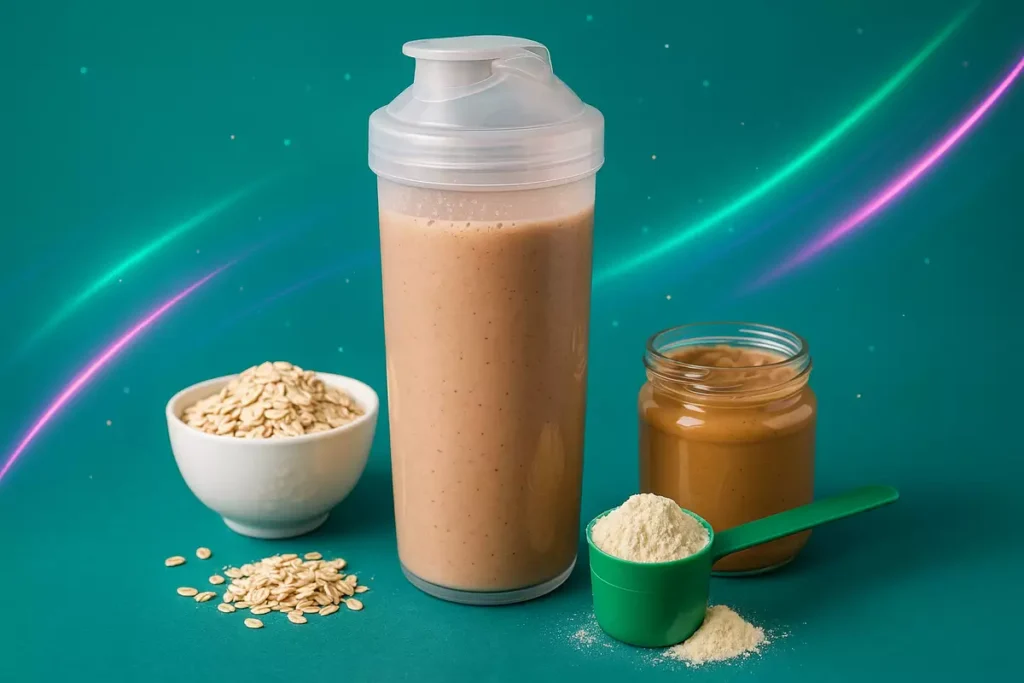
They’re designed for people who struggle to hit a calorie surplus through food alone.
When I first tried Optimum Nutrition Serious Mass, I gained around 4 kg in six weeks. My arms and chest looked fuller, but I also noticed a layer of fat around my waist.
The extra calories did their job—but they weren’t all muscle. If you’re wondering how long it might take to see results, check out my mass gainer results timeline guide.
Real-World Example:
One of my clients, Lucas from Brazil, had an insanely fast metabolism. He started taking a mass gainer after every workout.
In two months, he gained 6 kg. The downside? About half of it was fat, so we had to tighten up his nutrition.
For those looking to shape their body without bulking excessively, I’ve written a specific piece on using mass gainers for curves.
How Creatine Works (And Why It’s Different)
Creatine is a natural compound that your muscles use for quick energy during high-intensity efforts.

Supplementing with it increases your stored muscle creatine, which means more explosive power and better performance in the gym.
When I added creatine monohydrate to my routine—5g per day after a loading week—my bench press went up by 7 kg in just two weeks.
My muscles felt denser, I could recover faster between sets, and I had the stamina to squeeze out extra reps.
Real-World Example:
Marek from Poland was stuck on his squat at 120 kg for weeks. Three weeks on creatine, and he hit 130 kg with solid form. The strength boost was obvious, and he didn’t gain unnecessary fat.
Head-to-Head Comparison: Mass Gainer vs Creatine
Feature | Mass Gainer | Creatine |
|---|---|---|
Muscle Growth Potential | Moderate to High (depends on training and diet) | High (via strength and performance boost) |
Weight Gain Quality | Muscle + Fat | Mostly muscle + water weight |
Cost-Effectiveness | Lower (high-calorie shakes can be expensive) | High (cheap and effective) |
Best For | Hard gainers, high-calorie needs | Almost everyone training for strength and size |
If you’re budget-conscious, my mass gainer on a budget guide covers cost-effective options and homemade shake ideas.
Which One Should You Take? A Simple Decision Guide
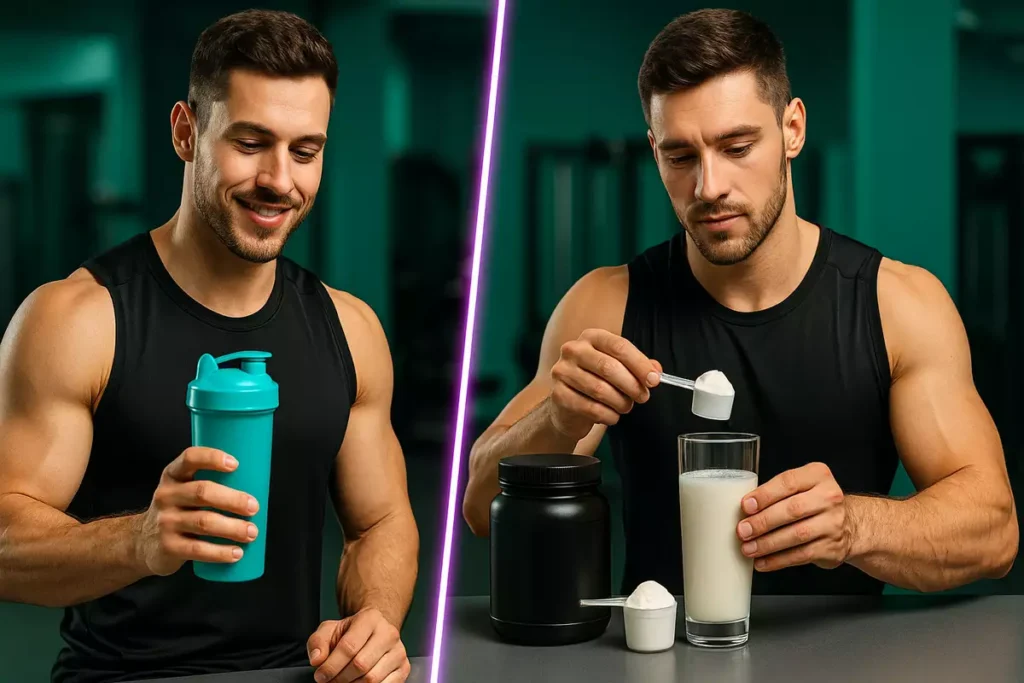
Choosing between a mass gainer and creatine doesn’t have to be complicated. The right choice depends entirely on your body type, eating habits, and fitness goals.
Use this simple guide to find your match.
You May Prefer a Mass Gainer If…
Mass gainers are designed for one specific purpose: helping you eat more calories than you burn. If any of these sound like you, a mass gainer might be your answer.
Scenario | Why It Works |
|---|---|
You have a fast metabolism | No matter how much you eat, you struggle to gain weight. A mass gainer adds easy, liquid calories without forcing down another meal. |
You’re underweight or a “hard gainer” | Your body burns through calories quickly. A mass gainer helps you maintain a consistent calorie surplus for steady weight gain. |
You often skip meals or forget to eat | Busy schedule? Low appetite? One shake can deliver 500–1,200 calories in minutes. |
You’re in a bulking phase and don’t mind some fat gain | If your priority is size at any cost, mass gainers accelerate weight gain—just be prepared to cut later. |
Bottom line: Choose mass gainer when your biggest obstacle is getting enough calories, not training intensity.
You May Prefer Creatine If…

Creatine is for lifters who already have their nutrition in check but want to train harder, recover faster, and build lean muscle without excess fat.
Scenario | Why It Works |
|---|---|
You want pure strength gains | Creatine fuels ATP production, giving you more power for heavy lifts and explosive movements. |
You’re eating enough but not seeing progress | If your calories are on point but strength has stalled, creatine pushes you past plateaus. |
You want lean muscle without fat gain | Unlike mass gainers, creatine adds mass through water retention in muscles and improved performance—not stored fat. |
You care about recovery between sets | More creatine in your muscles means faster regeneration, allowing you to do more volume in less time. |
Bottom line: Choose creatine when your training intensity is the limiting factor, not your calorie intake.
Can You Take Mass Gainer and Creatine Together?
Yes, you can combine them—but with caution.
Stacking creatine with a mass gainer can accelerate size gains, but it also increases the risk of adding unwanted fat. If you go this route:
- Track your weight weekly
- Take progress photos every 2 weeks
- Adjust serving sizes if fat gain outpaces muscle growth
I personally stacked both during a bulking phase and gained 5 kg in a month. The strength gains were great, but I also carried more fat than I wanted during my cut afterward.
If you’re combining them, read my guide on mass gainer daily use to avoid overdoing it.
Frequently Asked Questions About Mass Gainer and Creatine
Most mass gainers do not contain creatine unless specified. If you want both, you can stack them—but monitor body composition closely.
Yes, many people combine them during bulking phases. However, this can accelerate fat gain if not tracked carefully.
If you’re struggling to eat enough, mass gainer helps meet calorie needs. Creatine alone won’t help if you’re not in a calorie surplus.
Mass gainer is a calorie-dense supplement for weight gain. Creatine is a performance enhancer that helps you train harder and recover faster.
Final Takeaway: Choosing What’s Right for Your Goal
If your goal is pure muscle with minimal fat, start with creatine. It’s affordable, effective, and proven.
If you’re underweight or have a fast metabolism that makes eating enough a chore, a mass gainer can help—just be smart about the brand and serving size.
I’ve seen both work wonders in the right situation.
The key is knowing your body, setting clear goals, and tracking your progress.
Supplements can give you a push, but your training and diet will always be the main drivers of your muscle growth.
For more on choosing the right type, see my full comparison of powder vs homemade mass gainers.
Leave a Reply