


Choosing the right supplement can be confusing. With so many options out there, two names often stand out: Creatine Monohydrate and HMB.
Both are popular in the fitness world, but they don’t work the same way. Creatine is known for boosting strength and size. HMB is praised for protecting muscle and aiding recovery.
So, which one actually works better for building muscle? And should you even consider taking both together?
Creatine Monohydrate vs HMB: At a Glance
Feature | Creatine Monohydrate | HMB (Beta-Hydroxy Beta-Methylbutyrate) |
|---|---|---|
Primary Function | Performance & Power: Increases ATP production for explosive energy. | Protection & Preservation: Reduces muscle protein breakdown. |
Best For | Gaining strength, increasing power, building lean mass, improving workout performance. | Preserving muscle during cuts, reducing soreness, aiding recovery in high-volume training. |
Muscle Growth | High (Indirect): Lets you lift heavier and longer, driving hypertrophy. | Low to Moderate: Prevents loss, but doesn’t directly build new tissue quickly. |
Strength Gains | Rapid & Noticeable: Usually felt within 1-2 weeks. | Minimal: Does not directly improve explosive strength. |
Recovery | Good (Faster between sets). | Excellent (Reduces post-workout soreness). |
When to Take It | Bulking, strength phases, and all-around training. | Cutting phases, contest prep, or intense endurance blocks. |
Dosage | 3-5 grams daily. | 3 grams daily. |
Scientific Backing | Gold Standard: 1000+ studies confirming safety and efficacy. | Situational: Effective for specific catabolic conditions. |
Quick Verdict for Your Goals:
- I want to get bigger and stronger fast. 👉 Choose Creatine Monohydrate. It is the most effective, affordable, and researched supplement for this goal.
- I am dieting and scared of losing muscle. 👉 Choose HMB. It acts as a shield to protect hard-earned muscle when calories are low.
- I am an advanced athlete who wants it all. 👉 Take Both. They work through different pathways and complement each other perfectly.
In this article, I’ll break down the science, my personal coaching experience, and real-life examples to help you decide if creatine, HMB, or a combination is the best fit for your goals.
Table of contents
- Is “Creatine HMB” a Single Supplement?
- Creatine vs HMB (Quick Answer)
- What is Creatine?
- What is HMB?
- Creatine vs HMB: Direct Comparison
- Is HMB Worth It If I Already Take Creatine?
- Which Supplement Fits Your Goal? Creatine or HMB?
- Can You Take Creatine and HMB Together?
- Frequently Asked Questions
- Final Verdict: Which One Should You Choose?
Is “Creatine HMB” a Single Supplement?
No. Despite what you might read online, Creatine HMB is not a single supplement.
It is actually two distinct ingredients—Creatine and HMB—often stacked together in one product.
- Creatine Monohydrate: A performance powerhouse. It fuels strength and explosive power.
- HMB: A recovery specialist. It protects muscle from breakdown, especially during cutting phases.
Think of it like “Peanut Butter and Jelly.” You can buy them separately, or buy a combo jar—but they are still two different things doing two different jobs.
If you see a label saying “Creatine HMB,” it simply means the manufacturer put both ingredients into the same scoop.
To understand which one is right for your goals, you need to compare them side-by-side.
Creatine vs HMB (Quick Answer)
Creatine is the better choice for most athletes, bodybuilders, and everyday lifters.
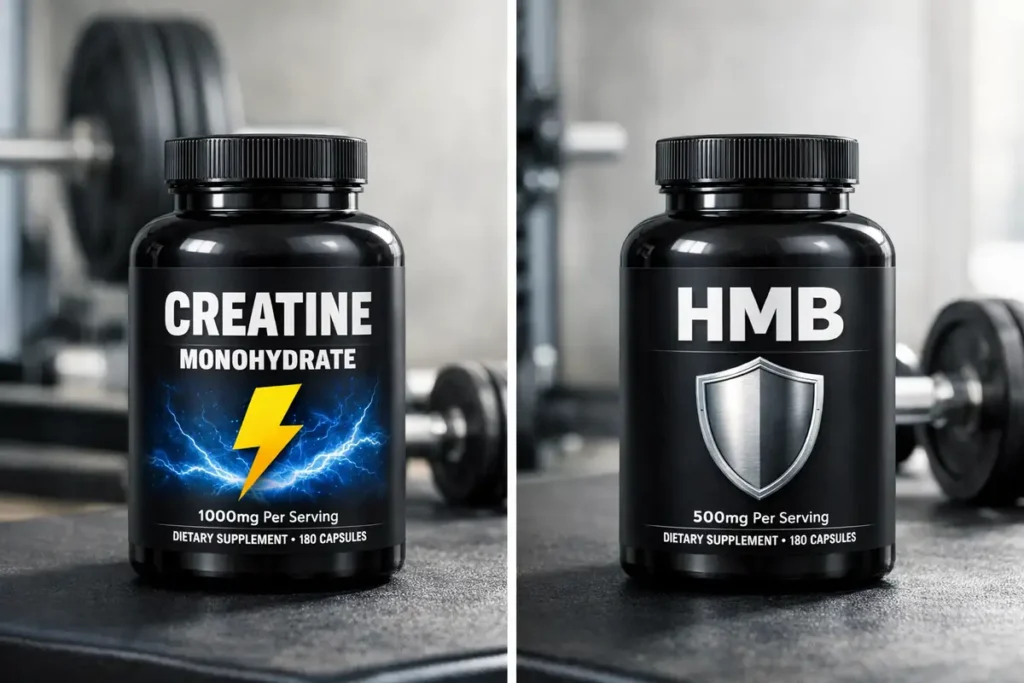
Unlike many supplements, creatine has been studied for decades and consistently delivers results across all groups.
The International Society of Sports Nutrition’s position stand on creatine recognizes it as one of the most effective and well-researched ergogenic aids available today.
What does this mean for you?
If you’re just starting out or want proven results, creatine monohydrate should be your first choice. It’s affordable, safe, and backed by over 1,000 studies.
What About HMB?
HMB isn’t useless—it’s just situational.
It shines when muscle preservation becomes critical:
- During a cut (low calories, high risk of muscle loss)
- For advanced athletes pushing extreme volume
- Endurance competitors needing recovery support
- Older adults combating age-related muscle breakdown
For a deeper look, check out this complete HMB guide.
The Bottom Line
If I had to recommend only one supplement to my clients? Creatine always comes first.
I’ve coached dozens who tested both. Creatine almost always provides faster, more noticeable strength and muscle gains.
Want to understand why? Check out this complete creatine guide for a simple, practical breakdown.
What is Creatine?
Creatine is a naturally occurring compound found in your muscles and produced by your body. It works by replenishing ATP—the main energy source for explosive movements like lifting, sprinting, or jumping.
When you supplement with creatine, your muscles store more of it. That allows you to push harder, lift heavier, and recover faster between sets. Over time, that extra effort translates into more strength and size.
A PubMed review on creatine supplementation confirms it is the most researched supplement for muscle and strength gains, with consistent evidence of effectiveness and safety. Most users notice visible results within weeks, making it one of the fastest-working sports supplements.
Who benefits? Research shows creatine works for everyone—from teenage athletes seeking a safe performance edge, to women using creatine monohydrate for strength and energy.
Even seniors supplementing creatine can improve muscle function and slow age-related decline. Some users also report increased appetite—a potential plus for hardgainers looking to bulk up. Learn more about creatine and appetite.
My experience: Within two weeks of consistent use (5 grams daily), my strength shot up. Squats felt lighter, and my muscles looked fuller. The only minor downside? Occasional bloating if I skimped on water—easily managed.
Client story: David, a beginner lifter, was skeptical. After one month of creatine, he bench pressed 10 kg more and said he finally “felt like a real gym guy.” For beginners, those quick gains build momentum and consistency.
Main Benefits of Creatine:
- Rapid strength increases
- Noticeable muscle fullness
- Faster recovery between sets
- Long-term muscle growth support
What is HMB?
HMB (beta-hydroxy-beta-methylbutyrate) is a metabolite of leucine, one of the most important amino acids for muscle repair.
Unlike creatine, HMB doesn’t give you a fast boost in strength. Instead, it plays a more subtle role in protecting your muscles from breakdown and supporting recovery.
The ISSN position stand on HMB explains that it helps reduce muscle protein breakdown and improve recovery after intense workouts. This makes HMB particularly useful during calorie restriction, high training volumes, or for athletes looking to minimize muscle loss.
I tested HMB at 3 grams daily for six weeks, especially during a cutting phase when I was lowering calories. Unlike creatine, the results weren’t dramatic in the gym, but I did notice less soreness, especially after heavy leg days. It felt like a shield that helped me hold onto muscle when I was in a deficit.
Real-life client example: Lucas, an advanced bodybuilder I worked with, used HMB while preparing for a show. During contest prep, calories were brutally low, and the risk of losing muscle was high. He told me HMB helped him keep his muscle fullness while dropping fat. He didn’t gain new strength, but it gave him an edge in retaining muscle mass.
Main Benefits of HMB:
- Reduces muscle breakdown during calorie restriction
- Supports faster recovery after hard sessions
- Helpful for older adults or endurance athletes
- Works well in cutting or intense training cycles
Creatine vs HMB: Direct Comparison
- Muscle Growth: Creatine Monohydrate is the clear winner. It directly supports hypertrophy by letting you train harder and lift heavier.
- Strength and Performance: Creatine again wins. It’s especially effective during short rest interval training where recovery speed matters most. HMB doesn’t improve strength directly.
- Recovery and Muscle Protection: HMB takes the lead here. It reduces muscle breakdown and helps soreness, especially when cutting or in high-intensity training blocks.
- Side Effects and Safety: Both are safe when taken properly. A review on creatine safety concludes that long-term use in healthy individuals is not harmful. HMB also has a strong safety record at recommended doses.
From my coaching perspective, creatine drives progress in the gym, while HMB protects what you already have.
Is HMB Worth It If I Already Take Creatine?
It depends on your goal.
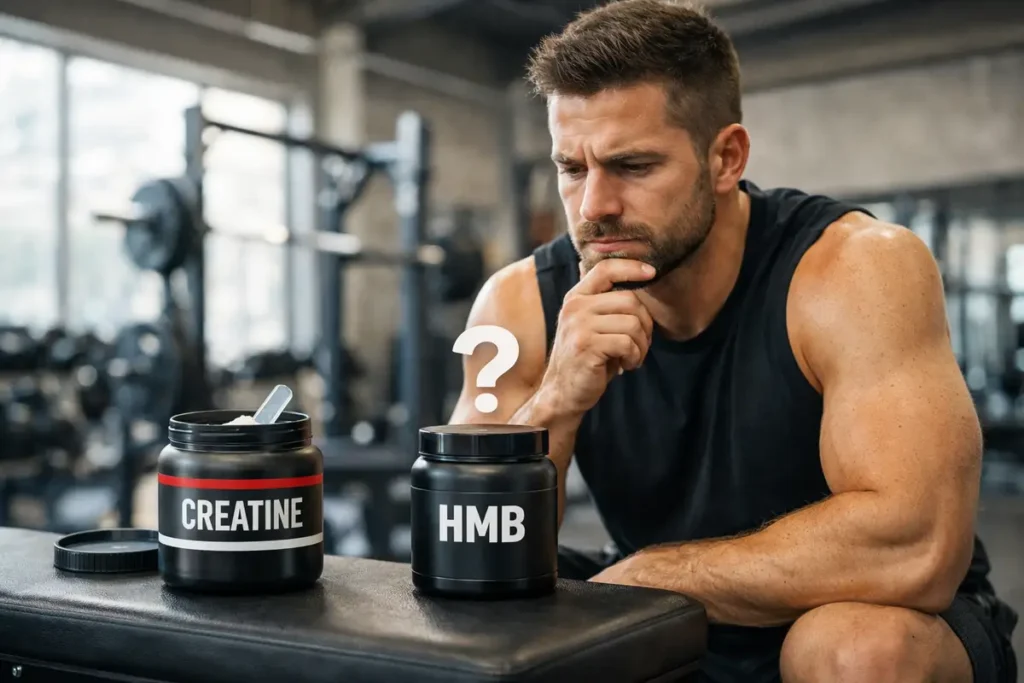
If you are bulking or focused on strength, HMB is probably not worth it. Creatine alone already covers performance and growth.
If you are cutting, training twice a day, or over 50, HMB is worth considering. It targets muscle preservation and recovery—two things creatine does not directly handle.
Scenario | Is HMB Worth Adding? | Why? |
|---|---|---|
Bulking / Strength Phase | ❌ Not really | Creatine already maximizes performance. Save your money. |
Cutting / Dieting | ✅ Yes | HMB helps hold onto muscle when calories are low. |
High-Volume Training | ✅ Yes | Reduces soreness and speeds up recovery between sessions. |
Older Adults (50+) | ✅ Yes | Helps slow age-related muscle breakdown. |
Think of creatine as your engine and HMB as insurance. If you are pushing hard or in a deficit, the insurance is worth it. If you are cruising and growing, the engine is enough.
Which Supplement Fits Your Goal? Creatine or HMB?
Not sure whether creatine, HMB, or both is right for you? Find your category below.
Who | Best Choice | Why |
|---|---|---|
Beginners | 🏆 Creatine | Fast results keep motivation high. HMB can wait. |
Advanced Athletes | ✅ Both | Creatine for performance. HMB for recovery during high-volume blocks. |
Bulking | 🏆 Creatine | Maximizes growth—especially with a calorie surplus. |
Cutting | 🏆 HMB | Prevents muscle loss when calories drop. Research confirms it reduces muscle wasting. |
Older Adults (50+) | ✅ Both | HMB reduces age-related breakdown. Creatine + vitamin D supports strength and function. |
Real Client Story: Sophia, a competitive CrossFit athlete, stacked creatine and HMB during a high-volume training cycle.
“Creatine gave me the push for heavy lifts. HMB kept me from feeling wrecked after back-to-back sessions.”
-Sophia
📌 Find your category above. If you are still unsure, start with creatine—it works for everyone. Add HMB when your goal shifts to preservation or recovery.
Can You Take Creatine and HMB Together?
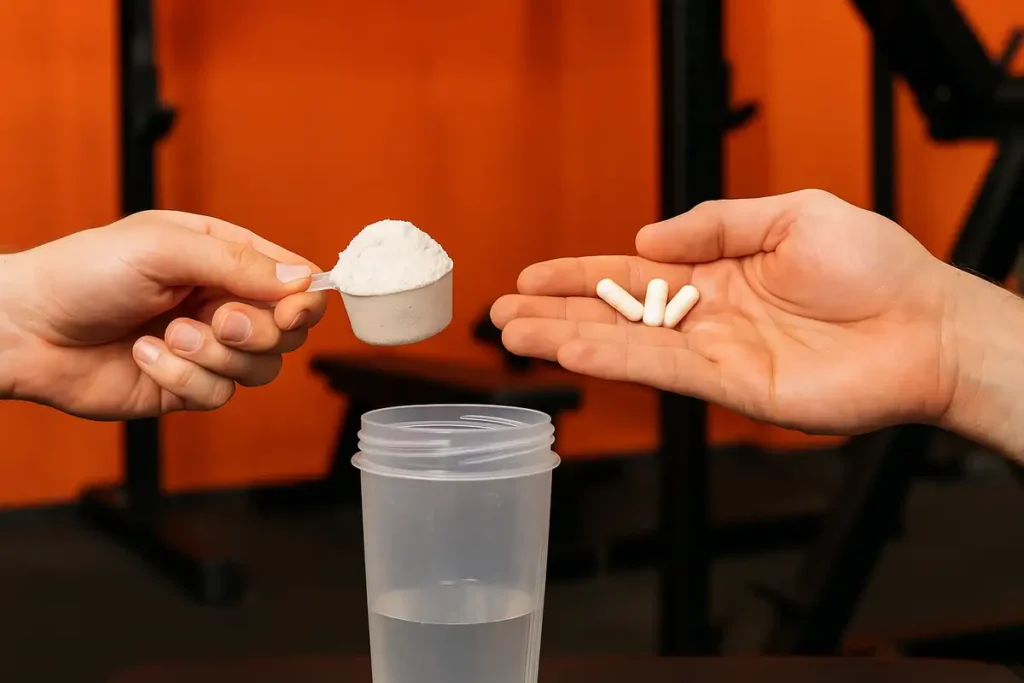
Yes, absolutely. In fact, stacking them is one of the smartest moves you can make.
They complement each other perfectly because they work through different pathways:
- Creatine boosts performance—helping you lift heavier, sprint faster, and push through plateaus.
- HMB protects muscle and speeds recovery—reducing soreness and preserving lean mass.
Think of it this way: Creatine is your accelerator. HMB is your shield.
Does Stacking Them Work?
Yes. Since they don’t compete for the same pathways, your body absorbs and uses both effectively. You get the performance upside of creatine plus the recovery and muscle-sparing benefits of HMB.
My experience: I ran a 12-week bulk using creatine daily and added HMB during the final month. The difference? I felt stronger in my workouts and recovered quicker between sessions. It wasn’t night and day, but the synergy made training smoother—especially as fatigue built up.
When Should You Stack?
Stacking makes the most sense when:
- You are in high-volume training (like CrossFit or intense bodybuilding blocks)
- You are cutting but still want to maintain performance
- You are an advanced athlete looking for every edge
- You struggle with soreness holding back your next workout
When Is Creatine Alone Enough?
If you are a beginner or strictly bulking in a calorie surplus, creatine alone is likely sufficient. Save HMB for when recovery becomes a bottleneck or muscle preservation is critical.
Bottom Line: Creatine and HMB work better together than alone. They target different parts of the muscle-building equation—performance and preservation. If your budget allows and your training demands it, the stack is worth it.
Frequently Asked Questions
No. For most people, creatine is better because it directly increases strength and muscle size. HMB is better only in specific situations, like preserving muscle during a calorie deficit.
No. They are completely different compounds. Creatine boosts energy for explosive performance. HMB helps reduce muscle breakdown and soreness.
Yes. They work well together. Creatine improves workout performance, while HMB supports recovery. Many advanced athletes stack both.
Creatine helps you lift heavier and train harder. HMB helps protect your muscles from breaking down, especially when cutting or training intensely.
Yes. Both supplements are safe when taken at recommended doses. Creatine monohydrate has decades of research backing its safety. HMB also has a strong safety record.
It depends on your goals. If you are bulking, creatine alone is enough. If you are cutting or doing high-volume training, adding HMB can help preserve muscle and reduce soreness.
Creatine builds muscle faster for most people. It allows you to progress overload more quickly. HMB primarily prevents muscle loss rather than building new tissue rapidly.
Beginners should start with creatine. It provides faster, more noticeable results, which helps build consistency and motivation in the gym.
HMB does not directly increase strength. It supports recovery, which may indirectly help performance over time, but it is not a strength booster like creatine.
When stacked, HMB complements creatine by reducing muscle breakdown and soreness, allowing you to recover faster between workouts while creatine fuels your performance.
Final Verdict: Which One Should You Choose?
Here’s my simple rule:
- Creatine is the foundation. It’s affordable, effective, and works for nearly everyone.
- HMB is situational. It’s a great support tool during cutting phases, heavy training blocks, or for advanced athletes who want every possible edge.
If you’re new to supplements, start with creatine. It’s the gold standard for strength and size. If you’re advanced, dieting hard, or need extra recovery help, adding HMB on top can be smart.
In my 10 years of bodybuilding and 6+ years of coaching, I’ve seen one truth: supplements only amplify what you already do.
If your training, nutrition, and recovery are on point, creatine and HMB can both help. But if you’re skipping workouts or not eating enough protein, no supplement will save you.
Stay consistent, train smart, and use supplements as tools—not shortcuts. That’s the real key to building a strong, lean, and lasting physique.

Leave a Reply