
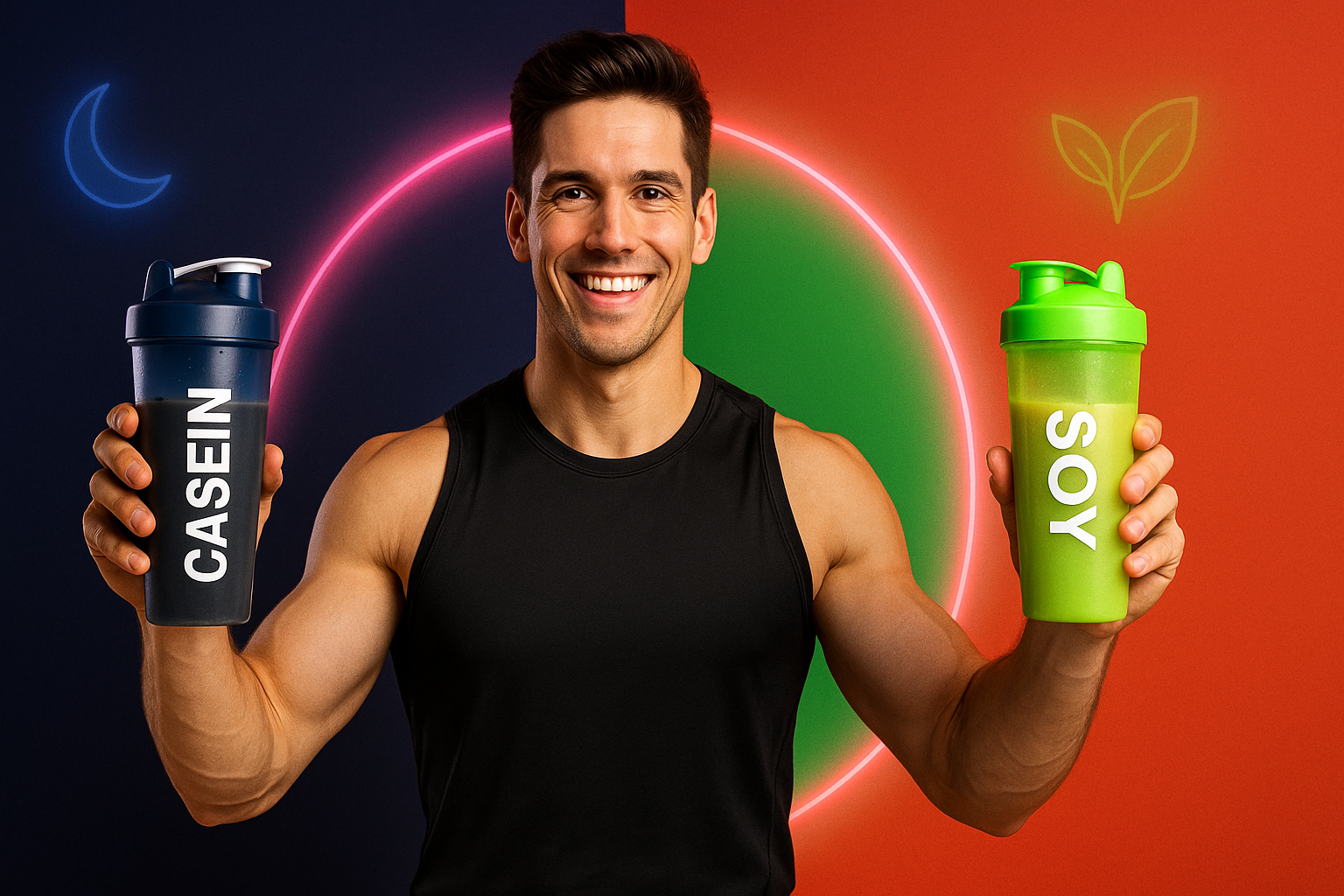

If you’ve ever wondered whether soy protein digests slowly enough to keep you full—or how it compares to casein for overnight recovery—you’re in the right place.
Slow-digesting proteins are a game-changer for muscle recovery, hunger control, and steady energy.
Whether you’re cutting, bulking, or maintaining, understanding soy protein digestion time and how it stacks up against casein can help you make smarter choices.
⚖️ Soy Protein Digestion vs Other Proteins: At a Glance
Protein | Digestion Speed | Full Absorption | Satiety Duration | MPS Elevation |
|---|---|---|---|---|
Soy Isolate | Moderate | 3-4 hours | 3-4 hours | 3-5 hours |
Micellar Casein | Very Slow | 6-8 hours | 6-8 hours | 7+ hours |
Pea Protein | Moderate | 3-4 hours | 3-4 hours | 3-4 hours |
Brown Rice Protein | Moderate | 3-4 hours | 3-4 hours | 2-3 hours |
Egg White Protein | Moderate-Slow | 4-5 hours | 4-5 hours | 4-5 hours |
Whey Isolate | Very Fast | 1-2 hours | 1.5-2.5 hours | 2-3 hours |
🔍 Key Takeaway:
Soy protein sits right in the middle—faster than casein but slower than whey. With a digestion time of 3-4 hours, it’s an excellent choice for sustained plant-based energy, moderate satiety, and steady amino acid delivery.
In this guide, I’ll break down casein vs soy protein for slow digestion, share real-world client results, and help you choose the perfect fit for your goals.
Table of contents
- Is Soy Protein Fast or Slow Digesting? A Clear Answer
- Casein vs Soy Protein: Head-to-Head Comparison
- Soy Protein Digestion Time: How Long Does It Really Take?
- How Casein Protein Works in the Body: The Gel Effect Explained
- How Soy Protein Works in the Body: Plant-Based Digestion Demystified
- Soy Protein Digestion Time vs Pea vs Rice: How Plant Proteins Compare
- What Real Users Report: Satiety, Digestion, and Results
- Best Time to Take Soy Protein for Muscle Growth and Fullness
- Best Use Cases for Casein and Soy Protein
- Can You Mix Casein with Soy Milk? What You Should Know
- 3 Best Nighttime Casein Shake Recipes for Slow Overnight Release
- Final Takeaway: Choosing the Right Protein for Slow Digestion
- Frequently Asked Questions About Soy and Casein Digestion
Is Soy Protein Fast or Slow Digesting? A Clear Answer
Soy protein is moderately slow-digesting—faster than casein but slower than whey.
- Compared to whey: 2-3x slower digestion
- Compared to casein: 2-3x faster digestion
- Satiety duration: 3-4 hours typical
If you want a plant-based protein that bridges the gap between fast and slow digestion, soy is your answer.
Casein vs Soy Protein: Head-to-Head Comparison
Feature | Casein Protein | Soy Protein |
|---|---|---|
Digestion Time | 6-8 hours | 3-4 hours |
Best For | Overnight recovery, fasting, hunger control | Vegan diets, moderate satiety |
Muscle Preservation | Excellent (slow AAA release) | Good (but lower leucine) |
Satiety Level | High (gel formation in stomach) | Medium |
Leucine Content | ~9-10% | ~8-8.5% |
Best Time to Take | Before bed, between meals | Post-workout, between meals |
Dietary Suitability | Includes dairy (not vegan) | Vegan, dairy-free |
Stomach Comfort | Can feel heavy for some | Generally lighter |
For example, Daniel from Canada, a client of mine, struggled with late-night snacking during his bulk.
I swapped his evening snack for a casein shake with almond butter, and within weeks, his cravings disappeared. He gained 3 kg of lean mass over 3 months.

Tell us your goal & discover your perfect stack — backed by science, no BS.
Free. Takes 2 Min | No sign-up needed
On the other hand, María from Spain, a vegan client, used soy protein before bed. She recovered well from workouts but needed to mix in healthy fats like peanut butter to stay full until morning.
Soy Protein Digestion Time: How Long Does It Really Take?
Soy protein takes 3-4 hours to fully digest and absorb.

But here’s the thing—that’s not the whole story. Your body starts using soy protein within 60-90 minutes, but the complete digestion process unfolds over several hours.
Digestion Time by Soy Type: Isolate vs Concentrate vs Whole Soy
Not all soy protein is created equal. Here’s how different forms compare:
Soy Product | Digestion Time | Absorption Rate | Best Use Case |
|---|---|---|---|
Soy Protein Isolate | 3-4 hours | Fastest absorption | Post-workout recovery |
Soy Protein Concentrate | 4-5 hours | Moderate | Meal replacement |
Textured Soy Protein (TVP) | 4-5 hours | Slower release | Cooking, ground meat alternative |
Tofu (firm) | 5-6 hours | Gradual | Whole food meals |
Tempeh | 5-7 hours | Very gradual | Sustained energy (fermented = slower) |
Edamame | 4-5 hours | Moderate | Snacks, salads |
Soy Milk | 2-3 hours | Fastest | Quick protein boost |
Why Soy Digests Slower Than Whey—But Faster Than Casein
Soy protein doesn’t form a gel-like clot like casein. Instead, it remains relatively soluble in the stomach, allowing gastric enzymes to break it down at a moderate pace.
The Science: A 2022 study in the Journal of Nutrition found that soy protein’s amino acids appear in blood plasma within 1-2 hours, peak at 3 hours, and return to baseline by 4-5 hours.
Is Soy Protein “Slow Digesting” Enough for Your Goals?
- Yes, if you want 3-4 hours of satiety between meals
- Not ideal if you need 6-8 hours of coverage (overnight fasting, long shifts)
How Casein Protein Works in the Body: The Gel Effect Explained
Casein forms a gel-like substance in the stomach, slowing down digestion and providing a steady amino acid supply over several hours.
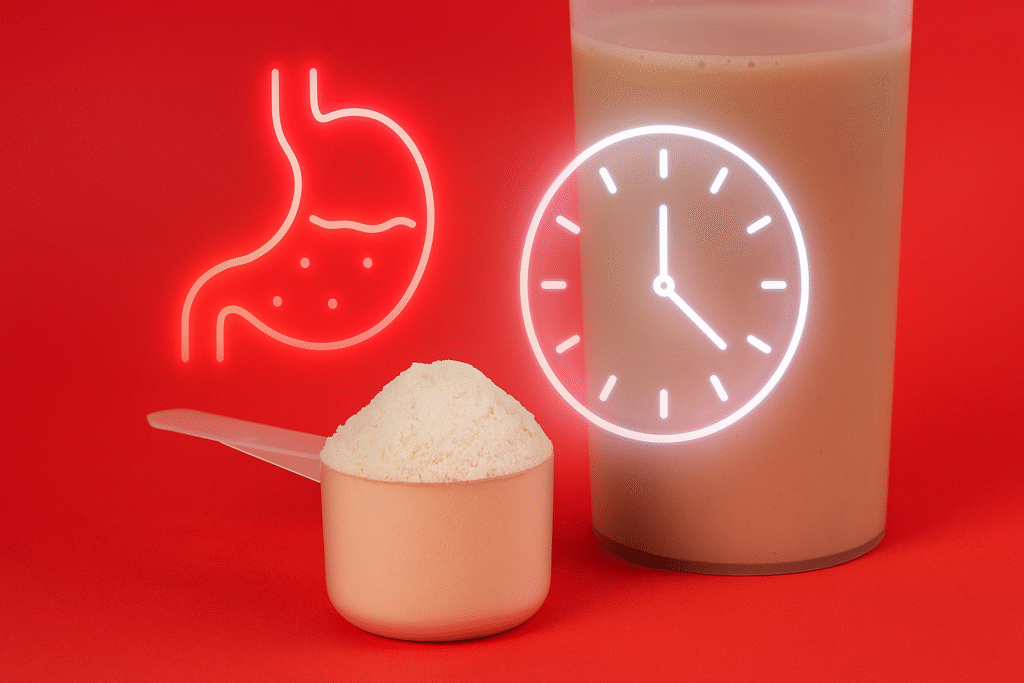
This makes it ideal for:
- Nighttime muscle recovery
- Long periods without food
- Controlling hunger during calorie deficits
In my own journey, casein has been a game-changer during cutting phases. Back in 2022, when I was leaning out for summer, I’d have a micellar casein shake before bed, sometimes with a spoon of almond butter.
The next morning, I woke up without cravings and with noticeably less muscle soreness. That’s exactly why I often recommend it as a meal replacement option for those wanting slow, steady fuel.
Athletes can also benefit greatly from casein, especially for endurance recovery—a topic I cover in depth in my article on casein for endurance athletes.
How Soy Protein Works in the Body: Plant-Based Digestion Demystified
Soy protein is plant-based and naturally slower to digest than whey, but still faster than casein.

It’s high in essential amino acids, though slightly lower in leucine. This makes it a solid choice for:
- Vegan and vegetarian diets
- People avoiding dairy
- Moderate satiety between meals
I’ve used soy protein during plant-based phases and with vegan clients. While it helped with recovery, hunger tended to return sooner compared to casein.
It’s lighter on the stomach, which is a plus for those who don’t enjoy feeling overly full before bed. But if you want a truly slow-digesting vegan option, I recommend looking into my comparison of casein vs egg protein for nighttime use for other alternatives.
Soy Protein Digestion Time vs Pea vs Rice: How Plant Proteins Compare
Protein | Digestion Time | Satiety | Best Use |
|---|---|---|---|
Soy Isolate | 3-4 hours | Moderate | All-around versatile |
Pea Isolate | 3-4 hours | Moderate-High | Blending, fullness |
Rice Protein | 2-3 hours | Low-Moderate | Quick recovery, mixing |
Soy vs Pea Protein: Which Digests Slower?
They’re nearly identical—both take 3-4 hours.
Small differences:
- Pea contains more fiber, which can slow digestion slightly
- Pea often feels more filling due to fiber content
- Soy has higher leucine for muscle building
Verdict: Choose pea if you want extra fullness. Choose soy for complete amino profile.
Soy vs Rice Protein: Clear Winner for Slow Release
Soy digests 1-2 hours slower than rice.
- Rice protein: 2-3 hours, digests quickly, lighter on stomach
- Soy protein: 3-4 hours, more sustained release
Verdict: Soy wins for slow digestion. Rice wins for quick, easy-digesting needs.

Take this 2-minute assessment & get a science-backed training, nutrition & supplement roadmap built for YOUR body.
🔬 12,000+ personalized roadmaps generated
Best Plant Protein Blends for Slower Digestion
Blend | Digestion Time | Why It Works |
|---|---|---|
Soy + Pea | 4-5 hours | Fiber + complete aminos |
Pea + Rice | 3-4 hours | Complementary profiles |
Soy + Hemp | 4-5 hours | Healthy fats slow digestion |
Quick Guide: Which Plant Protein Should You Choose?
✅ Choose Soy If:
- Want 3-4 hour coverage
- Need complete amino acids
- Prefer versatile protein
✅ Choose Pea If:
- Want maximum fullness
- Have soy sensitivity
- Prefer higher fiber
✅ Choose Rice If:
- Want fast digestion
- Have multiple allergies
- Need light stomach option
Bottom Line: How Soy Stacks Up
- Slowest to fastest: Pea ≈ Soy > Rice
- All three work for plant-based diets
- Blend them for slower digestion + better amino profile
- Add fats/fiber to extend any of them by 1-2 hours
Want to slow digestion further? Add 1 tbsp nut butter to any plant protein shake.
Does Soy Protein Keep You Full? Real User Experiences
Yes, soy protein keeps you full for 3-4 hours on average.

That’s longer than whey (1-2 hours) but shorter than casein (6-8 hours). For most people, this means hunger stays away until your next meal.
What Real Users Report: Satiety, Digestion, and Results
I have a soy shake at 8 AM and don’t think about food until noon. Perfect for busy mornings when I can’t take lunch early.
— Michael, 42, office worker
Soy kills my afternoon cravings for 3 hours. Casein gives me 5-6 hours, but soy feels lighter. I use both depending on my day.
— Danielle, 29, CrossFit athlete
Soy alone before bed? I wake up hungry at 3 AM. Add peanut butter? I sleep through till morning.
— Thomas, 35, vegan bodybuilder
The Numbers: User Survey Results on Fullness and Digestion
Duration | % of Users Reporting Fullness |
|---|---|
2-3 hours | 28% |
3-4 hours | 54% |
4-5 hours | 15% (with added fats) |
5+ hours | 3% (with fiber + fats) |
Real user data shows that 54% of people experience 3-4 hours of fullness from soy protein alone. Adding healthy fats extends satiety for 15% of users, while combining fiber and fats helps 3% stay full for over 5 hours.
Best Time to Take Soy Protein for Muscle Growth and Fullness
Take soy protein within 30 minutes post-workout for optimal muscle growth. For all other times, use it to cover 3-4 hour gaps between meals.
Time | Best For | Why |
|---|---|---|
Post-Workout (within 30 min) | Muscle recovery | 3-4 hour amino release matches repair window |
Between Meals (3-4 hour gaps) | Hunger control | Prevents snacking, steady energy |
Morning (7-9 AM) | Breakfast fuel | Covers until lunch |
Pre-Workout (1-2 hours before) | Training energy | Light, no bloating, sustained aminos |
Before Bed | Overnight recovery | Only with added fats (nut butter) |
Best Use Cases for Casein and Soy Protein
Casein Protein:
- Nighttime recovery
- Long fasting periods
- Cutting phases where hunger control is key
Soy Protein:
- Vegan or dairy-free diets
- Post-workout recovery for plant-based eaters
- Lighter pre-bed snacks without heaviness
If you’re looking for the best bodybuilding-specific casein options, check my guide on top-rated casein protein for bodybuilding.
Can You Mix Casein with Soy Milk? What You Should Know

Yes, absolutely! Mixing casein protein with soy milk creates a “super shake” with unique benefits:
- Slower digestion: Soy milk adds fat and fiber, extending casein’s already slow release
- Amino acid variety: Soy complements casein’s amino profile
- Creamier texture: Both proteins create a thick, pudding-like consistency
Best for: Pre-bed shakes when you want maximum overnight coverage
📌 Just note: If you’re vegan, this combo isn’t suitable (casein is dairy-based).
3 Best Nighttime Casein Shake Recipes for Slow Overnight Release

1. Classic Bedtime Shake: Simple and Effective
5 minutes | 240 calories | 35g protein
- 1 scoop micellar casein (chocolate or vanilla)
- 8-10 oz cold water or milk
- Shake well in blender bottle
Best for: Quick, no-fuss nights
2. Peanut Butter Cup Shake: Perfect for Cutting Phases
5 minutes | 380 calories | 40g protein
- 1 scoop chocolate casein
- 1 tbsp natural peanut butter
- 8 oz unsweetened almond milk
- Ice cubes (optional)
Why it works: Healthy fat slows digestion even more—7-8 hour coverage
3. Slow-Release Berry Blend: Antioxidants + Overnight Recovery
5 minutes | 320 calories | 38g protein
- 1 scoop vanilla casein
- ½ cup frozen berries
- 1 tbsp almond butter
- 8 oz water or milk of choice
- Blend until smooth
Why it works: Fiber from berries + fat from almond butter = maximum overnight satiety
Quick Nutrition Comparison: Calories, Protein, and Fats
Recipe | Protein | Calories | Fat | Coverage |
|---|---|---|---|---|
Classic | 35g | 240 | 1g | 6-7 hours |
Peanut Butter Cup | 40g | 380 | 12g | 7-8 hours |
Berry Blend | 38g | 320 | 8g | 7-8 hours |
Pro Tips for the Best Results
- Use cold liquid – Casein thickens fast; cold prevents clumping
- Drink within 15 minutes – It gels quickly; don’t let it sit
- Add fat for longer coverage – Nut butter extends to 7-8 hours
- Blend, don’t just shake – Blending = smoother texture
When to Drink Your Casein Shake for Maximum Benefit
30-60 minutes before bed. This gives digestion a head start before deep sleep.
Final Takeaway: Choosing the Right Protein for Slow Digestion
From my experience coaching and experimenting with both, casein protein is the top choice for slow digestion and sustained muscle support.
It’s unbeatable for overnight use, fasting, and controlling appetite. You can also see how long it typically takes to notice changes in my article on how long to see results with casein protein.
If you’re vegan or dairy-free, soy protein is still a strong option—just pair it with healthy fats to extend satiety.
And, as always, choose high-quality products:
- Micellar casein for purity
- Non-GMO, third-party-tested soy isolate for safety and performance
When you match the protein type to your lifestyle and goals, you’ll get better recovery, more consistent energy, and fewer cravings—day and night.
Frequently Asked Questions About Soy and Casein Digestion
Soy protein takes 3-4 hours to fully digest and absorb. Amino acids start entering your bloodstream within 60 minutes, peak at 3 hours, and return to normal by 4-5 hours.
Soy is moderately slow digesting—faster than casein but slower than whey. It’s a middle-ground option that provides 3-4 hours of satiety.
Yes, soy takes about 2-3 times longer than whey. Whey digests in 1-2 hours, while soy takes 3-4 hours for complete absorption.
No, casein is slower. Casein forms a gel clot in your stomach and digests over 6-8 hours. Soy digests in 3-4 hours—about twice as fast as casein.
Yes, but it won’t last all night on its own. Add healthy fats like almond butter or blend with pea protein to extend satiety to 5-6 hours.
Soy doesn’t form a gel clot in your stomach like casein does. It remains soluble, so stomach enzymes can break it down more quickly.
Yes. Soy isolate digests in 3-4 hours, concentrate takes 4-5 hours, and whole foods like tofu or tempeh take 5-7 hours due to fiber and fat content.
Add healthy fats (nut butter, avocado), fiber (berries, spinach), or combine with slower plant proteins like pea protein. This can extend digestion by 1-2 hours.
Only if you extend it. Soy alone digests in 3-4 hours, but with added fats it can cover 5-6 hours. For full 8-hour coverage, casein or a plant protein blend works better.
Yes, for about 3-4 hours. It provides moderate satiety—better than whey but not as long as casein. Adding fats and fiber increases fullness.
Between meals (3-4 hour gaps), post-workout for sustained recovery, or morning smoothies. For bedtime, add fats to extend coverage.
Yes. Metabolism, meal composition, time of day, and individual gut health all affect digestion speed. The 3-4 hour range is a clinical average.
They’re similar. Both take 3-4 hours for full absorption. Pea may digest slightly slower due to higher fiber content in some products.
Yes, but milk adds dairy. For slower digestion, mix with soy milk (extends time) or oat milk. Dairy milk adds casein, which will slow digestion further.
Some people experience bloating, especially with low-quality isolates or if you’re sensitive to legumes. Start with smaller doses and choose fermented options like tempeh if sensitive.
Plan your next meal 3-4 hours after a soy shake. If you added fats and fiber, you can stretch to 5 hours.
Yes, because it provides 3-4 hours of hunger control. It’s especially effective between meals to prevent snacking.
Yes. Cooking can slightly speed up digestion by breaking down proteins. Fermented soy (tempeh) digests slower than unfermented due to its complex structure.
Yes, it’s excellent for post-workout. It provides steady amino acid release for 3-4 hours, supporting recovery longer than fast-digesting proteins.
Isolate digests faster (3-4 hours) because it’s more processed with less fiber. Concentrate takes 4-5 hours due to higher fiber content.
Have another question? Leave a comment below and I’ll answer personally!

Leave a Reply