


Most whey protein shakes taste like watery regret—pick the right milk to get a delicious, rich shake that supports digestion and speeds up recovery.
As a fitness trainer, I’ve tested dozens of combinations and found that the best milk for whey protein matches your goal (muscle gain, fat loss, or digestive comfort) without sacrificing creamy texture. Oat milk is my top pick for smooth taste and recovery-friendly carbs.
Below, I’ve ranked 5 ultimate milks that deliver both flavor and results. (Prefer a zero-calorie shake? I’ll cover plain water as a bonus tip if you don’t want milk at all.)
✨ 5 Ultimate Milks for Whey Protein [Delicious & Rich]
- Oat milk for recovery
- Almond milk for cutting
- Soy milk for a protein boost
- Coconut milk for hydration
- Skim milk for lean gains
If you’re new to whey protein or want to understand how it supports muscle repair and fat loss, check out the Whey Ultimate Guide to learn the fundamentals before diving deeper into this article.
Table of contents
- 1. Oat Milk – Smooth, Creamy, and Great for Recovery
- 2. Almond Milk – Light, Low-Calorie, and Great for Fat Loss
- 3. Soy Milk – Protein-Rich and Digestive-Friendly
- 4. Coconut Milk or Coconut Water – Light, Refreshing, and Hydrating
- 5. Skim Milk – The Classic Lean Muscle Builder
- Bonus: Water – Simple, Clean, and Fast-Absorbing
- Best Milk for Protein Powder Mixing: Quick Comparison
- Milk Substitute for Protein Shake: Plant-Based Guide
- How to Choose the Right Liquid for Your Goal
- Mixing Tips for Better Taste and Texture
- Hossein’s Quick Recommendation
- FAQs
1. Oat Milk – Smooth, Creamy, and Great for Recovery

Oat milk is my personal favorite for mixing with whey protein. It delivers a naturally sweet, creamy texture that makes any shake feel indulgent without adding sugar.
What really makes oat milk shine is its carbohydrate profile. Those natural oats provide slow-digesting carbs that help restore muscle glycogen — the energy stored in your muscles that gets depleted during intense workouts.

In fact, oat milk is often considered one of the best milk alternatives for protein shakes because it blends seamlessly, supports recovery, and enhances flavor without added sugar.
According to a PubMed study on glycogen metabolism and exercise recovery, consuming carbohydrates right after training is crucial for efficient glycogen resynthesis. When combined with whey protein, oat milk helps your body refuel and recover faster.
Oat milk is also naturally rich in beta-glucans, a type of soluble fiber that supports gut health and can keep you full longer. That makes it perfect not just for recovery, but also for maintaining energy throughout the day.
If you’re curious about how whey interacts with other proteins or how timing affects recovery, check out Cycle Casein and Whey or compare absorption speeds in Whey vs. Egg Protein.
Personally, I love mixing vanilla whey isolate, oat milk, a dash of cinnamon, and a few ice cubes after a heavy training session. It’s like a reward after hard work — tasty, satisfying, and nourishing. My client Sophia from Italy even replaced her post-dinner dessert with this combo, saying it kept her cravings under control while helping her recover faster.
2. Almond Milk – Light, Low-Calorie, and Great for Fat Loss

If your main goal is fat loss or maintaining a calorie deficit, almond milk is one of the best choices. It’s extremely light — typically around 30 to 40 calories per cup — and has a subtle nutty flavor that pairs beautifully with vanilla or chocolate whey.
Almond milk blends smoothly and is an excellent option for those who experience bloating with heavier liquids. It’s also naturally low in carbs and fat-free if you choose the unsweetened versions, making it ideal for morning shakes or between-meal protein boosts.
For a clean, low-calorie Muscle Milk alternative, blending whey with unsweetened almond milk creates a light, effective shake perfect for fat loss phases.
When Emma from the UK switched from regular milk to unsweetened almond milk in her post-workout shakes, she unknowingly reduced over 700 calories per week — a simple change that led to measurable progress in her fat-loss journey.
If you want to explore other plant-based options similar to almond milk, check out Whey vs. Rice Protein or Whey vs. Hemp Protein. Both guides break down how different plant proteins compare in amino acid profile and absorption rate.
3. Soy Milk – Protein-Rich and Digestive-Friendly

Soy milk stands out among plant-based options because it actually contains a comparable amount of protein to cow’s milk — roughly 7 to 8 grams per cup.
It’s also lactose-free, making it perfect for people who experience discomfort or bloating with dairy, and a strong best milk alternative for protein shakes for those needing both protein and digestive ease.
As explained in a comprehensive review on soy-derived beverages, soy milk is rich in essential amino acids and provides a full protein spectrum that supports muscle recovery. That’s why it’s one of the few plant-based milks that truly complements whey protein nutritionally.

Many of my clients, especially those sensitive to dairy, have switched to soy milk and noticed dramatic improvements in digestion and workout recovery. For example, Nora from Germany used to feel sluggish after post-workout shakes made with cow’s milk. Once she switched to soy, her energy levels stabilized and her digestion became much smoother.
Soy milk also contains isoflavones — plant compounds that can have mild estrogenic effects and may support hormonal balance. For women in particular, Whey vs. Soy Protein for Women is a great read to understand how soy can fit into a balanced strength and nutrition plan.
Its high protein content also makes soy milk one of the best foundations for a homemade, nutrient-dense Muscle Milk alternative, offering similar protein benefits without the added sugars or preservatives.
For flavor, I recommend pairing soy milk with chocolate whey isolate. It blends into a thick, rich, mocha-like shake that’s both satisfying and muscle-friendly.
4. Coconut Milk or Coconut Water – Light, Refreshing, and Hydrating
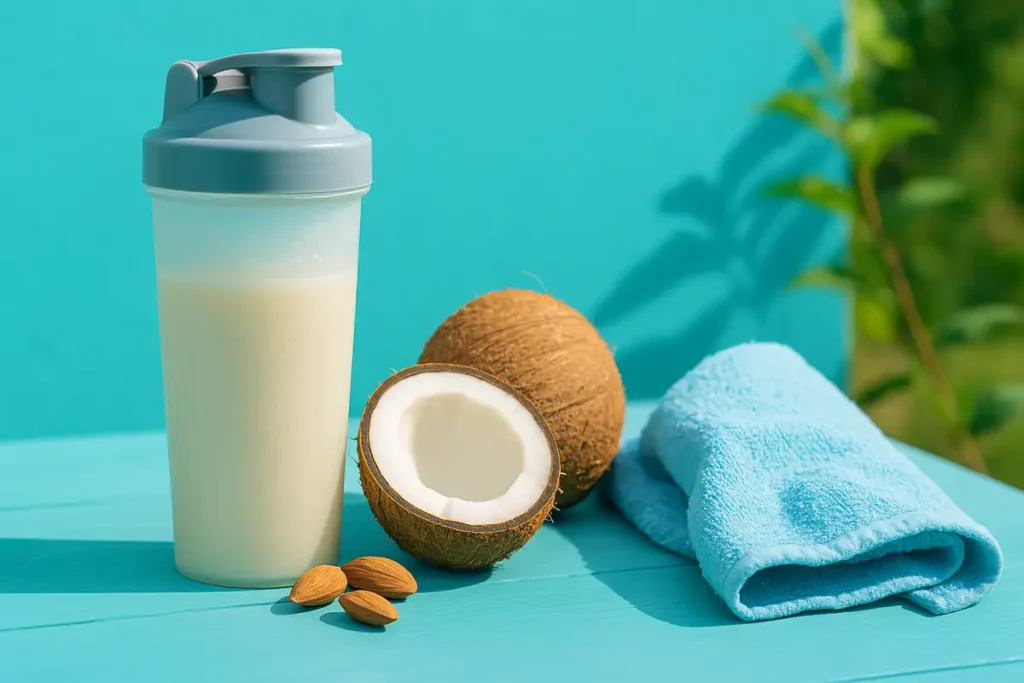
Coconut milk and coconut water both bring a tropical twist to your whey protein shake. While coconut milk is creamy and high in healthy fats, coconut water is light, electrolyte-rich, and excellent for hydration.
If you’re training in hot weather or tend to sweat heavily, coconut water can help restore minerals like sodium, potassium, and magnesium naturally. According to a Mayo Clinic expert review on coconut water and hydration, coconut water contains key electrolytes that help maintain proper fluid balance and muscle function.
This makes it one of the most refreshing and natural hydration options, especially if you prefer a lighter shake after an intense workout. Leila from Turkey used to struggle with dehydration during her summer cut phase until she started blending her whey isolate with chilled coconut water. It quickly became her favorite “hydrating protein refresher.”
If you prefer something richer, coconut milk adds a smooth, indulgent feel to your shakes — though it’s higher in calories and fat, so it’s better suited for muscle-gain phases.
5. Skim Milk – The Classic Lean Muscle Builder
Skim milk is the old-school, no-nonsense choice that still holds its own in any serious lifter’s nutrition plan. It’s virtually fat-free yet packed with high-quality protein and natural carbs, making it a reliable option for lean muscle gain without the extra calories.
What makes skim milk especially effective is its blend of fast-digesting whey and slow-digesting casein—a combo that fuels immediate repair while providing a steady amino acid drip hours after your workout.
Marcus from Texas used to mix his whey with water for years, convinced that cutting all extras was the only way to stay shredded.
When he finally switched to skim milk during a lean bulk phase, he was surprised to see better strength gains and improved recovery without any visible fat increase. He now calls it his “golden era go-to” for building dense, quality muscle.
If you’re targeting fat loss but still want a real milk base, skim milk gives you the creaminess and nutritional profile you need at a fraction of the calories.
For an even richer shake without switching to whole milk, simply blend it with a handful of ice and a dash of cinnamon—delicious, thick, and still on plan.
Bonus: Water – Simple, Clean, and Fast-Absorbing
Don’t underestimate the power of simplicity. Mixing whey with water may not sound exciting, but it’s one of the most efficient and cleanest ways to fuel your body post-workout.
Water keeps your shake low-calorie, easy to digest, and quickly absorbed — making it ideal for early morning workouts, fasted cardio, or anyone looking to minimize calorie intake.
For example, when I train clients who are cutting for photoshoots or competitions, I often have them mix whey isolate with cold water to reduce digestive load and speed up nutrient uptake.
If you’re curious about absorption rates and digestion differences, Whey vs. Collagen for Skin Health explains how lighter liquids can sometimes improve nutrient availability and reduce bloating.
Water-based shakes might not be as creamy, but they’re unmatched when it comes to efficiency and simplicity.
Best Milk for Protein Powder Mixing: Quick Comparison
To make your decision easier, here’s a side-by-side comparison of the best milks for protein powder mixing, based on nutrition and purpose.
Milk Alternative | Calories (per cup) | Protein (g) | Best For |
|---|---|---|---|
Oat Milk | ~120 | 3 | Recovery, Muscle Gain |
Almond Milk | ~30 | 1 | Fat Loss, Low Calorie |
Soy Milk | ~80 | 7 | Protein Boost, Digestion |
Coconut Water | ~45 | 0 | Hydration, Electrolytes |
Skim Milk | ~80 | 8 | Lean Muscle Gain, Low Fat |
Water | 0 | 0 | Purity, Fast Absorption |
Use this table as a cheat sheet. For muscle gain, prioritize calories and protein (oat, soy, skim milk). For fat loss, minimize calories (almond, water).
Milk Substitute for Protein Shake: Plant-Based Guide
If you’re looking specifically for a milk substitute for your protein shake, this plant-based guide is for you.
Here’s a quick comparison of the top dairy-free alternatives:
- Oat Milk: Best for creaminess & recovery carbs.
- Almond Milk: Best for low calories & fat loss.
- Soy Milk: Best for high protein & lactose intolerance.
- Coconut Milk/Water: Best for hydration & tropical flavor.
Your choice depends on whether you prioritize protein content, calorie count, or digestive comfort.
How to Choose the Right Liquid for Your Goal
- For muscle gain:
Choose oat milk or soy milk for added calories, carbs, and protein. They support glycogen replenishment and sustained recovery after training. - For fat loss:
Stick with almond milk or water to reduce calories while keeping your shake light and refreshing. - For better digestion:
Go for soy milk or lactose-free options. They’re gentle on the stomach and prevent post-shake bloating — an issue many people overlook.
When Lucas from Brazil started his lean bulk, I switched his post-workout base from water to soy milk. Within two weeks, he noticed improved energy, better digestion, and a fuller muscle look without adding unnecessary calories.
Mixing Tips for Better Taste and Texture
- Use cold liquids — they enhance taste and help prevent foaming.
- Add liquid first, then protein powder — this reduces clumping and gives a smoother blend.
- Blend for 15–20 seconds for a perfect texture.
- Add ice cubes, cinnamon, or frozen fruit for flavor variety.
- Experiment with half milk and half water if you want a balance between taste and digestion speed.
Small tweaks like these can turn your daily shake into something you actually crave — not just tolerate.
Hossein’s Quick Recommendation
From years of experimenting, my go-to formula is vanilla whey isolate + oat milk + cinnamon. It tastes amazing, fuels recovery, and keeps energy stable for hours.
I often recommend this mix to clients who struggle with sugar cravings after workouts. It gives them that satisfying, sweet taste without added sugar or processed ingredients.
For early-morning or fasted training, though, I prefer whey with cold water — it’s clean, refreshing, and helps me start the day light and focused.
FAQs
Not really. The difference in absorption speed between milk and water is minor. The key is meeting your total daily protein requirement.
It’s best to avoid it. Even small amounts of lactose can cause bloating or discomfort for sensitive individuals. Stick with soy, almond, or lactose-free milk.
Water is the lowest, followed by unsweetened almond milk — both great for cutting phases.
Oat milk wins easily. Its natural sweetness enhances the flavor of almost any whey protein.
Absolutely. Combining whey with soy or oat milk creates a complete amino acid profile and smoother texture — ideal for recovery.
The best milk for protein shakes depends on your goal. For muscle gain, use oat milk or soy milk for extra calories and protein. For fat loss, choose unsweetened almond milk or water to minimize calories. For best digestion, soy milk or other lactose-free options are ideal.
The best milk substitute for a protein shake is oat milk for creaminess and recovery carbs, soy milk for high protein content, or almond milk for the lowest calories. Your choice should match your fitness goal—recovery, muscle building, or fat loss.
Yes, you can mix whey protein with regular milk. It will add extra calories, protein, and creaminess, which is great for muscle gain. However, if you are lactose intolerant or cutting calories, opt for a milk alternative like soy, oat, or almond milk instead to avoid bloating and reduce calorie intake.
If you’re curious about how whey compares to other protein sources, explore:
Choosing the best milk alternative for your whey protein depends on your goals, digestion, and taste preferences.
Experiment with different options and note how your body responds. Whether you want faster recovery, fewer calories, or smoother digestion, the right choice can make every shake work better for you.
As I often tell my clients — the best shake is the one you actually enjoy enough to drink every single day.
Leave a Reply