

If you’re already using a high‑quality protein powder, you almost certainly don’t need a separate BCAA supplement.
Whey, casein, and most modern plant‑based blends naturally deliver a full dose of leucine, isoleucine, and valine — the branched‑chain amino acids your body uses for muscle repair and growth.
In other words, your protein shake already contains 5‑6 grams of BCAAs per scoop. Adding a BCAA product on top of that simply duplicates what you’re already getting.
There are a small handful of situations where BCAAs might still be a strategic tool: fasted training, an aggressive calorie cut, or an unbalanced vegan diet that lacks complete protein sources.
But for the typical person eating enough total protein, they’re an extra expense, not a necessity.
Table of contents
- What Are BCAAs and What Do They Do for Muscle Growth?
- Your Protein Powder Already Contains Enough BCAAs
- BCAAs vs. Protein Powder: Which One Actually Builds Muscle?
- When BCAAs Might Be Useful
- When You Can Skip BCAAs Entirely
- A Coach’s Honest Take on BCAAs
- Final Verdict: Are BCAAs Worth It If You Take Protein Powder?
- Frequently Asked Questions
What Are BCAAs and What Do They Do for Muscle Growth?
BCAAs are three essential amino acids — leucine, isoleucine, and valine — crucial for muscle protein synthesis and reducing muscle breakdown.
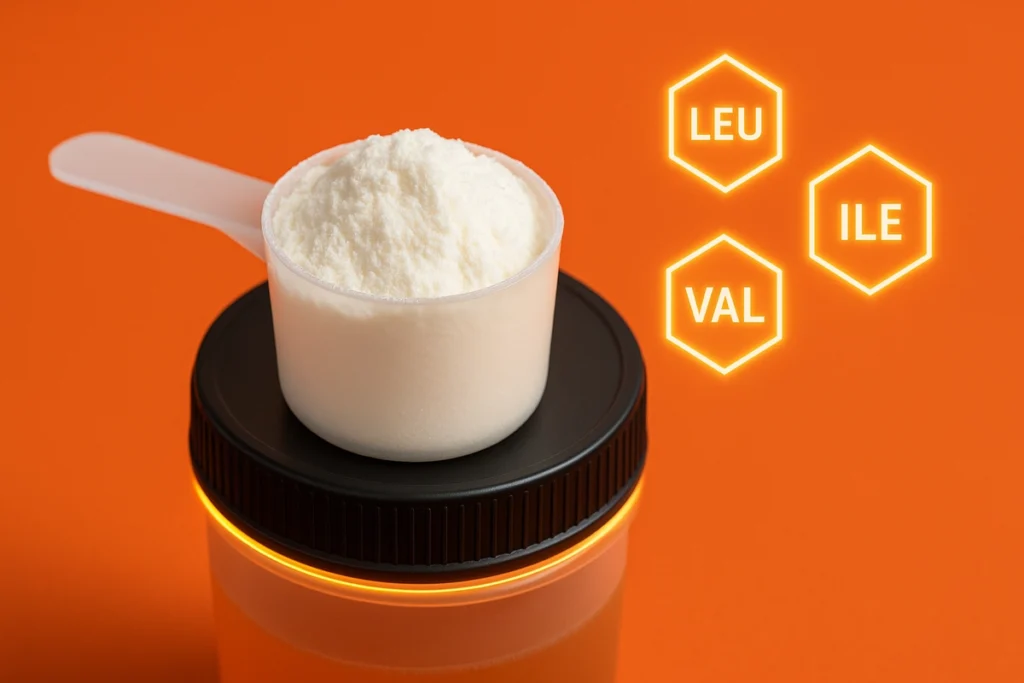
Leucine, in particular, plays a key role in switching on the muscle-building process.
Many lifters use BCAAs to reduce soreness, improve recovery, and train longer — but they often don’t realize their protein shake already includes BCAAs.
Your Protein Powder Already Contains Enough BCAAs
One scoop of whey protein typically provides 5–6g of BCAAs, including enough leucine to stimulate muscle growth.
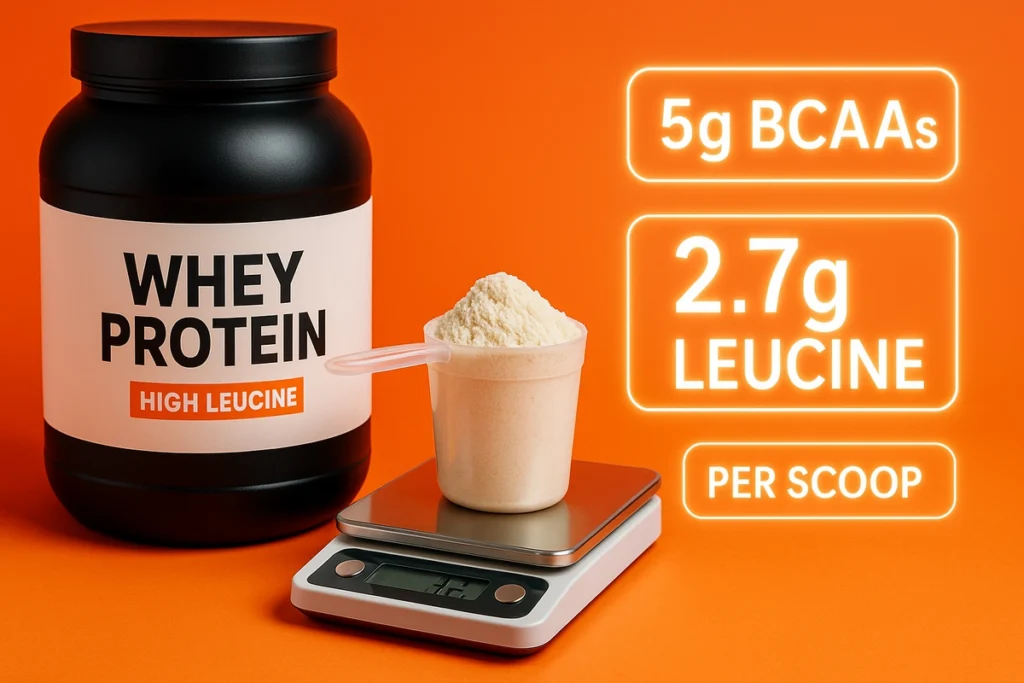
Even most plant-based blends now include complete amino acid profiles or are fortified to match the effectiveness of animal-based proteins.

Tell us your goal & discover your perfect stack — backed by science, no BS.
Free. Takes 2 Min | No sign-up needed
Unless your protein intake is low or unbalanced, you’re already covered.
BCAAs vs. Protein Powder: Which One Actually Builds Muscle?
The short answer: a complete protein powder does the real muscle‑building work, while BCAAs alone are more like a limited tool.
Here’s a straightforward breakdown.
What to compare | BCAA supplement | Complete protein powder |
|---|---|---|
Has all 9 essential amino acids? | No – only leucine, isoleucine, valine | Yes – full spectrum, including the BCAAs |
Triggers muscle growth? | No – can’t sustain full muscle protein synthesis alone | Yes – especially when a serving provides ~2‑3 g leucine |
Calories per serving | ~0‑20 | ~100‑150 |
Best used for | Fasted workouts, very low‑calorie cutting phases | Daily meals, post‑workout recovery, overall muscle support |
BCAAs give you just three building blocks. A complete protein gives you the whole toolkit.
That’s why a quality whey, casein, or fortified plant blend will beat a BCAA drink for muscle growth every time—while also keeping you fuller and better nourished.
When BCAAs Might Be Useful

Even if you use protein powder, there are situations where BCAAs might help:
For Fasted Workouts
If you train early with no meal beforehand, BCAAs can help reduce muscle breakdown. I’ve personally used them during fasted cardio while cutting, and noticed less soreness.
For Vegan or Plant‑Based Diets
One of my clients, Sophie, follows a strict plant-based diet. We added BCAAs pre-workout to support her recovery due to incomplete protein from whole food sources.
During an Aggressive Calorie Deficit
During intense fat loss phases, BCAAs can help preserve muscle without adding calories. Carlos, a client doing a fasted circuit routine, benefited from sipping BCAAs during workouts.
During Long or High‑Volume Training Sessions
For endurance athletes or long gym sessions, BCAAs may help delay fatigue. I had a triathlete client mix BCAAs with electrolytes during 2+ hour rides — and it worked well.
When You Can Skip BCAAs Entirely
If any of these sound like you, save your money:
- You consume enough protein daily (1.6–2.2g/kg body weight)
- You use a complete protein powder (like whey or fortified plant blends)
- You train in a fed state
- You’re not cutting aggressively
- You’d rather invest in real food, creatine, or quality sleep
One of my clients, John, was using both whey protein and BCAAs. After I explained they were redundant, he stopped the BCAAs — and noticed zero drop in recovery or progress.
A Coach’s Honest Take on BCAAs

I’ve coached lifters, lifestyle clients, and athletes for over 6 years, and my stance is simple: get your protein in first. BCAAs are not harmful, but for most people, they’re a “nice to have,” not a “need to have.”
Yes, I’ve used BCAAs in fasted states, and in some client cases, they added value. But I never make them a priority supplement. Focus on total protein intake, training, and recovery — that’s where real progress comes from.
Final Verdict: Are BCAAs Worth It If You Take Protein Powder?
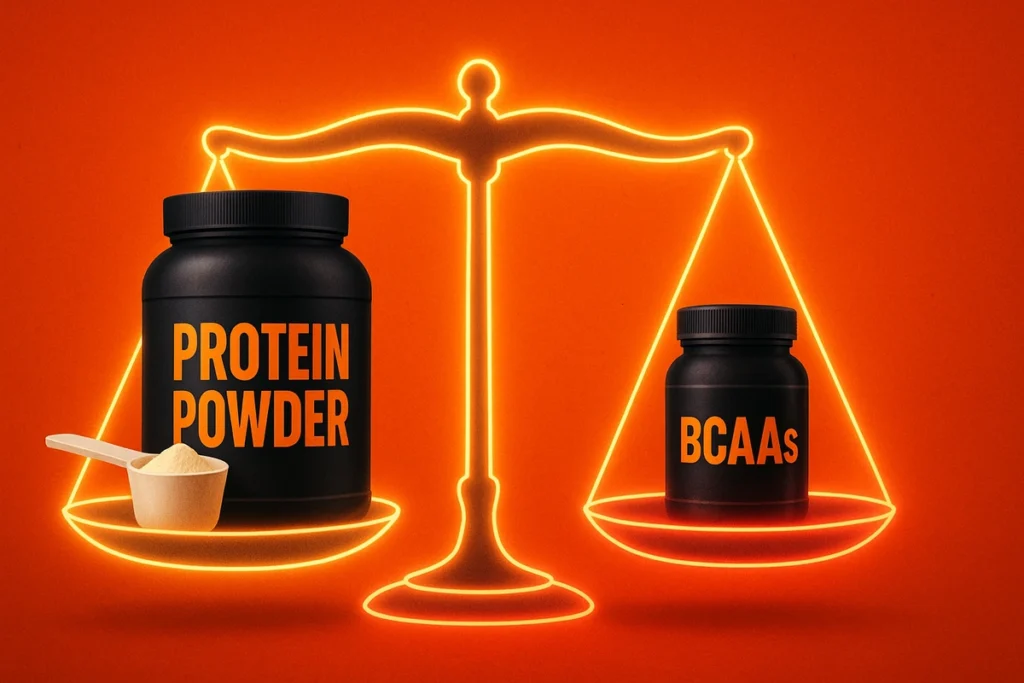
For the average gym-goer using protein powder regularly, BCAAs are unnecessary.
Your shake likely contains all the BCAAs you need — plus the other essential amino acids your body needs to actually build muscle.
Use BCAAs strategically if:
- You train fasted
- You’re vegan and lack complete proteins
- You’re cutting hard and need to protect muscle
- You’re training long hours or in extreme conditions
Otherwise, focus on your protein shake, meals, and consistent effort. That’s what drives results.
No fluff. No hype. Just what works.
Frequently Asked Questions
You can, but it’s almost always unnecessary. A good protein powder already gives you all the BCAAs your body can use, plus the other essential amino acids needed for muscle repair. Taking both just adds extra cost.

Take this 2-minute assessment & get a science-backed training, nutrition & supplement roadmap built for YOUR body.
🔬 12,000+ personalized roadmaps generated
A standard scoop of whey typically provides 2 to 2.5 grams of leucine. That’s enough to naturally trigger muscle protein synthesis, so you rarely need a separate leucine or BCAA supplement.
Yes, they can. Sipping BCAAs before or during a fasted workout may help limit muscle breakdown without adding meaningful calories. This is one of the very few situations where they’re practically useful.
They can be, especially if your diet lacks complete protein sources. A fortified plant-based protein powder is the first choice, but BCAAs taken around training can give extra recovery support when total amino acid intake is borderline.
Not if your daily protein intake is already sufficient. BCAAs can act as a low-calorie insurance policy during very aggressive diets, but real food or a protein shake remains more effective and filling.
Stick with your shake. A complete protein source includes all the building blocks for muscle growth, while BCAAs alone lack the full spectrum your body needs. The shake gives you better results for your money.
In most cases, yes. If you eat enough protein from food or powder, you’re already getting plenty of BCAAs. The supplement becomes an extra expense with no real benefit for recovery or gains.

Leave a Reply