
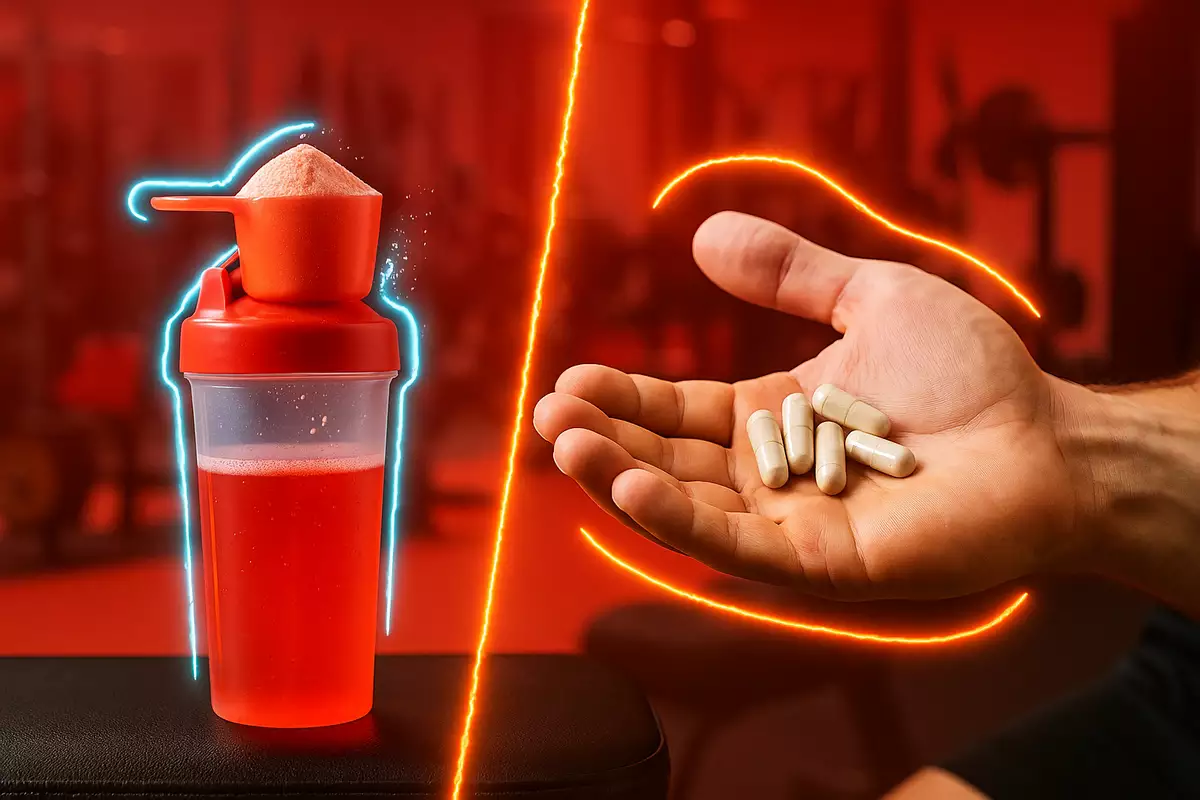

Trying to decide between BCAA powder and capsules?
You’re not alone—but most people choose wrong.
Both forms promise muscle support, faster recovery, and less fatigue. But they don’t deliver the same way.
I’ve tested both. Coached dozens through the decision. And honestly? One consistently outperforms the other.
In this guide, I’ll tell you which form actually works better, when to use each, and how to match it to your exact goals.
No fluff. Just what I’ve learned from years behind the shaker bottle—and what actually gets results.
Table of contents
- 🏆 Quick Verdict: BCAA Powder vs Capsules
- What Are BCAAs and Why Supplement Them?
- BCAA Powder vs Capsules: Full Comparison
- Pros and Cons of BCAA Powder
- Pros and Cons of BCAA Capsules & Pills
- BCAA Capsules vs Powder: Which One Is Better for You?
- Why Coaches Rank Powder Above Capsules (And What Studies Show)
- Real Clients, Real Choices
- Final Verdict
- BCAA Powder vs Capsules: Your Questions Answered
- Related Reads for Smart Supplementing
🏆 Quick Verdict: BCAA Powder vs Capsules
Not sure which form to choose? Here is how they compare—and the winner for results.
Criteria | Winner | Why |
|---|---|---|
Absorption Speed | ✅ Powder | Enters bloodstream faster—ideal during training |
Convenience | ✅ Capsules | No mixing, no taste, toss in gym bag |
Dosing Flexibility | ✅ Powder | Adjust scoop size; capsules are fixed |
Travel-Friendly | ✅ Capsules | No spills, no shaker needed |
Value for Money | ✅ Powder | Lower cost per serving |
Taste | ✅ Capsules | No flavor (or avoid bad-tasting powders) |
Overall Winner for Results: BCAA Powder
- Powder absorbs faster, supports hydration during training, and delivers more BCAA per dollar.
- Capsules are convenient and portable—but if your goal is better performance and recovery, powder is the smarter choice.
Once you’ve picked your form, the next decision is ratio. If you’re unsure which BCAA ratio to choose (like 2:1:1 vs 4:1:1), check out this detailed guide.
⚡ BCAAs without a plan = wasted money
Wrong time = zero muscle recovery. Wrong dose = money down the drain.
Fix My BCAA Timing Pay What You WantWhat Are BCAAs and Why Supplement Them?
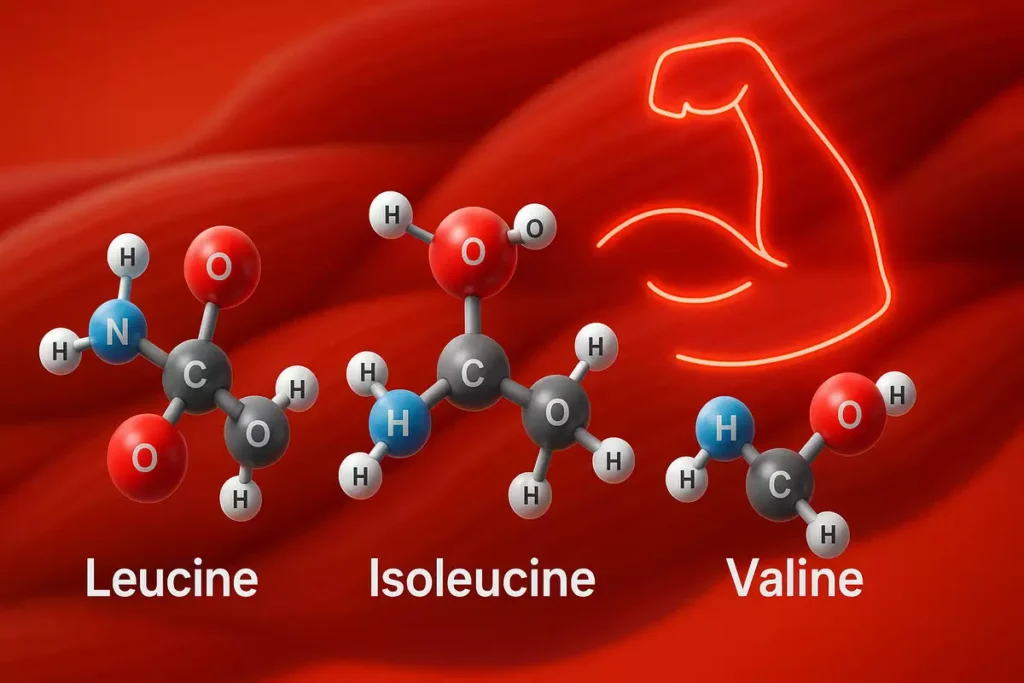
Branched-Chain Amino Acids (BCAAs) include leucine, isoleucine, and valine—three essential amino acids your body can’t produce on its own.
They’re key players in muscle recovery, endurance, and reducing soreness after intense training.
As a coach and lifter, I’ve relied on BCAAs during heavy workout blocks—especially when cutting or training fasted.
They help preserve muscle, fight fatigue, and keep me going hard set after set. You can learn more in this muscle preservation guide and this in-depth breakdown article.
BCAA Powder vs Capsules: Full Comparison
Still unsure which form fits your training style? This side-by-side comparison shows exactly how powder and capsules stack up—no guesswork.
Use this table to compare absorption speed, cost, convenience, and which form makes sense for your goals.
Feature | BCAA Powder | BCAA Capsules |
|---|---|---|
Absorption Speed | Fast (pre-dissolved) | Slower (capsule must break down) |
Time to Effect | 15–20 min | 30–45 min |
Typical Dose | 1 scoop (10–15g) | 4–10 capsules |
Prep Time | 20 seconds | 2 seconds |
Taste | Flavored or unflavored | None |
Best For | Intra-workout, stacking | Pre/post-workout, travel |
Cost per Serving | $0.60–$1.00 | $1.50–$2.50 |
🚀 Quick Takeaways:
- Powder absorbs faster – Pre-dissolved amino acids hit your bloodstream in 15–20 minutes. Ideal during training.
- Capsules are slower but simpler – No mixing, no taste. Best pre-workout, post-workout, or travel.
- Powder costs less – You save 40–60% per serving. Capsules charge for convenience.
- Dosing flexibility matters – One scoop or half scoop. Capsules lock you in.
Bottom line: Pick powder for performance. Pick capsules for portability.
You just read everything about BCAAs. Now let’s make it work for YOUR body.
I’ll design your personalized supplement protocol — exact timing, dosage, and stacking for your specific goal. No templates. No bots. A real coach who reads your answers.
Pay what you want after you receive it. No risk. No pressure.
Pros and Cons of BCAA Powder

I’ve used BCAA powder for years—and for training performance, it’s still my go-to.
Here is why it wins, and where it falls short.
✅ Why I prefer powder:
- Faster absorption — especially during long sessions when your body needs quick support
- Mixable — blends well with creatine, caffeine, or electrolytes
- Flavored options — helps boost water intake and feels like a refreshing intra-workout drink
- Customizable dosing — I can add more or less depending on the session
⚠️ Where Powder Falls Short:
- Taste isn’t for everyone – Some brands leave a strong artificial aftertaste. I’ve switched brands myself because of it.
- Can cause bloating – A few formulas settle heavy. If you’re prone to stomach issues during training, this matters.
- Not travel-friendly – Bulky tubs, powder spills, and shaker bottles don’t exactly pack light.
If you’re unsure whether to go for a flavored or unflavored version, this flavor comparison article breaks it down clearly.
Pros and Cons of BCAA Capsules & Pills
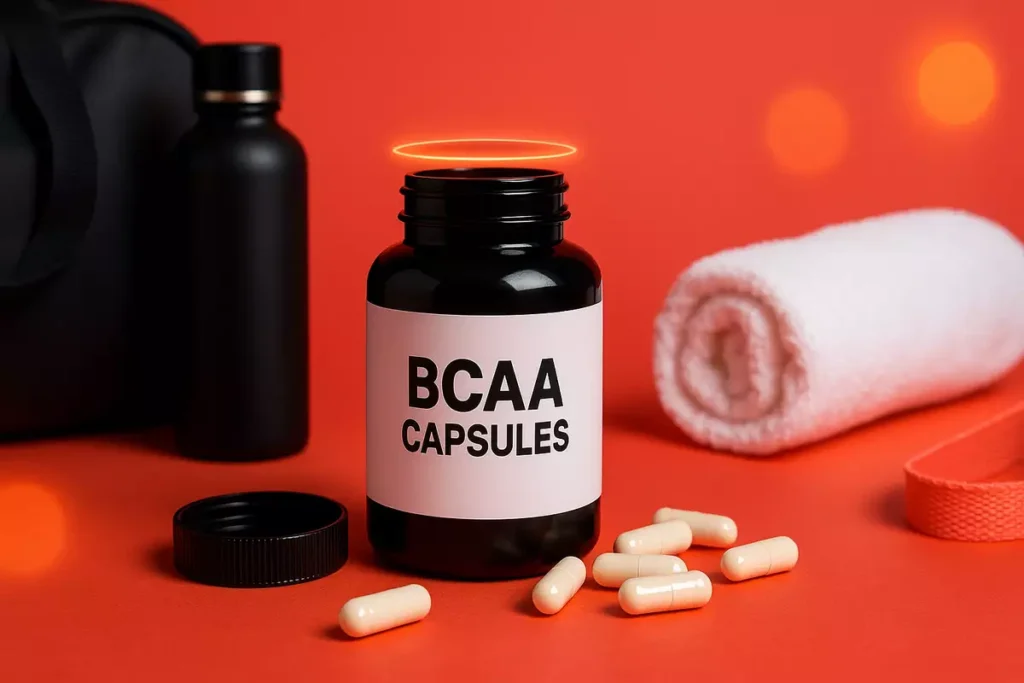
Capsules shine when you want something simple and portable. I often recommend them for my traveling clients or those who don’t want the fuss of powders.
✅ What they offer:
- Precise dosage — each capsule contains a fixed amount
- Zero taste — great if you hate the artificial flavor of some powders
- Convenience — toss a few in your gym bag or suitcase and you’re good to go
⚠️ Where Capsules Fall Short:
- Slow absorption – Capsules must break down first. Not ideal when you need amino acids during training.
- Pill fatigue – 6–10 capsules per serving. That’s a handful just for one dose.
- Expensive per serving – You pay more for the convenience. Capsules cost nearly double powder.
- Fixed dosing – Can’t adjust. You get what the capsule gives you.
Want to know how much BCAA is right for you? This dosage guide helps you find the sweet spot.
BCAA Capsules vs Powder: Which One Is Better for You?

It really depends on your goals and lifestyle.
✅ Use BCAA Powder if:
- You train hard and want intra-workout recovery
- You stack supplements like creatine, EAAs, or pre-workout
- You want adjustable dosing
- You train in hot environments and want to boost hydration
✅ Use BCAA Capsules (or Pills) If:
- You travel often or are always on the go
- You prefer no taste or mixing
- You take BCAAs pre- or post-workout, not during
- You hate carrying shaker bottles
🧭 Still not sure which form fits you?
Answer these 3 questions:
- Do you train first thing in the morning?
- Yes: Powder (fast absorption on empty stomach)
- No: Either
- Do you hate carrying a shaker bottle?
- Yes: Capsules
- No: Powder
- Is your budget tight?
- Yes: Powder (lower cost per serving)
- No: Either
Why Coaches Rank Powder Above Capsules (And What Studies Show)

You might notice most fitness professionals recommend powder over pills. This isn’t brand bias—it’s physiology.
Here’s why:
- Bioavailability: Powder enters digestion already dissolved. Capsules need 10–20 minutes to break down in the stomach.
- Hydration synergy: BCAA powder mixed with water supports both amino delivery and hydration during training. Capsules require swallowing water separately.
- Dosing precision: Studies on BCAA efficacy typically use 10–15g doses. That’s 1 scoop of powder—or 6–10 capsules. Most people won’t swallow 10 pills per workout.
Bottom line: Capsules work. But powder works faster and more practically for training performance.
Real Clients, Real Choices
Let me give you a quick real-life contrast:
My client Sarah from Sweden trains legs twice a week and felt extreme soreness.
After switching to a mango-flavored BCAA powder she sipped during workouts, she felt “less wrecked” the next day.
Tomás from Spain, however, travels weekly and prefers capsules because he can just pop them with water before hitting hotel gyms.
Both are right—it’s all about what fits your rhythm best.
If you’re vegan or plant-based, don’t miss this guide to vegan BCAAs.
And for endurance athletes or runners, this article dives deep into how BCAAs support stamina and performance.
Final Verdict

From a pro trainer’s perspective—and as someone who’s personally cycled through both—BCAA powder is better for most active lifters.
It hits faster, blends easily, and becomes part of your workout ritual.
But if you’re after simplicity, hate flavored supplements, or need something travel-friendly, capsules and pills still work great.
For beginners, I usually suggest starting with powder. It helps build good supplement habits and feels more rewarding to drink during a session.
I remember James from Australia, a beginner I coached, saying his flavored BCAA drink became a ritual—it motivated him to stay consistent and hydrated.
BCAA Powder vs Capsules: Your Questions Answered
Yes, but slower. Capsules work fine pre- or post-workout. During training, powder gets into your system faster.
Usually 4–10 capsules, depending on the brand. Check the label for leucine content per serving—that’s what matters most.
No. Swallow them whole. If you want something mixable, buy powder.
Yes. BCAAs contain calories and trigger an insulin response. If you’re fasting strictly, save them for your eating window.
Not really. EAAs contain BCAAs plus six other essential amino acids. If you take EAAs, you don’t need separate BCAAs.
Neither. Form doesn’t matter for fat loss. Total calorie intake and protein intake matter. Pick whichever helps you stay consistent.
Probably not. If you hit 1.6g–2.2g of protein per kg of body weight daily, your BCAA needs are already covered. BCAAs are useful during fasted training or long sessions—not essential for everyone.
2:1:1 (leucine:isoleucine:valine). More leucine isn’t better. Stick with what’s studied and proven.
You can, but you don’t need to. They’re most useful during or around training. On rest days, whole food protein does the job.
Related Reads for Smart Supplementing
- Best Time to Take BCAAs for Fat Loss & Muscle Gain
- EAAs vs BCAAs: Which One Should You Really Use?
- Top Pre-Workout Ingredients That Actually Work
Coach’s Note:
Whatever form you choose, consistency matters more than format.
Make it a habit, pair it with smart training, and your muscles will thank you.
Leave a Reply