


Every week, I get the same worried question from athletes and coaches: “Hossein, is hot water destroying my whey protein?”
I get the confusion. You stir protein into hot coffee and it clumps into a grainy mess. You bake protein brownies and the texture completely changes. Your shaker smells weird after sitting in a warm car. It’s only natural to think the protein itself is ruined and your gains are going down the drain.
You’re also landing here after searching things like:
- Does hot water destroy whey protein?
- Can protein powder be heated without losing its power?
✅ So let’s cut through the noise and settle this with 5 straight facts—no bro-science, no BS.
- Heat denatures whey protein, but your body does the exact same thing. Denaturation simply unfolds the protein structure—a process that begins the moment whey hits your stomach acid. Cooking it just gives your digestion a head start.
- Amino acids survive temperatures far beyond normal cooking. The leucine, isoleucine, and valine that drive muscle growth remain fully intact unless you literally burn the powder to charcoal. Your oatmeal or pancake griddle never gets that hot.
- That notorious clumping? It’s just a texture problem, not a protein problem. When whey hits hot liquid too fast, it coagulates on the surface. The clumps look alarming, but they digest exactly the same as a perfectly smooth shake.
- The only real risk is to the tiny live cultures in some blends. If your whey contains added probiotics or digestive enzymes, scalding heat can kill those sensitive extras. The protein itself, however, stays biologically available.
- Real-world testing proves it. I’ve tracked client progress for years with whey used in baked recipes and hot coffees. No one has ever lost muscle or stalled progress because they heated their protein powder.
But knowing the facts is one thing—applying them to your morning coffee or post-workout oatmeal without the dreaded clumps is another. Below, I’ll show you exactly how.
Table of contents
- Quick Answer — What Temperature Actually Does to Whey
- Simple Temperature Chart/Table
- Does Hot or Boiling Water Destroy Whey Protein?
- Can You Heat Protein Powder? (Complete Guide)
- What “Denaturing” Really Means (and Why It Doesn’t Reduce Quality)
- Safe Temperature Ranges for Whey Protein
- Best Coach-Approved Ways to Mix Whey Protein
- When Temperature Truly Matters (Storage & Freshness)
- Practical Tips to Protect Whey Protein Quality
- FAQ
Quick Answer — What Temperature Actually Does to Whey
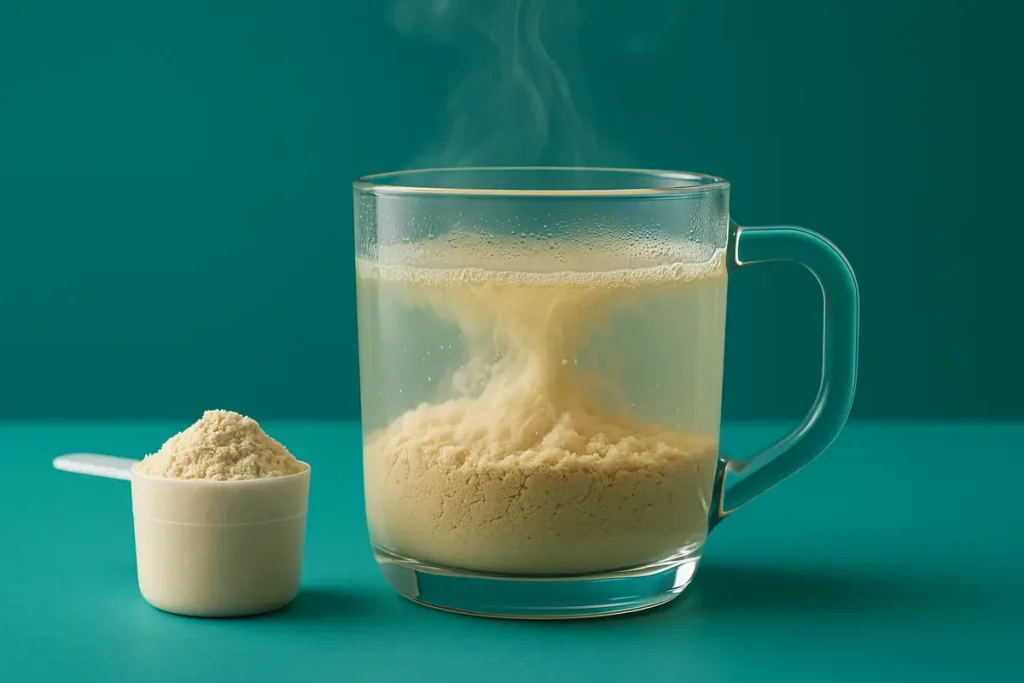
Whey protein stays effective, safe, and high-quality across nearly all cooking and beverage temperatures.
Here’s the practical breakdown:


- Warm or hot liquids do not destroy whey.
- Boiling liquids may cause clumping or thickening, but the protein still works.
- Extreme heat (like burning) can degrade nutrients.
- Baking changes texture, not protein quality.
I discovered this myself years ago while making morning whey coffee. If the coffee was boiling, it created protein clumps. But once I waited 1 minute, it blended perfectly and kept its nutritional power.
If you’re new to whey or want your foundation strong, start with this: Whey Protein Guide for Muscle, Fat Loss & Recovery.
If you’re curious about how different whey types react to heat and digestion, this guide helps a lot: Whey Isolate vs Hydrolysate Digestion Guide.
Simple Temperature Chart/Table
Here’s a clear breakdown of how temperature affects whey protein, based on my experience and science:
Temperature / Method | Effect on Whey Protein | Safe for Muscle Building? |
|---|---|---|
Cold / Room Temp Shakes | Smooth texture, easy mixing, ideal for fast digestion. | Yes – Perfect |
Warm Liquids (40–60°C) | Mixes smoothly, no clumping. Great for oatmeal or warm milk. | Yes – Fully Safe |
Hot Liquids (70–80°C) | May thicken or foam. Let cool 1–2 minutes for best results. | Yes – Nutrients Intact |
Boiling Water (~100°C) | Will clump and look “curdled.” Stir or blend to fix texture. | Yes – Protein Still Effective |
Baking (150–200°C) | Texture firms, flavor deepens. Perfect for brownies and pancakes. | Yes – Totally Safe |
Direct Flame / Burning (200°C+) | Amino acids can degrade. Avoid frying or toasting directly. | No – Avoid This |
Why this matters:
This chart isn’t just theory—I’ve tested every scenario with clients. Whether you’re blending a post-workout shake or baking protein brownies, you can trust that your whey is still working for you.
Does Hot or Boiling Water Destroy Whey Protein?
This is one of the most common worries I hear. You’re about to make a post-workout shake, and you wonder: If I use hot water, will I ruin my protein?
Let me make this clear:
No. Hot or even boiling water does NOT destroy whey protein.
Boiling water can change how it looks and feels—think clumps, a thicker texture, maybe even a curdled appearance. But here’s what matters: the amino acids stay intact. Your body can still use them for muscle repair and growth.
I’ve tested this myself, over and over. Mix whey into boiling water and it’ll look like a science experiment. Let that same water cool for just 60–90 seconds, and it blends smoothly. The nutrition? Unchanged.
The Effect of Boiling Water on Protein Powder
So what actually happens when you pour boiling water (~100°C) on whey?
- It clumps. This is the most obvious effect. The protein particles hydrate too quickly and stick together.
- It can thicken or look “cooked.” Similar to how an egg white goes from clear to white when heated.
- It might foam up if you shake or stir it vigorously.
But let’s be precise: this is a texture and solubility issue, not a nutrition issue. The protein denatures—meaning its structure unfolds—but the building blocks (amino acids) are exactly the same. Your stomach does this denaturing process every single day with stomach acid.
Think of it like this: frying an egg changes its texture, but it’s still an egg. Same protein, different form.

So if you accidentally use boiling water, don’t panic. Stir it well, maybe blend it, and drink up. Your muscles will still get what they need.
Can You Heat Protein Powder? (Complete Guide)
Short answer: Yes, absolutely. You can heat protein powder in liquids, baked goods, and cooked meals without losing its muscle-building power.
But there’s a right way and a wrong way to do it. Based on years of coaching and personal experimentation, here’s your complete guide to heating protein powder safely and effectively.
What Happens When You Heat Protein Powder?
Heating protein causes denaturation—a fancy word for “unfolding.” This is normal, natural, and happens every time you cook eggs, meat, or even when protein hits your stomach acid.
Denaturation is NOT destruction.
When whey denatures:
- Its 3D structure unfolds.
- It may become less soluble (leading to clumps).
- Its texture in foods can change (e.g., baked goods become denser).
What does NOT happen:
- The amino acids do not break down.
- The protein does not become “useless.”
- The nutritional value does not vanish.
Safe Heating Guide by Method
Method | Temperature Range | What Happens | Is It Safe? |
|---|---|---|---|
Warm Liquids | 40–60°C | Mixes smoothly, minimal clumping. | Yes, ideal. |
Hot Liquids | 70–80°C | May thicken/foam. Cool 1–2 min first. | Yes, fully safe. |
Boiling Water | ~100°C | Will clump. Stir/blend to fix texture. | Yes, nutrients intact. |
Baking | 150–200°C | Texture firms, moisture reduces. | Yes, great for recipes. |
Direct Flame/Frying | 200°C+ | Burns. Amino acids can degrade. | Avoid. |
Pro Tips for Heating Protein Powder
- Add Late in Cooking: Stir whey into oatmeal after cooking, not during.
- Mix with Dry Ingredients: For baking, blend whey with flour first to avoid clumps.
- Cool Hot Liquids Slightly: Let coffee/tea sit for a minute before adding powder.
- Use a Blender or Shaker: For hot drinks, a quick blend ensures smoothness.
- Don’t Burn It: Avoid direct high heat like frying pans or toasting.
I’ve had clients make everything from whey protein oats to protein pancakes to baked brownies—all with fantastic results and no loss in protein quality. Heat is your friend in the kitchen, not your enemy.
What “Denaturing” Really Means (and Why It Doesn’t Reduce Quality)

People see the word denatured and immediately think destroyed.
But that’s not what’s happening.
Denaturing simply means the protein structure unfolds. This happens:
- During heating
- During mixing
- And even in your stomach naturally
The structure changes, but the amino acids stay the same, so the nutritional value stays almost identical.
Your stomach acid denatures protein every day. Heat does the same thing outside your body.
Real-life example
My client Lina once messaged me in panic because her whey turned creamy and thick after mixing it into hot porridge. She thought it “expired.”
I explained that texture changes don’t mean nutritional changes. She still uses whey-oats every morning and jokes it’s her “protein pudding.”
If you love using whey in recipes, try these:
Safe Temperature Ranges for Whey Protein

Here’s a deeper, coach-level breakdown of how temperature affects whey in different situations.
Cold or Room Temperature — Perfect for Whey
Cold shakes maintain:
- Best texture
- Smoothest mixability
- Original flavor
- Fast digestion
If your stomach is sensitive, cold whey often feels easier to handle.
Warm Liquids — Completely Safe
Warm milk, warm water, warm oats — all of them are fully safe and still provide complete protein quality.
I personally use whey in warm oats almost every morning. If you prefer plant milks, check this: Best Milk Alternatives for Whey Protein
Hot Liquids (70–80°C) — Slight Texture Changes
This is hot coffee or tea that has cooled slightly.
Whey may:
- Get thicker
- Become foamy
- Dissolve slower
But the nutrients stay intact.
Real-life example
My client Daniel once mixed whey directly into boiling coffee.
He created what he called a “protein meteor” inside the mug.
After I told him to wait just 60–90 seconds, it blended like a latte.
Boiling Water — Clumps, Not Damage
When it comes to protein powder hot water brewing, here’s exactly what happens at boiling temperatures (~100°C):
- It causes clumping
- changes the texture
- and can make whey appear curdled
Many people see this and panic—but the amino acids do not disappear. This is purely a visual and texture change, not nutritional damage.
So if you’re wondering what happens if you heat protein powder at this temperature, now you know: it gets lumpy, but it’s still perfectly usable.
Baking (150–200°C) — Totally Safe and Delicious
Whey in cooked foods still supports muscle building.
What changes:
- Texture becomes firmer
- Moisture decreases
- Flavor deepens slightly
What stays the same:
Protein quality.
I learned this during prep for clients like Marco, who loved protein treats during cutting. Whey pancakes and brownies helped him stay full and motivated.
For on-the-go snacks, try Whey Protein Bars (Portable Nutrition)
Extreme Heat or Direct Flame — This Is Where Damage Happens
Whey should never be:
- Fried
- Toasted on a pan directly
- Exposed to open flame
- Burned or charred
At burning temperatures, amino acids can degrade or oxidize.
Best Coach-Approved Ways to Mix Whey Protein

These tips come from years of trial and error with myself and my clients:
- Let hot drinks cool 1–2 minutes before adding whey.
- Add whey at the end of cooking, not the beginning.
- Use a shaker instead of a spoon when possible.
- Cook oats first, then mix in whey afterward.
- Combine whey with flour in baked recipes for better texture.
- Add liquid slowly into whey to avoid clumping.
- Shake vigorously for 10–15 seconds for a smooth finish.
These small adjustments prevent most problems people face.
When Temperature Truly Matters (Storage & Freshness)

Cooking heat doesn’t ruin whey, but storage temperature can affect freshness.
Avoid Heat & Sunlight
High heat won’t destroy proteins but can make whey smell stale.
During a summer trip, my whey tub stayed in a warm room. When I opened it, the smell was faintly different — not bad, just “older.”
Nutritionally, it was perfectly fine.
Don’t Leave Whey in Cars
Cars heat up extremely fast.
My client Sara left her whey inside her car all day. The flavor changed slightly, but the protein worked the same.
Keep Containers Airtight
Moisture is the real enemy. Humidity can:
- Cause clumps
- Reduce mixability
- Speed up spoilage
- Introduce bacteria
Always keep whey sealed tightly.
Practical Tips to Protect Whey Protein Quality
- Store whey in a cool, dry place.
- Keep it sealed tightly after every use.
- Add whey at the end of cooking for the best texture.
- Mix whey into warm, not boiling, liquids.
- Travel with single-serving portions.
- Use both denatured and non-denatured whey (like shakes and baked whey) for balanced digestion.
- Rotate whey and casein based on your training plan.
If you want to optimize whey timing and get smarter recovery, this helps: Casein + Whey Cycling Guide
FAQ
No. It may clump or change texture, but the amino acids stay intact.
Yes. Whey in oats, pancakes, brownies, or muffins still supports muscle building.
Flavor may change, but the protein itself usually remains fine unless exposed to extreme heat for very long periods.
Yes. Let it cool slightly to prevent clumping and enjoy a latte-style drink.
No. Cold shakes actually protect whey’s original structure and flavor.
Leave a Reply