

Struggling with bloating, cramps, or that heavy gut feeling after your protein shake? You’re not alone—and it’s not the protein causing it.
I used to chug whey concentrate post-workout and spend the next hour wrecked. Gassy. Sluggish. Regretting the entire thing.
The culprit? Lactose. Hiding in plain sight.
Here’s what most lifters don’t realize: not all whey contains lactose. Whey isolate and hydrolyzed whey are filtered to strip out 99%+ of it—making them genuinely gut-friendly without sacrificing muscle-building power.
But with endless brands and confusing labels, finding one that actually works isn’t straightforward.
Below, I break down the best lactose-free whey protein options based on 7+ years of coaching, real client transformations, and plenty of my own trial and error (and bloating).
Let’s fix your digestion so you can get back to building muscle—without the suffering.


Table of contents
- Lactose in Whey: A Quick Breakdown by Type
- 3 Best Lactose-Free Whey Proteins for Sensitive Stomachs
- Why Lactose in Whey Causes Problems
- Lactose Content by Brand (Comparison Table)
- Optimum Nutrition for Lactose Intolerance: What to Buy & Avoid
- How to Choose the Right Option
- FAQs About Lactose-Free Whey Protein
- Final Verdict – Which One Should You Pick?
Lactose in Whey: A Quick Breakdown by Type
The question “Is whey lactose free?” doesn’t have a simple yes or no answer. It comes down entirely to which type you’re holding. Some will wreck your stomach. Others are virtually undetectable to a sensitive gut.
✨ Here’s the full picture at a glance:
Protein Type | Lactose Content | Best For |
|---|---|---|
Whey Concentrate | High (4–6g per serving) | Those with zero lactose sensitivity |
Whey Blend | Varies wildly (check the label) | Not recommended for sensitive stomachs |
Casein (not whey, but worth knowing) | Contains lactose (often more than concentrate) | Avoid entirely if lactose intolerant |
Whey Isolate | Very low (<0.5g) | Mild to moderate intolerance |
Hydrolyzed Whey | Near zero | Severe intolerance |
Only two forms of whey qualify as genuinely low-lactose—whey isolate and hydrolyzed whey. If you’re still using a basic concentrate or an unspecified “blend,” that’s almost certainly the source of your bloating.
✅ Below, I walk you through those three lactose-free solutions—starting with isolate, stepping up to hydrolyzed, and covering a 100% dairy-free alternative when whey itself is the problem.
3 Best Lactose-Free Whey Proteins for Sensitive Stomachs
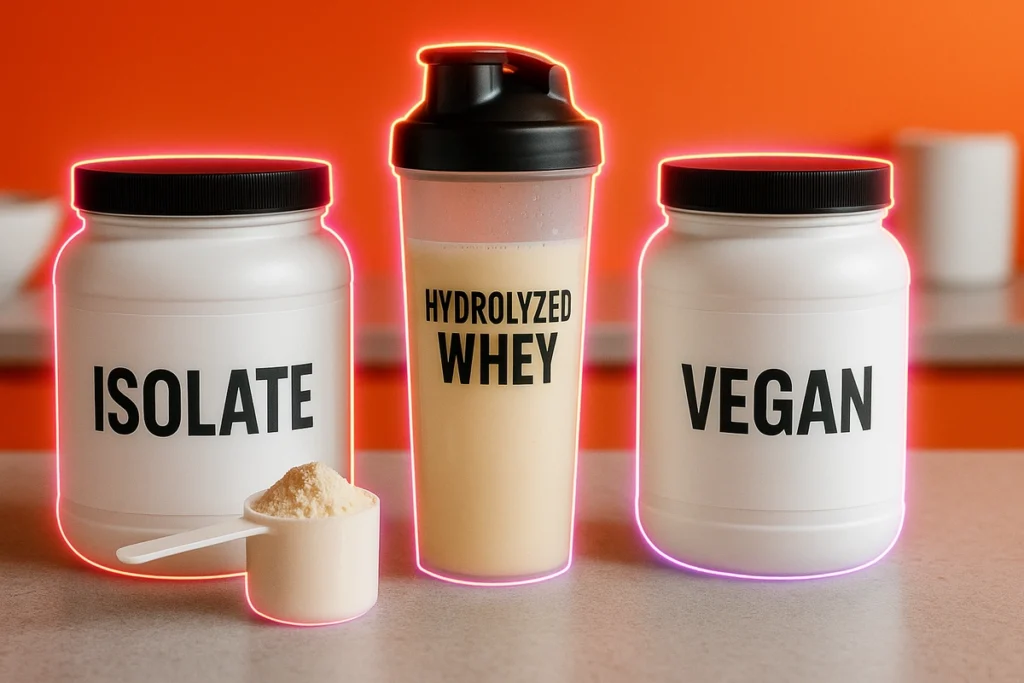
If your post-shake routine involves bloating, cramps, or acid reflux, the problem isn’t protein—it’s the lactose hiding in your powder.
ℹ️ The fix depends entirely on your sensitivity level. Here are the three tiers, ranked from mild intolerance to complete dairy elimination:
- Whey Isolate – Micro-filtered, 90%+ protein, nearly zero lactose. Best for mild sensitivity.
- Hydrolyzed Whey – Pre-digested peptides, virtually lactose-free. For severe sensitivity that isolate can’t fix.
- Vegan Alternatives – 100% dairy-free. The solution when your stomach rejects all forms of whey.
Now let’s break down each one.
1. Whey Isolate: The Best Low-Lactose Option
This is my go-to recommendation—for myself and the athletes I coach.
Whey isolate undergoes rigorous microfiltration, pushing protein content to 90% or higher while stripping away nearly all lactose. For most people with mild to moderate sensitivity, this solves the problem entirely.
My experience: When I switched to Optimum Nutrition’s Whey Isolate, the difference hit me within 24 hours. No post-shake bloating. No acid reflux creeping up during deadlifts. Just clean, fast-absorbing fuel that left me feeling light and ready for the next meal.
Client case study: Lucas, a client prepping for his first physique competition, dealt with painful bloating from a standard whey blend. The discomfort was killing his evening training sessions. I moved him to a pure isolate, and within three days, his digestion normalized. More importantly, his energy rebounded—he started pushing personal records in those late workouts because he finally felt light instead of inflamed.
Key takeaway: If you experience mild bloating but not severe cramping, isolate is almost certainly your fix. Start here before jumping to more expensive options.
💰 On a tight budget? You don’t need to overspend. I’ve compiled a list of affordable whey proteins available in the U.S. that still deliver solid quality.

2. Hydrolyzed Whey: For Severe Sensitivity
If isolate still triggers discomfort, hydrolyzed whey is your next logical step.
Think of it as pre-digested protein. The hydrolysis process uses enzymes to break protein chains into smaller peptides, dramatically reducing the work your gut has to do. Absorption is nearly immediate.
📌 The lactose question, answered definitively: Yes, hydrolyzed whey is the most lactose-free whey option available. The hydrolysis process degrades residual lactose beyond what standard isolation can achieve. If you’ve been avoiding whey entirely because you assumed all forms contain lactose, this is your path back.
Client case study: Aminah, a client training remotely from Dubai, suffered from cramps that would hit within an hour of consuming any protein shake. She had nearly resigned herself to avoiding supplements altogether.
I recommended Myprotein’s Hydrolyzed Whey, and the result was immediate—zero discomfort from the first serving. Within two weeks, her recovery times noticeably improved, which she attributed directly to finally being able to fuel properly post-training.
Why this matters for performance: Because hydrolyzed whey absorbs so rapidly, it’s an ideal pairing with creatine for your post-workout window. The fast insulin response aids creatine uptake. I break down the science in this Whey + Creatine stacking guide.
3. Vegan Alternatives: 100% Dairy-Free
This category isn’t technically whey, but it belongs in this conversation because for some stomachs, dairy elimination is the only solution.
Modern plant proteins—pea, rice, and pumpkin seed isolates—now deliver complete amino acid profiles that rival whey for muscle protein synthesis. EAA-fortified blends close any remaining gaps.
⚠️ Quick myth-bust: Some people assume casein is a gentler alternative. It’s not. Casein is milk-derived and contains lactose—sometimes in higher amounts than certain whey blends. If dairy is the root cause of your digestive issues, casein will make things worse. Stick to plant-based.
My honest take: I primarily recommend vegan proteins for clients who are strictly dairy-free by necessity or lifestyle. The taste and texture gap has narrowed dramatically in the last three years. Brands are investing heavily in flavor technology, and some plant blends now mix as smoothly as isolate.
Amino acid context: If you’re comparing options and want to understand how plant proteins stack up against whey on a molecular level, here’s a detailed breakdown of EAAs vs BCAAs vs whole protein sources.
Why Lactose in Whey Causes Problems

Lactose intolerance isn’t rare. Many of my clients—even those who never had issues before—start noticing discomfort after using regular whey concentrate.
Symptoms like bloating, gas, cramping, and even fatigue post-shake are often red flags.
I’ve personally dealt with this. Years ago, I used to down whey concentrate post-workout. But after a few weeks, I kept feeling gassy and sluggish.
It wasn’t until I cut dairy for a week and switched to an isolate that I realized just how much it had been affecting me.
A lactose-free approach isn’t just about comfort—it helps you stick to your nutrition plan without those annoying side effects.
If you’re curious about how whey can fit into your diet, check out this guide on whey protein as a meal replacement.
Lactose Content by Brand (Comparison Table)
Not all protein powders are created equal. Here’s how popular brands stack up for lactose content—so you know exactly what to grab (and what to avoid).
Brand | Product | Lactose-Free? | Notes |
|---|---|---|---|
Optimum Nutrition | Gold Standard Isolate | Yes | <0.5g lactose. My go-to. |
Optimum Nutrition | Gold Standard (regular) | No | Contains concentrate—avoid if sensitive |
Myprotein | Impact Whey Isolate | Yes | 95% lactose removed. Budget-friendly |
Myprotein | Hydrolyzed Whey | Yes | Pre-digested. Gold standard for severe cases |
Dymatize | ISO 100 | Yes | Hydrolyzed isolate. Absorbs fast |
MuscleTech | NitroTech Isolate | Yes | Added enzymes help digestion |
Orgain | Simple Plant Protein | Dairy-free | Vegan alternative |
BSN | Syntha-6 | No | Contains concentrate & milk protein |
GNC | Pro Performance Isolate | Yes | Solid budget option |
Rule One | R1 Isolate | Yes | Clean label, mixes easy |
✨ Quick Takeaways:
- Stick to “Isolate” or “Hydrolyzed” on the label
- Avoid “Concentrate” or “Blend” if you’re sensitive
- When in doubt: Hydrolyzed whey is your safest bet
- Dairy-free option: Go plant-based (pea, rice, or blend)
📝 A Note from Experience:
I’ve had clients message me saying, “But I bought ON’s regular whey—isn’t that safe?”
Nope. Even within the same brand, concentrate vs isolate makes all the difference. Always flip the bottle and check the fine print.
Optimum Nutrition for Lactose Intolerance: What to Buy & Avoid
Optimum Nutrition is one of the most trusted names in the game—but not every tub they make is safe for your stomach.

Here’s exactly which ON products work, and which one to avoid.
ON Gold Standard 100% Whey Isolate
- Lactose content: <0.5g per serving
- Best for: Mild to moderate lactose intolerance
- My experience: This is my daily driver. Mixes clean, digests even cleaner. Zero bloating, zero acid reflux—just 25g of fast-absorbing protein that lets me train and eat without the aftermath.
Verdict: Buy this if you want the ON quality you trust, minus the lactose.
ON Gold Standard Whey (Regular) – Skip This One
- The problem: It’s a blend built on whey concentrate—which means significantly more lactose per scoop.
- Why it matters: If you’ve tried ON before and felt off, this is likely the exact tub that caused it.
- Avoid if: You have any level of lactose sensitivity. This isn’t built for you.
Verdict: Great protein. Wrong audience. Leave it on the shelf.
ON Platinum Hydrowhey – The Nuclear Option
- Lactose content: Near zero (hydrolysis destroys residual lactose)
- Best for: Severe intolerance or anyone who wants the fastest possible post-workout absorption
- How it works: Hydrolyzed whey is pre-digested into smaller peptides. Your stomach does almost no work—absorption begins within minutes.
- The trade-off: Costs more than isolate. Worth it if isolate still bothers you, or if recovery speed is your priority.
Verdict: The most gut-safe, fastest-hitting whey ON makes. Use this when isolate isn’t cutting it.
How to Choose the Right Option
Here’s what I tell my clients:
- Read the label carefully. Avoid anything that says “whey blend” or “contains concentrate.”
- Heads up: Whey protein concentrate is not lactose-free. Even small amounts can trigger bloating if you’re sensitive.
- Look for 100% whey isolate or hydrolyzed whey.
- Check sugar content. Added sugars can worsen gut issues.
- Use digestive enzymes (like lactase) if you’re borderline intolerant.
Stefan, one of my clients from Germany, had mild symptoms that cleared up by combining isolate with a lactase supplement.
And don’t forget: what you mix it with matters.
I often pair my shake with water and a banana. Avoid milk—it defeats the purpose.
This advice is especially useful for women with lactose sensitivity. For more, read my guide on whey protein for female lifters.
Where to Buy Low-Lactose Whey Protein
Based on my testing and client feedback, here are the best places:
Retailer | Best For | Shipping |
|---|---|---|
Amazon | Fast delivery, easy returns | Prime available |
Bodybuilding.com | Wide selection, frequent sales | Free over $49 |
iHerb | International shipping | Great for Europe/Asia |
Brand Direct (ON, Myprotein) | Best bulk deals | Subscribe & save |
🌍 For readers in Germany: Check out Myprotein Germany or Amazon.de for lactose-free options like ON Gold Standard Isolate or Myprotein Hydrolyzed Whey.
FAQs About Lactose-Free Whey Protein
Yes, standard whey protein concentrate contains lactose. But whey isolate and hydrolyzed whey are processed to remove 99%+ of lactose—making them safe for most sensitive stomachs.
Not all whey is lactose-free. Regular whey concentrate contains lactose. You need to choose “whey protein isolate” or “hydrolyzed whey” for true low-lactose options.
Yes. Whey isolate undergoes extra filtration that removes almost all lactose—typically less than 0.5g per serving. It’s the safest choice for most lactose-intolerant users.
Yes. Hydrolyzed whey is pre-digested and broken down into smaller peptides, making it even easier to absorb. It’s the most lactose-free option available—ideal for severe sensitivity.
No. Whey concentrate retains most of milk’s natural lactose. If you’re sensitive, avoid anything with “concentrate” on the label—even if it’s mixed with isolate.
Yes—but only their Isolate and Hydrolyzed lines. Optimum Nutrition’s Gold Standard Whey Isolate and Platinum Hydrowhey are both lactose-free. Their regular Gold Standard contains concentrate and may cause issues.
It’s very rare. If it does, it’s usually due to other ingredients in the product—like artificial sweeteners, gums, or thickeners—not the protein itself.
Try switching to hydrolyzed whey or a vegan blend. Also, track your symptoms—it helps identify hidden triggers like added sugars or emulsifiers.
No. Lactose-free whey still comes from milk, so it’s not dairy-free. Dairy-free proteins (like pea, rice, or soy) are completely plant-based.
Not when used properly. For healthy individuals, moderate whey consumption is safe. If you have existing kidney issues, consult your doctor first.
Post-workout is ideal for muscle repair, but you can also take it between meals to hit your daily protein targets. Consistency matters more than timing.
Amazon, Bodybuilding.com, iHerb, and brand websites like Optimum Nutrition or Myprotein. Look for “isolate” or “hydrolyzed” in the product title.
No. Casein is another milk protein and contains lactose—sometimes even more than whey. Avoid if you’re lactose intolerant.
No, because it’s dairy-based. But you can try pea protein, rice protein, or blended vegan powders—they’re completely dairy-free and gut-friendly.
💬 Still have questions? Drop them in the comments below. I personally read and answer every single one.
Final Verdict – Which One Should You Pick?
If you want a reliable, stomach-friendly option, go for whey protein isolate. It’s widely available, well-tolerated, and keeps you on track with your goals.
If you have severe intolerance or want the cleanest absorption possible, hydrolyzed whey is the gold standard.
And if you’re ready to go completely dairy-free, a quality vegan blend can still get the job done.
Personally, I rotate between isolate and hydrolyzed whey, depending on how intense my training gets and how my body feels.
For men looking to maximize results with minimal digestive issues, here’s a list of top whey proteins for men in 2025.
📌 Final Tip from Coach Hossein: Don’t push through discomfort. Protein is supposed to support your progress, not disrupt your digestion. Listen to your body, invest in a clean product, and you’ll feel—and perform—way better.
Leave a Reply