


Tired of bulking up only to gain fat instead of muscle?
If you’ve been using a mass gainer and feel more bloated than strong, you’re not alone. Most lifters fall into the same trap: overeating with no strategy, believing more calories always mean more muscle.
Here’s the truth no supplement company tells you.
A mass gainer can build lean muscle – but only if you’re in a controlled calorie surplus and training hard. Take it without tracking, and you will gain fat.
I’ve made that mistake myself. Now, as a certified coach, I help athletes turn mass gainers into lean muscle weapons – not belly fat builders.
In this article, you’ll get my exact 5-step protocol to use mass gainer for lean muscle only, plus real client results and the 3 signs you’re gaining muscle (not fat) on a mass gainer.
Table of contents
- Lean Bulk: A 5-Step Mass Gainer System
- Do Mass Gainers Build Muscle or Add Fat?
- How Mass Gainers Work (Calories, Protein & Carbs)
- Why Mass Gainers Cause Fat Gain (And How to Avoid It)
- 3 Signs You’re Gaining Muscle (Not Fat) on a Mass Gainer
- Mass Gainer vs Homemade Shake: Which Builds Leaner Muscle?
- 3 Best Mass Gainers for Lean Muscle (Low Fat, High Protein)
- Real Client Results: Lean Gains vs Dirty Bulk
- Frequently Asked Questions About Mass Gainers & Lean Muscle
- Final Verdict: Is a Mass Gainer Worth It for Lean Muscle?
Lean Bulk: A 5-Step Mass Gainer System
Most mass gainers deliver 800–1,200 calories per serving. That’s a dirty bulk in a scoop.
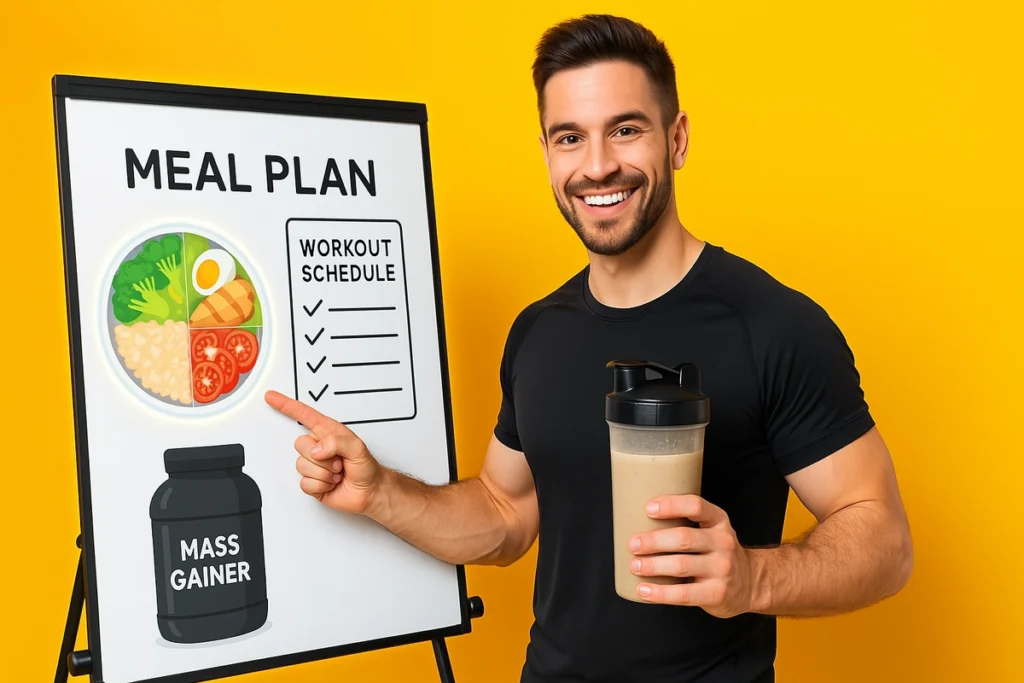
✅ Here’s how to turn yours into a lean muscle tool instead.
- Know your number: Calculate your maintenance calories using this free TDEE calculator (link out to a reliable one). This is your baseline. No guessing.
- Add just 300–400 calories from mass gainer: Not 1,200. Not even 800. A half serving (or less) is all most people need. Pour the rest down the sink – or save it for tomorrow.
- Time it right: Take it only post-workout within 45 minutes (link: Take it only post-workout). Your muscles are starving for nutrients. This is when those carbs work for you, not against you.
- Respect rest days: Skip mass gainer on rest days entirely. At most, use half a serving with water only. Your body isn’t demanding those extra calories on a sofa.
- Measure what matters: Track your waist measurement weekly. First thing Monday morning, before eating. If your waist goes up more than 0.5 inches in 2 weeks, cut your serving size or switch to every other day. The scale lies. Your waist doesn’t.
My personal switch that changed everything
When I adjusted my approach and started using a homemade shake made with oats, whey, banana, and peanut butter homemade shake, my gains became leaner and more consistent.
I could tweak ingredients based on my goals – more oats for energy, less peanut butter for fewer calories. It felt healthier, and my clients saw the difference too.
Special Note for Hardgainers (Fast Metabolism)
If you genuinely struggle to gain any weight, a mass gainer can be a lifeline – not a liability.
Here’s the hardgainer rule: Use a full serving only if you’ve tracked your food honestly for 2 weeks and still fall short of your calorie target by 500+ calories per day. Otherwise, stick to half.
If you have a fast metabolism fast metabolism, small changes like this can make a big difference. You don’t need to drown in calories. You need consistency and the right surplus – not a firehose of sugar.
⚡ Mass gainer turning into fat?
Wrong timing builds your waistline. Right timing builds your muscles.
Turn Gainer Into Muscle FreeDo Mass Gainers Build Muscle or Add Fat?
Let’s be honest — mass gainers have a reputation problem.
Some lifters swear by them for building lean muscle. Others blame them for belly fat, bloating, and soft gains.
So which side is right? Both.
✅ Here’s the truth from my 7+ years of coaching and personal experience: Mass gainers can help build lean muscle — but only when used as a tool, not a shortcut.
Treat them like a free pass to eat whatever you want? You’ll gain fat. Use them strategically with tracked calories and hard training? They become a lean muscle machine.
The difference isn’t the supplement. It’s how you use it.
How Mass Gainers Work (Calories, Protein & Carbs)
A mass gainer is a high-calorie supplement designed for one job: helping you hit a calorie surplus when whole food isn’t enough.
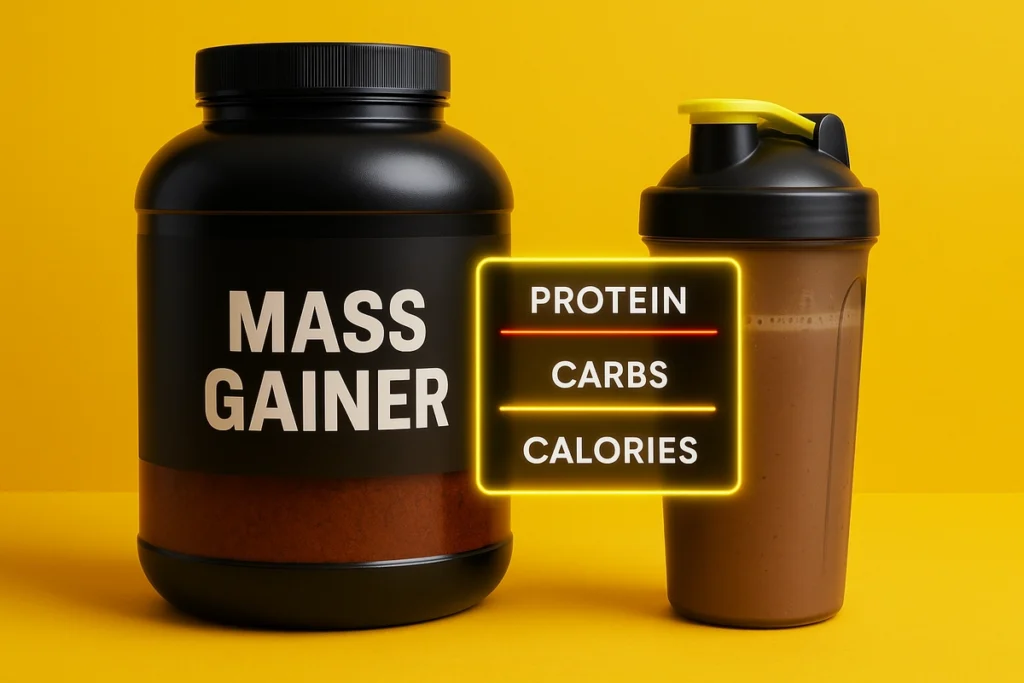
It typically contains three things:
- Protein (for muscle repair and growth)
- Carbs (for energy and recovery)
- Fats (sometimes added, sometimes minimal)
The goal is simple: support recovery, fuel growth, and make eating enough calories easier. This is a game-changer for people with a fast metabolism or a small appetite.
But here’s where most go wrong.
A single serving of mass gainer can pack 800–1,200 calories. That’s half a day’s worth of food for some people. Unless your training volume or metabolism is extreme, that much at once will store as fat – not muscle.
The smarter approach? Half servings. Or a clean formula with no added sugar.
If you’re wondering whether sugar-free mass gainers are better for lean muscle, check out this guide: no-sugar mass gainer guide.
You just read everything about mass gainers. Now let’s make it work for YOUR body.
I’ll design your personalized supplement protocol — exact timing, dosage, and stacking for your specific goal. No templates. No bots. A real coach who reads your answers.
Pay what you want after you receive it. No risk. No pressure.
Why Mass Gainers Cause Fat Gain (And How to Avoid It)
I see this mistake constantly.

People rely too heavily on mass gainers and ignore the rest of their diet. The shake becomes a crutch, not a tool.
I know because I made this mistake myself.
Early in my training, I slammed a full serving of Serious Mass post-workout without adjusting my meals. Within weeks, I noticed more softness around my waist than muscle definition. My strength went up slightly. So did my pants size.
Here’s what I learned the hard way: A mass gainer doesn’t exist in a vacuum. It’s about total daily calories and training intensity. If you consume more than your body burns, the excess stores as fat – regardless of the source.
My 8‑Week Personal Experiment (Tracked Exactly)
Approach | Total Gain | Fat Gain | Lean Gain |
|---|---|---|---|
Dirty bulk: full serving Serious Mass + no tracking | 4.5 kg | 3 kg | 1.5 kg |
Lean protocol: half serving post-workout + tracking | 3.2 kg | 0.8 kg | 2.4 kg |
The difference? 2.4 kg of lean muscle vs 1.5 kg. Same supplement. Different result.
Real Client Example: Daniel from Australia
Daniel started taking two mass gainer shakes daily without tracking his food. Within one month, he gained weight – but most of it was belly fat. He was frustrated, not motivated.
The fix? We cut him down to one half-serving post-workout only, tracked his total calories, and within 3 weeks, his waist stopped growing while his lifts improved.
The bottom line: A mass gainer amplifies your diet. If your diet is a mess, the gainer makes it worse.
If you’re using gainers without a plan, you may also run into other issues. Read more about side effects of mass gainers.
3 Signs You’re Gaining Muscle (Not Fat) on a Mass Gainer
How do you know if your mass gainer is working – or working against you?

Don’t trust the scale alone. It can’t tell the difference between muscle and fat. Instead, watch for these three signs. If you see them, you’re on the right track.
Sign #1: Your strength is increasing
You’re lifting heavier or doing more reps than 2–3 weeks ago. That’s not fat talking. Fat doesn’t help you bench press or do pull-ups. Muscle does.
If your squat, deadlift, rows, or overhead press are climbing, your mass gainer is fueling lean tissue.
Sign #2: Your measurements are improving (in the right places)
Check your waist every Monday morning. If it stays the same or goes up less than 0.25 inches per month, you’re not storing excess fat.
Check your arms, chest, or thighs. If those are growing while your waist isn’t, you’re building lean muscle. That’s the goal.
Sign #3: You look more defined – not puffier
Look in the mirror. Do you see more shape in your shoulders, chest, or back? Do your arms look fuller but not softer?
Or do you look bloated, smooth, or puffy?
Definition comes from muscle gain without excessive fat. Puffiness comes from the opposite.
Real Client Example: Jake from Canada
Jake struggled to eat enough despite training hard five days a week. He wasn’t underweight – he just couldn’t stomach that much food.
We added one moderate mass gainer shake post-workout (half serving, mixed with water). Nothing else changed.
After 6 weeks:
- He gained 3.5 kg of mostly lean mass
- His pull-up count went from 6 to 10
- He looked more solid – not bloated
Jake didn’t get a six-pack. But he stopped looking skinny, his waist barely moved, and his strength jumped.
That’s what lean mass gainer progress looks like.
If you see strength up, waist stable, and definition improving – keep going. Your mass gainer is working.
Mass Gainer vs Homemade Shake: Which Builds Leaner Muscle?
You don’t need to buy a commercial mass gainer. A homemade shake can do the same job – often better.
But “better” depends on your goal. Let me show you exactly how they compare.
The Side-by-Side Comparison
Feature | Commercial Mass Gainer | Homemade Shake (oats, whey, banana, peanut butter) |
|---|---|---|
Calories (per serving) | 800–1,200 | 400–700 (easily adjustable) |
Sugar content | Often 15–30g | ~10g (natural, from banana) |
Ingredient control | Low | High (you choose everything) |
Cost per serving | $2–4 | $0.80–1.50 |
Best for | Hardgainers, busy people | Lean bulk, clean eaters |
Which one builds leaner muscle?
The homemade shake wins for lean muscle – but only if you’re willing to make it.
Why? Because you control the calories, sugar, and ingredients. Want fewer carbs? Skip the banana. Want more protein? Add extra whey. Want lower calories? Use half a scoop of oats.
A commercial mass gainer locks you into their formula. Most have too much sugar and too many calories for a clean bulk.
That said, commercial mass gainers have one advantage: convenience.
If you’re a hardgainer who struggles to eat anything, or you work 12-hour shifts with no blender in sight, a commercial option is better than nothing. Just stick to half servings and low-sugar brands.
My recommendation:
- For lean muscle with minimal fat → homemade shake
- For convenience or hardgainer needs → commercial (half serving, clean formula)
Want the exact homemade recipe I use?
Blend this:
- 1 scoop whey protein (25–30g protein)
- 1/2 cup rolled oats
- 1 banana
- 1 tbsp peanut butter
- Water or unsweetened almond milk
That gives you roughly 500 calories, 35g protein, and under 10g sugar. Adjust as needed.
If you prefer to buy a ready-made option, the next section covers the 3 best mass gainers for lean muscle.
3 Best Mass Gainers for Lean Muscle (Low Fat, High Protein)
- Transparent Labs Mass Gainer
low sugar, 53g protein – Best overall. - Naked Mass
no artificial ingredients – Best clean label. - Optimum Nutrition Serious Mass
half serving – Best budget, but cut serving in half.
Real Client Results: Lean Gains vs Dirty Bulk

Let me break it down with two real coaching stories:
Sofia from Spain was underweight and hesitant about mass gainers. We introduced a clean, moderate shake after her workouts. Along with strength training, she gained 4 kg in 8 weeks—with visible muscle tone and boosted confidence.
On the flip side, I had a client who insisted on using a commercial mass gainer twice a day. He wasn’t tracking his food or training properly. The result? Most of the weight gained was fat, not muscle.
That’s why gainers alone don’t guarantee success. You need a plan, a goal, and the discipline to execute.
For a deeper look at the gainer vs. protein debate, here’s mass gainer vs whey protein for bulking.
Frequently Asked Questions About Mass Gainers & Lean Muscle
Only if you take more calories than you burn. Use half servings and track your results.
Better to skip it. Your body needs fewer calories on rest days. If you must take it, use half a serving.
With proper training and half servings, expect visible changes in 4 to 6 weeks.
Only at half a serving (about 600 calories). A full serving (1200 calories) usually adds fat unless you train very hard.
After. Your body needs fast nutrients for recovery. Before a workout, it may cause bloating.
Homemade shake (oats, whey, banana, peanut butter). You control the ingredients and calories. Mass gainer is only for convenience.
Too many calories at once, or you used milk. Try half a serving with water instead.
Yes. Track your calories first. If you still fall short by 500+ calories, add a full serving. Otherwise, stick to half.
300 to 500 calories extra per day, not 1200. That’s usually half a serving or less.
Many cheap ones are. Look for low-sugar options (under 10g per serving) or make your own shake.
Final Verdict: Is a Mass Gainer Worth It for Lean Muscle?
Yes – but only under the right conditions.
✅ A mass gainer is worth it for lean muscle if:
- You’re a hardgainer who genuinely struggles to eat enough whole food
- You’re short on time and need a quick, portable calorie source
- You track your total daily calories and use half servings
- You take it post-workout only (not on rest days)
- You pair it with progressive overload training
❌ A mass gainer is NOT worth it if:
- You take full servings without tracking
- You use it on rest days “just because”
- You expect it to work without hard training
- You ignore your waist measurement and only watch the scale
Mass gainers are tools – not shortcuts. They support your nutrition. They don’t replace it.
When used correctly, they can absolutely be part of a clean bulk that builds lean muscle, not just a higher number on the scale.
When used carelessly, they’re an expensive way to gain belly fat.
One more thing before you go: If you’re stacking your mass gainer with other supplements, consider whether creatine with mass gainer is worth it. Some combinations help. Some are just overkill.
And if you found this guide helpful, here’s what to do next:
- Save this article for reference
- Start with half servings this week
- Measure your waist every Monday
- Come back in 4 weeks and check your progress
Your mass gainer can work for you. Or against you. The choice – and the protocol – is now in your hands.
Leave a Reply