


Training like an athlete isn’t about training harder—it’s about training smarter. Real athletic results come from performance-focused workouts, not endless pump chasing.
Athletes build strength that transfers to real movement, speed that carries into daily life, and conditioning that doesn’t destroy recovery.
That’s the difference between looking fit and actually performing well.
As a professional fitness and nutrition coach, I’ve seen countless lifters stall because they train for appearance instead of function.
When training shifts toward athletic principles, strength improves, injuries drop, and progress becomes sustainable.
In this guide, I’ll show you exactly how to train like an athlete—using proven methods I apply in my own training and with real clients to build strength, speed, endurance, and long-term performance.
Table of contents
How to Train Like an Athlete (Quick Answer)
Training like an athlete means training for performance, not just looks.
As a coach with over 10 years of personal training experience and 6+ years of coaching real clients, I define athletic training as a balanced system that develops strength, speed, conditioning, mobility, and recovery together.
You don’t chase pump or soreness.
You build a body that moves efficiently, stays pain-free, and performs well under fatigue—whether you train in a gym or follow a structured build muscle at home guide.
1. Athlete Mindset: Train for Performance
When I first started bodybuilding, I was strong and muscular—but not athletic.
I looked fit, yet my conditioning was poor and joint stress was constant.
The shift happened when I stopped asking, “How do I look?” and started asking, “How well do I move and perform?”
Athletes train with intent.
Every session has a purpose: move better, get faster, last longer, or recover more efficiently.
In my coaching, I encourage clients to track performance markers like strength progress, sprint times, and work capacity—not just body weight or mirror results, especially when following structured plans like a dumbbell bulking workout for men.
2. Build Athletic Strength
Athletic strength is about usable power, not just max numbers.

My training—and my clients’—revolves around compound movements like squats, deadlifts, presses, rows, and loaded carries.
I’ve found that controlled reps with explosive intent deliver the best results.
One of my clients, Daniel (29, Canada), came to me with knee pain from years of high-volume bodybuilding splits.
When we reduced isolation work and focused on unilateral strength and core stability, his pain disappeared within six weeks.
Even better, his lifts actually improved.
This approach works across ages, including younger lifters following a smart teen dumbbell workout bulking plan.
Strong athletes move symmetrically, control their core, and stay balanced under load.
3. Develop Speed, Power & Agility
This is where most gym-goers fail.
They want to train like athletes but avoid sprinting, jumping, or reacting.
Personally, adding sprint work and plyometrics changed my performance completely.
My lifts felt smoother, my explosiveness improved, and my recovery between sets increased.
Even basic drills like acceleration sprints, box jumps, and medicine ball throws can make a massive difference—especially when paired with a smart workout routine for creatine results.
A great example is Lucas (34, France).
He was “gym-strong” but got winded walking upstairs.
After adding short sprints, sled pushes, and agility drills twice a week, his conditioning improved dramatically.
His physique also leaned out—without extra cardio.
4. Improve Conditioning Like an Athlete
Athletic conditioning is intense but strategic.
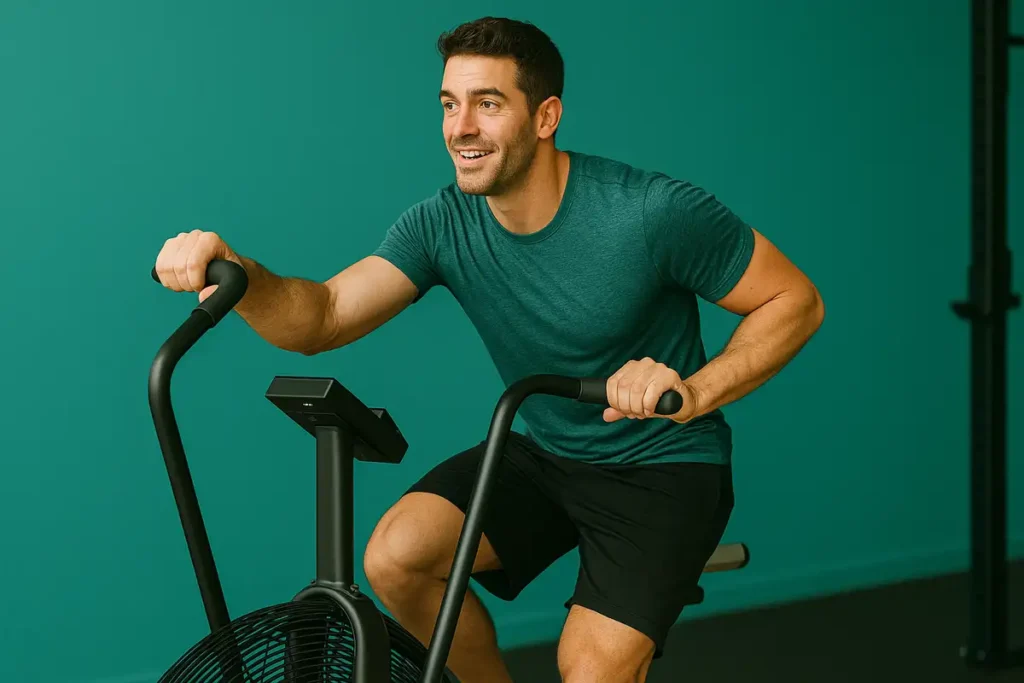
Long, slow cardio has its place, but athletes rely more on interval work, circuits, and sport-style conditioning.
I use short, focused conditioning sessions that challenge breathing and recovery without destroying strength.
The goal is to recover faster between efforts—not to feel exhausted all day.
Proper fueling and hydration matter here.
That’s why I emphasize strategies supported by a solid electrolyte hydration training guide.


When clients complain about constant fatigue, it’s usually because they’re doing too much random cardio instead of structured conditioning.
5. Mobility, Warm-Ups & Injury Prevention
If there’s one lesson I’ve learned the hard way, it’s this: mobility is not optional.

Early in my training, I ignored warm-ups and paid for it with tight hips and stressed joints.
Once I committed to dynamic warm-ups and regular mobility work—especially for hips, ankles, shoulders, and spine—my movement quality improved and injuries dropped to zero.
This includes using a proper warm-up for heavy lifting and consistent work on mobility for strength and muscle gains.
In my coaching, mobility is trained like strength: consistently and intentionally.
6. Recovery & Nutrition for Athletic Performance
Athletes don’t grow during training—they grow during recovery.
I personally avoid max-intensity days back-to-back.
Heavy strength days are followed by lighter conditioning or mobility-focused sessions.
If sleep quality drops, volume drops immediately.
Nutrition-wise, I rely on adequate carbohydrates, high protein intake, hydration, and creatine monohydrate.
Creatine has consistently improved my strength output and recovery, and I’ve seen the same effect in dozens of clients.
Recovery is not weakness.
It’s a performance strategy.
FAQ
No. Athletic training is about movement quality, performance, and resilience—anyone can train this way.
Most people do best with 4–6 structured sessions, depending on recovery and lifestyle.
Not at all. Bodybuilding methods work well when used intelligently—but they should never replace speed, conditioning, and mobility.
Yes. Beginners benefit the most when they start with proper movement patterns and balanced programming.
That you need extreme volume or pro-level intensity. In reality, smart, sustainable training beats brutal workouts every time.
Leave a Reply