


Creatine is one of the most researched and trusted supplements for strength, muscle growth, and power output—but almost every athlete I coach asks the same question: “Can I pre-mix it hours before drinking, or am I just pouring money down the drain?”
Most people assume it’s fine. Yet what actually happens to creatine in water overnight is far more surprising (and risky) than you’d think.
Before you pre-mix another shaker, take a look at these 5 shocking facts—they might change how you prep your supplements forever.
📌 5 Shocking Facts About Creatine in Water Overnight (At a Glance)
- After just 8 hours at room temperature, creatine begins converting into creatinine—a useless waste product your body can’t use.
- Orange juice destroys creatine stability in under 2 hours due to its acidity; even “healthy” mix-ins can sabotage your dose.
- Leaving a pre-mixed shaker in a hot car for 30 minutes can ruin the entire serving—heat is creatine’s worst enemy.
- Refrigeration slows the breakdown, but overnight fridge storage still causes measurable potency loss by morning.
- That gritty texture at the bottom of an old mix isn’t just undissolved powder—it’s often crystallized creatinine, a sign your creatine has gone bad.
In this article, I’m sharing exactly what I tell my clients: the science-backed limits, the real-world storage mistakes, and the simple daily habits that keep your creatine fully potent—even when life gets chaotic. Let’s separate fact from wasted shaker regret.
Table of contents
- Quick Answer: How Long Can Creatine Stay in Water?
- Can You Pre-Mix Creatine the Night Before? (Honest Answer)
- How Creatine Stability Works
- How to Know If Your Pre-Mixed Creatine Has Degraded
- Creatine Stability in Acidic Drinks (Apple Cider Vinegar, Juice, Soda)
- What Happens If You Leave Creatine in Water Too Long?
- Can You Freeze Creatine?
- Best Practices for Pre-Mixed Creatine Drinks
- Pre-Mixed Creatine Products on the Market
- Real-Life Coaching Stories
- Final Takeaways
- Still Have Questions? (15+ Overnight Pre-Mix FAQs)
Quick Answer: How Long Can Creatine Stay in Water?
Situation | OK to Pre-Mix? | How Long? |
|---|---|---|
Water + fridge | ✅ Yes | Up to 12h |
Water + room temp | ✅ Yes | 6–8h |
Protein shake + fridge | ⚠️ Okay | 2–3h max |
Juice / soda / ACV | ❌ No | Drink immediately |
Hot coffee / tea | ❌ No | Drink immediately |
Can You Pre-Mix Creatine the Night Before? (Honest Answer)
Yes, you can—under the right conditions.

Here’s what the research and my coaching experience say:

- 💧 Water + fridge: Remains mostly stable overnight (8–12 hours). You retain 95%+ potency—loss is negligible for most athletes.
- 🌡️ Water + room temp: Stable for 6–8 hours. By morning (12+ hours), some degradation occurs. Still safe, just slightly less effective.
- 🍊 Acidic drinks (juice, soda, ACV): Do not store overnight.
Degradation accelerates within 2–4 hours. Mix fresh or drink immediately. - ❄️ Protein shake + fridge: 2–3 hours max. Dairy is slightly acidic and less stable than water.
✅ My recommendation: Pre-mixing the night before is acceptable—if you use plain water and refrigeration.
Is it optimal? No.
Is it fine for consistency? Yes.
One of my clients, Ahmed from Dubai, has pre-mixed his creatine every morning for months, stored it in his office fridge, and trained post-work with zero loss in results.
Don’t let perfectionism kill your habit.
How Creatine Stability Works

To really understand this, let’s break down the science in simple terms.
- pH Levels Matter: Creatine is most stable in neutral liquids like water. Acidic liquids (juices, sodas, energy drinks) lower the pH and speed up degradation.
- Temperature Plays a Role: Heat speeds up chemical reactions. A creatine drink sitting in a hot car will break down faster than one in a cool gym bag or fridge.
- Time is the Biggest Factor: Freshly mixed creatine is almost 100% stable. After several hours, it’s still fine in water.
As a coach, I always explain this to my clients with a simple formula: Water + Cool Storage + Same Day = Safe and Effective.
At What Temperature Does Creatine Break Down?
Heat speeds up creatine breakdown—but only if you let it sit.
🌡️ Here are the exact temperatures and time limits:
- Room temperature (20–22°C / 68–72°F): Stable for 6–8 hours
- Warm/hot car or gym bag (30–35°C / 86–95°F): Degradation starts within 2–3 hours
- Hot water for mixing (40–60°C / 104–140°F): Brief exposure is fine—creatine dissolves better in warm water. But do not let it sit.
- Boiling / cooking temperatures (>70°C / 158°F): Rapid breakdown. Do not add creatine to hot coffee or tea and let it sit.
For athletes training in hot environments, stability matters even more. You can read more about this in creatine use during heat adaptation training.
Bottom line: Heat is a storage risk, not a mixing risk. Use warm water to mix, then cool it down or drink promptly.
How Long Until Creatine Turns Into Creatinine?
This is the #1 concern I hear. Based on available research and real-world observation:
- In water at room temp: ~5–10% conversion after 24 hours
- In water refrigerated: Minimal conversion (<3%) after 24 hours
- In acidic drink (room temp): Noticeable conversion within 4–6 hours
- In acidic drink (warm): Can begin within 1–2 hours
Can you taste or smell it? Some people detect a “sour” or “off” flavor. If it tastes noticeably different than when fresh, degradation has occurred.
Is it harmful? No. Creatinine is filtered out by kidneys. At worst, you might get mild stomach discomfort. The bigger loss is effectiveness.

How to Know If Your Pre-Mixed Creatine Has Degraded

Creatine doesn’t spoil like food, but degradation leaves clues. Here’s what my clients and I have learned to watch for:
- Taste — Sour, bitter, or metallic flavor that wasn’t there when fresh.
- Smell — An “off” odor, sometimes described as chemical or musty.
- Appearance — Rare, but slight cloudiness or sediment can occur.
- Stomach — Mild cramping, bloating, or discomfort during or after your workout.
Trust your senses. If it tastes or smells wrong, don’t drink it. The cost of wasted creatine is far less than the cost of a ruined training session or digestive upset.
Creatine Stability in Acidic Drinks (Apple Cider Vinegar, Juice, Soda)
Readers often ask me about specific mixers. Here’s the breakdown:
Drink | pH Level | Safe for Pre-Mix? | Notes |
|---|---|---|---|
Plain water | Neutral (7) | ✅ Yes, 6–8 hours | Best choice |
Apple cider vinegar | Acidic (2–3) | ❌ No | Degrades rapidly |
Lemon water / citrus juice | Acidic (2–4) | ❌ No | Drink immediately |
Fizzy soda / carbonated drinks | Acidic (2.5–4) | ❌ No | CO₂ increases acidity |
Milk / protein shakes | Slightly acidic (6.5–6.7) | ⚠️ 2–3 hours max | Fats may slow degradation slightly, but not reliable |
Coffee / tea (black) | Slightly acidic (5–6) | ⚠️ Not for storage | Fine if drunk within 1 hour |
📌 If it tastes tart or tangy, don’t store creatine in it.
Can You Mix Creatine with Apple Cider Vinegar?
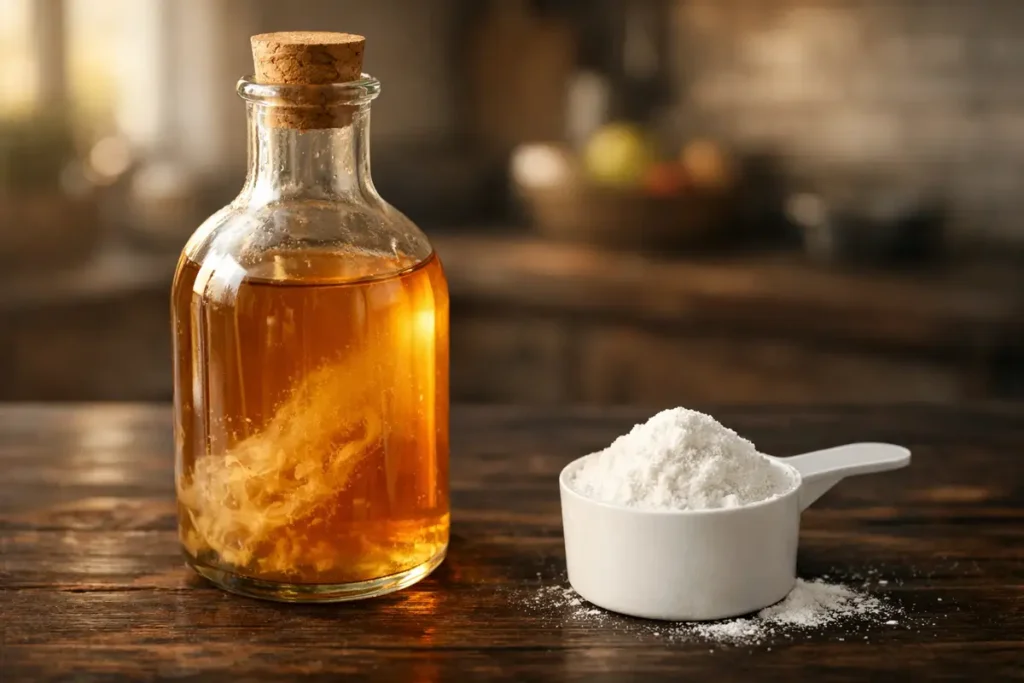
Short answer: Yes, you can mix them—but drink immediately. Do not store.
This is a question I get constantly, especially from clients who take ACV for digestion, blood sugar, or appetite control. And the query data doesn’t lie—you’re clearly searching for answers on this specific combination.
Here’s what happens when creatine meets apple cider vinegar:
Apple cider vinegar has a pH of 2–3. That’s highly acidic—comparable to stomach acid. When creatine sits in this environment, degradation into creatinine accelerates rapidly.
The ACV Degradation Timeline:
- First 30–60 minutes: Minimal loss. If you mix and drink right away, you’re fine.
- 2–4 hours at room temperature: Noticeable conversion begins. You’re losing potency.
- Overnight storage: Significant degradation. Most of the creatine has converted to useless creatinine.
My Coaching Advice on ACV + Creatine:
I have clients who take both daily—and here’s how we make it work:
- Take them separately
Take ACV first thing in the morning, wait 30–60 minutes, then have your creatine. This is actually optimal for both supplements—ACV works better on an empty stomach anyway. - Mix fresh and drink fast
If you must combine them (some people just want one drink), mix immediately before drinking and consume within 15–20 minutes. Don’t prep it ahead. - Use ACV capsules
Several of my clients switched to ACV capsules to avoid the whole issue. Problem solved.
What About Stomach Discomfort?
I’ve seen clients complain about stomach issues when combining creatine and ACV. The acidity can irritate the gut lining, especially before a workout. If you notice bloating, cramping, or nausea, separate them.
Bottom line: Apple cider vinegar and creatine aren’t enemies—they just don’t like being left alone together. Mix fresh, drink fast, or take them separately.
What About Lemon Water, Juice, and Soda?
This is where most people accidentally sabotage their creatine.

You want flavor. I get it. Plain water gets boring. But here’s the hard truth my clients learn: if it tastes tangy, it’s probably acidic enough to degrade your creatine over time.
Let’s break down the most common “flavored” mixers:
Lemon Water and Citrus Juices
pH level: 2–4
Lemon water seems healthy—and it is—but it’s also highly acidic. The citric acid speeds up creatine breakdown significantly.
- Fresh squeezed lemon + creatine: Drink within 60 minutes
- Store-bought lemon juice (often has preservatives): Even less stable
- Orange juice, grapefruit juice, lime juice: Same issue—all highly acidic
Client story: Maria from Spain used to mix her creatine in lemon water every morning and sip it throughout her 4-hour morning routine. She wasn’t getting results. When we switched her to plain water consumed within an hour, she felt the difference in her workouts within two weeks.
Soda and Carbonated Drinks
pH level: 2.5–4
This is a double threat:
- Carbonic acid (from carbonation) lowers pH
- Phosphoric acid and citric acid (common in sodas) lower it further
Plus, most sodas contain sugar, which has nothing to do with stability—but do you really want to mix your clean creatine with high-fructose corn syrup?
My rule: If you’re at a restaurant and forgot your water bottle, ordering a soda and dumping creatine in it is fine for that immediate drink. But don’t pre-mix soda with creatine for later.
Sports Drinks (Gatorade, Powerade)
pH level: 3–4
Sports drinks are designed to be acidic for taste and preservation. They’ll degrade creatine faster than water.
The exception: Some athletes use sports drinks for the carbs during training. If that’s you, mix the creatine right before you leave—don’t let it sit in the bottle for hours.
Flavored Seltzer / Sparkling Water
pH level: 4–5 (varies by brand)
Seltzer is less acidic than soda but still more acidic than plain water. The carbonation creates carbonic acid, which mildly accelerates degradation.
Verdict: Okay for same-day use if consumed within 2–3 hours. Not for overnight storage.
What About Pre-Workout?
Most pre-workout powders are already acidic (citric acid, malic acid, ascorbic acid). If you’re adding creatine to your pre-workout:
- Mix right before drinking
- Don’t pre-mix the night before
- Some degradation will occur during your workout window, but it’s minimal enough that I don’t worry my clients about it
What Happens If You Leave Creatine in Water Too Long?
Short answer: It slowly turns into creatinine—a waste product with zero performance benefits. Your drink won’t hurt you, but it won’t help you either.

Here’s exactly what happens when creatine sits too long:
The 3-Stage Breakdown Timeline
Stage 1: First 8–12 hours (Minimal loss)
- Creatine remains mostly stable
- Less than 3–5% converts to creatinine
- You won’t notice taste or performance differences
Stage 2: 12–24 hours (Noticeable degradation)
- 5–10% converts to creatinine at room temp
- Refrigeration slows this to under 3%
- Some people detect a slightly “off” taste
Stage 3: 24+ hours (Significant loss)
- Conversion accelerates
- Sour/bitter taste becomes obvious
- You’re drinking expensive water with minimal benefit
Three Things You’ll Notice
- The taste changes
Fresh creatine is virtually tasteless. Left too long? It turns sour, bitter, or metallic. Trust this signal—it’s your cue to mix fresh. - Your stomach might complain
Some people experience mild cramping, bloating, or discomfort after drinking degraded creatine. Not dangerous—just unpleasant. - Your results fade
This is the real loss. If your creatine has converted to creatinine, you’re not getting the strength, power, or muscle benefits you’re paying for.
Quick Stats from the Research
Condition | 24-Hour Conversion Rate |
|---|---|
Room temperature water | ~5–10% to creatinine |
Refrigerated water | <3% to creatinine |
Acidic drink (warm) | 15–20%+ to creatinine |
Is It Dangerous?
No. Creatinine is naturally filtered out by your kidneys and excreted. At worst, you might waste your money and feel mild digestive discomfort. At best, you’re just not getting the results you could be.
The 24-Hour Rule I Give My Clients
If it’s been sitting in water for a full day: dump it.
The cost of wasting 5g of creatine is pennies. The cost of a wasted training cycle because you thought you were supplementing but weren’t? Much higher.
When in doubt, mix fresh. Your gains are worth the 30 seconds it takes.
Can You Freeze Creatine?
Short answer: Yes, but don’t bother—especially with powder.
Freezing powder:
- ✅ Keeps it stable indefinitely
- ❌ Condensation when thawing = moisture = clumping
- ❌ Solves no real problem
Freezing pre-mixed drinks:
- ✅ Chemically fine (pauses degradation)
- ❌ Bottles crack (water expands)
- ❌ Thawing takes forever
- ❌ Impractical for daily use
Freezing works but is unnecessary. Keep powder in a cool, dry cupboard.
Quick Storage Guide:
Item | Room Temp | Fridge | Freezer |
|---|---|---|---|
Creatine powder | ✅ Years | ⚠️ Humid | ⚠️ Condensation |
Pre-mixed water | 6–8 hrs | 12+ hrs | ❌ Impractical |
Protein shake mix | 1–2 hrs | 2–3 hrs | ❌ No |
My rule: Powder in the cupboard, pre-mix in the fridge, freezer for ice cubes only.
Best Practices for Pre-Mixed Creatine Drinks

Here’s what I personally recommend to clients and what I follow myself:
- Mix with Plain Water. It’s the most stable and safest option.
- Drink Within 6–8 Hours. This window keeps creatine stable and effective.
- Use Cool Storage. A fridge, cooler, or insulated bottle is ideal.
- Avoid Acids for Storage. If you want flavor, add juice right before drinking, not hours in advance.
- Don’t Overthink It. If you forgot your creatine and it’s been sitting for half a day in water, it’s still fine. Just don’t stretch it for days.
My client Ahmed from Dubai struggled with carrying creatine powder to work.
I suggested he pre-mix it in the morning with water, keep it in his office fridge, and drink it before hitting the gym after work.
He’s been doing this for months with zero issues and great results.
🔥 If you want to go a step further, combinations can improve creatine’s effectiveness.
For example, pairing it with magnesium can help performance, as I explain in creatine-magnesium combination benefits.
For some of my firefighter clients, convenience is critical. You can learn how creatine supports them in creatine supplementation for firefighter fitness.
Pre-Mixed Creatine Products on the Market

You’ve probably seen ready-to-drink creatine bottles in supplement stores.
These are different from what you make at home.
Manufacturers use stabilizers and adjusted pH levels to prevent creatine from breaking down. That’s why they can sit on shelves for months without losing potency.
It’s important not to compare these products with your homemade pre-mix.
Unless you’ve got a chemistry lab at home, your best approach is to keep things simple: water + same-day use.
Real-Life Coaching Stories
Over the years, I’ve seen many different habits with creatine.
- David from the UK used to mix creatine in his protein shake at night for next morning’s workout. I advised him to switch to mixing fresh or at least use water if prepping ahead. He noticed his shakes tasted better and no longer had the “sour” flavor he used to complain about.
- Sara from Germany was a busy university student who trained in the evenings. She started carrying a shaker with pre-mixed creatine water to class. Drinking it after her last lecture worked perfectly, and she never had to worry about carrying the powder around.
- Ali from Iran, one of my early clients, used to mix creatine in fruit juice for taste. After a week of stomach discomfort, we figured out the juice’s acidity was breaking it down too fast. He switched to plain water, and the problem disappeared.
These small adjustments made a huge difference in consistency and results for them.
If your sport is more skill-focused, timing matters. You can learn more in creatine timing in skill-based sports.
These small adjustments made a huge difference in consistency and results for them. Whether you’re a strength athlete, a firefighter, or a skill-sport competitor, the right routine keeps your creatine working—and you performing.
Final Takeaways

Here’s what you should remember:
- Creatine is stable in water for several hours, so pre-mixing for same-day use is safe.
- Avoid acidic or sugary liquids if you plan to store it. Fresh juice or pre-workout might taste good, but they speed up breakdown.
- Keep it cool. A fridge or insulated bottle extends stability.
- Fresh is best, but practicality matters. Don’t stress if you can’t always mix right before drinking—same-day pre-mixed works just fine.
From my own training and coaching experience, the athletes who stay consistent—not the ones chasing perfection—get the best results.
If mixing creatine ahead of time helps you stick to your routine, do it smartly and confidently.
At the end of the day, creatine is one of the most researched and effective supplements you can take—just make sure you use it in a way that fits your lifestyle.
Still Have Questions? (15+ Overnight Pre-Mix FAQs)
Yes, but only if mixed with plain water and stored in the refrigerator. At room temperature, some degradation occurs after 8–10 hours. In acidic drinks, overnight storage is not recommended. If you use water and refrigeration, the potency loss is minimal—typically under 5%—and the drink remains safe.
Creatine is stable in plain water for 6–8 hours at room temperature. When refrigerated, it remains mostly stable for up to 12 hours. After 24 hours, gradual degradation into creatinine becomes noticeable, especially if left unrefrigerated.
Slowly, yes. In plain water at room temperature, conversion is minimal for the first 8 hours. After 24 hours, approximately 5–10% may degrade into creatinine. Refrigeration slows this process significantly, and acidity accelerates it.
Yes, if you use plain water and refrigeration. This is a common practice among busy athletes and is far better than skipping your dose. At room temperature, overnight storage leads to some degradation but is not harmful. With acidic drinks, do not leave overnight.
The creatine gradually converts to creatinine, which has no performance benefits. You may notice a sour or off taste, and some people experience mild stomach discomfort. The drink is not dangerous, but its effectiveness is reduced.
The most common signs are a sour or bitter taste, an unusual smell compared to fresh mix, and mild stomach cramping during your workout. If you notice any of these, discard the drink and mix fresh.
Hot water (not boiling) is safe for mixing and actually helps creatine dissolve more completely. The risk is not brief heat exposure—it is prolonged storage in warm conditions. Do not store mixed creatine in hot cars, direct sunlight, or warm gym bags.
Creatine degrades slowly at room temperature (20–22°C / 68–72°F) after 8–12 hours. Degradation accelerates above 30°C (86°F). Brief exposure to warm water for mixing (40–60°C / 104–140°F) is fine, but prolonged storage at high temperatures should be avoided.
Not for storage. Apple cider vinegar, lemon juice, and other acidic mixers have a pH of 2–4, which rapidly accelerates creatine degradation. If you take these for health reasons, consume them immediately after mixing or take them separately from creatine.
Yes, but pre-mix only 2–3 hours maximum, even when refrigerated. Dairy and protein shakes are slightly acidic and contain fats and enzymes that may affect stability. For best results, add creatine to your shake right before drinking.
Yes. Storing creatine powder in the fridge does not harm it, though it is unnecessary. Storing pre-mixed creatine drinks in the fridge is recommended and extends stability up to 12 hours. Avoid freezing, as this does not preserve potency better than refrigeration.
Heat accelerates degradation but does not instantly destroy creatine. The powder itself is heat-stable during storage. The concern is mixed creatine sitting in warm liquids or hot environments for extended periods. Brief heat for mixing is not destructive.
Commercial pre-mixed creatine drinks use pharmaceutical-grade stabilizers, pH buffering, and airtight sealed packaging. These manufacturing processes prevent the degradation that occurs naturally in homemade pre-mixed drinks. This is why homemade creatine should be consumed the same day.
No. Carbonated drinks are acidic (pH 2.5–4) due to carbonic acid and often contain citric or phosphoric acid. This accelerates creatine breakdown significantly. If you enjoy soda or sparkling water, add creatine immediately before drinking—do not store it.
It is not dangerous, but it is significantly less effective. After 24 hours in water at room temperature, measurable degradation has occurred. Refrigerated water performs better, but same-day consumption is always preferred for full potency.
Creatine is the active supplement that supports strength, power, and muscle growth. Creatinine is the waste product formed when creatine degrades. It has no ergogenic benefits and is simply filtered out by the kidneys. The goal is to minimize creatinine formation by storing creatine properly.
Mix creatine with plain water only, store it in the refrigerator or a well-insulated cooler bottle, and consume it within 6–8 hours. This method preserves approximately 95% or more of the creatine’s potency and eliminates the need to carry powder.
Have a creatine pre-mix situation I didn’t cover?
Drop your question in the comments below—I personally answer every one.
Leave a Reply