
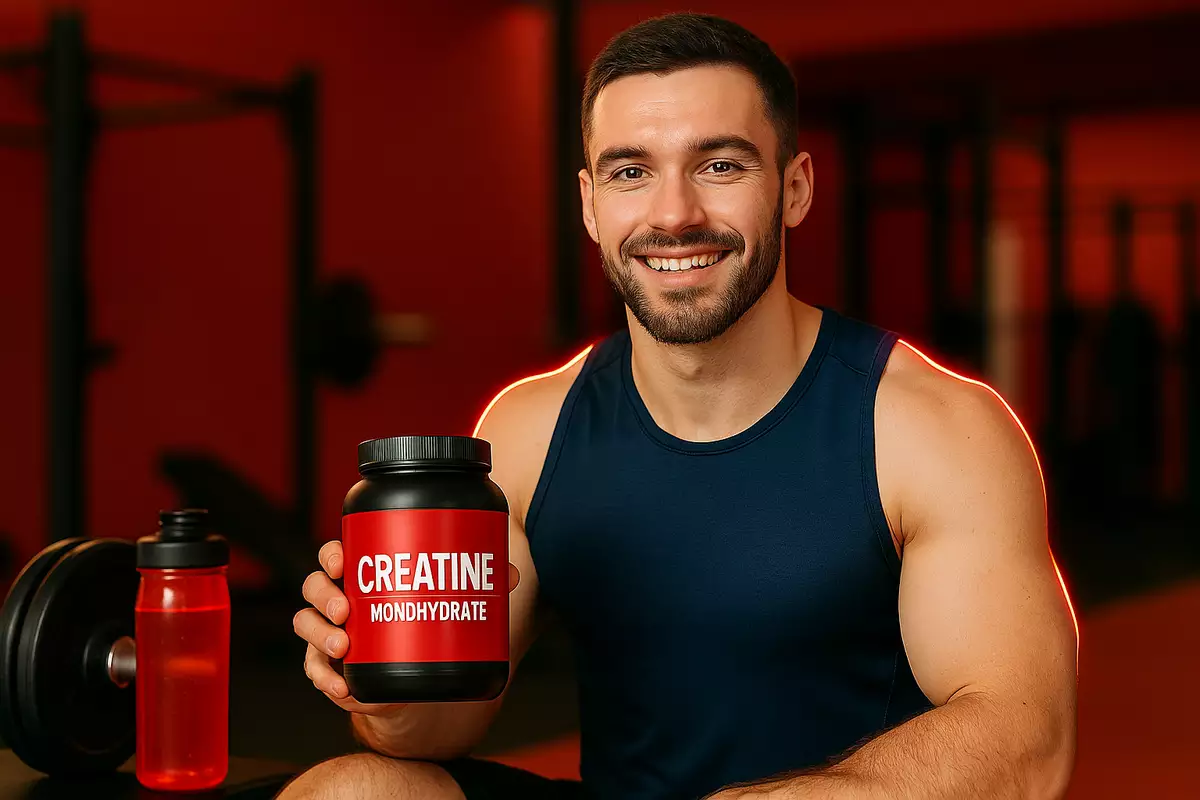

Creatine monohydrate is one of the most researched supplements in fitness.
Many lifters believe it boosts testosterone and fuels rapid muscle growth.
But is that really true, or just another gym myth?
As a fitness trainer with years of real-world experience, I’ll break down the science and share my personal results to finally answer: Does creatine actually increase testosterone?
Table of contents
Does Creatine Raise Testosterone?
Let’s get this out of the way—creatine monohydrate does not directly increase testosterone levels.
I’ve used creatine on and off for years. While it’s one of the most effective and well-researched supplements for strength and muscle gain, my blood tests during multiple cycles consistently showed normal testosterone levels.
What you do feel is increased energy, strength, and faster recovery. Many people mistake this for a testosterone boost, but it’s actually just improved performance from creatine’s role in energy production.
What Creatine Monohydrate Actually Does in the Body

Creatine’s main job is to help your muscles produce more ATP (adenosine triphosphate)—the energy your body uses during high-intensity activities.
With better ATP availability, you can lift heavier, do more reps, and recover faster between sets. This leads to progressive overload, muscle growth, and better performance—not because of higher testosterone, but because your muscles have more fuel.
If you’re curious about how creatine compares to other supplements, check out BCAA vs Creatine: Strength & Size Benefits and Creatine vs Pre-Workout: Which Is Better for You?.

Tell us your goal & discover your perfect stack — backed by science, no BS.
Free. Takes 2 Min | No sign-up needed
Scientific Studies on Creatine and Testosterone
Research consistently shows little to no direct hormonal changes from creatine supplementation.
For example, studies tracking testosterone levels over several weeks found no significant increase compared to placebo groups. I’ve personally mirrored these findings.
During a 12-week strength block while supplementing with creatine, my squat jumped from 160 kg to 175 kg. Despite this strength boost, my testosterone levels stayed exactly the same.
If you want to know how to use creatine properly, read the Daily Creatine Monohydrate Use Guide to avoid common mistakes.
Indirect Ways Creatine May Support Hormonal Health

While creatine doesn’t spike testosterone, it can indirectly support your hormonal balance by improving training quality.
Stronger lifts and better recovery allow you to train harder and gain more lean mass. This naturally supports a healthier hormonal environment.
I’ve seen this with my client Daniel from Canada. He gained noticeable muscle mass in 6 months and felt more confident and energized. However, his lab tests confirmed that testosterone remained stable.
For endurance athletes, creatine also helps with overall performance. Learn more in Creatine for Runners and Endurance Athletes.
Best Practices for Taking Creatine (Trainer’s Tips)
If you’re considering creatine:
- Dosage: Start with a loading phase of 20g/day for 5 days (optional), then maintain with 5g/day.
- Timing: Anytime works, but post-workout with carbs and protein may help absorption.
- Consistency: Daily use is key—it builds up in your muscles over time.
One of my newer trainees, Liam from the UK, was stuck on his bench press and hoped creatine would “fix” his plateau. After explaining the truth, we worked on progressive overload while adding 5g of creatine daily.
Within 10 weeks, he added 7 kg to his bench—no testosterone boost, just better performance.
You can also read Creatine with Protein Shake or Separate? to learn the best way to take it and check what happens if you stop in What Happens When You Stop Taking Creatine?.
For advanced users, combining it with other supplements like beta-alanine and caffeine can further enhance results. See the Beta-Alanine, Creatine & Caffeine Stack Guide.
Final Thoughts – What You Can Really Expect

Creatine is one of the safest and most effective supplements for strength and muscle growth.
But let’s keep expectations realistic—it won’t act like a testosterone booster. From my own years of bodybuilding and coaching, creatine’s magic lies in power, recovery, and consistent training gains.
Use it wisely, pair it with proper nutrition and a solid workout program, and you’ll see real, lasting results—without relying on hormonal myths.

Leave a Reply