

If you’ve ever wondered exactly how much caffeine you need to burn fat and stay laser‑focused, you’re not just curious—you’re ready for a strategy that actually works.
As a certified fitness coach, I get this question almost daily. And the real answer isn’t “drink more coffee” or “grab the strongest pre‑workout you can find.”
It’s a precise mix of body‑weight‑based dosing, smart timing, and knowing how your own body responds.
✨ Optimal Caffeine Dosage for Fat Burning & Mental Focus:
- For fat burning, use 3–6 mg of caffeine per kg of body weight.
- For mental focus and productivity, aim for 1–3 mg/kg.
- Take it 30–60 minutes before training or focused work.
Body Weight (kg) | Fat Burning (4 mg/kg) | Focus & Energy (2 mg/kg) |
|---|---|---|
50 kg | 200 mg | 100 mg |
60 kg | 240 mg | 120 mg |
70 kg | 280 mg | 140 mg |
80 kg | 320 mg | 160 mg |
90 kg | 360 mg | 180 mg |
100 kg | 400 mg | 200 mg |
Start at the lower end if you’re caffeine‑sensitive or new to pre‑workout supplementation. You can always adjust upward.
Now, let’s break everything down clearly so you can get the absolute most from caffeine — with maximum fat‑burning and mental sharpness, and none of the jitters or energy crash.
Table of contents
- How Caffeine Supports Fat Burning
- Caffeine for Mental Focus & Workout Drive
- Best Time to Take Caffeine for Fat Loss & Performance
- My Personal Caffeine Sources (Tablets, Coffee, Pre‑Workout)
- How to Cycle Caffeine & Reset Tolerance (Every 6–8 Weeks)
- My Favorite Fat‑Burning Stack: Caffeine + L‑Carnitine + Fasted Cardio
- Side Effects & How to Avoid Jitters and Crashes
- Coach’s Final Takeaway
- Frequently Asked Questions About Caffeine Dosage
How Caffeine Supports Fat Burning

Caffeine isn’t just a pick-me-up — it actively supports fat loss by:
- Boosting thermogenesis (your body’s heat production)
- Increasing fat oxidation
- Triggering adrenaline, which helps free stored fat for energy
David’s 4.8 kg Fat Loss: Caffeine Before Fasted Cardio
David, a client from the UK, was struggling to lose stubborn belly fat despite doing cardio.
We added 300 mg of caffeine (tablet form) before his morning fasted cardio four times a week.
Within 6 weeks, he dropped 4.8 kg, and told me it was the first time he felt truly energized during workouts.
I’ve used the same approach on myself many times — especially during cutting phases. A moderate caffeine dose pre-cardio always helps me push harder, even in a fasted state.
⚡ Caffeine crashes hitting hard?
Timing and cycling fix the energy rollercoaster completely.
Maximize Energy Without Crashing FreeCaffeine for Mental Focus & Workout Drive
This is where caffeine really shines. If you’re struggling to stay focused during workouts, or even work tasks, caffeine can:
- Improve reaction time
- Enhance motivation
- Reduce perceived effort during training
Natalia’s 8 kg Transformation: 150 mg Pre‑Workout Focus
Natalia, a mom of two from Spain, had trouble focusing during at-home sessions.
We started her on 150 mg from half a scoop of pre-workout. Within days, she was more consistent — and in 3 months, she lost 8 kg.
She told me: “It made the workout feel like something I wanted to do, not something I had to do.”
Best Time to Take Caffeine for Fat Loss & Performance
I recommend taking caffeine 30 to 60 minutes before training.
- For cardio or weight training: Aim for the 45-minute mark.
- For fasted cardio: Caffeine + empty stomach = powerful fat mobilization.
- For mental focus: Morning or early afternoon works best. Avoid late doses that mess with your sleep.
To get the full breakdown, including how it varies depending on your training style, check out this guide: Best Time to Take Caffeine Before a Workout.
I typically take caffeine in the morning or early afternoon, depending on my training schedule. Anything past 4 PM? Not worth the potential sleep disruption.
You just read everything about caffeine. Now let’s make it work for YOUR body.
I’ll design your personalized supplement protocol — exact timing, dosage, and stacking for your specific goal. No templates. No bots. A real coach who reads your answers.
Pay what you want after you receive it. No risk. No pressure.
My Personal Caffeine Sources (Tablets, Coffee, Pre‑Workout)
Not all caffeine sources are equal. Here’s how I guide my clients (and what I use myself):
- Caffeine Tablets: Best for fasted cardio. No calories. No surprises.
- Pre-Workouts: Great for intense sessions, but watch the stim levels.
- Black Coffee: My go-to for coaching, writing, and mild mental boost.
🚫 Avoid sugary energy drinks — they spike insulin and crash your energy.
How to Cycle Caffeine & Reset Tolerance (Every 6–8 Weeks)
The 8‑Week Cycle
- Weeks 1–8: Use your ideal dose (3–6 mg/kg for fat loss, 1–3 mg/kg for focus) on training days. Off days? Same dose or 30–50% less—both work.
- Week 9 (Reset Phase): 7–10 days off caffeine. Choose your path:
- Fast reset: Stop all caffeine at once. Effective, but expect 3–5 days of withdrawal.
- Gentle taper: Halve your dose every 2 days until zero, then hold 5–7 days. (Example: 400 → 200 → 100 → 50 → 0 mg)
Managing Withdrawal
Common symptoms: headache, brain fog, irritability, low energy.
- Hydrate with electrolytes – 2.5‑3 L water + a pinch of salt often kills the headache.
- Rhodiola rosea (200‑300 mg) in the AM – Fights mental fatigue without being a stimulant.
- Replace the ritual – Decaf coffee or chicory drinks satisfy the habit.
Should You Cycle Caffeine?
Yes. After about 6–8 weeks of daily use, your body builds tolerance. I usually recommend a 7–10 day break every 2 months to reset your sensitivity.
This makes a huge difference in both fat-burning efficiency and mental sharpness.
My Favorite Fat‑Burning Stack: Caffeine + L‑Carnitine + Fasted Cardio
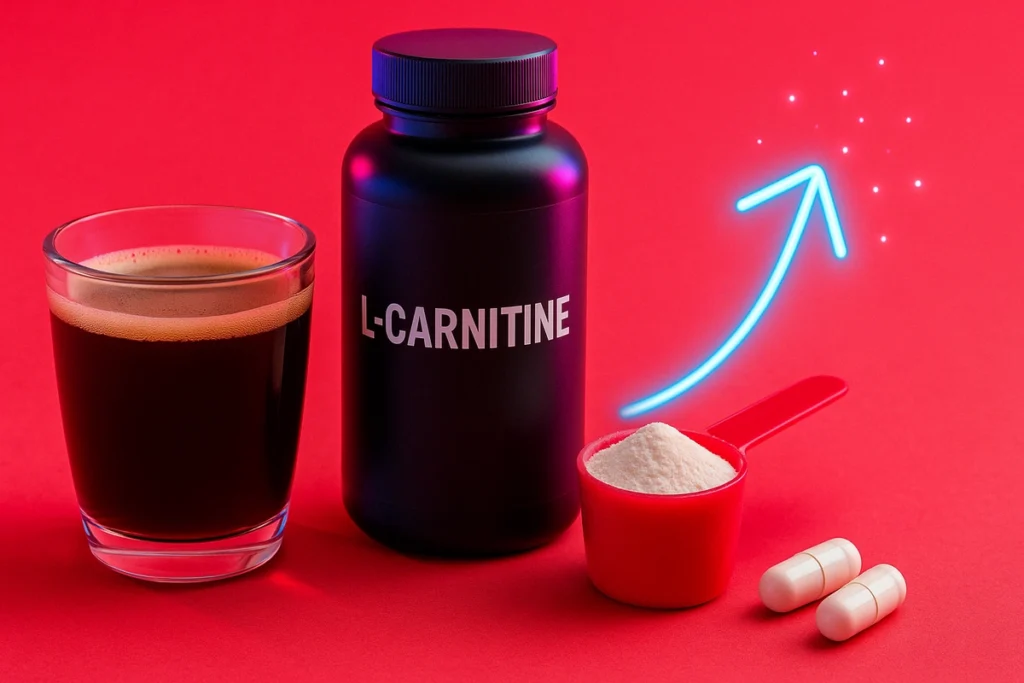
When I need to get leaner without losing training intensity, this is the trio I rely on—and it’s the same stack I’ve dialled in with dozens of clients during cutting phases and photoshoot preps.
Why the three work together
- Caffeine (3–6 mg/kg) mobilises stored fat by increasing adrenaline and noradrenaline. Taken on an empty stomach, it enhances lipolysis exactly when your body is most primed to burn fat.
- L‑Carnitine helps shuttle those released fatty acids into the mitochondria, where they’re burned for energy. While the research is mixed, many athletes (myself included) report better fat utilisation and less perceived fatigue when fasted cardio follows L‑carnitine intake.
- Fasted cardio keeps insulin low, creating an environment where fatty acid oxidation dominates. The caffeine ensures you have the drive to push hard, and the L‑carnitine may improve the efficiency of that fat‑burning engine.
How to run it (step by step)
- 30–45 minutes pre‑cardio: Take your caffeine dose (tablets or black coffee) with 1–2 g of L‑carnitine (liquid or capsule). No calories, no spike in insulin.
- Timing: Do this first thing in the morning after waking, or at least 3 hours after your last meal.
- Cardio style: Steady‑state at moderate intensity (think brisk walking on an incline, light cycling, or elliptical) for 30–45 minutes. The goal is fat oxidation, not all‑out exhaustion.
- Frequency: 3–4 times a week on non‑consecutive days while in a calorie deficit. The rest of the week, train normally with adequate fuel.
- Hydrate: Caffeine + fasting can dehydrate faster. Sip 500‑750 mL of water with electrolytes before and during.
A quick reality check
This stack isn’t magic—it still works only within a proper calorie deficit and consistent training plan. L‑carnitine, in particular, isn’t a standalone fat burner; think of it as a potential “helper” that makes the fasted cardio window slightly more effective.
If you skip the L‑carnitine, caffeine + fasted cardio alone is already a powerful setup. But if you want to leave no stone unturned during a cut, the full trio has been a game‑changer for me and many clients.
Side Effects & How to Avoid Jitters and Crashes

Overdo caffeine and you’ll know it—racing heart, shaky hands, anxiety, and that brutal post‑high slump that kills focus. The goal is peak energy without the penalty.
5 Tips to Stay Safe and Energized
- Start low, build up gradually
If you’re new to caffeine or returning after a break, begin with 100 mg or less. Let tolerance develop naturally rather than forcing it. Small dose increments every 3‑4 days let you find your personal sweet spot without side effects. - Pair caffeine with L‑Theanine
L‑Theanine (100‑200 mg) smooths caffeine’s rough edges. It increases calming alpha brain waves while leaving alertness intact. This combo reduces jitters, improves focus quality, and minimises anxiety—especially helpful for sensitive users. - Hydrate, then hydrate some more
Caffeine is mildly diuretic. Dehydration amplifies headaches, rapid heartbeat, and brain fog. Aim for 2.5‑3 litres of water per day and consider adding electrolytes if you train hard. A simple pinch of sea salt can make a difference. - Cut off caffeine 6‑8 hours before bed
Caffeine has a half‑life of 5‑6 hours. A late dose fragments deep sleep, even if you don’t feel wired. Protect your sleep architecture and hormone regulation by making early afternoon your last call. - Swap coffee for green tea if you’re sensitive
Some people metabolise caffeine slowly and feel jittery at even modest doses. Green tea extract provides a milder, slower‑release option with added theanine and antioxidants. It’s a smart way to ease into stimulant use while still getting a fat‑burning and focus benefit.
By respecting these guardrails, you keep caffeine a clean performance tool—not a daily dependency with a side of panic.
Coach’s Final Takeaway
Caffeine is a fantastic tool — when used intentionally.
It can help you train harder, focus better, and burn more fat. But it’s not a magic bullet. You still need a smart plan, a clean diet, and consistent training.
And remember: the right dose isn’t “as much as possible.” It’s about finding your personal sweet spot — and using it wisely.
If you’ve been feeling stuck or low-energy lately, give structured caffeine use a try. Just be smart with it, and if you’re unsure, feel free to ask me in the comments — I’ll help you figure it out.
Frequently Asked Questions About Caffeine Dosage
For fat burning, aim for 3–6 mg of caffeine per kilogram of body weight. For a 70 kg (154 lb) person, that’s roughly 210–420 mg, ideally taken 30–60 minutes before exercise. Start at the lower end if you’re new to caffeine, and increase only if you tolerate it well.
A lower range works best for focus and mental sharpness: 1–3 mg per kg of body weight. That’s about 70–210 mg for a 70 kg person. This amount improves concentration and motivation without the jitters that can come from higher doses. Pairing caffeine with L-theanine (100–200 mg) can further smooth out the focus.
Take your caffeine 30 to 60 minutes before training. For fasted cardio or morning sessions, aim for the 45‑minute mark. This timing allows blood levels to peak when you’re warming up, supporting both fat mobilisation and workout intensity. Avoid caffeine after 4 PM to protect your sleep quality.
Yes, many athletes stack caffeine + L‑carnitine before fasted cardio to enhance fat mobilisation and energy. However, the evidence for L‑carnitine on its own is mixed. Caffeine remains the more reliable fat‑oxidation booster in the stack, so only add L‑carnitine if it fits your budget and you’re already consistent with diet and training.
After 6–8 weeks of daily use, take a 7–10 day break to reset your sensitivity. To minimise withdrawal symptoms (like headaches or fatigue), you can taper down by reducing your dose by half every 2 days instead of stopping abruptly. During the break, your body will respond more strongly when you reintroduce caffeine.
Leave a Reply