


Eating clean doesn’t mean living on chicken and broccoli or saying goodbye to foods you love.
The real secret is flexible structure: build most meals around whole, nutrient-dense foods — and intentionally leave space for enjoyment.
When you do that, clean eating feels sustainable, not restrictive. As a coach, I’ve seen this approach work again and again, for myself and for my clients.
Table of contents
- What “Eating Clean” Really Means (and What It Doesn’t)
- Build a Plate You Enjoy (Not Just “Healthy”)
- The 80/20 Flex Rule
- Make Clean Eating Convenient
- Eat Out — Without Blowing Your Plan
- Mindset Shifts That Change Everything
- Simple Daily Habit Checklist
- When Cravings Hit — Practical Tools
- Sample Day of “Clean — Not Restrictive” Eating
- Final Takeaway
- FAQ
What “Eating Clean” Really Means (and What It Doesn’t)
When I say eat clean, I’m talking about choosing foods that are close to their natural form most of the time: lean protein, fruits and vegetables, whole grains, legumes, nuts, seeds, and healthy fats.
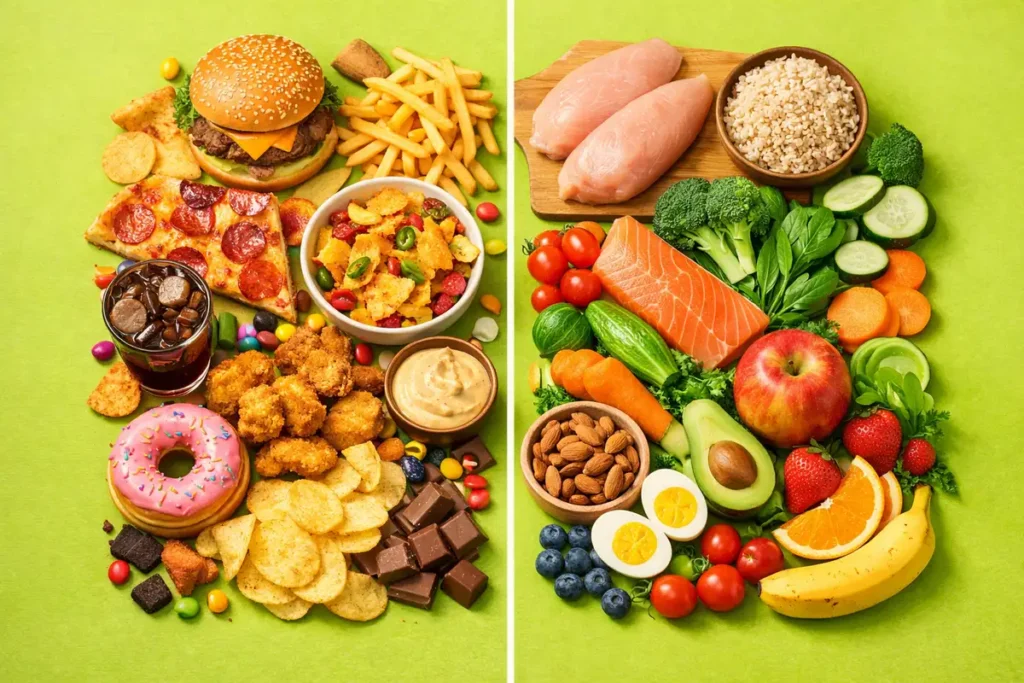
It doesn’t mean:
- Cutting out entire food groups
- Labeling foods “good vs. bad”
- Punishing yourself after a meal
Early in my journey, I tried the rigid version. I avoided bread, desserts, and most restaurants.
I got leaner — but I also thought about food constantly. Weekends turned into binges.
That was my wake-up call: strict rules backfire. Flexibility wins.
Build a Plate You Enjoy (Not Just “Healthy”)
Clean eating becomes effortless when your meals are satisfying.

Use this simple plate formula:
- Protein: chicken, eggs, fish, Greek yogurt, tofu
- Fiber: vegetables, beans, whole grains
- Healthy fats: olive oil, avocado, nuts
- Smart carbs: potatoes, rice, oats, fruit
Then make it taste great. Herbs, spices, salsas, yogurt sauces, and marinades add flavor without turning meals into calorie bombs.
When meals keep you full, cravings lose their power.
My go-to dinner many nights is salmon, potatoes, and a big salad with olive oil — clean, delicious, and satisfying.
The 80/20 Flex Rule

Here’s the mindset shift that changed everything for me — and for clients:
👉 80% nutrient-dense, whole foods
👉 20% planned enjoyment foods
No guilt. No “starting over Monday.”
Lukas, a client from Germany, loved pizza. Instead of banning it, we added one portioned pizza night each week.
Six months later, he was down 14 kg — without burnout and without obsession around food.
Restriction causes rebound. Flexibility builds consistency.
Make Clean Eating Convenient
Most people don’t struggle with motivation — they struggle with logistics.

These habits make clean eating automatic:
- Batch-cook proteins once per week
- Chop vegetables and store them ready-to-use
- Keep grab-and-go options (Greek yogurt, fruit, nuts, eggs)
- Build a simple grocery list and repeat it weekly
One of my busy clients, Sophie from Canada, cut her takeout meals by half just by prepping chicken and vegetables on Sundays.
Convenience is a powerful nutrition strategy.
Eat Out — Without Blowing Your Plan
You don’t have to avoid restaurants to eat clean.
Use these simple strategies:
- Order protein first (grilled meat, fish, or lean options)
- Swap fries for salad or veggies when it makes sense
- Share dessert or choose a smaller portion
- Stop eating when you’re satisfied — not stuffed
My client Marina from Brazil stopped skipping family dinners once she learned this.
She enjoyed eating out, stayed consistent, and reduced her stress around food — while still losing body fat.
Mindset Shifts That Change Everything
Your thoughts about food shape your behavior.
Shift from:
- “I can’t have this.” → “I don’t need this right now.”
- “I failed.” → “I had one off meal — back on track next one.”
- “Food is the enemy.” → “Food fuels my goals.”
When clients adopt this mindset, cravings lose their emotional grip.
Eating clean becomes a choice — not a punishment.
Simple Daily Habit Checklist
Use this quick checklist to stay consistent:
- Drink enough water
- Include protein in every meal
- Eat at least 1–2 servings of fruits and vegetables
- Move your body
- Allow a small treat if you want one
Small wins add up faster than extreme efforts.
When Cravings Hit — Practical Tools
Cravings happen — even to coaches.
Here’s what I teach:
- Pause for 10 minutes. Ask: Am I tired? stressed? bored?
- Eat protein + fiber first (yogurt, fruit, eggs, vegetables).
- If you still want it, have a portion — mindfully — and move on.
I’ve found that most cravings fade once hunger and emotions calm down.
And if you truly enjoy something occasionally, it fits within the 80/20 rule.
Sample Day of “Clean — Not Restrictive” Eating

- Breakfast: Oats with Greek yogurt, berries, and honey
- Snack: Apple + handful of nuts
- Lunch ideas: Chicken stir-fry with vegetables and rice
- Snack: Protein yogurt or cottage cheese
- Dinner: Salmon, potatoes, big salad
- Treat (optional): A small dessert or latte
Balanced. Satisfying. No guilt.
Final Takeaway
Eating clean without feeling restricted comes down to one principle:
👉 Build structure — but stay flexible.
You don’t need detoxes, extreme rules, or food fear.
Focus on habits, satiety, consistency, and a positive relationship with food.
Most people first notice better energy, fewer cravings, improved digestion, and better sleep — like Emre from Turkey, who slept better within two weeks before the scale even changed.
And remember: health includes your mindset.
If food rules create stress and isolation, they’re not truly “healthy.”
Progress — not perfection — creates results that last.
FAQ
Yes. Include small portions intentionally within the 80/20 framework.
Not necessarily. Start with balanced plates, portion awareness, and consistency.
Full cheat days often lead to overeating. Planned treats work far better.
Focus on protein, manage portions, and keep your next meals simple.
Most people feel improvements in energy, mood, and digestion in 2–4 weeks — body composition changes follow with consistency.

Leave a Reply