


You’re being played. The supplement industry has convinced you that a $40 tub of flavored powder is the secret to muscle growth. It’s not. The most powerful, scientifically-proven BCAAs—leucine, isoleucine, and valine—don’t come from a factory. They come from real food.
For years, I watched my coaching clients waste money on BCAA supplements with mediocre results. The turning point came when we scrapped the powders and switched to a strategic, food-first approach.
The difference was undeniable: faster recovery, sustained energy without the crash, and lean mass gains that actually lasted.
The truth is, your kitchen is the most anabolic tool you own. And once you see the 25+ proven natural BCAA sources below—with exact grams per serving—you’ll have the ammunition to ditch the supplements forever and build a stronger, healthier body on your own terms.
Table of contents
25+ Proven Natural BCAA Foods: Exact Grams to Beat Any Powder
Looking for a clear bcaa food list to guide your daily meals? Below is your go-to reference for the most bcaa rich foods from both animal and plant sources.
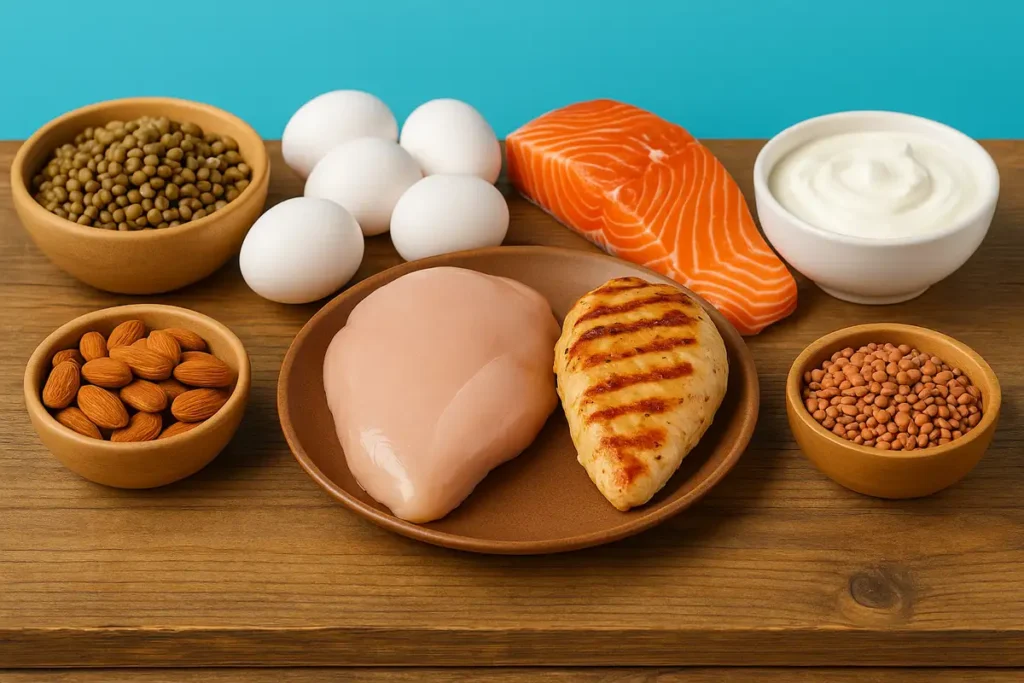
All values are approximate per 100g unless noted otherwise.
Natural BCAA Food | BCAA (grams per 100g) |
|---|---|
Lean beef (top round, sirloin) | 6.8g |
Chicken breast | 6.5g |
Turkey breast | 6.4g |
Tuna (canned in water) | 6.2g |
Pork loin | 6.0g |
Salmon (wild) | 5.9g |
Beef (regular ground, 80/20) | 5.5g |
Sardines | 5.3g |
Mackerel | 5.1g |
Eggs (whole, 2 large = ~100g) | 4.5g |
Greek yogurt (plain, non-fat) | 3.5g |
Cottage cheese (low-fat) | 3.2g |
Ricotta cheese | 3.0g |
Tofu (firm) | 2.8g |
Chickpeas (cooked) | 2.6g |
Lentils (cooked) | 2.5g |
Edamame (cooked) | 2.5g |
Milk (whole, 1 cup = 244g → ~2.0g per 100g) | 2.0g |
Quinoa (cooked) | 1.8g |
Pumpkin seeds (pepitas) | 1.7g |
Black beans (cooked) | 1.6g |
Almonds | 1.4g |
Sunflower seeds | 1.3g |
Walnuts | 1.2g |
Brown rice (cooked) | 1.1g |
Oats (cooked) | 1.0g |
Peanuts | 1.0g |
When I’m cutting, my go-to combo is eggs in the morning and grilled chicken for lunch. It keeps me full, maintains muscle, and provides steady energy without needing artificial BCAA drinks.

Animal-Based Sources
- Chicken breast
- Lean beef
- Eggs
- Tuna & salmon
- Greek yogurt
- Cottage cheese
- Milk (whey & casein)
Plant-Based Sources
- Lentils
- Chickpeas
- Quinoa
- Pumpkin seeds
- Almonds
- Soy (tofu, edamame)
How to Combine Foods for Maximum BCAA Intake
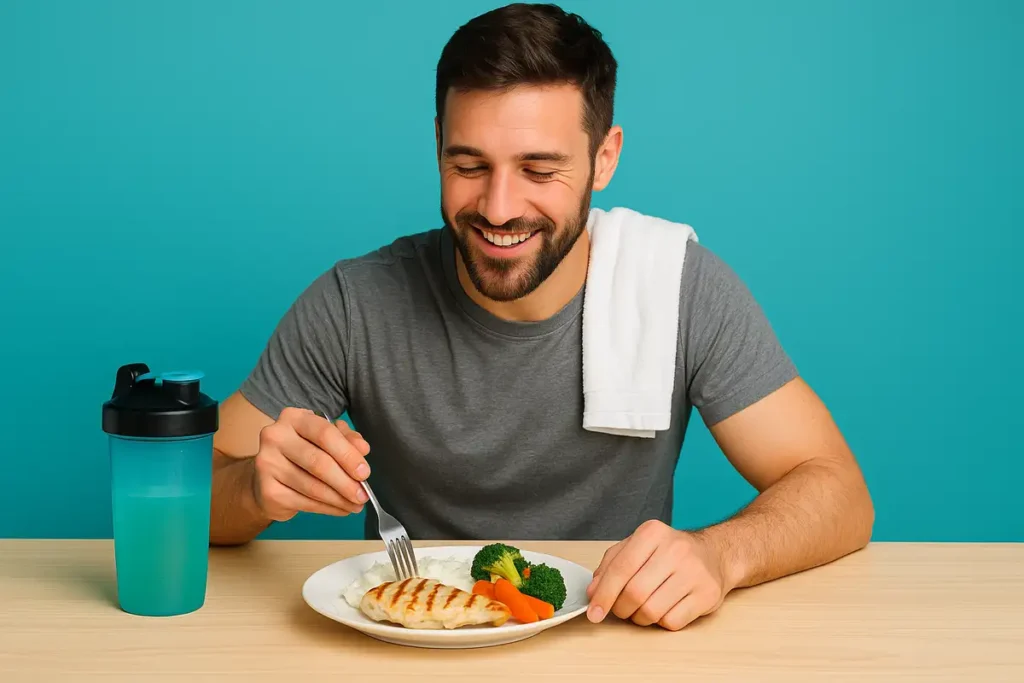
Your body thrives on balance. While animal proteins provide more concentrated BCAAs, pairing them with plant sources gives you a more complete amino acid spectrum and better micronutrient support.
Here’s how you can structure your day for optimal BCAA intake:
- Breakfast: 3 eggs + oatmeal topped with almonds or chia seeds
- Midday snack: Greek yogurt with honey and pumpkin seeds
- Lunch: Grilled chicken breast with quinoa and mixed vegetables
- Post-workout: Tuna or whey protein blended with banana and water
- Dinner: Salmon with lentils and olive oil
- Before bed: Cottage cheese with a few walnuts
This balance keeps your amino acid levels stable all day, supporting constant muscle recovery. It also maintains a positive nitrogen balance, which is crucial for muscle growth.
In my experience, clients who focus on diverse BCAA-rich meals feel more satisfied, experience fewer cravings, and recover faster between workouts.
When to Eat BCAA-Rich Foods

Timing is key. BCAAs work best when your body actually needs them — around your workouts and during recovery.
- Before training: Choose light proteins that digest quickly, like eggs, Greek yogurt, or a whey smoothie. This gives your muscles readily available amino acids during exercise.
- After training: Go for heavier, complete proteins such as chicken breast, tuna, or lean beef. They help rebuild damaged muscle fibers and replenish glycogen stores.
- Before bed: Cottage cheese or Greek yogurt works perfectly to keep a slow release of amino acids overnight, reducing muscle breakdown while you sleep.
I’ve seen clients like Maya from Canada improve their recovery dramatically by making these timing adjustments. She used to wake up sore and tired after leg days. Once she added a post-workout tuna meal and a bedtime yogurt snack, her soreness reduced within days.
For more insight into how BCAAs support recovery and your immune system, check out my guide on BCAA Immune System Recovery Benefits.
Why BCAAs Matter Naturally

If you’ve been training seriously, you’ve probably heard of BCAAs — branched-chain amino acids (leucine, isoleucine, and valine). These three amino acids play a massive role in muscle recovery, protein synthesis, and even mental performance during workouts.
In simple terms, they help your muscles rebuild and protect you from excessive breakdown, especially during intense training or dieting phases. However, many lifters and athletes fall into the trap of thinking they need BCAA supplements to see results. That’s not true.
From my experience as a fitness trainer and athlete, you can get everything your body needs for optimal performance from whole foods — and the results often feel cleaner and more sustainable.
Whole foods contain not only BCAAs but also other essential amino acids, vitamins, and minerals that support overall health, digestion, and hormone balance. They give your body the “full package,” not just an isolated ingredient.
If you still want to understand how supplements compare, I’ve written a full breakdown here: BCAA Supplements — Benefits, Timing, and Safety.
Who Benefits Most from Natural BCAAs
Natural BCAA intake works perfectly for most lifters, but it’s especially beneficial if you:

- Follow a whole-food, clean-eating lifestyle.
- Prefer less processed nutrition and fewer artificial additives.
- Have digestive sensitivities or don’t tolerate supplement sweeteners.
- Train regularly and eat sufficient protein (at least 1.6g/kg).
If you’re diabetic or managing blood sugar, you may find this helpful: BCAA for Diabetics — Safety & Benefits Guide. Whole foods provide a steadier amino acid release and are easier to control for blood glucose balance.
Real-Life Tip — Hossein’s Experience

When I started bodybuilding, I believed supplements were the magic answer. I drank BCAA powders every day, thinking it was the secret to faster growth. But over time, I realized they didn’t make a big difference.
Once I replaced supplements with real food — eggs in the morning, yogurt mid-day, chicken or beef post-workout — everything improved. My muscles felt fuller, digestion was smoother, and my energy stayed consistent.
One of my clients, Luca from Italy, had a similar experience. He was using flavored BCAA powders daily but still felt exhausted after workouts. I suggested replacing them with lean beef, lentils, and plenty of water. Within two weeks, his energy levels rose and his recovery felt easier.
Another client, Maya, struggled with post-workout cramps for months. After we introduced natural sources like quinoa, eggs, and bananas, her cramps disappeared. You can learn more about this in my full guide on BCAAs and Muscle Cramps.
These stories prove a simple truth — your body performs best when you fuel it naturally.
Frequently Asked Questions
Lean beef, chicken breast, turkey, tuna, salmon, eggs, Greek yogurt, cottage cheese, lentils, chickpeas, tofu, and quinoa. These are the top natural BCAA foods.
Lean beef has the most BCAAs — about 6.8g per 100g. Chicken breast and tuna are close behind.
Yes. If you eat 100–150g of quality protein daily from natural BCAA foods, you’re already getting more BCAAs than most supplements provide.
Lentils, chickpeas, tofu, edamame, quinoa, Greek yogurt, cottage cheese, and eggs (if lacto-ovo). Plant-based eaters can easily meet their needs by combining these foods.
Usually no. Whole foods give you BCAAs plus other amino acids, vitamins, and minerals that powders lack. Supplements are only useful for convenience when you can’t eat real food.
Lean beef (6.8g), chicken breast (6.5g), turkey breast (6.4g), tuna (6.2g), and salmon (5.9g) per 100g.
Yes for most people. Natural BCAA foods provide steady absorption, better nutrition, no artificial ingredients, and better long-term results.
Breakfast: Eggs or Greek yogurt.
Lunch: Chicken breast or tuna.
Dinner: Lean beef or salmon.
Snack: Cottage cheese or almonds
Absolutely. Tofu, lentils, chickpeas, quinoa, and edamame are excellent plant-based BCAA sources. Just eat a variety throughout the day.
Foods provide BCAAs naturally along with other nutrients. Supplements are isolated, processed, and often contain sweeteners or additives. Food is almost always the better choice.
Not really. Most BCAA powders are isolated and processed. Some brands claim “fermented” or “whole food-based” BCAAs, but these are still supplements. The most natural BCAA source is always real food — eggs, chicken, beef, fish, lentils, and dairy.
Final Thought
Supplements can be helpful tools, but they’ll never replace real food. Whole, natural meals provide not just BCAAs — they offer balance, satiety, and the kind of recovery your body was built for.
As a coach, I’ve seen clients gain more strength, maintain leaner physiques, and recover faster just by improving their food quality. It’s not about eating more — it’s about eating smarter.
So before you reach for another scoop of powder, reach for real fuel: eggs, chicken, fish, or lentils. Trust me, your muscles — and your long-term health — will thank you for it.
Leave a Reply