


BCAAs can be highly effective for preserving muscle during intermittent fasting, but only if you’re training hard in a fasted state.
They’re not a universal must‑have; whether they’re right for you depends entirely on your goals.
I learned this firsthand. Sipping BCAAs during my own fasted heavy sessions helped me hold onto strength and bounce back faster between workouts — without the calorie load that kills a fast.
That experience, plus years of coaching athletes through it, is exactly what I’m laying out here.
✅ Key Takeaways:
- For muscle preservation: BCAAs can make a real difference — especially during intense fasted training.
- For pure fasting: They technically break a fast, but rarely hurt fat loss results.
- For dosage: 5–10 g around workouts; avoid sipping all day.
When you’re pushing through demanding training with no food, BCAAs deliver the muscle‑sparing signal you need — without dragging you out of the calorie deficit that’s driving your results.
🚀 Let’s unpack exactly how and when to use them.
Table of contents
- Do BCAAs Break a Fast? Here’s What Happens
- Should You Take BCAAs While Fasting?
- How Much BCAAs to Take While Fasting (Dosage & Timing)
- What Your Body Goes Through During Intermittent Fasting
- How BCAAs Help Protect Muscle While You Fast
- BCAAs vs. EAAs During Fasting: Which One Should You Choose?
- Real Coaching Experience: What I’ve Seen With BCAAs and Fasting
- Final Verdict: Are BCAAs Right for Your Intermittent Fasting Plan?
- FAQs About BCAAs and Intermittent Fasting
Do BCAAs Break a Fast? Here’s What Happens
Technically, yes — BCAAs break a strict fast because they trigger a small insulin response. However, for fat loss and muscle preservation, this effect is minimal and almost never ruins your results.
The real question isn’t a simple yes or no — it’s what kind of fast are you running, and why?
When you’re fasting purely for autophagy or gut rest, even a tiny insulin spike can interrupt the process. BCAAs, especially leucine, are insulinogenic.

Tell us your goal & discover your perfect stack — backed by science, no BS.
Free. Takes 2 Min | No sign-up needed
The moment you sip them, your body shifts slightly out of its deepest fasted state. So if your top priority is maximizing autophagy or keeping a 100% water‑only fast, BCAAs are out.
But here’s the thing — most people using intermittent fasting aren’t after perfect autophagy. They’re after fat loss and body composition.
In that world, the small insulin bump from BCAAs doesn’t block fat burning in any meaningful way. Your overall calorie deficit is still doing the heavy lifting.
Does BCAA stop autophagy?
Yes, it can pause autophagy temporarily. The rise in insulin signals your body that nutrients are available, which puts the cellular clean‑up process on hold. Once the BCAAs clear, the fast resumes and autophagy can pick up again. It’s not a permanent off‑switch — more like a brief pause — but if strict autophagy is your #1 goal, it’s best to skip them.
Can I drink BCAAs during intermittent fasting and still lose weight?
Absolutely. I’ve seen it consistently with clients. Weight loss depends almost entirely on an energy deficit, and a 5–10 gram serving of BCAAs adds a negligible amount of calories.
The insulin response is small and temporary, not enough to derail fat-burning for the day. Where BCAAs really shine here is when you’re training fasted — they help protect muscle without pulling you out of the calorie‑burning zone that matters.
In my coaching, I break it down like this: if you’re fasting strictly for longevity and cellular health, treat BCAAs as a fast‑breaker. If you’re fasting to get leaner and train hard, they’re a muscle‑sparing tool that won’t hurt your progress. It’s all about matching the tool to your goal.
Should You Take BCAAs While Fasting?
The yes‑or‑no answer you get from most articles isn’t very useful, because the real answer depends entirely on how you train and why you’re fasting.

Over years of coaching, I’ve boiled it down to five clear scenarios. Find the one that matches your situation, and you’ll have your answer immediately.
1. You’re lifting heavy, training fasted, and want to protect every ounce of muscle
Verdict: Take BCAAs
When you’re already lean and pushing heavy weights in a fasted state, muscle breakdown is a real concern. BCAAs give you that leucine trigger to signal “protect muscle” without a meaningful calorie load. This is the exact scenario where I’ve seen the most consistent positive results.
A real‑world example: I worked with Lucas, a 32‑year‑old amateur bodybuilder prepping for a photoshoot. We added BCAAs during his fasted morning sessions, and even as his body fat dipped low, his muscle density held firm. For him, it was a non‑negotiable tool.
2. You’re doing intense fasted cardio (HIIT, sprint intervals, taxing conditioning)
Verdict: Strongly consider BCAAs
High‑intensity fasted cardio puts your body in a similar catabolic zone as heavy lifting. BCAAs can act as a muscle‑sparing buffer when the work is short, sharp, and demanding. If you’re already quite lean, the benefit is even greater.
I saw this with Nina, a 29‑year‑old competitor prepping for her first fitness show. Fasted HIIT sessions without BCAAs left her feeling drained and slow to recover. Once we introduced 8g of BCAAs before those sessions, her strength didn’t just hold — it improved. She described the difference as “finally being able to push hard without feeling like I’m eating my own muscle.”
3. You’re doing low‑intensity steady‑state cardio (LISS) while fasting
Verdict: Skip BCAAs
Walking, light cycling, or a casual incline treadmill walk is not a real threat to your muscle tissue. Your body can handle this easily using stored fat. Adding BCAAs here just adds unnecessary cost and technically breaks your fast for no meaningful performance or preservation benefit. Water, black coffee, and electrolytes are all you need.
4. You’re fasting mainly for weight loss, health benefits, and you don’t train intensely
Verdict: Skip BCAAs. Save your money.
If heavy training isn’t in the picture, the muscle‑sparing argument disappears. The tiny insulin bump from BCAAs won’t ruin fat loss, but it’s not doing enough for you to justify buying a tub. Focus on your total daily protein intake during your eating window, stay hydrated, and be consistent. That’s what actually moves the needle.
5. You’re fasting primarily for autophagy or longevity (strict fast)
Verdict: Avoid BCAAs entirely

Take this 2-minute assessment & get a science-backed training, nutrition & supplement roadmap built for YOUR body.
🔬 12,000+ personalized roadmaps generated
Autophagy is far more sensitive to nutrient intake than fat loss is. Even the small insulin response from BCAAs can briefly pause the cellular clean‑up process. If your absolute priority is deepening autophagy or following a strict medical/religious fast, BCAAs are a no‑go. In this case, they’re not a tool — they’re a minor interruption.
The Takeaway
I don’t see BCAAs as a blanket supplement for everyone who skips breakfast. I see them as a targeted strategy for people who are seriously training hard while fasted and have muscle to protect. If that’s not you, stay focused on your deficit, your training, and your whole‑food protein — and you’ll get fantastic results without them.
For more insights on muscle recovery during fasting, read BCAAs for Muscle Soreness.
How Much BCAAs to Take While Fasting (Dosage & Timing)
Getting the dose and timing right is what separates a useful tool from an expensive flavoured drink. Over the years, I’ve landed on a simple protocol that works for the vast majority of fasted trainees.
The Ideal BCAA Dose for Fasted Training
A standard serving of 5–10 grams of BCAAs is all you need. More isn’t better — it’s just more calories and a bigger insulin bump for no extra muscle-sparing return.
The key is what’s inside that scoop: make sure the formula delivers 2–3 grams of leucine per serving. Leucine is the primary trigger for muscle protein synthesis, and without enough of it, the other two (isoleucine and valine) can’t do their job fully.
Stick to unflavoured or very lightly flavoured powders with minimal additives. You’re aiming for muscle support, not a zero-calorie candy drink.
When to Take BCAAs During Your Fasting Window
Use BCAAs around your workout window only — not throughout the fasting day. The two most effective approaches are:
- Pre-workout: Sip 5–10 grams 15–20 minutes before you start training. This gets amino acids circulating just as your muscles are about to be placed under tension.
- Intra-workout: Sip the same dose throughout your session. This provides a steady trickle during the highest-risk window for muscle breakdown.
Either method works well. I often recommend intra-workout for longer sessions (60+ minutes) and pre-workout for shorter, more intense efforts. If you’re doing fasted cardio, the same rules apply — take it right before or during the session.
What to Avoid When Using BCAAs While Fasting
Don’t sip BCAAs all through your fasting window. I’ve seen people casually drink them from morning until their first meal like a flavoured water.
That’s a mistake. Constant sipping keeps insulin slightly elevated in repeated mini-spikes, which blunts many of the metabolic benefits you’re fasting for in the first place.
You end up in a grey, semi-fed state — not truly fasted, not truly fed, and missing the point entirely.
📌 Treat BCAAs like a targeted tool. In and around your training, they’re valuable. Outside that window, stick to water, black coffee, or plain electrolytes, and let the fast do its work.
What Your Body Goes Through During Intermittent Fasting
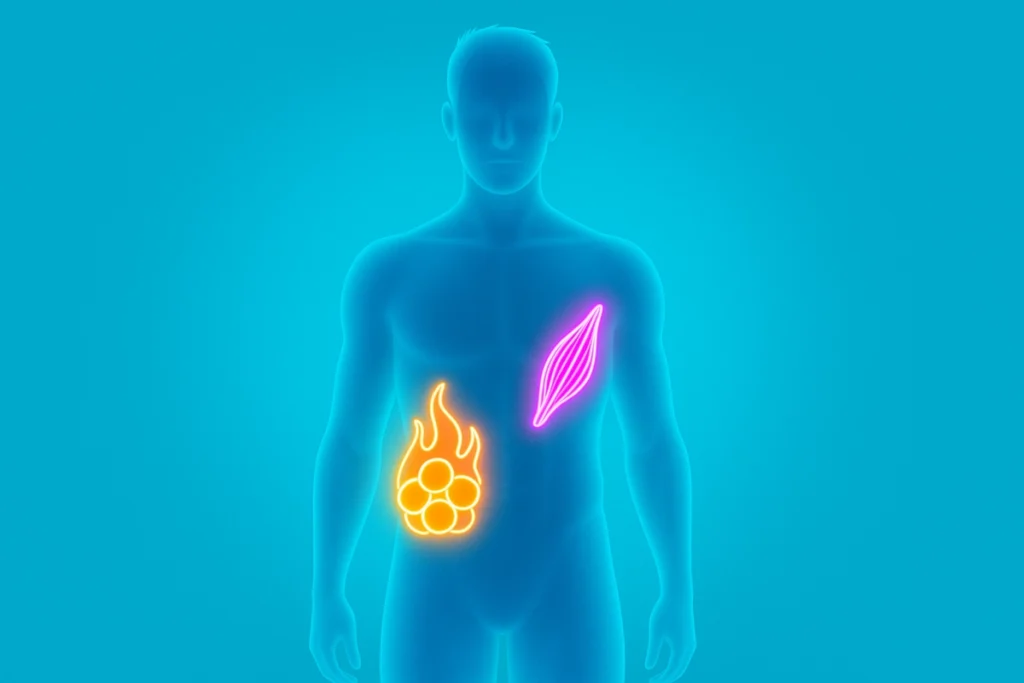
When you fast, your insulin levels drop significantly. This signals your body to switch from storing energy to mobilising it—primarily by tapping into stored body fat for fuel. For fat loss, this metabolic shift is exactly what you want.
But there’s a trade-off. In the absence of incoming nutrients, and especially during intense or prolonged training, your body can start breaking down muscle protein for energy. This process, called gluconeogenesis, converts amino acids into glucose to fuel your brain and working muscles.
This isn’t a major concern during casual fasting or light daily activity. However, if you’re pushing through heavy lifts, sprints, or HIIT sessions deep into your fasting window, the demand for quick energy rises sharply. Without a strategy, some of that energy may come from your hard-earned muscle tissue.
That’s where targeted amino acid support becomes worth considering—not to stop fat loss, but to help your body prioritise fat over muscle when fuel is low.
Want to see how BCAAs stack up against a more complete protein source? Read: BCAA vs Whey for Muscle Building.
How BCAAs Help Protect Muscle While You Fast
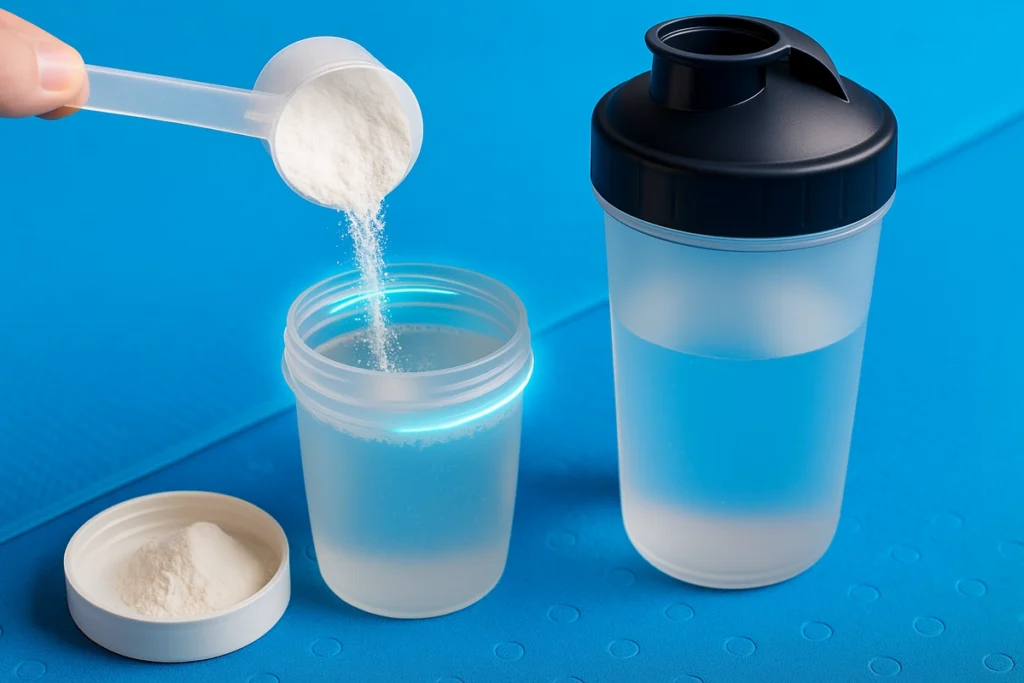
BCAAs, particularly leucine, stimulate muscle protein synthesis.
In simple terms, they tell your muscles, “Hey, stay strong even though we’re not eating right now!”
The benefit is that BCAAs provide this support without adding significant calories.
However:
- BCAAs may cause a slight insulin spike.
- Strictly speaking, this would “break” a pure fast.
- Practically, for body composition goals, it’s not a deal-breaker.
Want to go deeper into smart supplement strategies? You might also like EAAs vs BCAAs for Workouts.
In my coaching practice, I use BCAAs as a targeted tool — not a blanket recommendation for everyone.
BCAAs vs. EAAs During Fasting: Which One Should You Choose?
BCAAs give you the three key aminos — leucine, isoleucine, and valine. Leucine flips the switch for muscle protein synthesis. Calories and insulin impact are tiny. They’re a trigger, not the full building block set.
EAAs supply all nine essential amino acids your body can’t make. That means alongside the trigger, you get the full raw materials needed to actually build and repair muscle. The trade‑off is a mildly higher insulin response — still minimal, but enough to more clearly break a strict fast.
In practice:
- If you want the lightest possible touch and only need a muscle‑sparing signal during fasted training, stick with BCAAs.
- If you’re training hard, lean, and want maximum insurance against muscle loss (and don’t mind stepping a bit further from a pure fast), EAAs are the stronger choice.
For most people I coach, BCAAs hit the sweet spot. But if you’re highly lean or in a deep contest prep, EAAs are worth the extra.
Real Coaching Experience: What I’ve Seen With BCAAs and Fasting

From my personal experience and years of coaching, I can confidently say:
BCAAs are helpful, but they’re not mandatory for everyone.
If you’re training seriously and care about muscle preservation, BCAAs can make a real difference.
But if you’re fasting casually or just focusing on weight loss, you’re better off saving your money.
When clients ask me:
Coach, should I take BCAAs while fasting?
I usually answer:
“If you’re pushing hard and want to protect your muscle, BCAAs can help.
If you’re just casually fasting, skip them and stay consistent with your routine.”
Timing matters too. Learn more in my detailed guide on Best Time to Take BCAAs.
Final Verdict: Are BCAAs Right for Your Intermittent Fasting Plan?

BCAAs are a useful tool when used smartly — not a necessity for everyone.
If your goal is serious muscle retention during intense training while fasting, BCAAs make sense.
If you’re more focused on weight loss, hydration and electrolytes will usually be enough.
For even broader recovery strategies, you can also explore BCAA vs Glutamine for Muscle Recovery and Benefits of Taking BCAAs on Rest Days.
Stay focused, stay consistent, and always align your supplements with your real fitness goals.
FAQs About BCAAs and Intermittent Fasting
Technically, yes.
BCAAs can cause a slight insulin response, which technically interrupts a strict fast.
However, for most people focused on fat loss or muscle preservation, this minor spike doesn’t hurt results. It’s really about your goal: strict fasting for autophagy or practical fasting for body composition.
It depends on your goal.
If you’re just aiming for basic fat loss with low-intensity cardio, you don’t need BCAAs.
If you’re doing intense fasted cardio sessions and want to protect muscle mass — especially if you’re already lean — BCAAs can help.
A standard dose is around 5–10 grams of BCAAs during your workout or cardio session.
Make sure the formula has a good amount of leucine (around 2–3 grams per serving) for optimal muscle support.
It’s best to use BCAAs only around your workouts — not sipping them all day.
If you constantly sip BCAAs, you might blunt some of the fasting benefits and stay in a semi-fed state.
EAAs (essential amino acids) offer a broader range of muscle support compared to BCAAs.
If you want to explore the difference, check out my full comparison: EAAs vs BCAAs for Workout Recovery.

Leave a Reply