
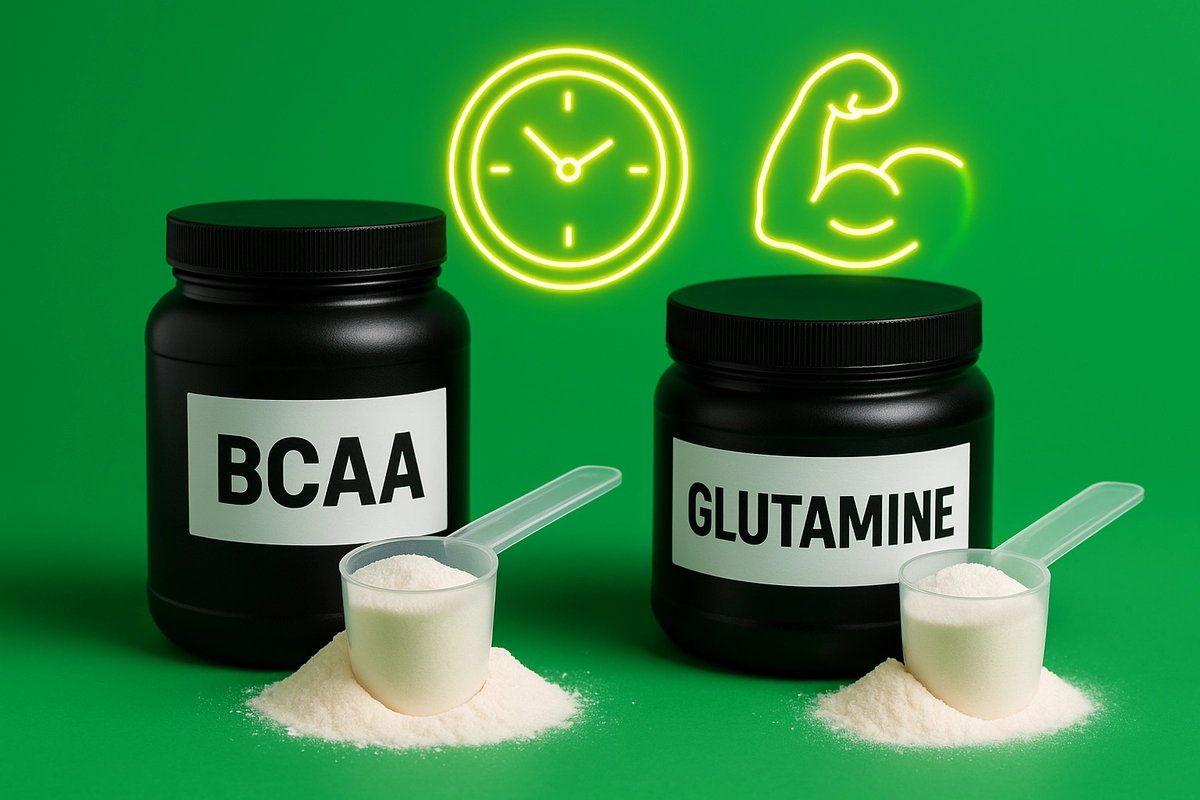

Most athletes I coach have the same two questions: “When should I take BCAA and glutamine?” and “Do I even need them?”
The short answer: it depends on your goal.
- If you’re cutting calories and worried about losing muscle, BCAAs help protect hard-earned tissue.
- If your training is brutal and recovery feels slow, glutamine can finally help you bounce back faster.
The table below gives you the exact timing — at a glance.
✨ BCAA & Glutamine Timing at a Glance
Time | BCAA | Glutamine |
|---|---|---|
Morning (fasted) | Yes, prevents breakdown | Optional |
Pre‑workout | Yes, for energy & protection | Not necessary |
Intra‑workout | Yes, especially long sessions | No |
Post‑workout | Only if meal lacks protein | Yes, 5 g |
Before bed | Yes, overnight muscle preservation | Yes, 5 g for recovery |
I’ve personally tested these timing strategies on myself and with clients over years of coaching. The results have been solid — but I’ll be honest: BCAA and glutamine aren’t for everyone.
In this guide, we’ll walk through exactly when, how, and whether you should use them, with real-world experience and no fluff.
Table of contents
- Best Time to Take BCAA & Glutamine
- Why Take BCAA? (Cutting & Performance Benefits)
- Why Take Glutamine? (Recovery & Immune Support)
- Do You Really Need BCAA & Glutamine? (Honest Answer)
- How to Stack BCAA & Glutamine for Maximum Recovery
- BCAA & Glutamine Side Effects
- Real-World Results: How BCAA & Glutamine Helped
- Final Verdict: Should You Take BCAA and Glutamine?
- Frequently Asked Questions
- Recommended Resources on BCAA & Glutamine
Best Time to Take BCAA & Glutamine
Timing your supplements correctly makes the difference between “maybe it helped” and actually feeling a noticeable benefit.
Below, I’ll break down exactly when to take each one, based on what’s worked for me and my clients — and what the science supports.
When to Take BCAA
BCAAs are most valuable when your body might otherwise break down muscle for fuel. Here’s how to time them:
- Morning (fasted): After a night without food, muscle breakdown can start to creep up. Taking 5–10 g of BCAAs first thing helps stop that process, especially during a cut.
- Pre‑workout: This is my preferred time. A serving 20–30 minutes before training ensures amino acids are already circulating in your bloodstream, so your muscles are protected from the first rep.
- Intra‑workout: For long or especially brutal sessions, sipping BCAAs during training helps maintain energy and spares muscle tissue. I’ll often do this when training fasted or pushing past 90 minutes.
- Post‑workout: Only necessary if your post‑workout meal won’t come for a while or lacks quality protein. Otherwise, whole food or whey does a better job at recovery.
- Before bed: A dose before sleep provides a steady stream of amino acids overnight, reducing muscle loss during your natural fasting window.
The key takeaway: pre- and intra‑workout BCAA intake usually beats post‑workout, because complete proteins handle recovery more effectively later.

Tell us your goal & discover your perfect stack — backed by science, no BS.
Free. Takes 2 Min | No sign-up needed
A 2012 study on BCAA supplementation and muscle recovery found that taking BCAA before and after intense resistance training can reduce muscle damage and speed up recovery.
When to Take Glutamine
Glutamine isn’t a direct performance booster — it shines in recovery and overall resilience. Here’s where to slot it in:
- Post‑workout: Immediately after training, 5 g of glutamine helps jump‑start repair. I mix it into my post‑workout shake or just water. It’s an easy habit that noticeably cut down my soreness when I stayed consistent.
- Before bed: An additional 5 g before sleep supports overnight recovery, gut health, and immune function. This became my secret weapon during heavy training blocks — I’d wake up feeling far fresher.
- Morning (optional): If your immune system is under pressure (e.g., intense training + calorie deficit), some people add a morning dose, but it’s not necessary for most.
While glutamine’s effect on direct muscle soreness is still debated, its proven roles in gut and immune health make it a valuable recovery tool — especially if you’re training hard and dieting.
A study suggested that glutamine can help muscle recovery in endurance athletes, but less evidence supports its benefits for strength athletes. (Trusted Source 3: mcgill.ca)
BCAA & Glutamine Dosages
Stick to simple, evidence‑backed amounts:
- BCAA: 5–10 grams per serving. More isn’t better and can upset your stomach.
- Glutamine: 5–10 grams per serving. I typically use 5 g post‑workout and 5 g before bed on intense days.
Both supplements are safe within these ranges. For beginners, start at the lower end and see how your body responds before increasing.
Can You Take BCAA and Glutamine Together?
Yes — and they complement each other very well.
BCAAs protect muscle from breaking down, while glutamine supports the repair and immune systems that get stressed during heavy training.
Taking them together before bed is a strategy I’ve used personally with great results: I’d wake up less sore, more recovered, and ready to hit it again.
There’s no negative interaction between the two, so you can confidently mix them in the same shaker if you’re short on time. The combined effect is simply covering both sides of the recovery coin — preservation and repair.
Studies show that combining multiple amino acids enhances muscle protein synthesis, but whole protein sources remain superior for muscle growth and recovery. See research on amino acid synergy and a comparison of amino acids vs. whole proteins.
Why Take BCAA? (Cutting & Performance Benefits)
In my years of coaching, the scenario where BCAA truly earns its place is a calorie deficit.
When you’re eating less to lean out, your body can start breaking down muscle tissue for energy — even if protein intake is high.
I learned this the hard way during my own cut. Despite hitting my protein numbers, I watched my muscles gradually flatten out until I added BCAA back in, twice a day.
The difference was unmistakable: better muscle retention, less fatigue during workouts, and that “full” look I’d been missing.
Of course, BCAA isn’t a substitute for enough total protein. If your daily protein is inadequate, no amount of BCAA will save your muscle. But when protein is on point and calories are low, BCAA can act as an extra insurance policy — and a performance booster.
Key BCAA Benefits
Here’s what I consistently see, both personally and with clients:
- Preserves muscle in a caloric deficit – Helps tip the balance away from muscle breakdown when energy is restricted.
- Reduces workout fatigue – By lowering perceived exertion, you push harder and stay focused longer.
- Supports faster recovery – Less soreness and quicker readiness for the next session.
- Enhances muscle protein synthesis – Supplies leucine, the key trigger for building and repairing muscle (but remember, whole protein sources are still far superior for actual growth).
🧠 Keep in mind: The most important muscle-sparing tool you have is still your overall protein intake. BCAA works best as a supplement to an already solid diet, not a replacement for it.
Why Take Glutamine? (Recovery & Immune Support)
The biggest game-changer for me was adding Glutamine post-workout and before bed. Without it, my muscle soreness lasted for days, especially after intense leg workouts.

Once I started taking 5 grams post-workout and 5 grams before bed, I noticed:

Take this 2-minute assessment & get a science-backed training, nutrition & supplement roadmap built for YOUR body.
🔬 12,000+ personalized roadmaps generated
- Faster recovery.
- Less muscle soreness.
- Better ability to train frequently without burnout.
After a heavy leg day, I used to be sore for days. But when I started taking Glutamine regularly, my recovery improved significantly, and I could train harder without feeling wrecked.
Glutamine might help with soreness, but its main proven benefits are gut health, immune function, and nitrogen balance maintenance.
Research on glutamine supplementation presents mixed results regarding its benefits for muscle recovery and immune function:
- Muscle Recovery: A 2021 study indicated that glutamine supplementation might reduce exercise-induced muscle damage, particularly in activities with eccentric movements. However, individual responses varied, suggesting that its effectiveness may depend on specific exercise types and personal factors. (Trusted Source 1: PubMed Central)
- Immune Function: Glutamine serves as a crucial nutrient for immune cells, supporting functions like lymphocyte proliferation and cytokine production. This underscores its significant role in maintaining immune health. (Trusted Source 2: PubMed Central)
In summary, while glutamine supplementation shows promise in supporting both muscle recovery and immune function, its effects can vary among individuals. Further research is necessary to fully understand its benefits and optimal usage.
Do You Really Need BCAA & Glutamine? (Honest Answer)
Let me be straight with you: most people don’t need either supplement.
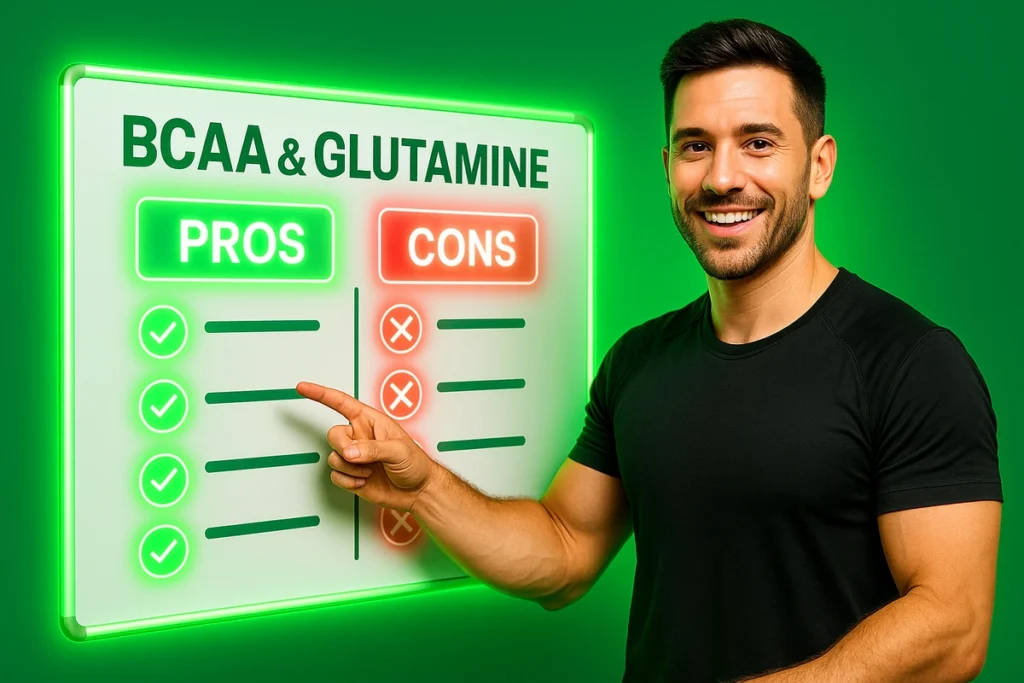
If your diet is already rich in high‑quality protein (think whey, chicken, eggs, fish) and your training isn’t leaving you wrecked day after day, BCAA and glutamine won’t move the needle much. You’re already covering your bases with real food.
That said, there are two situations where they honestly earn their place:
- You’re in a calorie deficit and worried about muscle loss.
This is where BCAAs shine. When calories are low, the body gets tempted to break down muscle tissue. A well‑timed BCAA dose — especially pre‑ or intra‑workout — gives your body an alternative fuel source and helps hold onto hard‑earned muscle. - You train hard, frequently, and recovery is struggling.
If soreness sticks around for days, or you feel run‑down no matter what you eat, glutamine is worth a shot. Its main proven benefits (gut health, immune support) indirectly help you recover better and stay consistent.
One thing I always reinforce with my clients: whole food and complete protein powders beat isolated amino acids every time.
A study by the Australian Institute of Sport backs this up — BCAA supplementation shows limited additional benefits when total daily protein intake is adequate. So these supplements are helpers, not heroes.
My rule of thumb: I only suggest BCAA or glutamine to athletes who are cutting aggressively or training at a genuinely high intensity. If you’re hitting your protein numbers and recovering fine, save your money and spend it on quality food instead.
How to Stack BCAA & Glutamine for Maximum Recovery
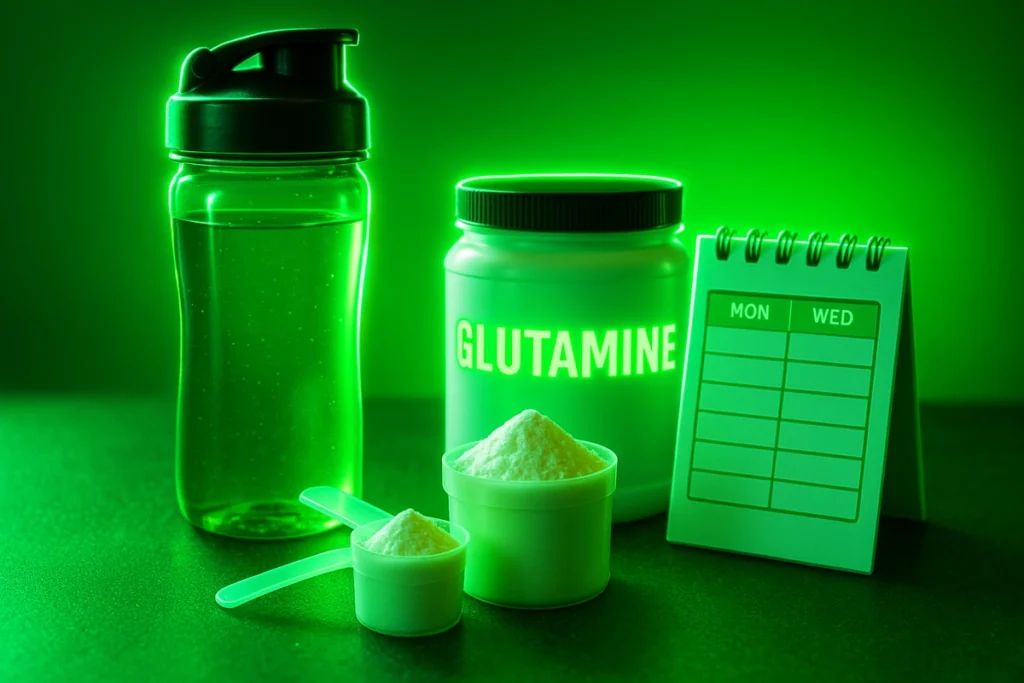
Knowing when to take each supplement is half the battle. The real magic happens when you stack them strategically — so BCAA handles muscle preservation and glutamine handles repair at the same time.
Here’s exactly how I do it, and how you can too.
BCAA Usage
BCAA’s job is protection, not repair. I use it to keep my body from burning muscle while I’m pushing hard.
- How to take it: Mix 5–10 g with 300–500 ml of cold water or your intra-workout drink. It dissolves easily and has a slightly bitter taste; a flavoured version helps.
- Best timing: I take it 20–30 minutes before training and sip the rest during the session if I’m going heavy or long. On fasted-morning workouts, this becomes non-negotiable.
- When to skip: If you’re about to eat a solid protein-rich meal within an hour, you can skip the pre-workout dose. Whole food will cover you perfectly.
Glutamine Usage
Glutamine steps in after the work is done. Think of it as your recovery crew, repairing what got broken down.
- How to take it: Mix 5–10 g in water, your post-workout shake, or even a small glass of juice. It’s virtually tasteless and blends well with anything.
- Best timing: I take a 5 g dose immediately post-workout and another 5 g before bed on intense training days. That second dose is what moved the needle for me — less morning stiffness, better sleep quality, and a real feeling of freshness.
- Pro tip: If your training is moderate and you’re eating well, the post-workout dose alone is often enough. Listen to your body.
Best Stacking Strategy
This is the simple, no-fluff daily blueprint I give to my clients. Pick the version that matches your training intensity.
For hard training or cutting phases:
- Pre/intra-workout: 5–10 g BCAA – muscle armour for the session.
- Post-workout: 5 g Glutamine – launch the repair process.
- Before bed: 5 g BCAA + 5 g Glutamine – overnight preservation and deep recovery.
For moderate training (maintenance):
- Pre-workout: 5 g BCAA (optional if fasted).
- Post-workout: 5 g Glutamine – just enough to support repair.
- Before bed: Nothing extra needed; rely on your dinner protein.
Why this stack works:
BCAA and glutamine don’t compete; they tag-team. BCAA keeps the muscle you have, especially when food is low or stress is high.
Glutamine fuels the immune system, gut, and repair processes that get hammered during intense training. Together, they cover the two biggest performance leaks — breakdown and slow recovery — without overcomplicating your supplement routine.
You can mix them in the same shaker if time is tight. I’ve done it countless times: pre-bed, one bottle, both supplements, and I wake up feeling noticeably less wrecked. Just stay consistent, and the results add up.
BCAA & Glutamine Side Effects
The FDA classifies both supplements as safe when taken in recommended amounts.

BCAA and Glutamine are generally safe, but excessive intake may cause minor side effects.
BCAA Side Effects
- Digestive discomfort
- Nausea
- Headaches
Glutamine Side Effects
- Stomach bloating
- Mild gastrointestinal discomfort
How to Avoid Side Effects
- Stick to 5–10 grams per serving.
- Drink plenty of water to aid absorption.
- If you feel discomfort, reduce the dose and gradually increase it again.
I’ve personally never had side effects from BCAA or Glutamine, and none of my clients have either. These are some of the safest supplements you can take.
Real-World Results: How BCAA & Glutamine Helped
Numbers and theories are nice, but nothing beats seeing what actually happens in the gym.

Here are two real examples — my own experience and a client’s — so you can judge for yourself.
My Personal Experience
During a harsh cutting phase, I was already eating high protein, yet I could see my muscles flattening out week by week. Strength was dipping, and I felt noticeably flatter, especially in the mirror. Frustrated, I added BCAAs — 10 g before training and another 5 g sipped during the workout.
The shift was surprisingly quick. Within about two weeks, my energy during sessions stopped crashing halfway through. More importantly, my muscles kept that full, hard look, even as calories stayed low. It genuinely felt like my body was finally holding onto the muscle instead of burning it for fuel.
Client Example
One of my athletes trains six days a week — heavy lifting, high volume, very little time off. He was constantly sore, sometimes so wrecked after leg day that his next session suffered. The soreness was killing his consistency, and he was close to dialing back.
We added just 5 g of glutamine post-workout and another 5 g before bed. Within two weeks, he reported a major drop in lingering soreness. In a month, he was recovering fast enough to push intensity back up without burning out. The simple bedtime + post-workout glutamine habit became a permanent part of his stack.
Final Verdict: Should You Take BCAA and Glutamine?
After years of testing on myself and coaching clients, here’s the straightforward truth:
- For muscle protection and endurance: Take BCAA before and during workouts. That’s where they shine — not after, when whole food or whey protein does a better job.
- For faster recovery and less soreness: Use glutamine post‑workout and before bed. While the direct evidence on soreness reduction is mixed, its proven support for gut health and immune function makes it a valuable part of your recovery stack.
- Stacking them together during intense training or a cutting phase can give you an edge — BCAAs preserve muscle, glutamine helps you bounce back.
But supplements aren’t magic. If your total protein intake is adequate and your training isn’t brutally intense, you might not need either. Whole protein sources like whey, chicken, and fish remain superior to isolated amino acids.
I’ve personally seen the difference these supplements can make when used wisely. And “wisely” is the key: always build your diet first, then use BCAA and glutamine to support your training — not replace what real food already does well.
If you’re pushing hard, chasing a cut, or struggling to recover between sessions, these two supplements are simple, safe tools worth trying. Just don’t expect them to outwork a poor diet.
💬 Share Your Thoughts: Tried BCAA & Glutamine? How did it work for you? Comment below and let’s chat!
Frequently Asked Questions
Yes, you can safely take BCAA and glutamine together. A popular strategy is to take both before bed – this supports overnight muscle repair, helps prevent muscle breakdown during fasting, and may improve overall recovery without any known negative interactions.
The best times are before and during your workout to protect muscle tissue and maintain energy. Taking BCAA before bed can also help reduce overnight muscle loss, especially if you’re in a calorie deficit. Post‑workout BCAA isn’t necessary if you’re eating a protein‑rich meal.
Take 5–10 grams per serving. This is the standard, research‑supported range for safe and effective use. Stick to this dose, and avoid taking more unless a qualified professional advises it. Splitting your serving before and during training often works best.
Many athletes (including me) report less muscle soreness when taking glutamine. However, scientific studies show mixed results on direct soreness reduction. The strongest proven benefits of glutamine are for immune function, gut health, and nitrogen balance – all of which support faster overall recovery.
If your total daily protein intake is sufficient and you aren’t in a steep calorie deficit or training at extremely high intensity, you likely don’t need extra BCAA or glutamine. Whole food proteins provide all the amino acids your body needs for recovery and muscle maintenance.
Yes, glutamine can be taken on an empty stomach and is often absorbed well that way. Many users take it first thing in the morning or before bed without food. If you experience mild stomach discomfort, taking it with a small amount of water or a light snack usually solves the issue.
Recommended Resources on BCAA & Glutamine
For further reading on the science behind BCAA and glutamine supplementation, check out these authoritative sources:
- Effects of BCAA on Muscle Damage and Soreness
A scientific review on how BCAA supplementation impacts post-exercise muscle damage and recovery. - Best Time to Take BCAA for Maximum Benefits
A detailed guide from Healthline covering the optimal timing for BCAA intake. - L-Glutamine Benefits for Muscle Recovery
Everything you need to know about L-Glutamine’s role in workout recovery and immune health.
🩺 Disclaimer: This article is for informational purposes only and not medical advice. Always consult with a healthcare provider before starting any supplement.

Leave a Reply