


If you’ve just stirred creatine into your water and spotted a gritty layer at the bottom, don’t panic—you’ve actually hit the purity jackpot.
That undissolved sediment isn’t a flaw; it’s one of the clearest signals you’ve bought a clean, research-backed supplement.
In fact, science shows that real creatine monohydrate shouldn’t dissolve completely in cold liquids, and the grit is a direct consequence of its chemical stability and additive-free nature.
Below, we break down the 3 key reasons—backed by chemistry and real-world testing—why creatine not dissolving is a proven good thing.
You’ll discover why crystal-clear water is often a red flag, how to spot genuine powder instantly, and the simple trick to take it without the texture shock.
✨ Quick Reference: What Your Creatine Is Telling You
- Gritty texture/sediment → Normal. Pure creatine settles fast.
- Cloudy water with tiny particles → Normal. Suspended particles = no fillers.
- Crystal clear with zero residue → Suspicious. Often indicates additives or instantised powders with lower purity.
- Hard, clumpy chunks in the tub → Moisture exposure. Check storage.
I’ve coached clients like David, who almost returned a “defective” tub because his cold post-workout shake looked like sand. His worry vanished the moment he learned: if your creatine disappears instantly, you’re likely swallowing fillers, not the real deal.

Before diving deeper, bookmark our Creatine Ultimate Guide for a full breakdown—then read on for the 3 science-backed reasons your gritty experience is actually a win.
Table of contents
Why Doesn’t Creatine Dissolve Completely?
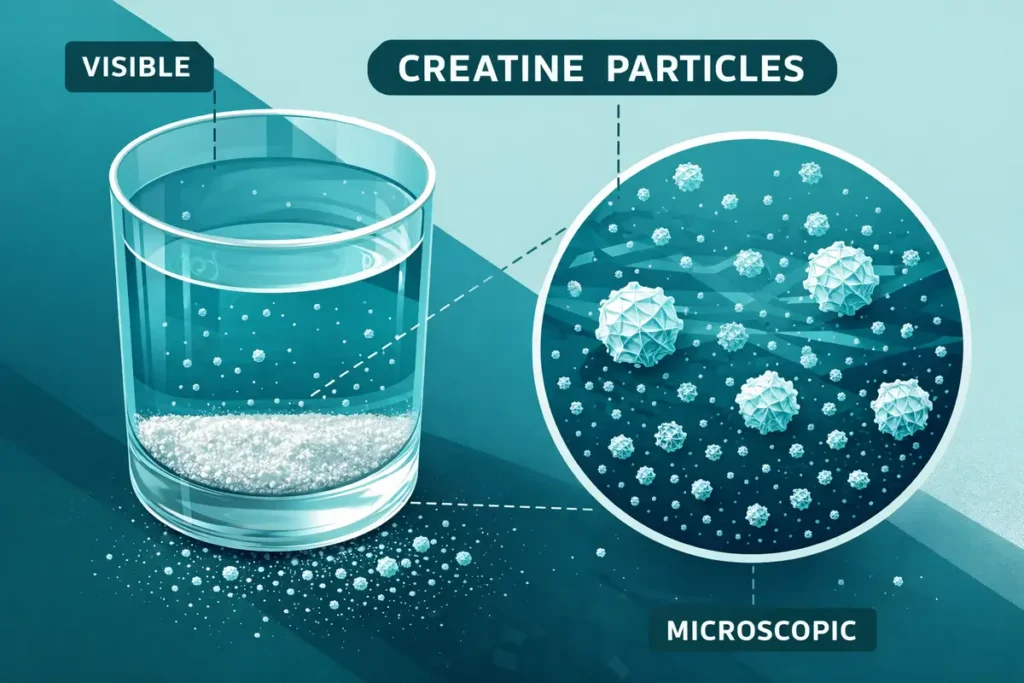
Let’s break down the science behind that grainy glass of water.
1. Solubility Limits
Cold water can only hold so much creatine. When you drop those five grams into cold water or a chilled protein shake, you’re essentially asking the liquid to absorb more than it can handle.
The excess particles have nowhere to go but the bottom of your glass.
2. Particle Size Matters
Standard creatine powders come with larger particles. About two years ago, I was traveling and forgot my usual micronized creatine at home. I grabbed a cheap, generic brand from a local pharmacy.
When I opened it, the texture looked almost like coarse salt. Mixed with water? Incredibly gritty. It settled fast and felt rough going down.
Creatine Type | Particle Size | Dissolution Speed | Mouthfeel |
|---|---|---|---|
Standard | Large | Slow | Gritty |
Micronized | Small | Faster | Smoother |
Generic | Varies | Unpredictable | Usually gritty |
Micronized versions break those particles down smaller, which helps them suspend in liquid a bit longer. But even micronized creatine will eventually settle. Don’t let anyone tell you otherwise.
Athletes in high-intensity sports often have specific preferences, which is something I cover in my article on Creatine for CrossFit Performance: What the Evidence Shows.
3. No Additives Means No Fake Dissolving
Here’s something most supplement companies won’t tell you: pure creatine doesn’t contain emulsifiers, fillers, or flow agents that force it to dissolve artificially.
That grainy texture you dislike? It’s proof you bought creatine, not creatine mixed with who-knows-what.
Does Settling Mean It’s Not Working?
Absolutely not. Effectiveness has zero relationship with dissolution.
I explained this to my client Michael when he complained about his cheap pharmacy brand. He was worried the grittiness meant he wasn’t absorbing it. I asked him to trust the process.
Once that creatine hits your stomach, the acid and digestive fluids break it down completely. Your body doesn’t care if it dissolved in water five minutes ago or five seconds ago.

It cares about absorption, and studies consistently show creatine monohydrate is highly bioavailable regardless of how it mixes.
Michael stuck with it despite the texture. Within weeks, he reported better recovery and noticeable strength gains in the gym. The grit didn’t stop his results one bit.
Some athletes combine it with other supplements, and you can read about that in my guide on BCAA + Creatine Stacks: When They Make Sense for You.
How to Make Creatine Dissolve Better (If It Bothers You)
Look, I get it. Some people simply cannot handle that chalky texture.

I had a client named Sarah, a competitive boxer, who almost quit taking creatine because she gagged on the grit. She dreaded her post-workout routine.
Here’s what I told her, and what I recommend to anyone struggling with texture:
Best Methods for Better Dissolution
Method | How To Do It | Effectiveness |
|---|---|---|
Warm Liquid | Mix into warm tea, coffee, or water | ⭐⭐⭐⭐⭐ |
Shaker Bottle | Shake vigorously for 20-30 seconds | ⭐⭐⭐⭐ |
Micronized Powder | Switch to finer particle version | ⭐⭐⭐⭐ |
Let It Rest | Stir, wait 60 seconds, stir again | ⭐⭐⭐ |
Blender | Quick blend with your shake | ⭐⭐⭐⭐⭐ |
Use Warm Liquid
Heat is your best friend here. Creatine dissolves much more readily in warm fluids.
I told Sarah to mix her five grams into a small cup of warm green tea right after her morning workout. She stirred for about fifteen seconds, and it went down smooth. No grit, no gagging. Now she actually looks forward to it.
Shake It Vigorously
If warm liquid isn’t your style, grab a shaker bottle and go to town. The agitation helps suspend those particles temporarily. Just don’t expect it to last forever—drink it relatively quickly.
Try Micronized Versions
If texture really bothers you, micronized creatine offers a smoother experience. The finer particles mix more easily and stay suspended longer. Just remember, it will still settle eventually.
Let It Rest
After stirring, let your drink sit for about sixty seconds. Some settling is still normal, but a quick final stir before drinking helps redistribute what’s left.
If you’re looking to maximize absorption, some research suggests combining it with specific carbs, which is why I wrote about Creatine with Grape Juice: Science-Backed Benefits.
Common Mistakes to Avoid
Over the years, I’ve watched athletes make the same errors repeatedly. Let me save you the trouble.
❌ Top 5 Creatine Mistakes:
- Pre-mixing and storing for hours – Creatine degrades into creatinine, a waste product
- Expecting crystal clear liquid – Sets you up for unnecessary worry
- Judging quality by dissolution – Graininess often indicates purity
- Storing in humid areas – Moisture creates clumps and degradation
- Giving up due to texture – Missing out on proven benefits
Don’t Pre-Mix and Store
This is the big one. I had a client named James, a busy personal trainer, who thought he was being efficient. Every morning, he filled his giant water jug with creatine and water, sipping it throughout the day while training clients.
He wondered why results weren’t coming.
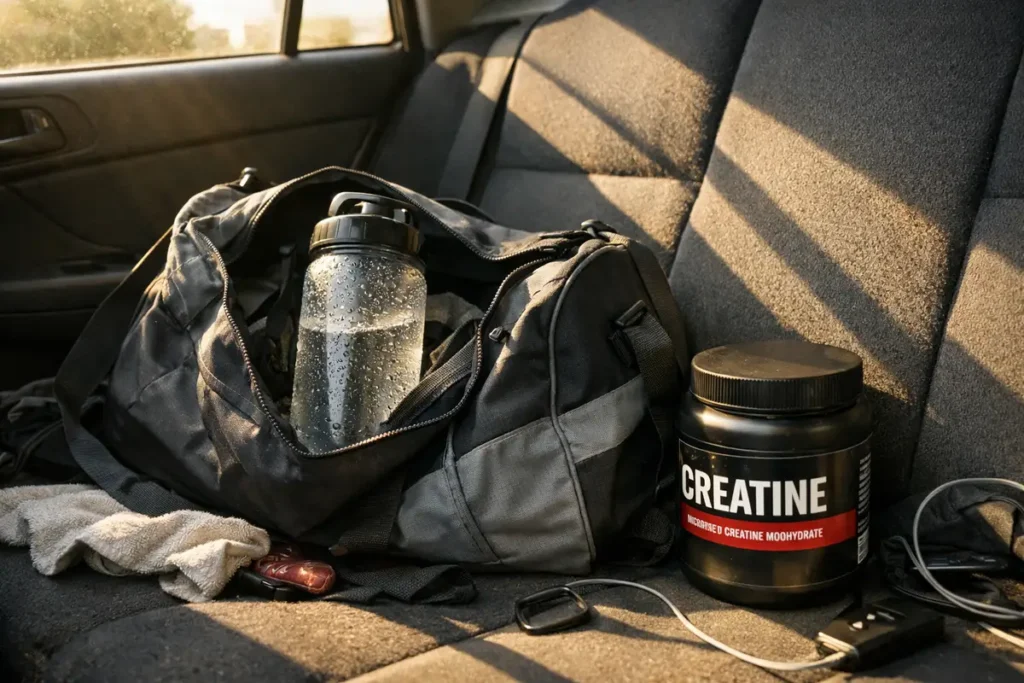
I explained that creatine begins breaking down into creatinine—a waste product—when left suspended in liquid for hours. Toss in a warm gym bag, and you’re basically drinking degraded supplements by afternoon.
I told him to dry scoop or mix fresh right before drinking. Within two weeks, James noticed better retention and strength. Fresh matters.
Don’t Expect Crystal Clear Liquid
Cloudiness isn’t failure. That milky appearance or sediment at the bottom means your creatine is doing exactly what pure creatine does.
If you want perfectly clear water, drink water. If you want results, drink the cloudy stuff.
Don’t Judge Purity by Dissolution
Remember David from Toronto? He almost returned his “fake” creatine. Now he knows that graininess often indicates no additives. You’re paying for creatine, not for fancy mixing technology.
Proper dosage also matters, and if you weigh around 60 kg, you’ll want to check my Creatine Dosage for a 60 kg Man: Daily Intake Guide.
For those closer to 90 kg, I have a Creatine Dosage for a 90 kg Man: Daily Intake Guide as well.
FAQ Section
Because pure creatine monohydrate isn’t highly soluble in cold liquids. It’s normal for it to settle at the bottom.
Yes. Grittiness doesn’t affect absorption. Your stomach acid breaks it down completely regardless of texture.
No. Cloudiness just means particles are suspended. It’s still perfectly good to drink.
Use warm liquid, shake vigorously in a bottle, or switch to micronized creatine for smoother mixing.
Yes. Dry scoop it and chase with water, or mix into yogurt, oatmeal, or other foods.
Moisture got into the container. Keep it sealed tight in a cool, dry place.
Years if stored properly away from moisture and heat. Check for hard clumps to assess quality.
Yes. Heat helps it dissolve better. Just drink it soon after mixing.
No. It degrades into creatinine over time. Always mix fresh right before drinking.
Micronized has smaller particles that mix smoother, but both work exactly the same in your body.
Final Thought: What Actually Matters
Here’s what I want you to take away from this article.
Stop stressing about the grit.
What Matters | What Doesn’t |
|---|---|
Daily consistency | Perfect dissolution |
Proper storage | Crystal clear water |
Fresh mixing | Instant mixing |
5g daily dose | Brand name |
Training hard | Sediment at bottom |
I’ve coached hundreds of clients through this exact concern. The ones who succeed? They don’t obsess over whether their creatine dissolves perfectly.
They focus on consistency. They take it daily, they train hard, and they let the supplement do its job.
That gritty creatine sitting at the bottom of your glass? It’s still five grams of one of the most researched, effective supplements available. It’s still going to support your strength, recovery, and muscle growth.
So stir it, shake it, or dry scoop it. Mix it warm or cold. Drink it fast or slow. Just take it.
Your results don’t care about the texture. Neither should you.
Now go crush your workout.
Leave a Reply