


You train hard. You eat right. But the next day, you’re still hobbling around with soreness that kills your next session.
You’ve heard BCAAs can speed up recovery and boost endurance — but exactly how many grams per day do you need to see real results, not just flavored water?
As a certified fitness and nutrition coach with over a decade of hands‑on experience, I’ve personally tested BCAA doses through bulks, cuts, and grueling two‑a‑days.
Trust me: getting the right daily amount makes the difference between staying crushed and bouncing back stronger.
In this guide, I’m handing you the full blueprint — science‑backed dose ranges, precise timing, and the pitfalls I’ve made so you don’t have to.
So you can skip the guesswork and start feeling the benefits right away.
Table of contents
- Quick Answer: Daily BCAA Dosage for Athletes
- Why Athletes Use BCAAs for Performance and Recovery
- How to Calculate Your BCAA Needs by Body Weight
- Best Times to Take BCAAs Around Your Workout
- Common BCAA Mistakes to Avoid
- BCAA vs EAA: Which One Do You Need?
- Quick Tips for Choosing a BCAA Supplement
- Frequently Asked Questions About BCAAs
- Conclusion: Dial In Your BCAA Intake for Better Results
Quick Answer: Daily BCAA Dosage for Athletes
Most athletes need between 10 and 20 grams of BCAAs per day, split around workouts.
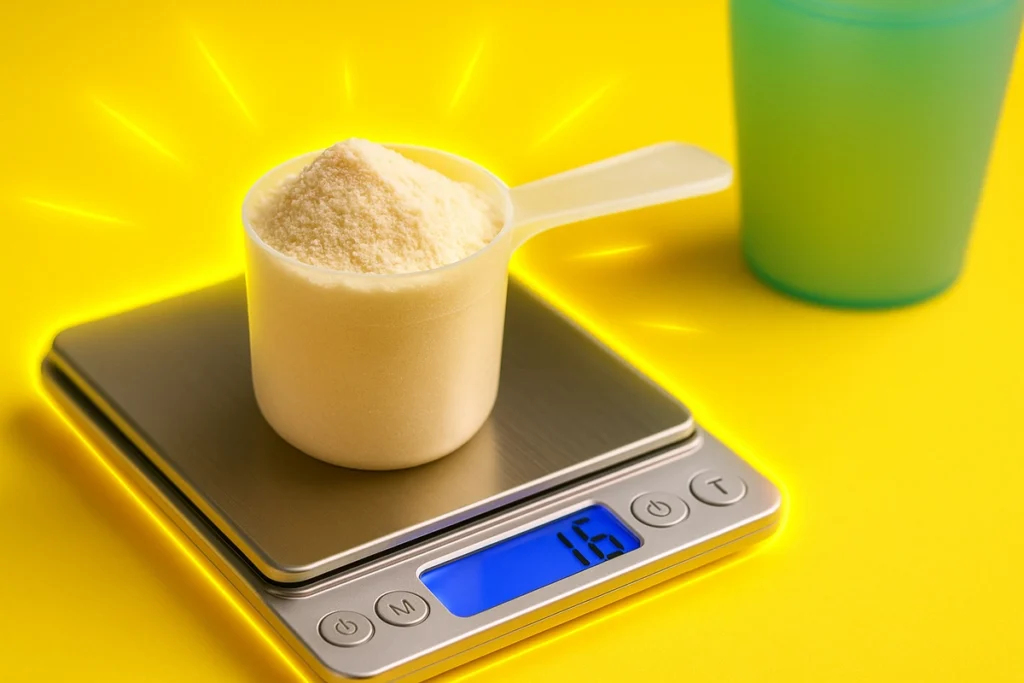
The exact BCAA dosage depends on your training intensity and body weight.
- Body weight-based dose: 0.2–0.4 grams per kg of body weight
- Light to moderate training: 5–10 grams daily
- Heavy or intense training: 10–20 grams daily
If you’re curious how BCAAs fit during fasting, check out this guide on using BCAAs during intermittent fasting.
⚡ BCAAs without a plan = wasted money
Wrong time = zero muscle recovery. Wrong dose = money down the drain.
Fix My BCAA Timing FreeWhy Athletes Use BCAAs for Performance and Recovery
BCAAs — Leucine, Isoleucine, and Valine — are essential amino acids that your body can’t produce on its own.

They play a critical role in:
- Muscle recovery after tough sessions
- Reducing muscle soreness (that brutal day-after leg day pain)
- Boosting endurance and training intensity
- Protecting muscle mass during calorie deficits
Research suggests that BCAA supplementation can reduce exercise‑induced muscle damage and delayed onset muscle soreness (DOMS).
A 2024 overview of systematic reviews found that BCAAs help lower creatine kinase levels, a key marker of muscle damage, and speed up post‑exercise recovery.
In my own training, BCAAs have been game-changers during both heavy bulking phases and intense cutting periods.
Real Story: How 15 Grams Daily Improved Recovery
One of my clients, Daniel from the UK (28 years old), was prepping for his first bodybuilding show.
Despite hitting his macros, he struggled with recovery.
After adding 15 grams of BCAAs daily around his workouts, he noticed less soreness, faster recovery, and stronger training sessions within just 10 days.
If you’re struggling with post-workout soreness, you’ll want to read how BCAAs help with muscle soreness.
How to Calculate Your BCAA Needs by Body Weight

The easiest, most reliable way to find your personal BCAA dose is this body‑weight formula:
0.2–0.4 grams of BCAAs per kilogram of body weight per day.
That range covers maintenance on light training days all the way to heavy support during intense phases. Here’s how it works in practice:
- Use 0.2 g/kg for light or moderate training, or when your total protein intake is already high.
- Use 0.3–0.4 g/kg during hard training blocks, calorie deficits, or two‑a‑days when recovery demands spike.
Example: A 70 kg athlete would need 14–28 grams of BCAAs daily, depending on training load.
Quick Dosage Lookup Table
Weight (kg) | Weight (lbs) | Light Day (0.2 g/kg) | Heavy Day (0.4 g/kg) |
|---|---|---|---|
50 kg | 110 lbs | 10 g | 20 g |
60 kg | 132 lbs | 12 g | 24 g |
70 kg | 154 lbs | 14 g | 28 g |
80 kg | 176 lbs | 16 g | 32 g* |
90 kg | 198 lbs | 18 g | 36 g* |
*Doses above 30 g are rarely necessary and may cause stomach upset in some athletes. Start lower and assess your tolerance before pushing higher.
Tip from Experience: Adjusting for Cutting and Two-a-Days
If you’re dieting hard or doing two‑a‑days, lean toward the higher end of your range. During my own cutting phases, I personally felt noticeably better—less sore, more energy, better sleep—when I stayed close to 18 grams per day. Don’t just go by numbers; listen to your body and dial it in.
If you’re wondering how BCAAs stack up against EAAs, check out this detailed comparison.
You just read everything about BCAAs. Now let’s make it work for YOUR body.
I’ll design your personalized supplement protocol — exact timing, dosage, and stacking for your specific goal. No templates. No bots. A real coach who reads your answers.
Pay what you want after you receive it. No risk. No pressure.
Best Times to Take BCAAs Around Your Workout
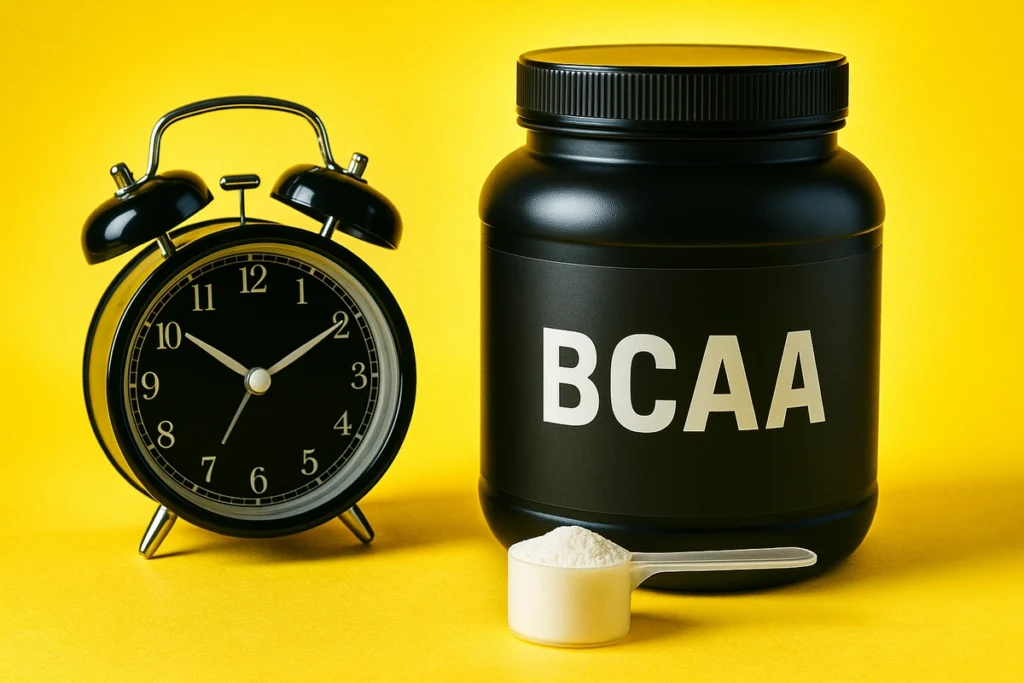
When you take your BCAAs matters just as much as how much you take. Nail the timing, and you won’t just feel okay during your session — you’ll feel unstoppable.
This schedule is what I’ve fine‑tuned over years of coaching athletes and experimenting on myself:
- Pre‑workout (15–30 min before): 5–7 grams
Fuels your muscles, fights breakdown from the very first rep, and delivers a clean energy lift — no jitters, just focus. - During your workout (sip throughout): 5–7 grams
Keeps endurance high, wards off central fatigue, and helps you stay mentally locked in when the session gets brutal. - Post‑workout (only if needed): 5 grams
Take this if your post‑workout meal is delayed by 2+ hours. If you can eat a solid, protein‑rich meal within an hour, skip it. Real food does the job better.
I learned this lesson the hard way. Early in my career, I used to chug BCAAs only after training. I’d finish, shake them up, and wait for magic — but I rarely felt much.
The game changer? Shifting my BCAA intake to before and during my workouts. That tiny adjustment made a massive difference in performance, soreness, and energy the next day. It truly turned me into a firm believer.
For a deeper look — including how to time BCAAs on rest days — read our full guide on the best time to take BCAAs.
Client Example: Maria, CrossFit Athlete
Maria (34, from Spain) is a CrossFit athlete I coach. She started sipping BCAAs during her hardest WODs after hitting a wall: halfway through a 20‑minute AMRAP, she’d feel completely gassed and her form would crumble.
With intra‑workout BCAAs, that changed fast. She told me she could hold her intensity longer, recovered quicker between rounds, and bounced back faster for the next day’s session. A tiny shift in timing gave her a noticeable edge.
Common BCAA Mistakes to Avoid
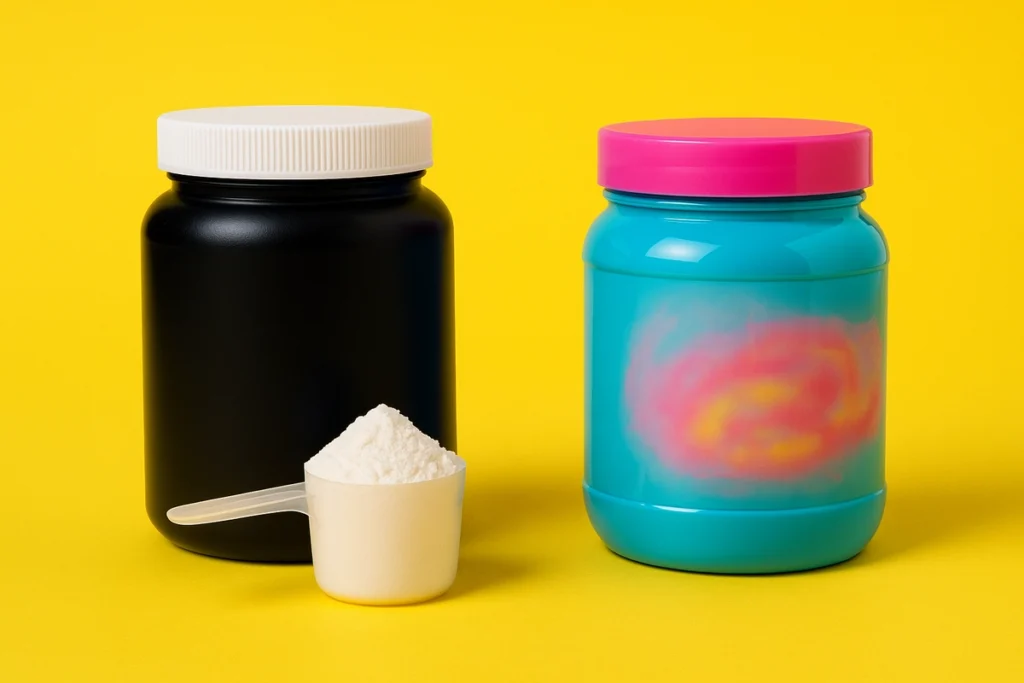
I’ll be honest—I’ve made a few costly BCAA mistakes over the years, and I’ve seen clients fall into the same traps.
Avoid these, and you’ll save money, dodge stomach issues, and actually get results.
- Taking too little
Doses under 5 grams per day are barely above placebo. You won’t move the needle on recovery or soreness with a sprinkle of powder. If you’re going to use BCAAs, commit to a real, effective dose. - Overloading past 30 grams
More isn’t better. Exceeding 30 grams daily rarely adds extra benefit, strains your wallet, and can trigger bloating or stomach upset. If you’re above that ceiling, you’re just making expensive urine. - Buying cheap, sugary BCAA products
I once grabbed a flashy, neon-colored BCAA drink loaded with sugar. All I got was a bloated stomach and zero performance boost. Stick to clean, low‑sugar formulas—your gut and your goals will thank you.
Pro Tip: Choose the Right Ratio and Quality
Quality trumps everything. Always look for a 2:1:1 ratio of leucine to isoleucine and valine—the gold standard backed by research. Leucine is the trigger for muscle repair, so skimping on that ratio means you’re leaving recovery on the table. Quality, timing, and ratio matter just as much as the total grams you take.
If you’re stacking supplements, it’s worth knowing how BCAAs compare to other recovery aids. Check out our breakdown of BCAA vs. Glutamine for muscle recovery to see which one deserves a spot in your bag.
BCAA vs EAA: Which One Do You Need?
Athletes often ask me whether they should buy BCAAs or switch to EAAs. It’s easy to get confused, but the difference is straightforward once you see them side‑by‑side.
Feature | BCAAs | EAAs |
|---|---|---|
What they are | 3 essential amino acids (leucine, isoleucine, valine) | All 9 essential amino acids, including the 3 BCAAs |
Main use | Reduce exercise fatigue & muscle soreness | Stimulate muscle protein synthesis & actual repair |
Best when | Training fasted, cutting, or needing intra‑workout support | Recovery when whole protein intake is low |
Verdict | Great for maintaining performance & endurance support | Superior for building new muscle and full recovery |
Bottom line: If your main protein intake is solid from food, BCAAs can still help you train harder and feel less sore. If you struggle to get enough total protein, EAAs cover the full spectrum your muscles need to rebuild.
For a deeper breakdown, including which one suits your specific goals, read our full BCAA vs EAA comparison.
Quick Tips for Choosing a BCAA Supplement
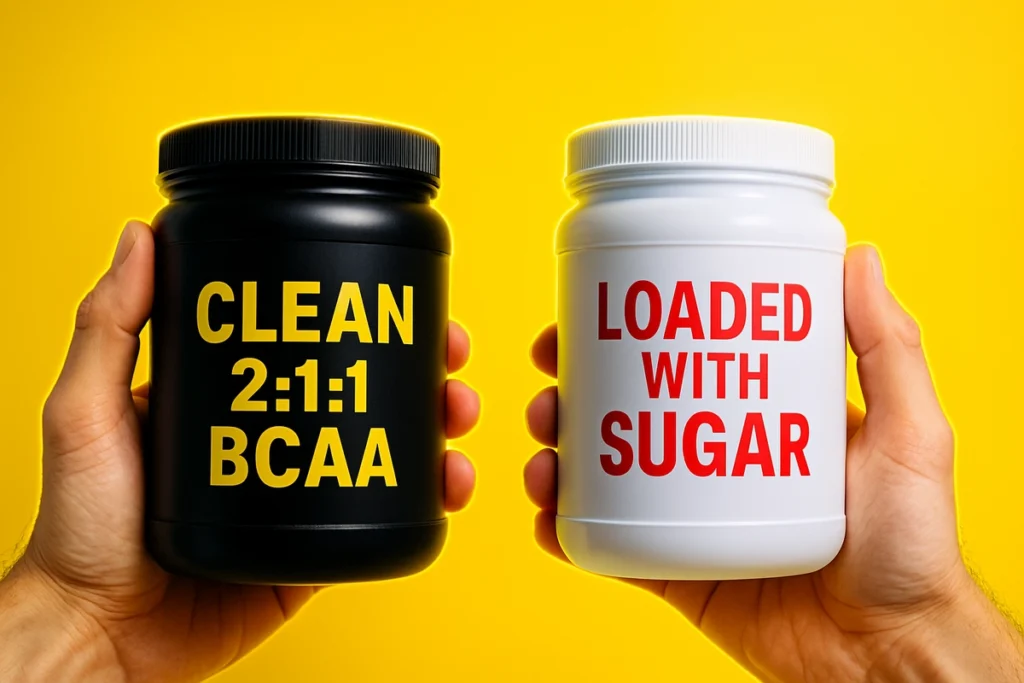
Here’s my go-to checklist when picking a BCAA:
- 2:1:1 ratio — the golden standard
- Zero or very low sugar — avoid hidden calories
- Third-party tested — purity matters
- Minimal ingredients — keep it simple
Some brands I trust based on my own use include Xtend, Optimum Nutrition, and Nutrabio.
No matter what brand you pick, always check the label carefully!
Also, many athletes ask: should you use BCAAs even on rest days? Find the answer here.
Frequently Asked Questions About BCAAs
Most athletes need 10 to 20 grams of BCAAs per day. The exact amount depends on your training intensity and body weight. For light training days, 5 to 10 grams is usually enough. For heavy or intense training, aim for 10 to 20 grams daily.
Use 0.2 to 0.4 grams of BCAAs per kilogram of body weight. For example, a 70 kg athlete would take 14 to 28 grams per day. Use the lower end for lighter training and the higher end during intense training or cutting phases.
Take 5 to 7 grams 15 to 30 minutes before your workout. Sip another 5 to 7 grams during your training session. If your post-workout meal is delayed by more than 2 hours, you can take an extra 5 grams after training. This timing helps with energy, endurance, and recovery.
You can, but it is not always necessary. If your daily protein intake is already high from whole foods, you likely do not need extra BCAAs. If your protein intake is low or you are cutting calories, 5 to 10 grams on rest days can help protect muscle mass.
Yes. Taking more than 30 grams per day is unnecessary for most athletes. It does not improve results and can cause stomach upset, bloating, or nausea. Stick to 10 to 20 grams per day unless a qualified coach advises otherwise.
The 2:1:1 ratio means the supplement contains 2 parts leucine, 1 part isoleucine, and 1 part valine. This ratio is considered the gold standard because leucine is the key amino acid for triggering muscle repair. A quality BCAA supplement should always list this ratio clearly on the label.
Yes, BCAAs contain calories and can raise insulin levels slightly. This technically breaks a fast. If you are fasting for metabolic or gut rest reasons, it is best to avoid BCAAs during the fasting window. For a deeper look, read our guide on using BCAAs during intermittent fasting.
EAAs contain all 9 essential amino acids, including the 3 BCAAs. BCAAs are helpful for reducing fatigue and soreness during training. EAAs are better for actually building and repairing muscle. If your goal is muscle growth and your protein intake is low, EAAs are the stronger choice.
Conclusion: Dial In Your BCAA Intake for Better Results

If you’re serious about performance, recovery, and holding onto hard-earned muscle, getting your BCAA intake right is one of the smartest, simplest moves you can make.
After years of coaching and personal trial and error, here’s the protocol that consistently works:
- Dose: Aim for 10–20 grams of BCAAs per day, or use the 0.2–0.4 g/kg body weight formula to dial it in personally.
- Timing: Split your dose before and during your workout. The classic 5–7 grams pre‑workout and 5–7 grams intra‑workout is the sweet spot for most athletes.
- Quality: Always pick a clean, sugar‑free product with the 2:1:1 leucine‑to‑isoleucine‑and‑valine ratio. That’s your non‑negotiable baseline.
✅ Your Quick BCAA Success Checklist
- Calculated my daily dose based on body weight
- Pre‑workout: 5–7 grams, 15–30 minutes before training
- Intra‑workout: 5–7 grams sipped during the session
- Supplement label confirmed: 2:1:1 ratio, low sugar, third‑party tested
- Post‑workout meal planned within 1–2 hours (skip extra BCAAs if eating soon)
Small, consistent habits like proper BCAA timing and dosage really do stack up. They build the foundation for better training sessions, faster recovery, and more progress over the long haul.
I’ve seen it transform my own training across bulks and cuts. I’ve watched it help clients like Daniel push through stubborn plateaus and Maria crush her WODs without the usual crash. If you stay consistent and listen to your body, you’ll feel the difference too.
Train smart, recover better, and keep moving forward — you’ve got this.
Leave a Reply