


Feeling tired, unmotivated, or stuck in your workouts? Low testosterone might be the reason — and the fix could be sitting on your plate.
Your diet has a direct impact on your hormones, energy, and performance. The right foods can naturally support your body’s testosterone production without relying on supplements or risky shortcuts.
As a fitness coach, I’ve seen firsthand how small nutrition changes can lead to massive improvements in strength, focus, and recovery. You don’t need expensive boosters — just smart, consistent food choices.
In this guide, I’ll share the top 7 testosterone-boosting foods every man should eat. Each one is backed by science, easy to include, and proven to help your body perform at its best.
Table of contents
Why Natural Testosterone Matters
Testosterone plays a massive role in how you feel, perform, and even think. It’s not just about muscle growth or libido — it affects energy levels, recovery, focus, confidence, and mental drive.
From years of working with clients, I’ve noticed that men often chase supplements or “boosters” before fixing the fundamentals: nutrition, sleep, training intensity, and stress balance.
The truth is, your daily food choices can make or break your hormonal health. What you eat influences how your body produces and regulates testosterone.
When your diet is full of nutrient-dense, hormone-supportive foods, your natural testosterone stays in a healthy, active range — even as you age.
You don’t need exotic pills or miracle powders to feel more alive. You just need consistency, a smart approach to nutrition, and an understanding of how certain foods fuel your body’s testosterone production naturally.
The Top 7 Testosterone-Boosting Foods

If you’re short on time and want the quick list, here it is — the seven foods that consistently deliver results for me and my clients:

Tell us your goal & discover your perfect stack — backed by science, no BS.
Free. Takes 2 Min | No sign-up needed
- Eggs
- Oysters
- Fatty Fish (Salmon, Sardines, Mackerel)
- Extra-Virgin Olive Oil
- Spinach
- Pomegranates
- Avocados
These foods cover the key nutrients your body needs for optimal testosterone production — from zinc and magnesium to omega-3 fats, antioxidants, and vitamin D. Each one plays a unique role in supporting hormone synthesis, improving blood flow, and protecting your cells from oxidative stress.
How These Foods Support Testosterone Production
Eggs: The Natural Foundation for Hormone Health
Eggs are a complete protein source and rich in cholesterol — a building block for testosterone synthesis. Without sufficient dietary cholesterol, your body struggles to maintain healthy hormone production.
I eat eggs almost every morning — usually three whites and two yolks — and I notice better mental focus and more stable morning energy. The key is balance: don’t fear yolks. They’re packed with vitamin D, healthy fats, and nutrients that directly support hormonal function.
Oysters: The King of Zinc and Testosterone
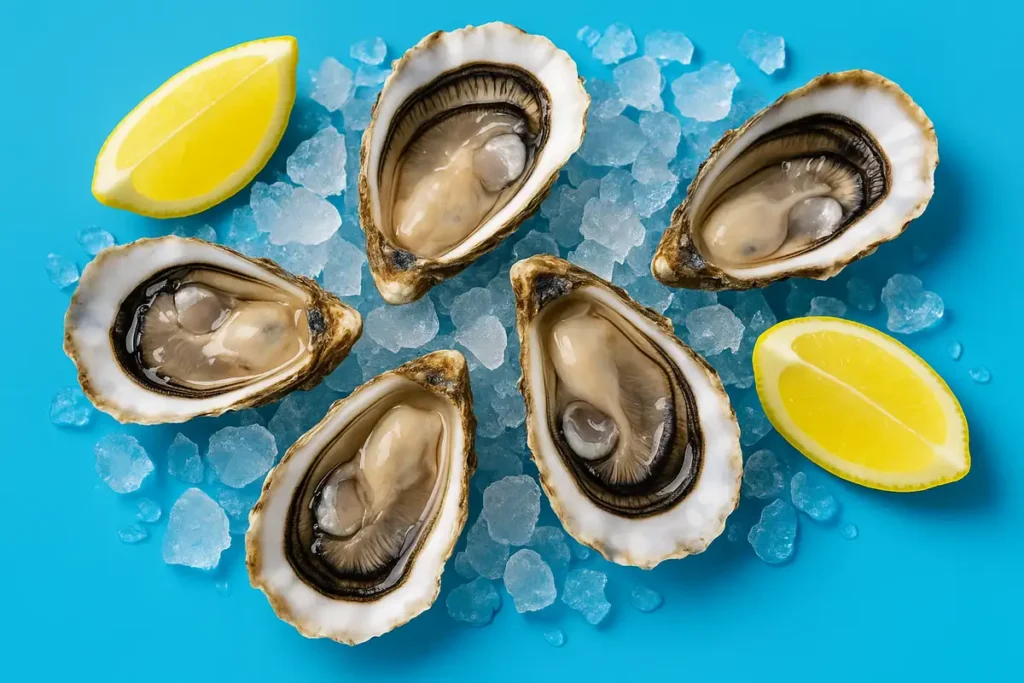
Oysters are among the most zinc-rich foods you can eat, and zinc is one of the most critical minerals for testosterone production. A review in the International Journal of Molecular Sciences confirms that zinc plays a vital role in male fertility and supports testosterone synthesis in Leydig cells — the cells responsible for producing this key hormone.
I’ve seen this repeatedly with clients. One of them, David, struggled with low motivation and slow recovery. After adding oysters and other zinc-rich foods like pumpkin seeds and lean beef to his diet, he reported feeling more energetic and alert within weeks. Low zinc levels are directly associated with reduced testosterone, so maintaining adequate intake through real food is an easy win for hormonal health.
Fatty Fish: Omega-3s for Hormone Signaling and Recovery
Fatty fish like salmon, sardines, and mackerel provide omega-3 fatty acids that lower inflammation and improve cellular communication. These fats are crucial for maintaining healthy hormone receptors and supporting the body’s natural anabolic response.
When my client Marco hit a plateau in his lifts, we introduced salmon three times a week. Within a month, his recovery time improved and his training intensity increased again. Omega-3s don’t just help testosterone; they also improve heart health, joint function, and cognitive performance — all vital for men who train hard.
Olive Oil: The Everyday Hormone Protector

Extra-virgin olive oil is one of the simplest yet most powerful additions to a testosterone-friendly diet. I take a tablespoon daily with meals, and whenever I skip it for a few days, I can feel the dip in my energy and mental sharpness.
A study published in Clinical and Experimental Reproductive Medicine found that olive oil helped preserve and increase the number of Leydig and Sertoli cells — the primary testosterone-producing cells — in rats exposed to stress and sleep deprivation. While it’s an animal study, it suggests that olive oil’s healthy monounsaturated fats and antioxidants help protect testicular health under stress.
This makes olive oil not just a cooking ingredient but a daily “hormone stabilizer.” Whether you drizzle it over salads, mix it with vegetables, or use it for light cooking, it supports both testosterone and overall longevity.
Spinach: Magnesium and Stress Control
Spinach is loaded with magnesium — a mineral that helps regulate cortisol levels. Since high cortisol can suppress testosterone production, magnesium indirectly supports your hormone balance. It also improves blood flow and muscle function, which is why I often recommend spinach or other leafy greens in post-workout meals.
Magnesium from whole foods is more bioavailable than most supplements. If you’re active and sweat a lot, you may be losing more magnesium than you think. Including spinach in your meals is one of the easiest ways to keep your hormones stable and your recovery smooth.
Pomegranates: Blood Flow and Vitality Enhancer

Pomegranates are my go-to natural “booster” fruit, especially when energy levels dip or recovery feels sluggish. A PubMed study on nitric oxide and pomegranate juice found that the fruit’s antioxidants protect nitric oxide from oxidative damage and enhance its biological function — meaning better blood flow and oxygen delivery.
Improved circulation doesn’t just help performance; it supports healthy testosterone function indirectly by ensuring proper nutrient delivery to the testes. I often recommend my clients include a small glass of pomegranate juice after training or enjoy the seeds with yogurt as a snack. It’s a refreshing and functional food choice that benefits both heart and hormone health.
Avocados: Monounsaturated Fats and Free Testosterone
Avocados provide the perfect combination of healthy fats, fiber, and boron — a trace mineral that may help maintain free testosterone levels. I like adding half an avocado to breakfast or salads for a satisfying, nutrient-dense boost.
They also replace processed or hydrogenated fats that can negatively affect hormone production. Over the long term, replacing bad fats with good ones like those in avocados and olive oil helps maintain hormonal balance, joint health, and even skin elasticity.
Food vs. Supplements — When to Add Support
Supplements have their place, but food is always the foundation. I tell my clients: supplements should fill gaps, not replace real nutrition.
I occasionally use zinc and vitamin D3 — especially during winter when sunlight is low. I always pair them with food; for example, I take vitamin D alongside salmon or olive oil to improve absorption.
If your diet includes these testosterone-boosting foods and you’re consistent with training, you likely won’t need much supplementation. But if your diet is restrictive, or you’re deficient due to lifestyle factors, targeted support can help maintain hormonal balance without overreliance on pills.
Testosterone-Friendly Meal Ideas
Here’s an example of how to structure a full day of eating for testosterone support:

Take this 2-minute assessment & get a science-backed training, nutrition & supplement roadmap built for YOUR body.
🔬 12,000+ personalized roadmaps generated
- Breakfast: 3 eggs cooked in olive oil, spinach omelet, and half an avocado.
- Snack: Greek yogurt with crushed walnuts and a drizzle of olive oil.
- Lunch: Grilled salmon with brown rice and pomegranate salad.
- Snack: A handful of pumpkin seeds or a small serving of oysters (if available).
- Dinner: Turkey or lean beef with sautéed spinach and olive oil dressing.
These meals are simple, nutrient-rich, and hormone-supportive — perfect for busy men who want steady energy, better recovery, and sustainable progress.
Lifestyle Tips to Maximize Natural Testosterone

Diet is powerful, but it works best when combined with the right lifestyle habits.
Even the most optimized diet won’t help if your sleep, stress, and training recovery are off balance.
When I was working long hours and sleeping only five hours a night, my energy, focus, and motivation tanked — even though my diet was perfect. Once I fixed my sleep schedule and practiced deep breathing after workouts, my energy and strength returned quickly.
To maintain optimal testosterone, follow these principles:
- Train hard, but avoid overtraining. Your body needs recovery to grow.
- Sleep at least 7 hours. Testosterone production peaks during deep sleep.
- Keep stress low. Chronic stress raises cortisol, which suppresses testosterone.
- Don’t stay in long calorie deficits. Extended dieting can crash your hormone levels and slow recovery.
Conclusion — Build Hormones Naturally, Stay Consistent
Boosting testosterone doesn’t require shortcuts or risky “boosters.” It’s about consistency, nutrient-dense foods, proper recovery, and patience.
I’ve seen this countless times — both in myself and my clients. Once you fuel your body properly, train with purpose, and recover well, your natural testosterone levels improve noticeably. You’ll feel stronger, sharper, and more motivated — without needing artificial help.
Start simple. Add one or two of these foods to your meals this week. Over time, your body will reward you with better energy, strength, and vitality — all powered by real food and smart habits.
FAQ
Yes — if your diet is consistent and includes these foods, they can naturally optimize testosterone without relying on supplements.
Most men feel more energy, strength, and focus within 3–6 weeks of consistent eating and training.
Not necessarily. Focus on zinc- and fat-rich plant foods like avocados, nuts, seeds, and olive oil.
Moderate soy intake is fine. Just avoid relying on processed soy products as your main protein source.
Absolutely. Poor sleep and high stress lower testosterone faster than any diet can fix — recovery is key.

Leave a Reply