


If you’ve ever finished a late-night workout and wondered whether casein protein could actually help you sleep better — you’re not alone.
As a fitness coach, I’ve tested almost every supplement out there, and casein is one of the few that has earned a long-term spot in my own nightly routine.
So, here’s the short answer: Yes, casein protein can improve your sleep quality — indirectly.
It doesn’t act like a sleeping pill, but it helps by keeping your body nourished, reducing nighttime hunger, and supporting deeper recovery while you rest.
According to a study published in Frontiers in Nutrition, higher protein intake — especially slow-digesting forms — is positively associated with better sleep quality in adults.
That aligns perfectly with what I’ve seen in my own clients: when they eat balanced protein throughout the day and include a serving before bed, they sleep better and recover faster.
If you’re new to casein or want to understand why it behaves differently than other proteins, I’ve broken everything down step-by-step in the Casein Ultimate Guide.
Table of contents
How Casein Protein Affects Sleep Quality

Casein is a slow-digesting protein found naturally in milk and dairy products. Unlike whey protein, which digests rapidly, casein forms a gel-like structure in your stomach that releases amino acids slowly — often lasting 6–8 hours.
This slow release has been confirmed by a PubMed study on pre-sleep casein ingestion, which showed that casein maintains a steady amino acid supply overnight, allowing your muscles to repair and grow even while you’re asleep.
That’s why athletes and bodybuilders often refer to casein as the “nighttime protein.” While fast-digesting proteins like whey are ideal for post-workout spikes in protein synthesis, casein provides the long-term amino acid availability your body needs when fasting overnight.
To understand more about how casein influences fullness and energy balance, check out Casein vs Isolate: Which Protein Keeps You Fuller Longer. The study of satiety is especially relevant for those cutting calories, as casein can reduce late-night hunger and cravings that often sabotage fat loss goals.
Personally, I’ve seen this countless times in clients. Liam, a 29-year-old bodybuilder from the UK, used to wake up at 3 a.m. hungry and tired. Once he started taking 25–30g of micellar casein before bed, his sleep improved, he stopped waking up mid-night, and his recovery scores (tracked via wearable) increased noticeably.
Beyond physical recovery, casein’s amino acid profile may also support neurochemical processes related to sleep. A 2023 review in the National Library of Medicine found that dairy proteins — including casein — are rich in tryptophan, a precursor to serotonin and melatonin, which are crucial for relaxation and sleep regulation.
So, while casein doesn’t “knock you out,” it creates a physiological environment that supports rest and regeneration. To dive deeper into how these hormones work in synergy with casein, visit the Casein Protein & Sleep Hormones analysis on Muscle Zeus.
Isabella, a 32-year-old client from Spain, used to struggle with staying asleep during her cutting phase. After introducing casein before bed, she told me she felt “comfortably full but light,” and her energy levels were more consistent the following mornings.
That’s the beauty of casein — it doesn’t just feed your muscles; it feeds your recovery cycle.

We analyze your goal, body & budget — then recommend only what you need.
IT’S FREETakes 2 Min | No sign-up needed
Best Time and Way to Take Casein for Sleep

Timing is key. The optimal window to take casein is about 30–60 minutes before bedtime. This allows your body to start digestion as you unwind and transition toward sleep.
You can mix it with water if you’re trying to keep calories lower, or with milk for a thicker, creamier texture that provides an extra boost of tryptophan. Personally, I like to mix 30g of casein with water, a small spoon of peanut butter, and a dash of cinnamon — it tastes like dessert but works like fuel for recovery.
If you train late at night, casein can double as both your post-workout shake and sleep recovery drink. The slow digestion helps sustain muscle protein synthesis through the night when your body is naturally repairing itself.
For athletes sensitive to stimulants or those who consume pre-workouts late in the evening, I highly recommend reading the Casein & Caffeine Interaction Timing Guide. It explains how caffeine can interfere with sleep quality and how to time your protein intake around it for optimal rest.
Many of my clients also benefit from pairing casein with magnesium glycinate or ZMA supplements to enhance muscle relaxation and support restful sleep. When used as part of a consistent bedtime routine, casein becomes more than just a supplement — it becomes a recovery ritual.
Casein vs. Other Proteins for Night Recovery

Not all proteins are created equal when it comes to nighttime use. A study in Nutrients by Trommelen and van Loon found that casein digests slowly, maintaining elevated plasma amino acid levels for hours.
Whey protein, on the other hand, digests rapidly — perfect for post-workout recovery when you need a quick nutrient hit, but not ideal before long periods of fasting like sleep.
That’s why I often recommend whey protein right after training and casein protein before bed. Together, they create a powerful 24-hour recovery cycle that maximizes muscle protein synthesis both immediately after workouts and during rest.
I saw this strategy work wonders for Farid, a client training for a natural bodybuilding competition. He used whey isolate post-workout and casein at night, and his muscle retention during cutting was exceptional. His energy, recovery, and even mood were more stable throughout the prep phase.
To learn how these two proteins complement each other, see Whey vs Casein for Overnight Recovery and the Cycle Casein & Whey Protein Guide. Both explain how alternating or stacking them can improve long-term results for lifters and endurance athletes.
Who Benefits Most from Nighttime Casein

Casein isn’t just for bodybuilders — it benefits a wide range of individuals.
- Athletes and strength trainers can use casein to maintain muscle protein synthesis during sleep.
- People in calorie deficits can manage hunger and prevent muscle breakdown.
- Older adults can support muscle preservation and better sleep cycles as natural growth hormone and protein utilization decline with age.
One of my clients, Daniela, a 45-year-old endurance runner from Italy, constantly struggled with nighttime cravings. When she began adding a 20g casein shake before bed, she reported fewer awakenings, less soreness after long runs, and greater morning alertness.
If you’re an endurance athlete, check out the Casein Protein for Endurance Recovery Guide to learn how casein supports glycogen preservation and recovery between intense training sessions.
Possible Drawbacks and Considerations
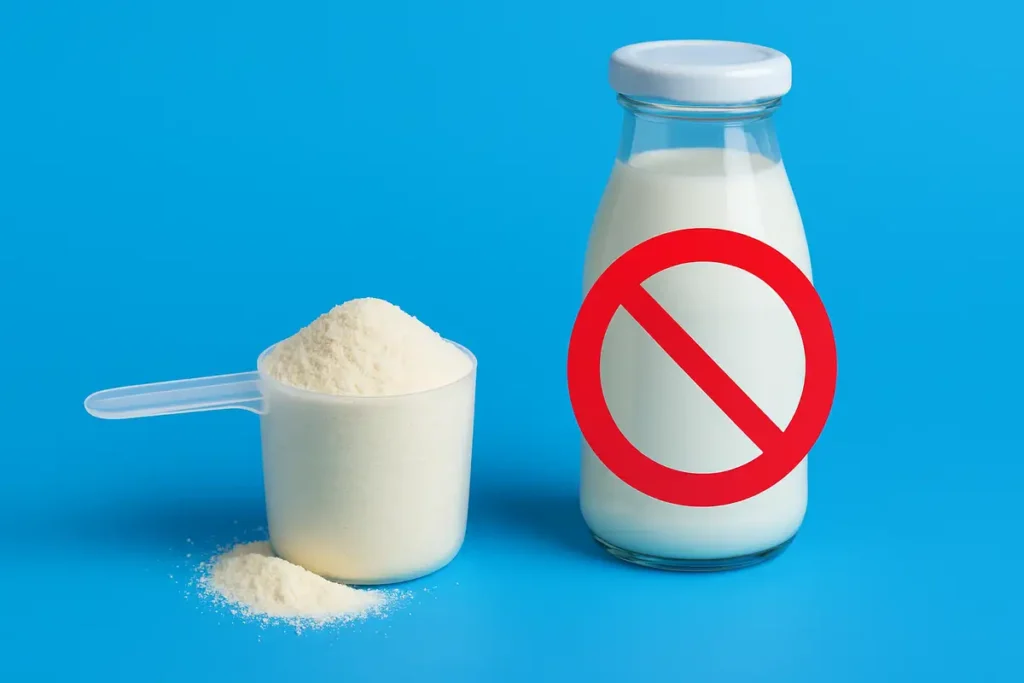
While casein is safe for most people, it may cause mild bloating or discomfort in those sensitive to dairy or lactose. For instance, Markus, one of my German clients, initially experienced bloating after using casein with milk. Switching him to a lactose-free micellar casein fixed the issue immediately.
If you have similar sensitivities, explore Dairy-Free Casein Protein Alternatives to find suitable plant-based or lactose-free options that still provide slow-release benefits.
To get the best results:

Take this 2-minute assessment & get a science-backed training, nutrition & supplement roadmap built for YOUR body.
🔬 12,000+ personalized roadmaps generated
- Choose micellar casein (not calcium caseinate) for optimal digestion and amino acid release.
- Avoid flavored blends that contain excessive sugar or additives.
- Stick with 25–35g per serving, depending on your total protein goals and activity level.
Casein is incredibly versatile — it can be consumed as a shake, pudding, or even blended into oatmeal or Greek yogurt for a high-protein night snack. Personally, I like to mix it with a few crushed almonds or a drizzle of sugar-free syrup for taste.
Key Takeaway
Casein protein isn’t a direct sleep aid, but it enhances sleep quality by keeping your muscles nourished, stabilizing hunger, and promoting recovery. It’s an underrated nighttime tool that supports both performance and relaxation.
When taken consistently before bed, casein helps maintain lean muscle, reduce overnight catabolism, and balance energy levels the next day.
For me and many of my clients, it’s not just a supplement — it’s part of a nightly recovery habit:
Casein shake → light stretch → unwind → sleep strong.
FAQ
Not directly, but it supports calmness and rest by maintaining steady amino acid levels and promoting serotonin and melatonin production.
Ideally, 30–60 minutes before sleeping for gradual absorption and maximum overnight recovery.
Milk adds creaminess and extra tryptophan for relaxation. Water keeps calories lower — ideal for fat-loss phases.
Whey digests too fast for overnight recovery. Casein works better for sustained muscle repair.
Yes. When used as part of a balanced diet, casein is safe and highly effective. Choose micellar casein and monitor how your body responds over time.

Leave a Reply