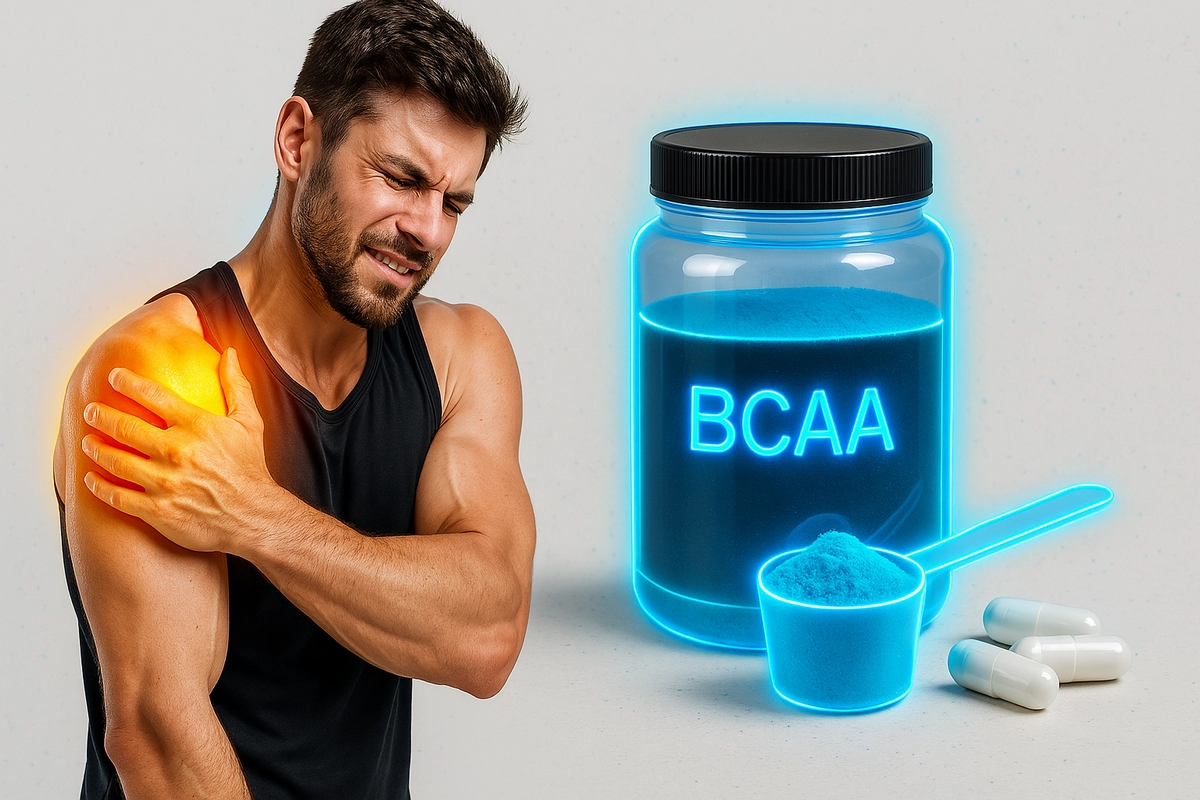

Yes — BCAAs can reduce post‑workout muscle soreness, especially in beginners, fasted lifters, and athletes in a calorie deficit. They’re not magic pills, but when soreness threatens your consistency, they’re worth a closer look.
I’ve tested BCAAs with dozens of clients. Results vary with diet, training intensity, and recovery habits. Yet when they work, they can be the small edge that keeps you showing up.
Liam, a 26‑year‑old software engineer from London, joined me to build strength. After his first heavy squat session, he called the soreness “crippling.” I gave him a simple 5 g BCAA protocol before and after lower‑body days. Two weeks later, he messaged:
It still hurts, but now I can actually sit on the toilet without swearing.
Liam, 26‑year‑old.
If leg day leaves you wincing on the stairs, that exact 5 g pre‑workout plus 5 g post‑workout protocol is the first thing I’d try. The real win wasn’t less pain — it was Liam showing up to every session without dread. That’s what the right recovery tool can do.
Now let’s break down exactly how BCAAs support muscle recovery and help you feel fresher after training.
Table of contents
- How BCAAs Support Muscle Recovery & Reduce Soreness
- When & How Much BCAA to Take for Soreness
- Who Benefits Most from BCAAs? (Diet, Training & Fasting)
- BCAAs vs EAAs vs Whey – Which Is Best for Muscle Soreness?
- What Causes Post‑Workout Muscle Soreness? (DOMS Explained)
- Final Thoughts: Are BCAAs Worth It in 2026?
- BCAA Soreness FAQs
How BCAAs Support Muscle Recovery & Reduce Soreness
After more than a decade of coaching, I’ve learned one truth: the quicker you recover, the sooner you can train hard again – and BCAAs can help you bridge that gap.
The three branched-chain amino acids – leucine, isoleucine, valine – directly influence how sore you feel after training by:
- Fuelling muscle repair – they trigger muscle protein synthesis to rebuild micro-tears caused by your session
- Supplying on-demand energy – they’re oxidised in muscle during exercise, delaying fatigue and reducing post-workout damage
- Slowing muscle breakdown – they create a more anabolic environment, especially when you’re fasted or in a calorie deficit
In my own client work – and across 6+ years of online coaching – consistent BCAA use, combined with proper hydration and a well-timed meal plan, has been the difference between crippling next-day soreness and feeling ready to hit the gym again.

Tell us your goal & discover your perfect stack — backed by science, no BS.
Free. Takes 2 Min | No sign-up needed
It’s not a miracle, but it’s a reliable tool when everything else is already in place.
What the Science Says – And What I’ve Seen with Clients
A study published in the Journal of the International Society of Sports Nutrition found that BCAA supplementation before and after eccentric exercise significantly reduced muscle soreness at both 24 and 48 hours post-exercise compared to a placebo group.
While that sounds great on paper, in practice, results vary.
When Akira, a 23-year-old medical student from Tokyo, started lifting while training for a half-marathon, his legs were constantly sore. We added 7g of BCAAs intra-workout and made sure his overall protein hit 1.6g/kg daily.
Within 2 weeks, he said:
I feel fresher after leg day. I can actually run the next day without wincing.
That kind of feedback — from real-life application — matters more to me than numbers in a study.
When & How Much BCAA to Take for Soreness
Your 2-Week BCAA Soreness Trial:
- Fasted training: 5 g BCAA 15 min before workout
- Intra-workout: 5–10 g sipped during the session with 500 ml water
- Post-workout: If you can’t eat within 1 h, another 5 g
- Always pair with electrolytes (add a pinch of salt)
- Do this for all lower-body or high‑volume days and judge after 14 days.
If you’re unsure exactly when to take them, here’s a full breakdown of the best time to take BCAAs based on your training schedule.
Nina, a 28-year-old client from Berlin, was doing 6am fasted workouts during Ramadan. She reported feeling sluggish mid-session. We added 5g BCAAs before training, and she immediately noticed better endurance and less soreness the next day.
Who Benefits Most from BCAAs? (Diet, Training & Fasting)
💥 BCAAs work best for:
- Beginners who are sore from every little movement
- Dieters/cutters in a calorie deficit
- Vegans/vegetarians or people with low protein intake
- Fast trainers (early morning or intermittent fasting)
Do BCAAs Help Beginners With Muscle Soreness?
Carlos, a 35-year-old vegan from Madrid, couldn’t hit his protein targets consistently. He trained 5x/week and was always sore. I introduced BCAAs post-workout + a protein blend at night — his soreness dropped, and he finally progressed without backsliding due to recovery issues.
BCAAs can even support your recovery on rest days. I often recommend sipping on BCAAs during active recovery, especially for those struggling with DOMS.
Here’s more on the benefits of BCAAs on rest days — including when and how to use them for muscle maintenance.
BCAAs vs EAAs vs Whey – Which Is Best for Muscle Soreness?
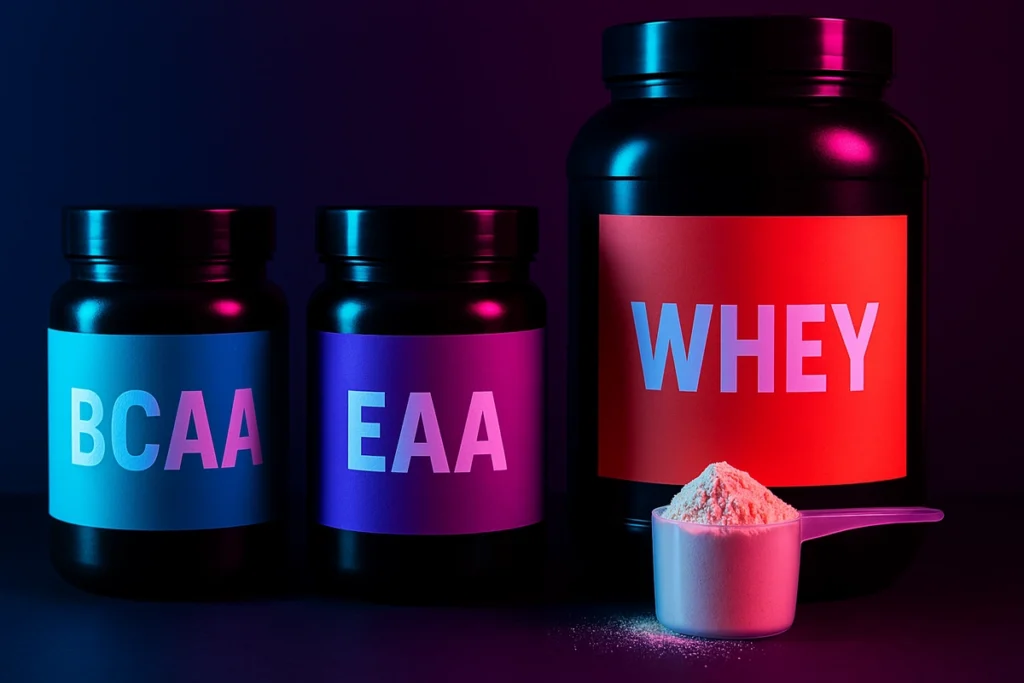
Trying to pick between BCAAs, EAAs, and whey for post‑workout soreness?
Over a decade of coaching has taught me there’s a clear hierarchy – and it depends as much on your situation as on the science.
Below, I’ve ranked them by soreness reduction, convenience, and best use case, so you can see the big picture at a glance before we dig into the real‑world details.
Supplement | Soreness Reduction | Convenience | Best Use Case |
|---|---|---|---|
Whey Protein | ⭐⭐⭐⭐⭐ | Moderate (needs mixing, digestion) | Any time you need total protein |
EAAs | ⭐⭐⭐⭐ | Moderate (more expensive) | Incomplete proteins/vegans, fasted training |
BCAAs | ⭐⭐⭐ (situational) | Very high (light, mixes instantly) | During workouts, low protein days, fasting |
So, BCAAs vs whey for soreness? Whey is stronger, but BCAAs win when you can’t stomach a shake mid-session.
Still, BCAAs win for convenience. They’re light, mix easily, and taste good — perfect during workouts or for those who can’t stomach a shake post-session.
When Emily, a 29‑year‑old physique competitor from Sydney, asked me: “Should I go with whey or BCAAs?”
I said:

Take this 2-minute assessment & get a science-backed training, nutrition & supplement roadmap built for YOUR body.
🔬 12,000+ personalized roadmaps generated
If you’re low on total protein, go with whey. But if you want something light during workouts to support recovery, BCAAs can help.
When clients are looking for extra recovery tools, I sometimes compare BCAAs with glutamine. If you’re stuck deciding, I’ve written a detailed guide on BCAA vs glutamine for muscle recovery — including who needs what, and why.
And if you’re planning to stack both, here’s the full protocol on how to take BCAA and glutamine together without wasting your money or messing with absorption.
What Causes Post‑Workout Muscle Soreness? (DOMS Explained)

Most soreness 24–72 hours post-training is DOMS (Delayed Onset Muscle Soreness). It’s your body’s response to:
- Microtears in muscle fibers
- Inflammation and fluid shifts
- Unfamiliar movement patterns or high intensity
As a coach, I’ve seen this hit beginners and returners the hardest.
One client, Isabella, a 31-year-old mother of two from Milan, came back to training after a year off. Her first glute session left her texting:
Hossein… my legs are broken. Sitting is a core workout now.
We backed off volume, added 10g of BCAAs intra-workout, and introduced post-training walks. Her DOMS reduced within 7–10 days — and more importantly, she didn’t quit.
Final Thoughts: Are BCAAs Worth It in 2026?
Yes — BCAAs can help reduce muscle soreness after workouts, but only for the right person in the right scenario.

If you’re eating enough protein, sleeping well, and managing training load, BCAAs aren’t going to revolutionise your recovery.
But when soreness starts to threaten your consistency — especially if you’re in a calorie deficit, training fasted, or new to lifting — they can be that missing 5% that keeps you showing up.
I never push supplements as a must. What I tell my athletes is this:
Don’t buy BCAAs just to feel like you’re doing something. Use them because you’ve already nailed your basics — and now you want to go the extra mile.
If muscle soreness is crushing you after every leg day, start with a simple 2‑week BCAA trial.
Time them right, pair them with good hydration and stretching, and you’ll know very quickly whether they make a difference for you. Even on non‑training days, a small dose can support recovery once you understand the right protocol.
Supplements don’t replace discipline — they support it. This article will show you exactly who benefits, how much to take, and where BCAAs fit next to whey and EAAs. No magic pills, just practical, coach‑tested advice.
BCAA Soreness FAQs
Yes, they can help lessen soreness, especially if you’re a beginner, training fasted, or in a calorie deficit. They’re not a miracle fix – basics like sleep, food, and hydration still come first.
5–10 grams per workout. If you train on an empty stomach, take 5 grams just before you start. Otherwise sip it during training or right after.
During or right after your workout. For fasted morning sessions, a small dose beforehand helps too.
Whey protein is stronger overall because it contains all essential amino acids. BCAAs win on convenience when you want something light during training that won’t sit heavy.
Often yes. Beginners who get very sore from almost any movement usually feel a real difference within a couple of weeks when they add 5–10 grams of BCAAs alongside proper hydration.
Many people find they do. If heavy squats or lunges leave you barely able to walk, a consistent intra-workout BCAA protocol can take the edge off so you can train again sooner.
Yes, this is one of the best use cases. A small dose before fasted training helps maintain energy and reduces post-session soreness without breaking your fast.
Total daily protein. If you’re not hitting around 1.6g per kg of body weight, prioritize that first. BCAAs are a small extra, not a replacement for whole food or powder protein.
Still sore after every workout? Drop a comment below — I’ll answer with a recovery plan that actually works.

Leave a Reply