


As a fitness coach and bodybuilder, I’ve tested countless supplements. The question I hear most? “Should I take l-glutamine on empty stomach or with food?”
Truth is, there’s no single answer. After 30 days testing l glutamine empty stomach myself, plus coaching athletes through cutting phases, I’ve learned the timing—glutamine morning or night—completely depends on your goal.
In this article, I’ll break down exactly when to take it for muscle recovery versus gut health, plus what my 30-day experiment revealed.
Table of contents
- Can You Take L-Glutamine on an Empty Stomach?
- Glutamine on Empty Stomach: Who Should Do It?
- Best Time to Take Glutamine for Muscle Growth & Recovery
- Glutamine With or Without Food: What Works Best?
- My 30-Day Experiment: Taking L-Glutamine on Empty Stomach
- Real-World Coaching Stories
- Should You Take Glutamine? (Decision Guide)
- Possible Side Effects of Glutamine
- Best Supplement Stacks with Glutamine
- Frequently Asked Questions
- Final Thoughts
Can You Take L-Glutamine on an Empty Stomach?
Short answer: Yes, but it depends on your goal.
Taking l-glutamine on empty stomach works best for:
- Gut health – Supports intestinal lining and digestion
- Immune function – Helps recovery from stress or illness
- Mental clarity – Some users report improved focus
However, if your goal is muscle recovery and growth, empty stomach dosing is less effective. For those results, take it post-workout or before bed instead.
Glutamine on Empty Stomach: Who Should Do It?
Not everyone needs to take l-glutamine on empty stomach. Your goal determines whether morning dosing makes sense.

✅ Take it on empty stomach if you want:
Benefit | Why It Works |
|---|---|
Gut health support | Glutamine fuels intestinal cells and strengthens gut barrier |
Better digestion | May reduce bloating and improve nutrient absorption |
Immune system boost | Supports immune cells, especially during stress or cutting phases |
Mental clarity | Some users report improved focus when taken first thing |
Faster illness recovery | Helps repair tissue and reduce gut inflammation |
❌ Skip empty stomach and take post-workout/bed if you want:
- Muscle recovery after training
- Reduced soreness from intense workouts
- Overnight muscle repair and growth
- Preserving muscle during caloric deficit
Quick Self-Check
Ask yourself:

Tell us your goal & discover your perfect stack — backed by science, no BS.
Free. Takes 2 Min | No sign-up needed
Am I taking glutamine for gut health and daily wellness—or for muscle recovery and performance?
- Gut health/wellness → Empty stomach morning dose ✅
- Muscle recovery/growth → Post-workout + before bed ✅
- Both? → You can do morning and post-workout (5g each)
Bottom line: Empty stomach dosing isn’t wrong—it’s just specific to certain goals. Match your timing to your target.
Best Time to Take Glutamine for Muscle Growth & Recovery

After a decade of coaching and personal testing, I’ve found two timing windows deliver real results for muscle recovery:
- Post-Workout (Most Effective for Recovery)
- Before Bed (Overnight Muscle Repair & Growth)
1. Post-Workout
- Why: Intense training depletes glutamine levels. Taking it immediately after workout helps kickstart muscle repair, reduce soreness, and replenish what training burned through.
- My protocol: 5 grams post-workout mixed with my protein shake.
- Result: Faster recovery, less DOMS, better next-day performance.
2. Before Bed
- Why: Growth hormone peaks during sleep. Glutamine provides the building blocks your body needs for overnight tissue repair and muscle protein synthesis.
- My protocol: 5 grams 30–60 minutes before bed.
- Result: Noticeably less morning soreness and better recovery between training days.
Glutamine Morning vs Night: Which is Better for You?
Goal | Best Time | Why |
|---|---|---|
Muscle recovery | Post-workout | Replenishes depleted stores immediately |
Muscle growth | Before bed | Supports overnight repair |
Gut health + focus | Morning (empty stomach) | Absorbed without competition from amino acids |
Cutting phase | Both (AM + post/bed) | Helps preserve muscle tissue |
Verdict: If you want muscle gains only, post-workout + before bed wins. If you want gut health + muscle, add a morning dose.
Quick Note for Beginners
- Already eating high protein? (chicken, eggs, dairy, fish) You may not need glutamine—whole foods cover baseline needs.
- Cutting or in a deficit? Glutamine becomes more valuable. Helps preserve muscle when calories are low.
- New to supplements? Start with 5g post-workout only. See how your body responds before adding more.
Bottom line: For muscle growth, timing matters less than consistency—but post-workout and pre-sleep are your highest-leverage windows.
Glutamine With or Without Food: What Works Best?
Short answer: Both work—it depends on your goal.

On Empty Stomach (Best for: Gut Health, Immunity, Focus)
- Faster absorption into bloodstream
- No competition from other amino acids
- Ideal first thing in morning, 30min before meals
With Food (Best for: Muscle Recovery, Convenience)
- Slower release, extends presence in bloodstream
- Mixes easily in protein shakes post-workout
- Prevents mild stomach discomfort in sensitive users
Quick Comparison
Situation | Take It |
|---|---|
Gut health focus | Empty stomach |
Post-workout recovery | With protein shake/food |
Morning routine | Empty stomach |
Sensitive stomach | With food |
Before bed | Empty stomach (light) |
Bottom line: No wrong choice—match it to your goal and how your stomach feels.
My 30-Day Experiment: Taking L-Glutamine on Empty Stomach
To test the theory myself, I took 5g of L-glutamine first thing every morning on an empty stomach for 30 days.
The result for muscle recovery? Nothing noticeable. Strength, soreness, and energy stayed exactly the same.
But here’s what the research—and my deeper dive—revealed about other benefits:
What Morning Glutamine Can Do
Benefit | How It Works | Source |
|---|---|---|
Gut health support | Fuels intestinal cells, strengthens gut barrier, may reduce bloating | |
Immune system boost | Powers white blood cells; helps recovery from stress, illness, or intense training | |
Blood sugar regulation | May enhance insulin sensitivity | |
Mental clarity | Anecdotal—some users report improved focus | User reports |
The Takeaway
Empty stomach morning dosing isn’t for muscle gains—it’s for gut health and immunity.
If that’s your goal, it works. If you want faster recovery and less soreness, stick to post-workout and before bed. I learned this the hard way so you don’t have to.
Real-World Coaching Stories

Case Study #1: Competitive Bodybuilder in Cutting Phase (2020)
In 2020, I coached a competitive bodybuilder preparing for a show. His biggest struggle? Extreme soreness and recovery issues during his deep cutting phase.
- My recommendation: 5g glutamine post-workout & 5g before bed.
- Results: After 2 weeks, he reported less soreness, better sleep, and improved training frequency.
Case Study #2: Busy Professional Seeking Gut Health & Focus (2021)
One of my clients (who wasn’t a hardcore lifter) wanted better digestion and focus at work. Since his training was moderate, I had him take 5g glutamine first thing in the morning on an empty stomach.
Results: Within a few weeks, he noticed less bloating and improved mental clarity. This proved to me that morning glutamine is better for general health rather than muscle recovery.
Should You Take Glutamine? (Decision Guide)
Still unsure? Match your goal to my go-to protocol:
Your Goal | My Recommendation | Timing |
|---|---|---|
Faster recovery & muscle growth | 5–10g daily | Post-workout + before bed |
Cutting phase / muscle retention | Glutamine + BCAAs | Morning + post-workout |
Gut health & mental focus | 5g | Morning on empty stomach |
General wellness | Probably not needed | — |
A Few Reality Checks
- Already eating high protein? (meat, eggs, dairy) You likely get enough glutamine from food.
- Training hard and struggling with recovery? Worth testing 5g post-workout for 2–3 weeks.
- Cutting calories? Glutamine becomes more valuable—helps preserve muscle when energy is low.
- Sensitive stomach? Start with 3g with food, work up slowly.
Glutamine isn’t magic, but it’s a useful tool when matched to the right goal and timing.
Possible Side Effects of Glutamine
Glutamine is generally safe for most people, but no supplement works for everyone. Here’s what to watch for:
🚨 Side Effects to Know:
Side Effect | When It’s More Likely | What to Do |
|---|---|---|
Stomach discomfort (bloating, nausea, mild pain) | High doses (10g+) or empty stomach | Lower dose or take with food |
Digestive issues (gas, diarrhea, constipation) | First-time use or sensitive gut | Start low (3g), increase slowly |
Headaches or dizziness | Rare—reported in some users | Stop use; if persists, see doctor |
Allergic reaction (itching, rash, swelling) | Very rare | Stop immediately; consult doctor |
Kidney/liver concerns | Pre-existing conditions | Talk to doctor before starting |
How to Minimize Side Effects
Strategy | Why It Works |
|---|---|
Start low (3–5g/day) | Lets your body adjust gradually |
Take with food if bloated | Slows absorption, reduces stomach irritation |
Stay hydrated | Supports digestion and kidney function |
Listen to your body | Everyone reacts differently—adjust accordingly |
When to see a doctor: Severe reactions, persistent symptoms, or if you have existing kidney/liver conditions.

Take this 2-minute assessment & get a science-backed training, nutrition & supplement roadmap built for YOUR body.
🔬 12,000+ personalized roadmaps generated
Best Supplement Stacks with Glutamine
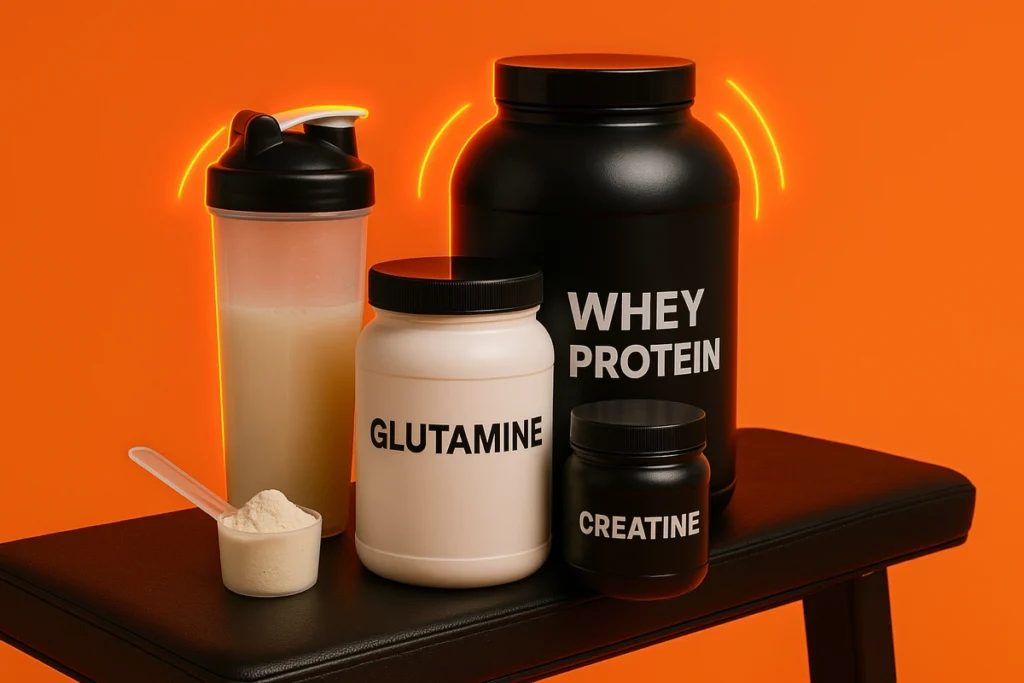
Glutamine is effective alone, but stacked strategically, results amplify. Here are my go-to combinations from years of coaching:
🔥 Top-Performing Stacks:
Your Goal | The Stack | Why It Works |
|---|---|---|
Muscle retention during cutting phase | Glutamine + BCAAs + Whey Protein | BCAAs prevent breakdown, whey provides fast protein, glutamine spares muscle tissue |
Faster recovery after intense training | Glutamine + Creatine + Electrolytes | Creatine replenishes ATP, electrolytes rehydrate, glutamine repairs muscle |
Gut health + mental focus | Glutamine + Probiotics + Omega-3 | Probiotics balance gut flora, omega-3 reduces inflammation, glutamine repairs intestinal lining |
💡 Pro Tips for Stacking:
- Timing matters: Take glutamine with or 30min before other supplements—no competition for absorption
- Start simple: Add one stack at a time to see what works for your body
- Quality counts: Look for third-party tested brands (NSF, Informed Choice)
The right stack turns glutamine from a “nice-to-have” into a targeted tool for your exact goal.
Frequently Asked Questions
Yes. It’s actually preferred for gut health and immunity since absorption is faster without food competing.
Depends on your goal. Morning for gut health/focus. Night for muscle recovery. Post-workout for best muscle gains.
Without food for gut health. With food if you have a sensitive stomach or want slower absorption post-workout.
Yes. Taking 5g before bed supports overnight muscle repair and reduces next-day soreness.
Probably not. Most people get enough from food. Only consider supplementing if you’re cutting, training intensely, or targeting gut health.
5–10g total is standard. Start with 5g and see how your body responds before increasing.
Yes. It stacks well with BCAAs, creatine, whey protein, and probiotics. See the stacks section above.
Mild bloating or stomach discomfort possible, especially at high doses or first use. Start low, take with food if needed.
Gut health benefits may take 1–2 weeks. Muscle recovery improvements often noticed within first few days of post-workout dosing.
Yes for most healthy adults. If you have kidney or liver conditions, consult your doctor first.
Final Thoughts

If You Want… | Take It… | Verdict |
|---|---|---|
Gut health, immunity, focus | Morning on empty stomach | ✅ Works well |
Muscle recovery & growth | Post-workout + before bed | ✅ FAR more effective |
Both? | Morning + post-workout | ✅ Do both (5g each) |
📌 My Personal Protocol: 5g post-workout + 5g before bed — tested for years, works like a charm.
Still unsure? If you’re training hard and struggling with recovery, it’s worth a 3-week test. You’ll know quickly if it works for you.
A Final Word
Supplements aren’t magic. But used correctly — matched to your goal and timed right — they help you train harder, recover faster, and perform better.
This article combines my coaching experience with trusted research. Try the protocol that fits your goal, track how you feel, and adjust from there.
📢 Now Over to You!
Have you tried taking glutamine on an empty stomach? Morning? Night? Notice anything?
Drop a comment below — I read every single one and would love to hear what worked (or didn’t) for you.
Resources for Enhancing Digestion and Focus with Glutamine
To provide further insights into the benefits of glutamine supplementation, particularly concerning digestion and cognitive function, consider the following reputable sources:
- Glutamine’s Role in Gut Health – This article from the Canadian Digestive Health Foundation discusses how glutamine supports digestive health, strengthens the immune system, and becomes increasingly important as we age.
- Comprehensive Overview of Glutamine Benefits – Healthline provides an in-depth look at glutamine, highlighting its importance in immune support and intestinal health, and discussing its presence in various foods and supplements.
- Glutamine’s Impact on Gut Microbiota and Disease – This systematic review from the National Library of Medicine explores glutamine’s role in the complex interaction between gut microbiota and disease, offering insights into its potential therapeutic applications.
These resources offer valuable information on how glutamine supplementation can enhance digestive health and cognitive focus, supporting your client’s wellness journey.
🩺 Disclaimer: This article is for informational purposes only and not medical advice. Always consult with a healthcare provider before starting any supplement.

Leave a Reply